Updated for 2025
Snake encounters spike from late spring through early fall as temperatures rise and both people and reptiles spend more time outdoors. Most snakes you’ll meet are nonvenomous and beneficial, yet surprise‑distance encounters around boots, pets, barns, boat ramps, or garden beds can force a quick decision. A purpose‑built snake gun—properly patterned and legally carried—gives you a last‑resort tool when backing out or relocating the animal isn’t feasible.
First choice is always avoidance. Learn local species, keep property tidy, wear protective lower‑leg gear in heavy cover, and leave snakes alone when possible. Jump to Snake Encounter Playbook and First Aid for safety details.
Match platform to how (and where) you spend time in snake country. Distances shown are practical pattern envelopes—always confirm with your exact gun & load.
*Measured to ~18″ pattern spread on paper plate; confirm with your firearm.
Snake work happens at arm’s‑length distances. Look for a firearm that patterns densely at 3–10 feet, is light enough to keep on you all day, resists corrosion, and lets you stage shot first with solid projectiles behind it if you also need a general‑purpose ranch sidearm.
Most real‑world snake shots occur within about 1–5 yards—often closer—because you typically don’t see the snake until you’re nearly on top of it. Beyond ~10–15 feet, small handgun shotshell payloads thin out fast and rifling in revolver barrels can spin patterns wide. Pattern your specific gun and load on paper plates at 5, 7, and 10 feet; count pellet hits in a 6″ circle representing the head/neck zone.
Below are the common platform types people rely on for snake duty. Each has tradeoffs in pattern density, portability, and follow‑up capability.
Large‑frame DA/SA wheelguns (Taurus Judge family, Smith & Wesson Governor) chamber 2½” or 3″ .410 shotshells plus .45 Colt; the Governor also takes .45 ACP via moon clips. They provide broad versatility but are bulkier than pocket revolvers.
Two‑shot stainless break‑actions from Bond Arms (Snake Slayer series, Rowdy XL, XLV) are ultra‑short and rugged. Interchangeable barrels let you swap calibers. Recoil is brisk; reloads are slow.
J‑frame .38/.357s and similar small revolvers can carry 1–2 chambers of shotshell backed by solids. Patterns are tiny; think boot‑top distances.
Featherweight .22 LR kit revolvers stow anywhere. Fine #12 shot is marginal on thick‑bodied pit vipers; best for very small snakes or pests.
When weight allows—or when working dogs, barns, or camp perimeters—a short .410 pump, lever, or single‑shot gives you tighter patterns and a bit more reach than handguns. See Long‑Gun Alternatives.
Ranked by field utility for short‑range snake work. Specs are manufacturer published unless noted; always verify current SKUs.
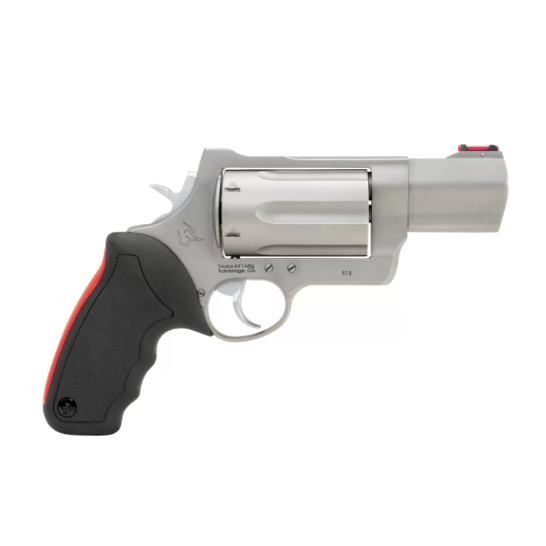
The Judge family remains the go‑to for many landowners because it chambers both .410 shotshells and .45 Colt in a 5‑shot DA/SA package available in multiple barrel lengths (approx. 2″–6.5″) and cylinder lengths (2½” or 3″). Polymer, steel, and lightweight variants let you balance weight vs. recoil. Shallow rifling is tuned to moderate shot dispersion while still stabilizing bullets. Pattern performance varies—test yours.
The big Raging Judge returns for 2025 in limited runs. Built on the beefy Raging frame, it adds .454 Casull capability to the .45 Colt / 3″ .410 mix and ups capacity to 6 rounds. Stainless steel construction, cushioned insert grip, and fiber‑optic front sight help manage recoil from full‑power loads. It’s overbuilt for most snake chores but appeals to ranchers who want one revolver for pests, feral hog deterrence, and large‑animal defense.
Six‑shot capacity, scandium/stainless construction that keeps weight just under 30 oz, and the ability to fire .410 2½” shells, .45 Colt, and .45 ACP (with moon clips) make the Governor a flexible field companion when ammo shelves are thin. Standard front night sight; available Crimson Trace‑equipped variants. Short 2.75″ barrel—pattern yours to learn spread.
The appropriately named Snake Slayer IV stretches barrel length to 4.25″ (vs. 3.5″ standard) for noticeably tighter .410 patterns and higher velocity. Stainless frame & barrels, extended rosewood grip, cross‑bolt safety, rebounding hammer, and interchangeable barrels across the Bond lineup. Available in .45LC/.410 or .357/.38.
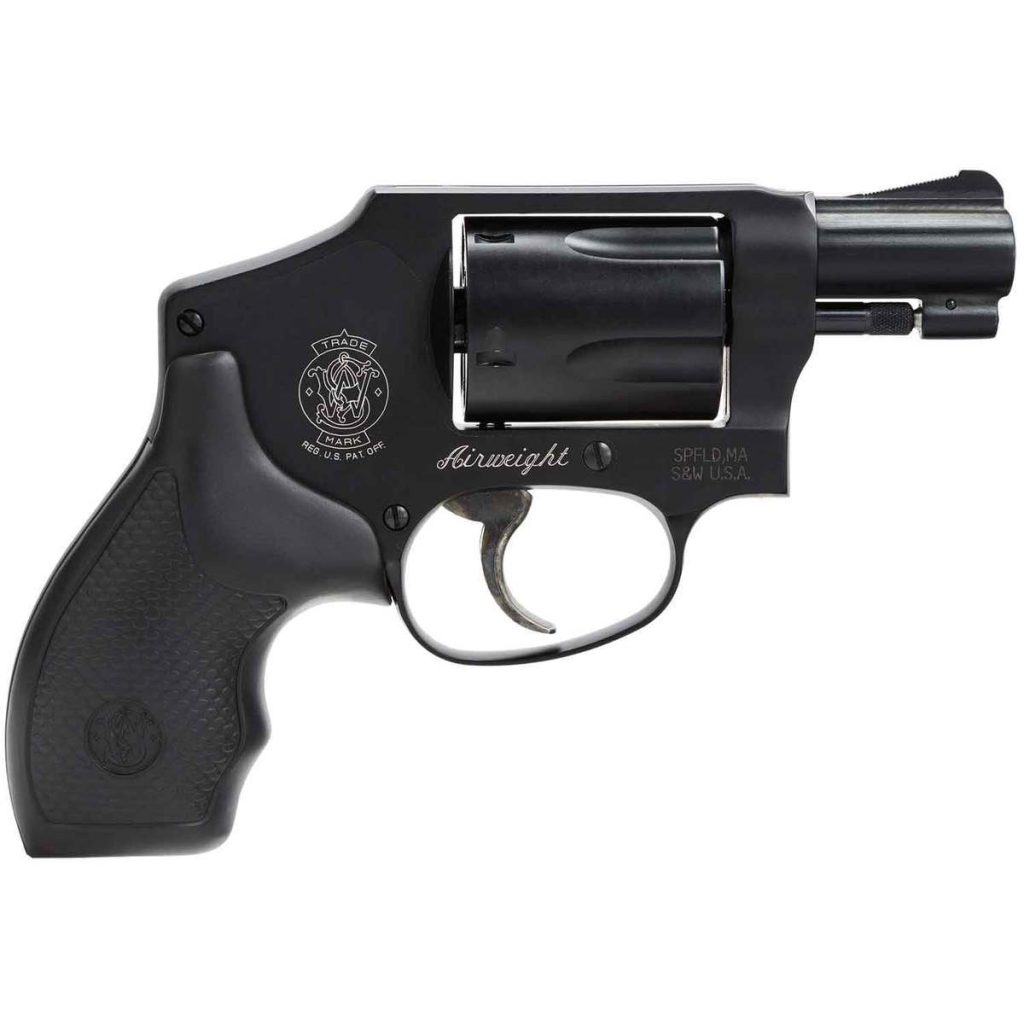
The classic Airweight J‑Frame rides unnoticed in shorts‑weather pockets. Load the first one or two chambers with CCI .38 Spl shotshells for snake duty and backfill with standard +P defensive loads. Internal hammer DAO design draws snag‑free; alloy frame and stainless barrel/cylinder (642) resist sweat. Effective range is measured in feet, not yards—pattern accordingly.
Bond’s Rough Series Rowdy XL trims cost while keeping stainless durability. A 3.5″ barrel improves pattern and sight radius vs. the short Rowdy; B6 grips add control. Chambered in .45LC/.410; compatible with standard Bond barrels for caliber swaps as budget allows.
If you work dogs, manage barns, or prefer a shoulderable gun for slightly more reach and pattern density, these small .410s are practical snake getters.
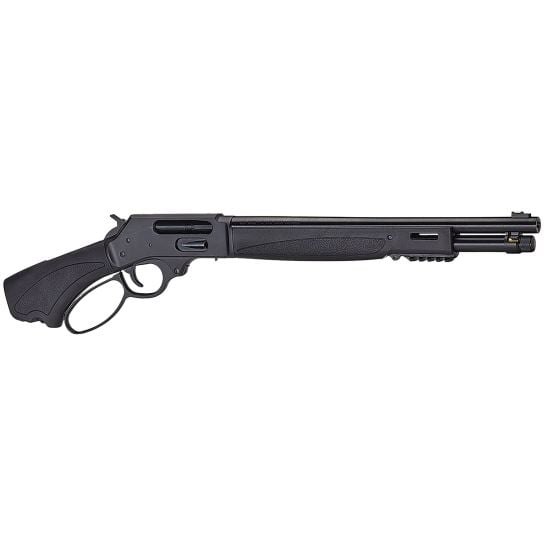
Short 15″‑class barrel and ~26″ OAL make the Axe stowable in UTVs or behind a truck seat. Brass bead (or fiber‑optic on X Model), Invector‑style threaded muzzle with supplied choke, and 5+1 capacity offer quick follow‑ups around kennels or sheds.
A youth/compact pump that doubles nicely as a farm snake gun. 5+1 capacity (3″ chamber), 24″ barrel with dual beads, and ~6‑lb weight. Short LOP stock works for smaller shooters or bulky snake chaps.
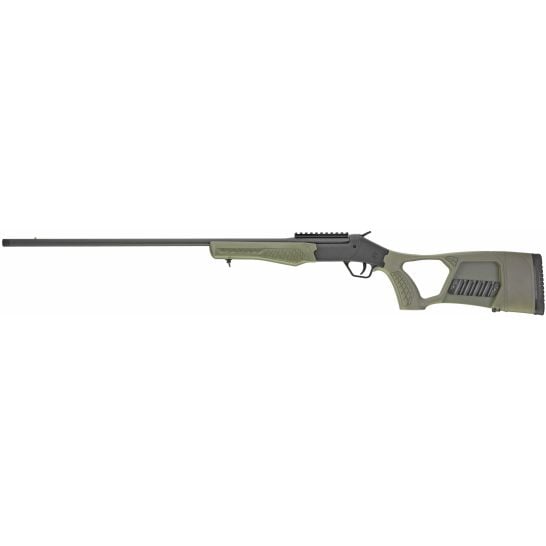
Ultra‑light (sub‑3 lb) break‑open single shot with thumbhole stock that stores extra shells in the butt. 18.5″ barrel, ~31″ OAL. Budget friendly and easy to stash in UTV racks or behind barn doors.
At true snake ranges, pellet count and distribution trump raw muzzle energy. Fine shot (#9–12) gives dense coverage on small moving heads; larger shot (No. 4 “Big 4”) trades pattern for penetration on thick‑bodied vipers. Try several loads; even adjacent cylinders can print differently.
Need a non‑toxic option for kennels, barns, or regulated properties? CCI’s HEVI‑Bismuth Pest Control handgun shotshell line mirrors lead density closely (9.6 g/cc) while meeting lead‑free rules. Available in common revolver calibers including .38/.357, .45 Auto, .45 Colt, and more.
Loaded with No. 4 lead shot for bigger pests and extended reach at the cost of pattern density. Offered in 9mm, .38/.357, .44, .45 Colt. Recoil and pattern differences are noticeable—pattern test.
Fine #12 shot in plastic capsules; minimal penetration but handy in rimfire kit guns for small snakes or pests at 3–6 ft.
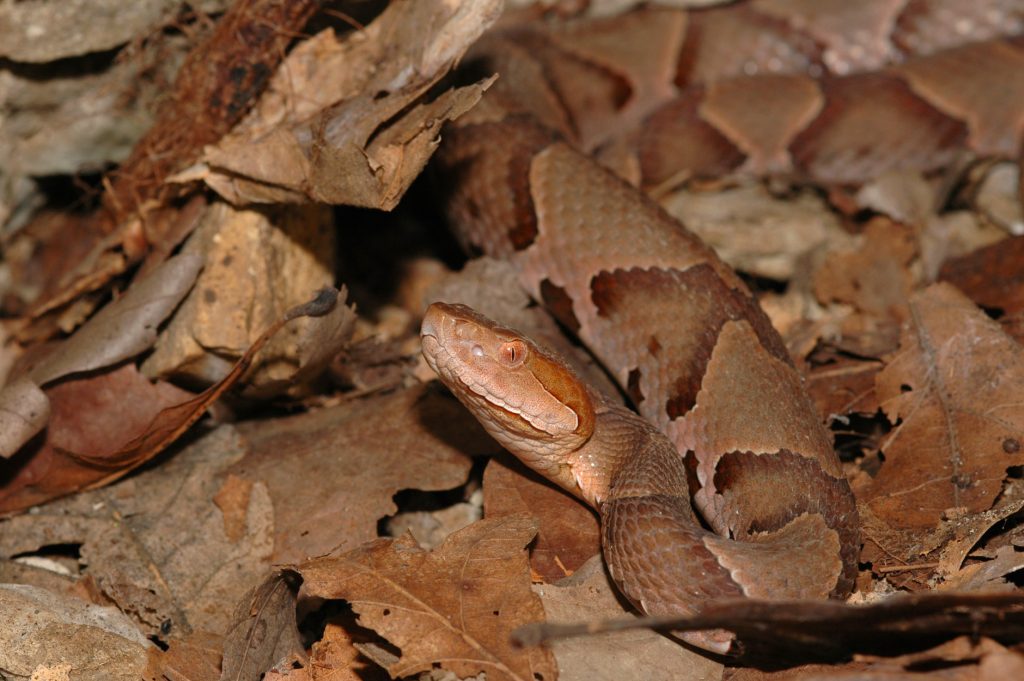
Most snakes are harmless and ecologically valuable. Misidentification drives unnecessary killing and bite incidents. Learn key traits: pit vipers show heat pits between eye and nostril; copperheads wear hourglass cross‑bands; cottonmouths flash a white mouth lining; rattlers aren’t the only banded snakes, and some lose rattles.
If you’re not sure the snake is venomous—and it isn’t an imminent threat—step back and let it go. Many bites happen when someone tries to catch or kill a snake.
Treat all suspected venomous bites as medical emergencies. Call 911 or emergency services immediately. Keep the victim calm and still; remove rings, watches, or tight clothing before swelling. Position the bite at or slightly below heart level if practical.
Do NOT: cut the bite, suck venom, apply ice, use a tourniquet, drink alcohol or caffeine, or self‑medicate with NSAIDs unless directed by medical professionals. Photograph the snake from a safe distance if possible—never risk another bite to capture it.
For pets: remove collars if bitten on head/neck and seek veterinary care immediately.
Counts vary by state. Example: Oklahoma has 7 venomous species out of 40+ total; Texas has ~15 dangerous taxa. Contact your state wildlife agency for a local list.
.410 throws more shot and gives a wider “forgiveness cone” at 5–10 ft; .38 shotshells pattern tiny but ride in lighter revolvers you’ll actually carry. Pattern both if possible.
CCI HEVI‑Bismuth Pest Control in several handgun calibers offers non‑toxic performance close to lead density.
Usually not; they’re low‑mass payloads intended for revolvers. Some pistols may short‑stroke—test carefully.
Depends on state law, species status, and immediate threat. Many states protect nongame reptiles; some allow lethal take of invasives. See Legal Landscape.
Fine shot loses steam fast; thin wood may be peppered at close range. Always account for livestock, windows, and bounceback.
Snake boots or gaiters, heavy pants, gloves when moving debris; eye/ear protection when shooting.
Commercial handgun shotshell cases are marked non‑reloadable; follow manufacturer guidance.
Why a Snake Gun (and When You Don’t Need One)
At‑a‑Glance Decision Matrix: Pick the Right Tool for the Job
Use Case
Best Platform Type
Recommended Chambering / Load
Practical Pattern Distance*
Carry Weight Target
Notes
Walking property / farm chores
.410/.45LC Revolver (Judge / Gov) or Light J‑Frame w/ shot first
.410 2½” #9 or mixed payload; .38 Spl shotshell
5–12 ft
< 40 oz loaded
Versatility to carry shot + solids; patterns vary by barrel.
Tractor / ATV tool kit
.410 Revolver or Bond Arms Derringer in console
.410 #8–9 pest loads
5–10 ft
N/A (vehicle carry)
Stainless or coated finish resists grime.
Fishing waders / bank angling
Bond Arms Snake Slayer / Rowdy XL; lightweight J‑Frame
.45LC/.410 derringer loads; .38 shotshell
3–8 ft
< 28 oz
Short reach; retain with lanyard when wading.
Backpacking / ultralight
.22 LR kit gun w/ shotshell or alloy J‑Frame
.22 #12 shot; .38 shotshell
3–6 ft
< 20 oz
Limited penetration; small snakes only.
Dog handlers / bird dogs
Compact pump or single‑shot .410 long gun
.410 #9 field / pest
8–15 ft
< 7 lbs
Better pattern standoff around kennels/fields.
Guide / outfitter depredation
Heavy‑duty .410/.45LC/.454 revolver (Raging Judge) + .410 long gun staged
.410 #8–9; solid .45 Colt follow‑up
5–12 ft (handgun) / 10–20 ft (long gun)
< 61 oz HG / < 7 lbs LG
One‑gun versatility; recoil, size tradeoffs.
What Makes a Good Snake Gun?
How Close Is “Snake Range”? Patterning Basics
Pattern Your Snake Load (DIY)
Snake Gun Platform Categories
.410 /.45 Colt Multi‑Cal Revolvers
Derringer‑Style .410 Pistols
Conventional Revolvers w/ Shotshell Loads
Rimfire Kit Guns + .22 Snake Shot
Compact .410 Shotguns (Long Gun Alternatives)
2025 Top Snake Gun Picks
Best Overall Snake Revolver: Taurus Judge (Family Overview)

Heavy‑Duty / Extended Capability: Taurus Raging Judge (Back in Limited Production)
Most Versatile Multi‑Cal: Smith & Wesson Governor

Ultra‑Compact Field Companion: Bond Arms Snake Slayer IV

Lightweight Always‑There Option: S&W Model 442 / 642 w/ Shotshell
Budget Stainless Derringer: Bond Arms Rowdy XL

Long‑Gun Alternatives: Compact .410s Worth a Look
Henry Axe .410 Lever “Mare’s Leg” Style
Mossberg 500 Compact Bantam .410 Pump

Rossi Tuffy Single‑Shot .410
Snake Shot & Ammunition Guide (2025)
Load Matters More Than Gun at 5 Feet
Lead vs. Lead‑Free Bismuth
CCI “Big 4” Loads
Standard Capsule Shotshells & Safety Notes
.22 LR Snake Shot
Load
Shot Size
Velocity (fps)
Use Case
Notes
Buy
CCI Pest Control Bismuth .38/.357
#8
~1100
Lead‑free barns / kennels
Non‑toxic; denser than steel
Buy
CCI Big 4 .45 Colt
No. 4
~800
Thick‑bodied snakes
Fewer pellets; more penetration
Buy
CCI Std .38 Spl Shotshell
#9
~1000
J‑frame snake first shot
Boot‑top distance
Buy
CCI Rimfire .22 LR Shotshell
#12
~1000
Ultralight kit gun
Very close range
Buy
Field Carry & Deployment
Snake Identification & When Not to Shoot
Snake Encounter Playbook: Avoidance First
Safe Shot Placement & Backstop
Post‑Bite First Aid & Emergency Response
Frequently Asked Questions
How common are venomous snakes where I live?
.410 pistol vs. .38 shotshell for copperheads?
Lead‑free shotshell options?
Will snake shot cycle my semi‑auto?
Legal to shoot a snake in my yard?
How far will snake shot penetrate barn siding?
What safety gear should I wear in snake country?
Can I reload handgun shotshell capsules?
Always check current wildlife and firearms laws in your state before killing or handling any snake. Regulations change. Many native snakes are protected, and some states allow lethal take only in immediate defense of people, pets, or property.