

What’s not to love about a 22 rifle? The miniscule round is low on recoil and noise, and high on affordability, availability, and fun. A good, accurate 22 is the perfect introduction to the world of shooting, as well as a solid training tool for experienced shooters looking to get a little extra time behind the trigger.
For this article, we sat down with Jeff Bradley of Christensen Arms to discuss what features he values in and considers the best 22 rifle. Christensen Arms is widely recognized in the firearms industry for their innovation in manufacturing lightweight, precision firearms with a focus on using advanced materials and engineering. As an ardent rimfire enthusiast myself, I was excited to sit down with Jeff and talk about the recent improvements manufactures have made to everybody’s favorite “plinker.”
22 Rifle Points To Consider
Before you rush out and purchase a 22 rifle, Jeff says it’s important to consider what your intended usage will be.
“I think there’s a lot of value in trying to figure out what the intended purpose of the rifle is, and matching that intended purpose with the design and manufacturer of the 22 you buy,” Jeff says. “If you’re buying a first rifle for a little kid, a little Savage Cricket is a pretty good rifle for a very, very young shooter who is just starting to learn how to safely load and fire a rifle. Whereas somebody who is looking to go out into the squirrel woods; he’s going to be interested in a little bit different rifle. And the nice thing about 22s is that you can find them in lots of different configurations throughout the price spectrum. You can find a 22 for $99.99, or you can buy one for $1,999.99.”

Jeff says that most of the people he talks to are looking at buying a 22 for one of three reasons: to introduce a young person to the shooting sports; to acquire a fun, low-cost “range toy;” or to use as a training aid for competitive shooting.
“I hear this over and over again,” he says. “We’ll have a customer buy a really nice Ridgeline PFT in 6.5 PRC, let’s say. And they’ve got a 12 years old son who in a few years will be able to shoot a big game rifle. They’ll buy a Ranger to introduce them to firearms and hunting. Then you have a lot of recreational shooters, who don’t know anything about other types of guns, but they want a 22 as their first gun. They’re not looking to get into long range shooting or hunting; they just want a firearm they can shoot in the backyard and have fun with. Then you have the last segment of guys. They may shoot a BA Tactical or NPR or another long range, precision rifle; but due to cost and venue availability, range time is limited. So they buy a 22 so that they can practice the fundamentals.”
22 Rifle Barrel
Colonel Townsend Whelen famously wrote that “Only accurate rifles are interesting.” A big part of a rifle’s accuracy boils down to its barrel construction. Generally, when a firearms company wants to make an accurate rimfire rifle, they build that gun with a heavy target or bull barrel. This is an easy way to add mass to a gun, making it less “jittery” as its user aims down the sights. The extra mass also absorbs heat, the buildup of which changes the gun’s POI as it accumulates.
The downside of this extra mass is the extra weight. Bull barrels are heavy, especially for young shooters or hunters who may cover several miles with the gun slung over their shoulder throughout the day. But modern advances in materials science have led to advancements in barrel building that allow for super-accurate barrels without having to pay a weight penalty.
“Our Ranger 22 uses a carbon tension barrel,” Jeff says. “And what that means is that the stainless steel barrel is in there under a carbon fiber over casement. So, picture a stainless steel barrel with a carbon fiber tube around it, and then a tensioning nut tightening on the barrel threads, drawing that barrel tight. This tensioning of the barrel makes it very, very rigid.”
This rigidity allows for a high degree of accuracy out of a very lightweight barrel.
“We sell the Ranger as a ½ MOA rifle,” Jeff continues. “What we tell buyers is that their gun should be able to put 3 shots inside of a minute-of-angle at 50 yards. And what that translates to is basically 3 shots you can cover with a nickel at 100 yards. That’s pretty tough talk to advertise that, and you’ve got to have a pretty well performing barrel to make that guarantee.”
22 Rifle Action Options: Bolt Action vs Semi Auto vs Lever Action
One of the neatest things about 22 rifles is that they’re available in a wide range of action types. Semi autos like the popular Marlin Model 60 or the even more ubiquitous Ruger 10/22 provide maximum fun for shooters who want to throw as much brass as possible downrange. Lever action guns also have a certain appeal to anyone who watched a little Gunsmoke as a kid, but for serious shooters, bolt actions remain king.
I have been hostage to many discussions about whether or not bolt actions are inherently more accurate than other action types. Rather than weigh-in on the topic, I’ll make two simple observations: most precision shooting sports are dominated by bolt action guns, and most manufacturers who bring precision rifles to market build those rifles on bolt actions. Make of that what you will.

Another thing to consider when choosing a rifle, according to Jeff, is the rifle’s compatibility with aftermarket accessories and upgrade components. Something like a Henry Golden Boy is a nice rifle, but what you see is what you get. Other models are more modular, allowing users to replace or upgrade components to create a “semi-custom” rifle.
“We wanted the Ranger to have some upgradability,” he says. “So that a more experienced shooter could buy that rifle and replace the stock Remington 700 trigger assembly on it with a nicer one if he wanted to go out and compete in, say, the new NRL22 competitions. We also chose to go with what’s been proven to be the most reliable way to feed 22 rounds in a rifle: the old Ruger 10/22 mags.”
While it’s a small thing compared to other factors, the ability to use widely-available and well-regarded 10/22 flush mount rotary magazines is a nice touch, especially for shooters who like to keep plenty of full magazines on the bench at the range.
22 Rifle Stock
While technical discussions on barrels and actions abound on firearms forums, somewhat less is said on stock choice. Most discussions center around the tradeoffs of wood vs synthetics. Wood, so conventional knowledge dictates, is the superior choice as far as aesthetics are concerned, but lacks the practical durability of synthetics. Synthetic stocks are more tolerant of heat and moisture, but rather lacking as far as looks go. Good injection-molded plastic stocks look…utilitarian. Bad ones look downright chintzy.
I have to admit my partiality for wood, but it seems that good wood has become almost impossible to find on production guns. It’s rare that you find a modern gun with really nice, tight grained hardwood; good checkering; and a nice finish. When you do find such a critter, it usually comes with a price tag that puts it well beyond the point at which you’d want to take it afield.
With wood increasingly hard to find, carbon fiber composites have become a go-to for manufacturers looking to class-up the furniture on a rifle. Carbon doesn’t have the same old-world grace that walnut has, but it’s a big step up from polyethylene mold lines. It’s also significantly stiffer than your typical plastic stock, which makes a world of difference in the overall feel of the gun as well as its accuracy. I own a Savage Model 93 that I swear I can feel twist every time I shoulder it. Carbon stocks don’t do that.
With Christensen being famous for their carbon fiber barrels, it’s no surprise that their Ranger 22 wears a matching carbon fiber composite stock. At first glance, the Ranger’s stock is fairly traditional, but it does have a few “tactical” characteristics snuck into its design. It has a prominent palm swell on the grip, a sandbag hook on the butt, and a flattened forend to accommodate a picatinny rail. These features are commonplace on high end, precision rifles, but less common on rimfire rifles.
What Is A .22 Calber Good For?
So far, this article has focused on .22 caliber rifles. But what about the round itself? If you’re like me, you may have a hard time justifying a rifle just as a “range toy.” Does the humble .22lr serve any purpose aside from introducing newcomers to the world of shooting sports or helping serious shooters accumulate range time?
In my opinion, yes. While often eclipsed by newer, more powerful rimfire cartridges, the old .22lr has remained a very popular and capable small-game cartridge, particularly for squirrel hunters. With good ammo a lightweight, bolt action rifle chambered in .22lr is the perfect squirrel gun. The round has enough power to be lethal at the ranges most hunters can ethically engage these active critters, without being so powerful that it causes undue meat damage.
With that being said, it’s true that there are some situations where the best “22 rifle” may not involve the classic .22lr chambering.
22 Ballistics
To understand better which rimfire caliber is right for you, it’s important to understand the ballistics of those rounds. We’ll start by briefly looking at the .22 LR, and then work our way through the newer and “hotter” calibers.
22 LR Ballistics
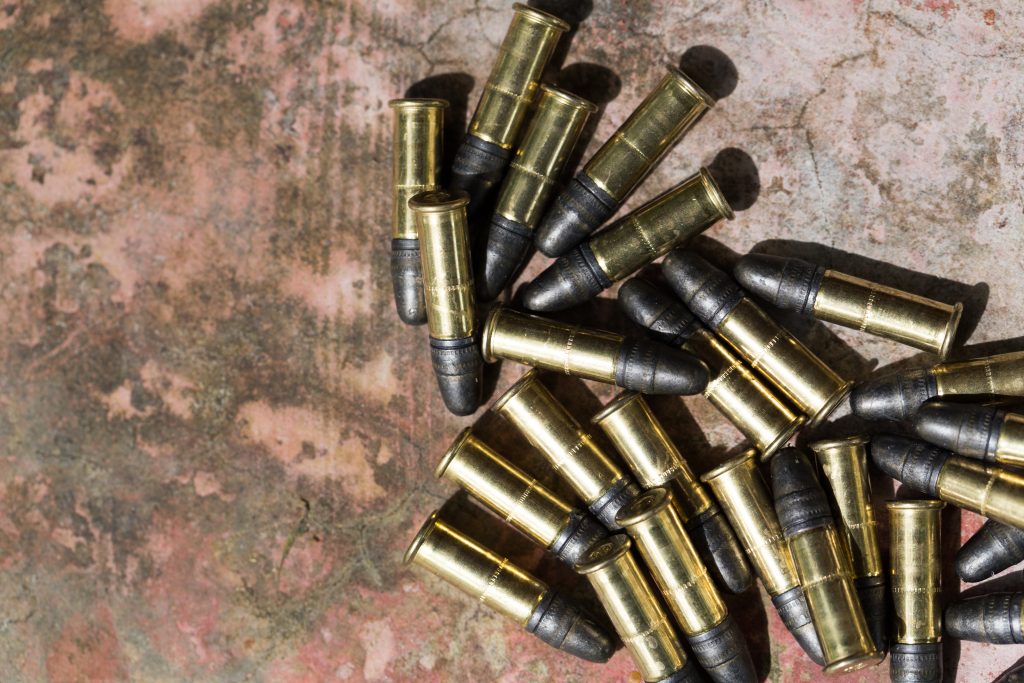
It may be hard to believe it, but the diminutive .22 LR we all know and love is in a way a “magnum” cartridge. You rarely see them anymore, but older guns were often chambered for either the .22 Short or .22 Long caliber. The .22 LR or “long rifle” usually propels a 40 grain, .22 caliber projectile at around 1,100 FPS, give or take 100 FPS. At the barrel, this usually gives shooters around 130 ft.lbs of energy. In a hunting application, this round is usually limited to small game at distances of 50 to 100 yards max. Not a particularly powerful round, but adequate for the job. Its main appeal is its low noise and recoil production, combined with being extremely economical to shoot.
22 Magnum Ballistics
For many shooters, the .22 WMR (Winchester Magnum Rimfire) is the original “magnum” rimfire round. While it uses the same 40 grain, .22 caliber bullet as the .22 LR, it uses a higher-pressure, higher-volume powder charge to push that little pill much faster. You get 1,800 fps on average out of one, and a typical load sees muzzle energy in excess of 320 ft.lbs at the muzzle.
This makes the .22 WMR a substantially more lethal round on larger game. While not as popular as it once was, it’s commonly used among varmint hunters. It works well on coyotes out to 100 yards, and I’ve had good success using it to hunt hogs on public lands that require you to use small game arms and ammunition if hunting hogs during state small game seasons.

The hogs shown above were all killed with a single .22 WMR round applied directly to the shoulder of the animal. I’ve killed hogs in excess of 200 lbs with the round, and have only very rarely lost one. It’s a great hunting round for hunters who, to quote Jeff, are “expecting to encounter a little more shoulder” than they would usually use a rimfire round for.
17 HMR Ballistics
The .17 HMR takes the .22 WMR casing and necks it down to .17” in diameter at the throat, allowing it to shoot a much smaller bullet. While the typical 17 grain bullet doesn’t have as much shoulder-busting potential as a .22 WMR, the upside is sizzling speed and a very flat trajectory. A typical load can clock 2,650 FPS, generating 265 ft.lbs of energy at the muzzle.
This load has attained widespread popularity among prairie dog hunters and other small varmint hunters who need a flat-shooting round. Whereas most .22 LR shooters will zero their hunting rifle at 50 yards, most .17 HMR guys are zeroing at 100-125 yards…quite a bit of difference in capability there!
17 WSM Ballistics
The .17 WSM is currently the “most powerful” commercially available rimfire caliber. Using a necked down nail gun cartridge, it propels a 20 grain, .17 caliber bullet at a blistering 3,000 fps; generating 400 ft.lbs of energy at the muzzle. At 200 yards, you’re looking at a measly 4” of drop with a 100 yards zero, making this an extraordinary flat-shooting small game round.
What To Look For In 22 Ammo
Once you’ve chosen a quality rimfire rifle, you’ll want to make sure that you’re feeding it high-quality rounds as well. While .22 WMR, .17 WSM, and .17 WMR rounds are all about as standardized as most centerfire rounds, .22 LR rounds can vary dramatically in quality. I won’t name names, but I refuse to buy one particular bullet after observing that every bucket I purchased had rounds whose bullets had separated completely from the casing. Other bullets could be removed with nothing but your fingers, and some bullets were seated visibly crooked in the casing!
According to Jeff, there’s a simple rule that you can use to determine the caliber (Sorry, couldn’t resist) of your ammunition. “The more you spend on ammunition,” he says, “the better it performs. CCI performs well in my experience. Eley performs really, really well.”
I can attest that Eley, if you can find it, is a great performing round. For years now, I’ve used their subsonic load as my go-to squirrel hunting bullet, and it has consistently been one of if not the best shooters out of every gun I have tested it in.
Christensen Arms Ranger 22
So, with as much as we’ve talked about Christensen Arms’ Ranger 22, is it the best 22 rifle? It depends. If you’re looking for a first gun for a small child, probably not. It doesn’t have quite the endless “modibility” of Ruger’s 10/22. It won’t help you indulge in fantasies about the wild, wild west like a Henry Golden Boy. And, while it’s a nice rifle, you may not fit in if your range buddies are all shooting Anschutz or Volquartsen rifles (although there’s a good chance you’ll be able to outshoot those guns at only half the price your buddies paid).
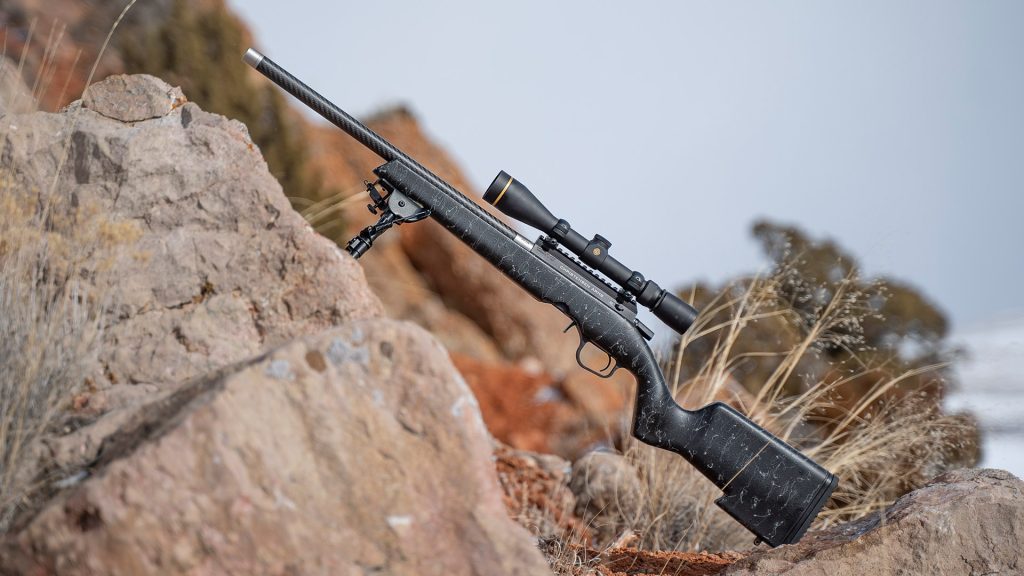
But, if you’re a serious hunter or marksman looking for a reasonably priced rimfire rifle that doesn’t sacrifice accuracy, you would be very hard-pressed to find a better gun. To my knowledge, no other manufacturer is putting a ½-MOA guarantee on their 22 rifle. That’s 3 shots that have to practically touch each other at 50 yards, which will leave all but the best shooters as very much the weakest link in the accuracy equation. Considering that you get accuracy like that in a sleek, 5.1 lb package…I’d say it comes close to the “best” rifle I’ve seen for both bench shooters and small game hunters who will appreciate a lighter gun.
Final Thoughts On The Best 22 Rifle
Ultimately, like Jeff says, it’s up to the end user to determine how they’ll be using their rifle, and then work backwards from there to see what criteria are important for that usage. Hopefully, this article has provided you with the information you need to make an informed decision when choosing the next addition to your gun safe.