

Deer feeders are essential tools in wildlife management and hunting, helping to attract deer to specific locations and ensuring they receive adequate nutrition. This article aims to compare the pros and cons of various types of deer feeders to help hunters and wildlife enthusiasts make informed decisions.
Types of Deer Feeders
Dumping feed or corn directly on the ground is a bad idea. A pile of corn in the dirt is subject to spoilage and bugs, and can be eaten by any animal that comes across it. Wet piles of corn are also an ideal environment for Aspergillus flavus and Aspergillus parasiticus, two common southeastern fungi that produce harmful and even deadly aflatoxins. These toxins can cause liver damage, cancer, immune system suppression, and reproductive issues, leading to reduced fertility, birth defects, and lower survival rates for wildlife offspring. Additionally, aflatoxins can weaken the immune system, making animals more susceptible to diseases and infections.
In order to prevent wasting feed, feeding non-target animals, and poisoning wildlife, hunters can turn to a variety of feeder styles to keep corn and deer feed dry, off the ground, and available to targeted species. Broadly speaking, these are gravity feeders, trough feeders, and automatic or spin-cast feeders.
Gravity Deer Feeders
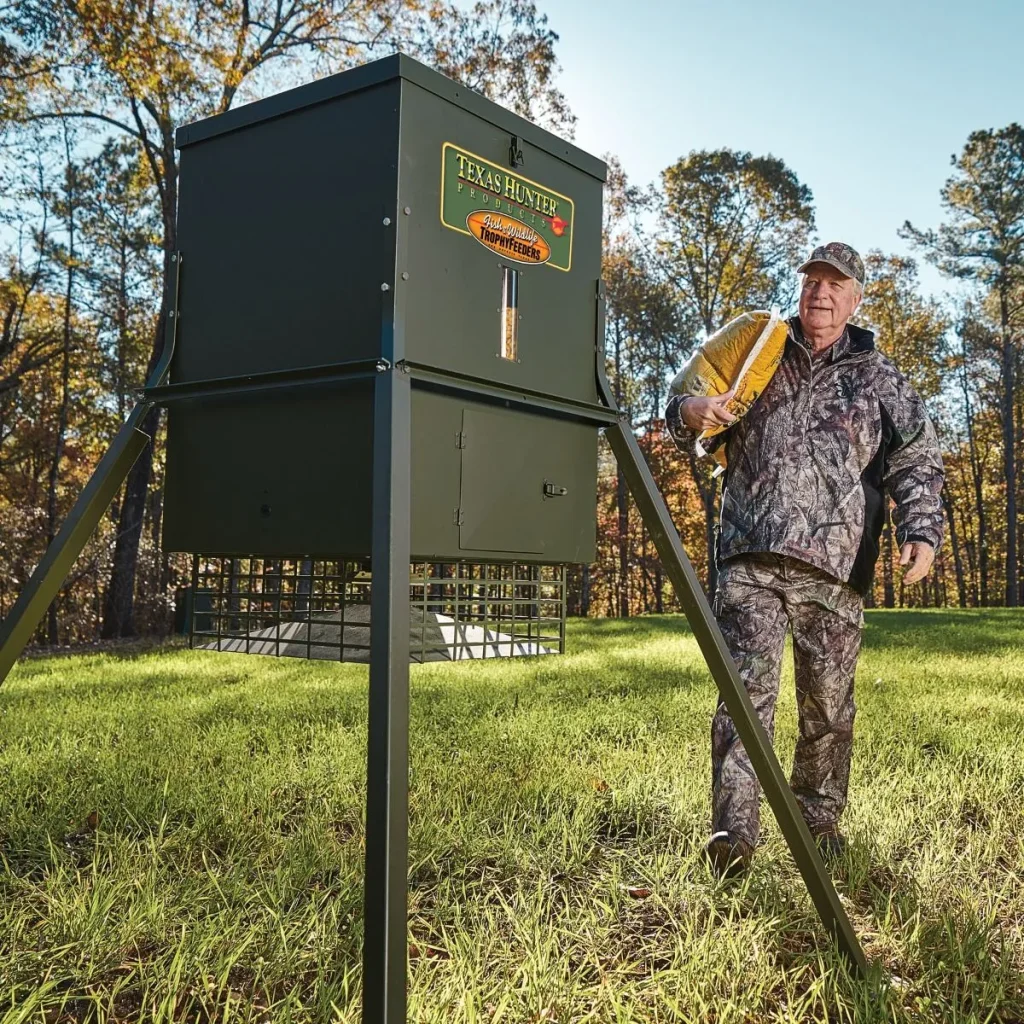
Gravity feeders are as simple as they sound. Feed is poured into a reservoir and gravity forces it to flow down to a feeding port. As deer eat the feed, more flows from the reservoir to the feed port. Deer have access to as much feed as they want, whenever they want it. This type of feeder is commonly called a “free choice” feeder. Free choice feeders are popular with wildlife managers who are looking to increase body weight and antler size in deer by providing them with maximum access to high-protein feed and mineral supplements.
The first deer feeder I ever saw was the ubiquitous and classic “pipe feeder” which is a simple gravity-style feeder made from a section of inexpensive 4” PVC drain pipe and a few fittings. This style of feeder is popular because it’s inexpensive to build or buy, and requires practically no maintenance beyond filling. However, they do little to nothing at all to prevent raccoons, opossums, squirrels, bears, and insects out of your feed. Improperly designed models also do a poor job of keeping moisture out of feeding ports, meaning that feed is prone to getting wet, which increases spoilage and aflatoxin contamination.
Trough Deer Feeders
Another simple, free-choice design, trough-style feeders are exactly what they sound like. A trough feeder keeps feed up off of the ground and, assuming it has a roof over it, reasonably dry. Trough feeders are inexpensive, simple, low maintenance, and allow multiple deer to feed at once, something that most gravity feeders don’t do. However, just like gravity-fed feeders, trough feeders do nothing to keep non-target critters out of your feed.

Automatic (Spin-Cast) Deer Feeders
Spin-cast, sometimes referred to as automatic feeders, do a much better job of keeping feed safe from spoilage and varmints than trough and gravity feeders. They are not typically regarded as free-choice feeders. Instead of the feed being “on tap” for wildlife, it stays contained in a hopper, and hunters can program when and for how long they want the feeder to distribute material.
This design has its advantages. For starters, feed in an automatic feeder is much more reliably protected from the elements than in other types of feeders. Controlled distribution means that only a little feed is broadcast each day. If set properly, just enough food to attract wildlife is broadcast, and no waste feed is left to spoil or attract nuisance animals.
Being able to set a feeding schedule also means that hunters can control when deer have access to corn or other bait. Deer, when free to make the decision for themselves, will usually choose to frequent bait under the cover of darkness. But hunters and wildlife managers can set automatic feeders to go off at specific times. Dropping a relatively small amount of corn or feed at strategic times of the day can create competition amongst the herd for the food, making it more likely that they frequent the feeder during daylight hours.
Feeding Strategy
While they’re not true free-choice feeders, property owners can always increase the frequency and duration of feeding windows. A common strategy is to increase feeding during critical times of the year when deer need nutrients (such as when bucks are growing antlers and does are recovering from birthing fawns and nursing) and reducing it during hunting season when the goal is to harvest deer.
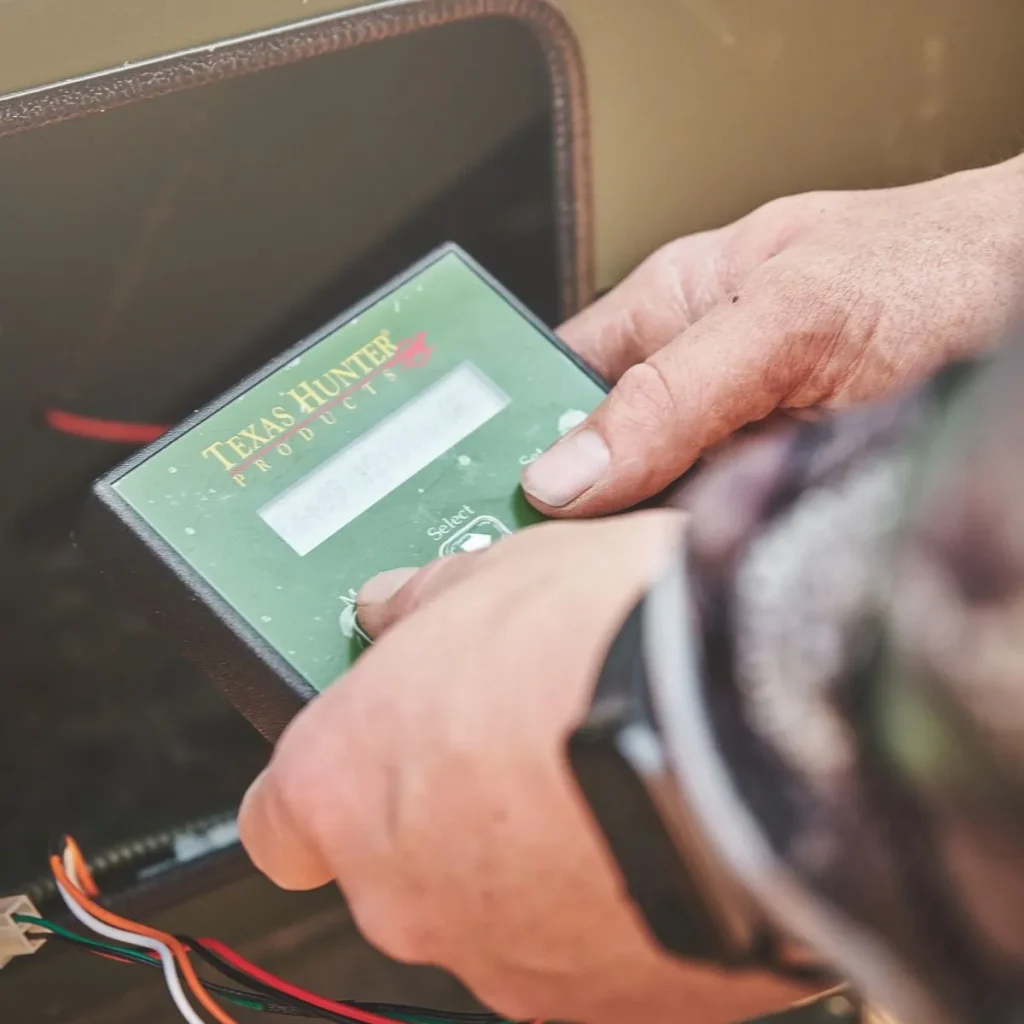
The downside to automatic feeders is that they are more mechanically complex than gravity and trough feeders, which increases cost and potential for failure. Unless properly protected from the elements, electric motors, batteries, and circuitry will quickly fail when left outside. Since feeders are often in remote locations, a burnt-out motor or shorted circuit can mean hungry deer and souring feed.
Choosing the Best Feeder for You
Mechanical failures or design failures are common with cheap feeders. As we’ve seen, they can lead to spoiled feed, wasted money, sick deer, and missed hunting opportunities. This is why, no matter which feeder design you go with, it’s important to buy quality.
Manufacturers like Texas Hunter go the extra mile to make sure that your feeders remain dependable and trouble-free for years to come. Their gravity and automatic feeders are carefully designed with quality materials, and feature rugged latches and quality seals to keep feed safe and dry. You’ll pay more upfront but the investment pays off in the long run by reducing wasted feed and avoiding the headache of constant repairs. Whether you’re a wildlife manager looking to improve herd health or a hunter wanting to increase your chances during the season, choosing a high-quality feeder is crucial.
Another factor to consider when selecting a feeder is the specific needs of your property and wildlife. For instance, if your primary goal is to boost nutrition year-round, a gravity feeder might be the best option due to its free-choice feeding style. On the other hand, if you want to control feeding times and reduce waste, an automatic feeder would be a better fit.
It’s also worth considering the type of game you’re targeting. If you’re in an area with high raccoon or bear populations, a spin-cast feeder with a secure, lockable hopper might be essential to prevent non-target animals from consuming your feed. Additionally, think about the environmental conditions of your location. In particularly wet or humid climates, the ability of a feeder to keep feed dry becomes even more critical to prevent spoilage and the growth of harmful molds.
Summary
In conclusion, there isn’t a one-size-fits-all solution when it comes to deer feeders. Each type has its own advantages and disadvantages depending on your specific needs and the conditions of your hunting area. Gravity feeders are great for those who want to provide constant nutrition, while automatic feeders offer more control over feeding times and reduce waste. Trough feeders provide simplicity and accessibility but may fall short in protecting feed from non-target animals and the elements. Ultimately, choosing the right feeder involves balancing cost, maintenance, and the specific needs of your wildlife and environment.
Investing in a high-quality feeder, like those from reputable manufacturers such as Texas Hunter, ensures that you’ll have a dependable, long-lasting tool that not only attracts deer but also contributes to the overall health of your local deer population. With the right feeder in place, you’ll be better positioned to enjoy successful hunts and support sustainable wildlife management on your property.