
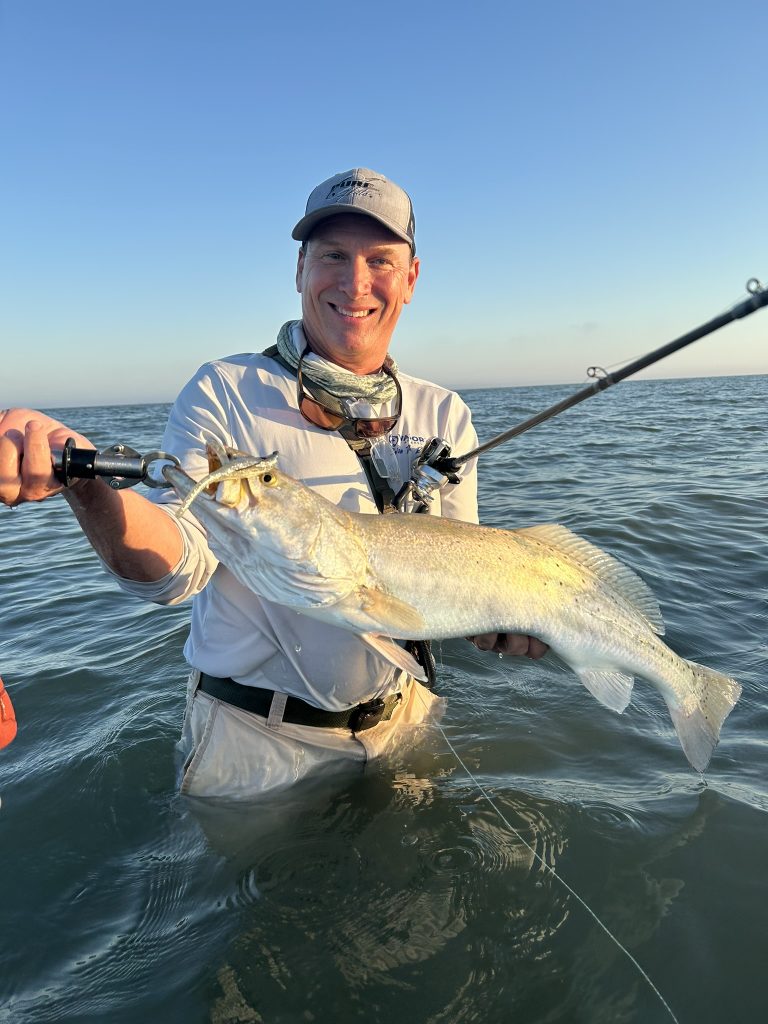
Speckled trout, found along the southern shores of the U.S. from Virginia through Florida to the Gulf of Mexico, is one of the most popular inshore game fish for anglers and seafood lovers alike. Known for their aggressive nature, these beautiful, spotted fish are widely sought after. However, despite their abundance, speckled trout can be challenging to catch, especially the larger ones. A vast array of lures have been crafted to attract them, and anglers often invest in a variety to find the perfect lure for trophy trout. Let’s dive into the best speckled trout lures, as recommended by some expert anglers who have successfully caught large specks in different regions. We spoke to seasoned trout anglers across the country about their preferred lures and techniques for attracting these fish.
The Anglers and the Lures They Use
Charlie Church – Chesapeake Bay
Charlie Church, a renowned angler in the Chesapeake Bay, shares his experience with lure selection. “The primary forage for big trout here includes mullet, menhaden, shrimp, and bay anchovy,” he says. “The Slick Lure is a great year-round choice because it mimics mullet well.”
Church favors topwater lures like Spooks and Skitterwalks, twitch baits like Mirrolures and Paul Browns, and plastics for a versatile approach. He notes that seasonal changes in water temperature affect trout behavior, requiring adjustments in presentation. “In winter, the cold water means slowing down the presentation or choosing lures with a slow fall, like a weightless Slick,” he advises.
When it comes to color, Church prefers purple, darker shades for tannic water, and translucent hues in clear water. His approach to lure action is equally flexible: “A double twitch-pause pattern works well on lures that fall slowly. I keep classic lures in my arsenal but enjoy trying new ones.” His preferred choice? “The classic weedless Slick. Trout hammer it.”
Capt. Josh Sutton – Pamlico Sound
Capt. Josh Sutton, who guides anglers in the Pamlico Sound area, puts his clients on some big speckled trout. He has gathered a great deal of experiences chasing specks with lures, and he offers us some good advice when it comes to selecting the best lure choices for specks. When asked about his favorite lure choices Sutton tells us, “If you know me at all you know my go to for a big old slimy trout is a topwater plug. I’m not too brand specific, I let the fish tell me which one to throw. But when the topwater action dies and the bait moves down in the column, jerk baits twitch baits and finesse soft plastics are my go to presentations.” Capt. Josh recommends soft plastics with a finesse presentation that mimics a dying baitfish. “ Most of my baits are 4 to 6 inches long and are usually trying to resemble a menhaden. With the right presentation, it’s irresistible to big fish,” Sutton says. According to Sutton, staying attuned to water temperature, bait migrations, and environmental factors is essential. His color choices depend on water clarity: “In dark brackish water, I use hot pink, chartreuse, and purple, while in clear water, I stick with natural shades like white.” Sutton’s method involves letting the lure sink for a few seconds, then twitching it to imitate wounded prey. “The lure size depends on the baitfish in the area,” he adds.
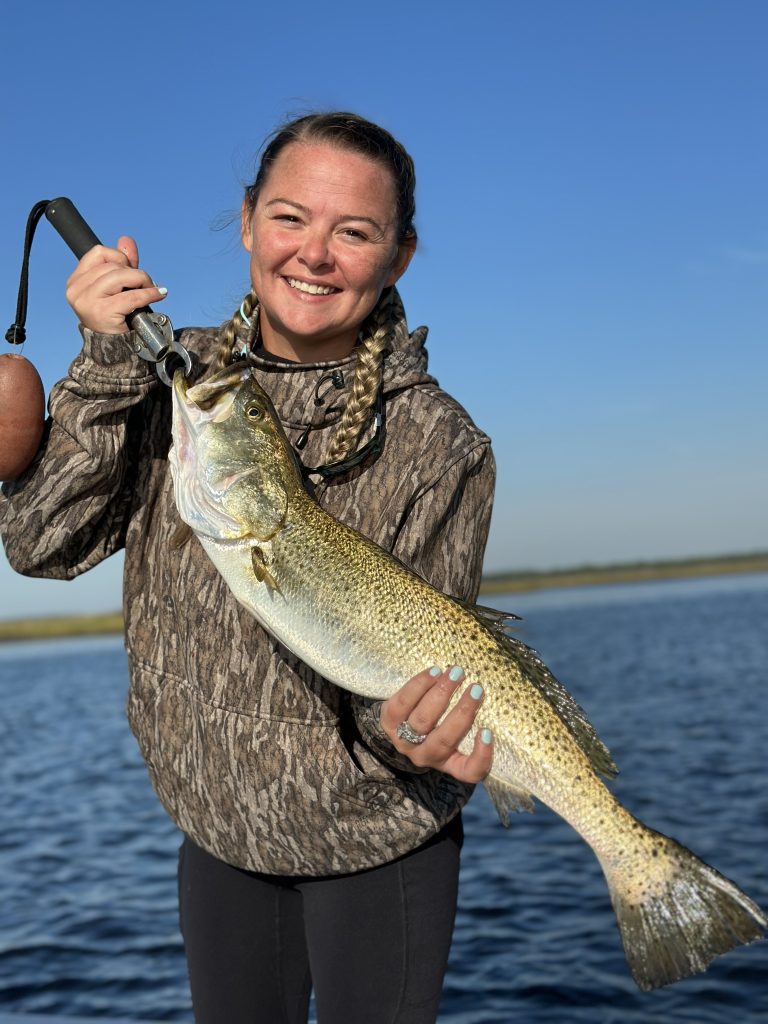
Capt. Asa Martin – Florida Panhandle
Capt. Asa Martin, based in Florida’s Panhandle, finds great success using topwater baits in early fall. “The MirrOlure Duke Dog is a favorite on days when floating grass isn’t a problem,” he says. Martin also recommends using a popping cork paired with a soft plastic, such as a Slick Jr., to navigate through floating grass. “This setup offers a natural vertical presentation with minimal interference.”
In winter, Martin targets trout feeding on mud minnows, mullet, and shrimp. “Trout in the 15-19” range are often in large, competitive schools, meaning they’ll bite almost anything,” he explains. Martin advises anglers to carry suspending hard baits and paddle tails for varied action, which can be adapted for weedless or bottom-fishing presentations depending on conditions.
As spring arrives, trout become more aggressive feeders, and Martin highlights the importance of using topwater or search baits to find the fish. “If you’re getting short strikes on topwater, switching to a subsurface bait with a walk-the-dog motion can make all the difference,” he adds.
Capt. Patric Garmeson – Mobile Bay
In the Mobile Bay area, Capt. Patric Garmeson targets trout feeding on pogies, shrimp, croakers, mullet, and other baitfish. “When larger pogies, mullet, and croakers are a main food source, look for lures that have a larger body and displace more water,” he advises. Garmeson also emphasizes matching lure size and pattern to the current forage and adjusting based on seasonal shifts.
“Shrimp pattern lures are obvious choices when shrimp are the primary food source, while small straight-tail lures are versatile for mimicking baitfish,” Garmeson notes. When the trout are targeting larger prey, he prefers bulkier options. “Colors like chartreuse, white, green, pink, and purple work well, with shapes ranging from slender for shrimp imitations to bolder for larger baitfish.”
Among newer innovations, Garmeson highlights the versatility of soft plastics like the Slick Jr., which can be rigged in various ways to suit different environments. He explains, “This lure proves effective regardless of the prey trout are feeding on at the time.”
Andrew Moreno – Corpus Christi, Texas
In Corpus Christi, Texas, where large speckled trout are common, expert angler Andrew Moreno finds success with weedless soft plastics for navigating grassy waters. “I throw Slick Lures on a weedless hook because this setup handles floating grass well and offers a sporadic action,” Moreno explains.
During winter, Moreno targets big trout in grassy potholes with larger lures for long casts. “For sight fishing, I prefer smaller lures to avoid spooking fish,” he says. Moreno has seen the range of available colors expand over the years and prefers natural tones like Croaker and Silver Dollar.
In Conclusion
From these expert insights, it’s clear that catching big speckled trout requires a variety of lures suited to different seasonal and environmental conditions. While soft plastics like Slick Lures and other versatile options play a significant role, anglers must also adapt their choices based on forage, water clarity, and fish behavior. By carrying a range of lure types, sizes, and colors, you’ll be better prepared to find and catch trophy speckled trout wherever you fish.