Building a dock is one of the best ways to enhance a waterfront property. Whether it’s a simple platform for fishing and family gatherings or a fully equipped boathouse with boat lifts, a well-constructed dock adds both functionality and value. However, ensuring that a dock can withstand daily use, harsh weather, and damage from marine organisms requires careful planning, high-quality materials, and expert guidance.
One such expert is Ryan Vess, a seasoned dock builder and partner at Art Marine LLC in Panama City, Florida. With years of experience in marine construction, Ryan understands the complexities of building durable, visually appealing docks that stand the test of time. His company, Art Marine, specializes in top-quality marine construction, including docks, seawalls, and boat lifts, ensuring every project meets the highest standards. Known for his commitment to excellence and customer satisfaction, Ryan is a trusted authority in the field.
Choosing the Right Location for Your Dock
The location of your dock significantly influences its design, durability, and longevity. For instance, a small canoe dock on a quiet freshwater pond will not require the same materials or structural reinforcement as a dock in a coastal bay exposed to saltwater, waves, and wood-destroying organisms. Similarly, docks on rivers with strong currents or areas with large tidal fluctuations must be designed to endure changing water levels and forces.

Underestimating the environmental demands of your location can lead to premature dock failure. In areas prone to hurricanes or high winds, a dock may fail within a year if it isn’t adequately reinforced. Conversely, overbuilding a dock in a calm, protected area can lead to unnecessary costs. Matching the dock’s design to its specific location is essential to achieving both longevity and cost-effectiveness.
Selecting the Best Materials
Choosing the right materials is crucial to building a dock that will last. While pressure-treated pine pilings have been the traditional choice, modern materials offer improved durability and environmental benefits. Composite pilings, such as Shoreline Plastics’ EcoPile, are impervious to marine borers and rot. Unlike pressure-treated wood, EcoPile contains no leaching preservatives and is designed as an environmentally friendly alternative for marine construction.
EcoPile pilings are reinforced with a fiberglass matrix, making them more durable than solid fiberglass pilings. They flex under stress rather than breaking, making them ideal for locations with heavy wave action or high winds. Available in various diameters and lengths, EcoPile pilings can be thru-bolted and filled with concrete for added strength in demanding applications.
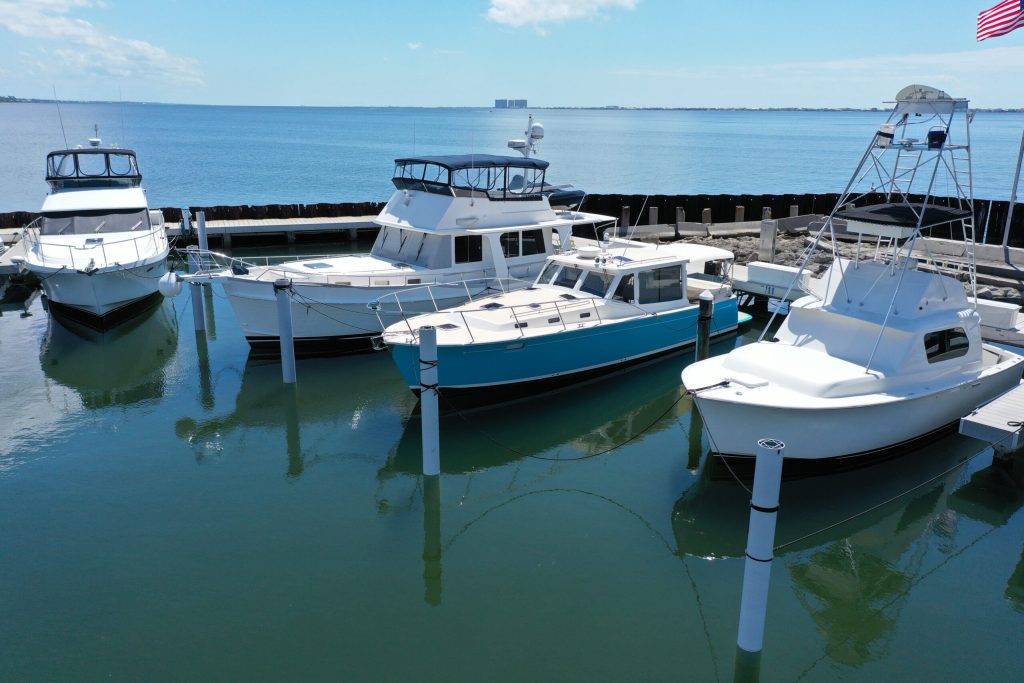
If your dock design includes a roof or boathouse, high-quality roofing materials are essential to protect the structure from environmental damage. Dixie Supply and Baker Metal Works offer marine-grade metal roofing designed to withstand coastal conditions. Their roofing materials are available in a wide selection of colors and finishes, with warranties ranging up to 40 years depending on the material selected.
Designing for Strength and Stability
A solid piling system forms the foundation of a durable dock. Pilings are typically sunk using a hydraulic vibratory hammer or water jet to ensure they are deeply embedded and stable. In areas with rocky or hard-bottomed conditions, additional drilling may be necessary.
For docks subject to heavy winds or waves, reinforcing measures such as cross-bracing and double-bolted joints help prevent structural damage. These features keep the dock’s components securely anchored, minimizing the risk of movement or collapse. Ryan Vess of Art Marine emphasizes that docks in high-impact areas require these reinforcements to ensure long-term stability and reduce the need for costly repairs.
EcoPile pilings, with their fiberglass-reinforced matrix inside the PVC exterior, offer exceptional durability and resilience, flexing under stress rather than breaking. This design makes them better able to withstand strong winds and heavy wave action than even solid fiberglass pilings, which can cost two to five times as much. They are also stiffer, which helps them stay firmly set in sand, mud, or clay year after year, even in areas with significant wave action.
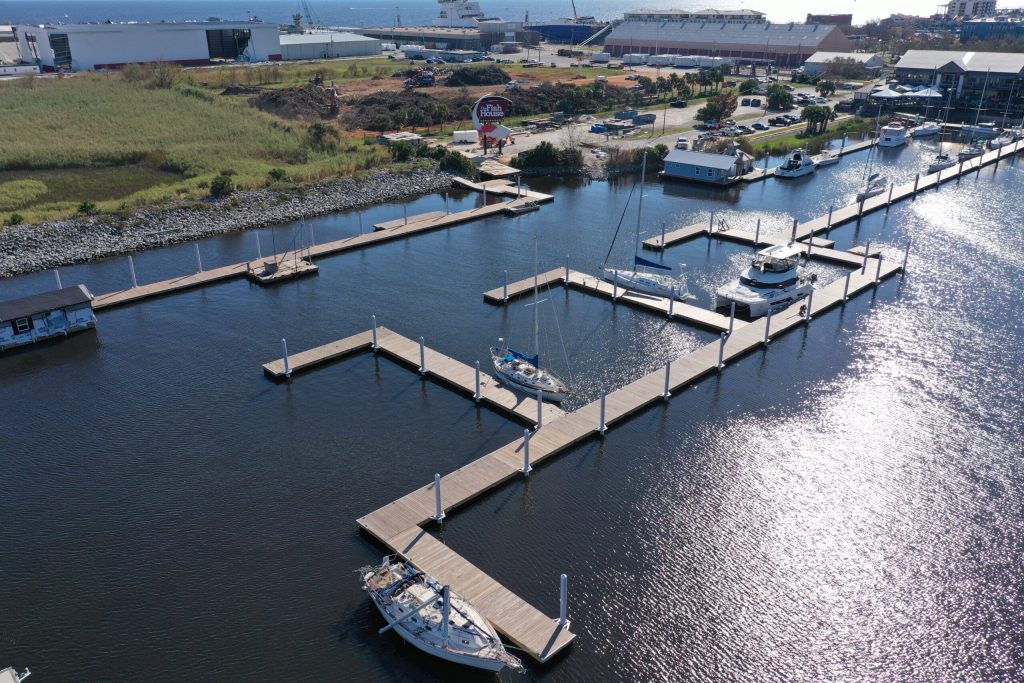
Dock designs for EcoPile are similar to those for traditional wood docks. According to Austin Porter of EcoPile, an 8” piling is suitable for walkways, while a 10” piling is recommended for end platforms in deeper water. The 12” piling is ideal for boat lifts or structures with roofs, and the 16” option is designed for commercial docks. While concrete fill is generally unnecessary for most installations, it may be beneficial for docks with added stress points, like lifts. For contractors new to EcoPile, Porter advises using one size larger than what they would typically choose in wood pilings for added strength. As of April 2026, Shoreline Plastics has also updated production of its 8- and 10-inch EcoPile sizes with deeper-cut retention grooves designed to provide additional holding surface when the piling is driven.
Decking is the Finishing Touch
Quality decking and fasteners play a crucial role in a dock’s durability. Fasteners and connectors should also be selected for compatibility with the treated lumber and marine environment, with hot-dipped galvanized or stainless steel hardware commonly used to resist corrosion. Pressure-treated wood is affordable and common, but it may require more maintenance over time. Premium wood options like redwood and cedar offer beauty and natural resistance to decay but are more expensive.
Composite decking, made from a combination of fibers and plastics, provides a durable and low-maintenance alternative with warranties ranging from 25 to 50 years. For those seeking a longer-lasting, low-maintenance solution, anodized aluminum decking is an excellent option. Companies like Dixie Supply provide corrosion-resistant materials that perform well in coastal environments. Powder-coated aluminum can also enhance the appearance and comfort of aluminum decking, reducing heat buildup in direct sunlight.
Customizing Your Dock for Current and Future Needs
Once the bones of your dock are in place, the next step is adding the elements that make it truly livable—things like furniture, shade, and fish cleaning stations. This is where durability matters just as much as design, and KillerDock has earned a reputation for offering both.
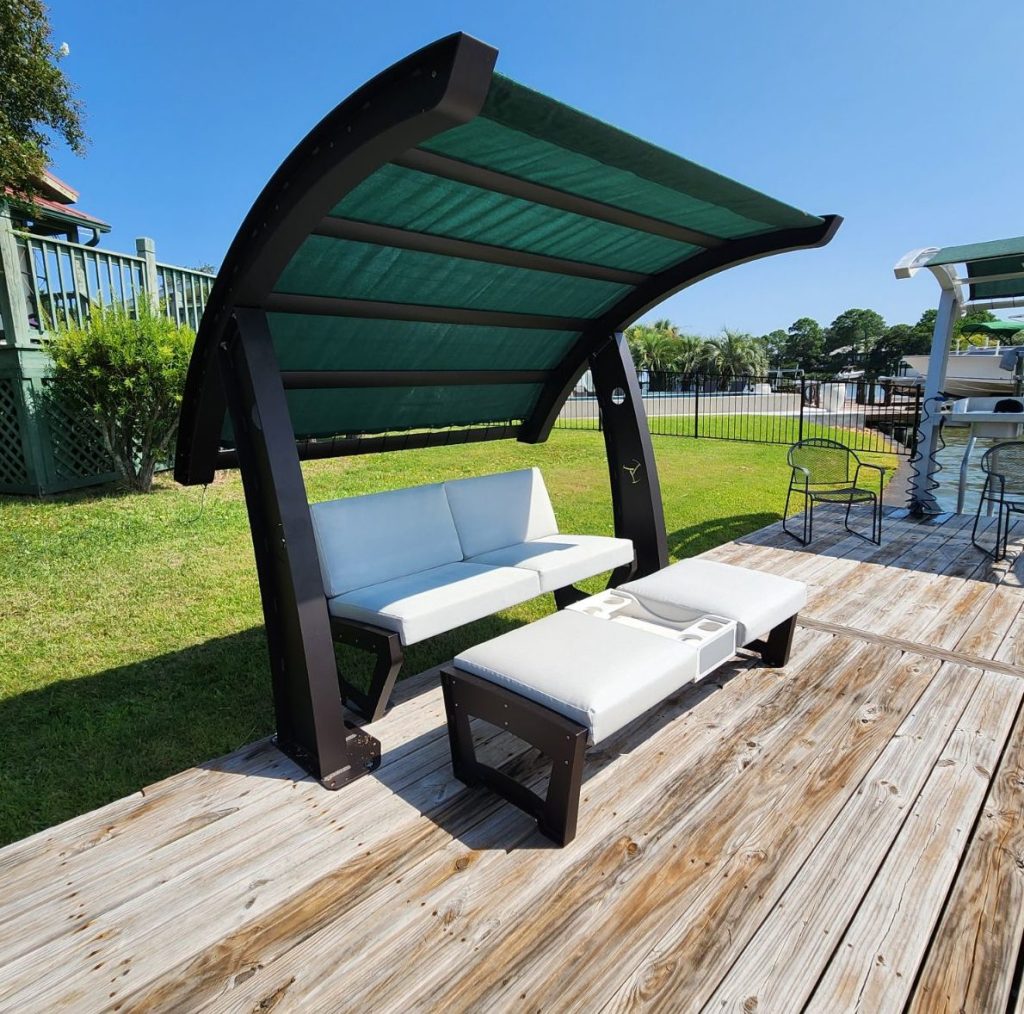
Based in Theodore, Alabama, KillerDock manufactures marine-grade aluminum dockside gear that stands up to salt, sun, and years of use. Their Upscale and Slam series fish cleaning stations are available with features like integrated hose systems, large cutting surfaces, sinks, drawers, umbrella holders, and workstation lighting. Their furniture—including cabanas and cushioned aluminum seating—is built from marine-grade aluminum and can be securely mounted to a dock, seawall, deck, or concrete surface. KillerDock’s fish cleaning stations are also engineered for winds up to 150 mph, making durability a major part of the design.
Ryan Vess advises property owners to think ahead when building docks. For example, constructing a boathouse large enough to accommodate a future boat upgrade can save significant time and money. Altering a dock later to expand a boathouse or add pilings is often far more expensive than incorporating those features from the start.
Adding Value to Your Property
A well-built dock enhances the value and appeal of your property. Real estate expert Angelo de Paola notes that docks are often deal-breakers for waterfront buyers. Buyers view docks as essential features, particularly when they provide access to watercraft storage and recreational spaces.
By investing in durable materials and designs, property owners can expect a strong return on investment. Buyers prefer properties where major expenses like dock construction have already been handled. Features like high-quality pilings, durable decking, and protective metal roofing from companies such as Baker Metal Works & Dixie Supply—and thoughtfully designed accessories from brands like KillerDock—further enhance the dock’s appeal.
The Last Dock You’ll Ever Need
A dock built with modern materials like EcoPile pilings, high-performance metal roofing, long-lasting decking, and marine-grade accessories from companies like KillerDock is designed to endure for decades. By focusing on site-specific design, durable materials, and expert construction techniques, you can build a dock that withstands salt, sun, and storm damage while enhancing your enjoyment of the waterfront.