
My first squirrel hunt took place in Illinois about six decades ago. I still have my poly-choked bolt-action .410 that brought down that multi-colored Eastern Fox squirrel. Several decades later, a solid black Southern Fox squirrel fell to my 16-gauge Ithaca pump near Vicksburg, Mississippi. Although I’ve glimpsed a few more over the years and often discussed their numbers with other hunters, they are not nearly as common as their gray cousins.
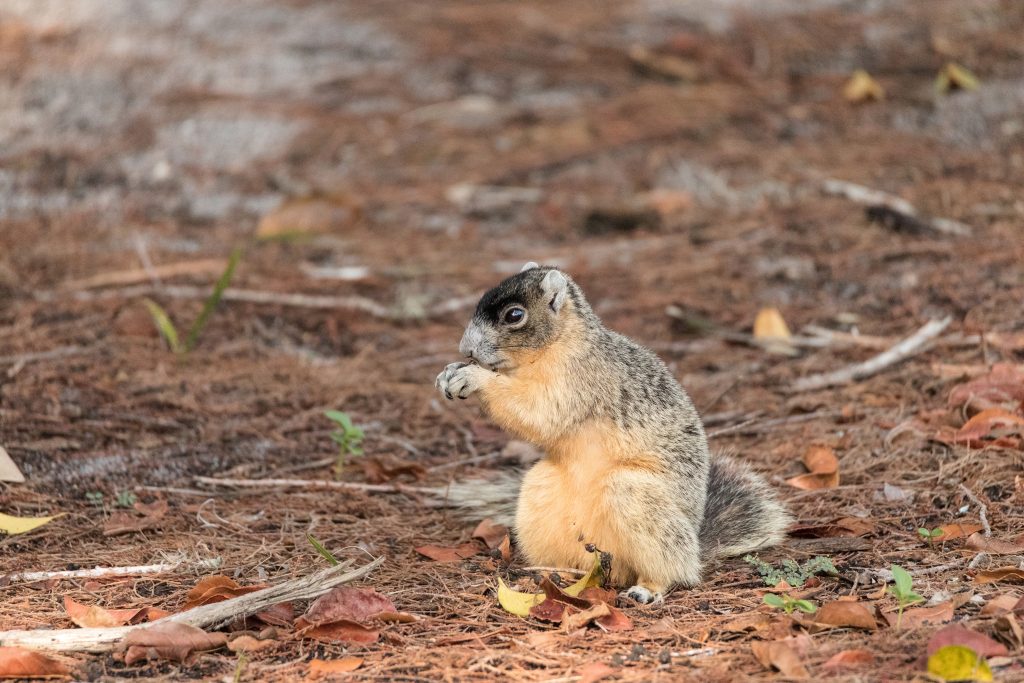
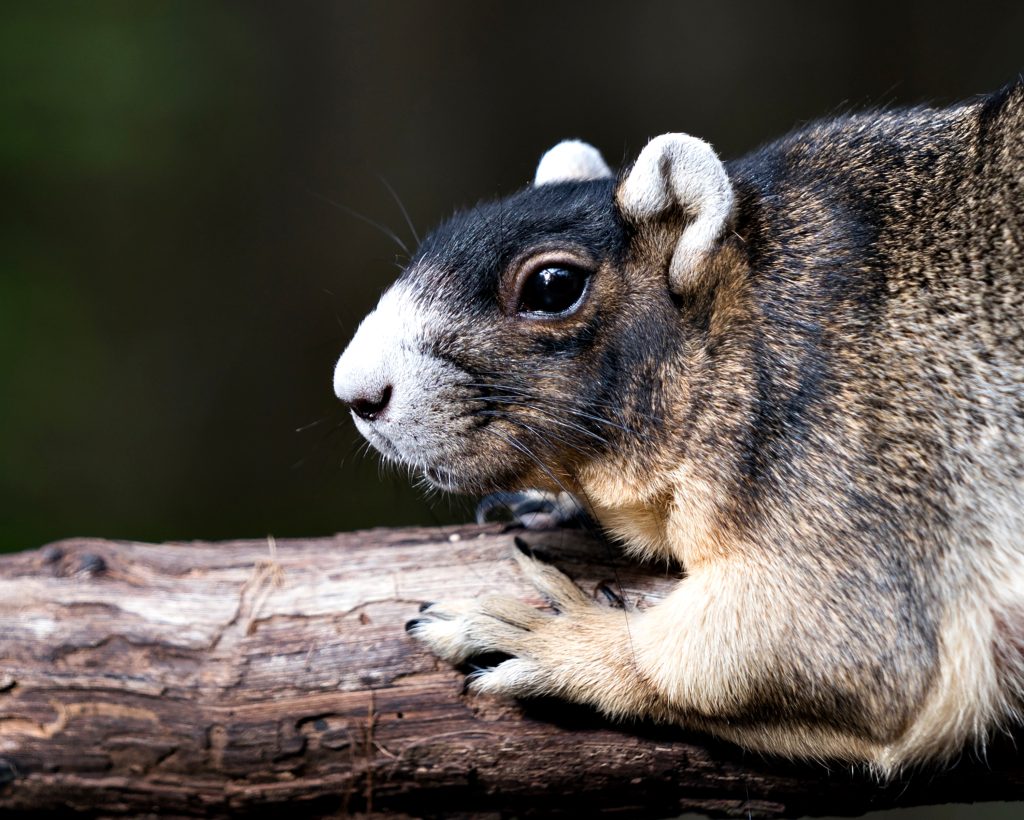
In Alabama, Fox squirrels typically have upper bodies that are gray, sometimes tinged with reddish or rusty hues. Their bellies are a reddish-orange, and their tails often carry a distinct red tint. These squirrels frequently display a black mask around their eyes and nose, with the tips of their nose and ears often appearing white.
The “Southern” part of its name distinguishes this subspecies from other Fox squirrels found in different regions. The “Fox” in its name likely derives from its size and coloration, which can resemble that of a small Red Fox. Generally larger than other squirrel species, Southern Fox squirrels have bushy tails with a mix of rusty or reddish-brown fur that is reminiscent of a Fox’s coat.
The Southern Fox squirrel once thrived in the longleaf pine forests that dominated the southeastern United States. Named for its physical characteristics and regional habitat, this species is Alabama’s largest squirrel, weighing between one and a half to three pounds. While fur coloration can vary, it is generally an orangish-yellow with gray along the back and neck. The belly is typically pale yellow to orange, with the feet and nose appearing yellowish-brown to rusty orange. However, in some parts of Alabama, the Southern Fox squirrel can also be black or silver.
Compared to Gray squirrels, Fox squirrels are less agile and spend more time foraging on the ground. They are not early risers, often waiting until mid-morning to become active, and they tend to be more energetic around midday and late afternoon.
Breeding season for these squirrels begins in February and occurs again in July or August. The female constructs a den nest in hollow trees or builds a leaf-and-stick nest in the branches of mature trees, where up to four kits are born.
Natural History and Historical Overview
In 1758, Carl Linnaeus, a Swedish botanist and zoologist, first named and classified the Fox squirrel species. As scientists studied these squirrels more closely, they recognized differences between the Fox squirrels in the southern U.S. and those in the central and eastern regions. These differences eventually led to the reclassification of the Southern Fox squirrel as a distinct subspecies based on geographic ranges, color variations, and genetic distinctions.
The Eastern Fox squirrel typically has a reddish-brown or rusty coloration with a more consistent color pattern than the Southern Fox squirrel. It is widely distributed across the eastern and central United States.
The Southern Fox squirrel, primarily found in the southeastern United States, began experiencing a population decline by the late 19th and early 20th centuries, primarily due to habitat loss, forest fragmentation, and overhunting.
This subspecies favors mature, open pine and oak forests with scattered undergrowth, especially in longleaf pine ecosystems. Males require larger territories of 25 to 100 acres. Despite their slow decline into the 21st century, conservation efforts have been implemented in some areas to protect and restore their habitat.
With long, bushy tails aiding in balance and heat regulation, Southern Fox squirrels typically measure from 18 to 28 inches, including their tails, and can weigh up to three pounds. They have 22 teeth compared to the 24 in Gray squirrels. Spending much of their time foraging on the ground, they are solitary except during mating season. Their diet, similar to that of other squirrels, consists mainly of nuts, seeds, fruits, and fungi. However, Southern Fox squirrels also consume insects and occasionally bird eggs. Breeding occurs twice a year, typically in winter and summer, with a gestation period of about 44 days. Litter size varies from one to four kits, with two being the average. Young squirrels become independent after about three months.
Native to southeastern forests for thousands of years, Fox squirrels played a role in Native American diets and folklore. From the Colonial period to the early 20th century, European settlers hunted them for food and fur.
Early settlers observed Native Americans periodically burning weeds and underbrush in the forest, a practice many adopted. However, as fear of uncontrolled forest fires grew, these burns were suppressed, leading to landscape changes that proved unfavorable to the local Fox squirrel population.
Since the 1970s, increased awareness of the species’ decline has led to the implementation of forest management practices that favor the squirrel’s habitat. Reintroduction programs in some areas of its former range, along with legal protections in several states like Florida, which include hunting restrictions, offer hope for the species’ future.
Factors Leading to Decline
The population decline of the Southern Fox squirrel is closely linked to the clearing of old-growth longleaf pine forests and the conversion of these areas into agricultural land and pasture.
Several additional factors have contributed to the decline of the Southern Fox squirrel. Besides habitat loss and fragmentation, changes in forest management practices that prioritize harvesting immature timber, a reduction in prescribed burning, and competition with the highly adaptable Gray squirrel have all negatively impacted their population.

Gray squirrels typically produce two to eight offspring twice a year, compared to one to four offspring biannually for Fox squirrels. The Southern Fox squirrel also requires larger tracts of forest, ranging from 25 to over 100 acres, whereas Gray squirrels typically have a home range of one to six acres. Fox squirrels also spend more time foraging on the ground, making them more vulnerable to predators.
These factors have collectively led to population declines and reduced distribution of the Southern Fox squirrel across its historic range in the southeastern United States. Combined with its specific habitat requirements and relatively low reproductive rate compared to other squirrel species, the Southern Fox squirrel population faces numerous challenges.
Conservation Efforts
Although the Southern Fox squirrel is not federally listed as endangered or threatened, some states, such as Florida, have implemented hunting restrictions that limit squirrel hunting to Gray squirrels.
Since the 1970s, increased awareness of the Southern Fox squirrel’s decline has prompted the implementation of forest management practices that favor its habitat. Reintroduction programs in some areas of its former range, increased use of controlled burning, legal protections, and the preservation and planting of longleaf pines offer hope for a population resurgence.
Where to Find Huntable Populations
In Alabama, Fox squirrels are more common in the southern and central parts of the state. They thrive in open pine forests or mixed pine-hardwood areas with an open understory. Conecuh National Forest, located in southern Alabama, provides an ideal habitat with its longleaf pine ecosystems. In the Talladega National Forest, particularly in the Oakmulgee District, a suitable mix of pine and hardwood forests supports Fox squirrel populations. Tuskegee National Forest in the eastern part of the state also offers favorable habitats. Additionally, the Eufaula National Wildlife Refuge along the Alabama-Georgia border provides a diverse mix of forested environments where Fox squirrels are found.

In Mississippi, Fox squirrels are present in various locations across the state. Some of the best places to hunt them include public lands managed by the Mississippi Department of Wildlife, Fisheries, and Parks (MDWFP) and national forests. The Bienville National Forest in central Mississippi offers a mix of hardwoods and pine forests, providing a suitable environment for Fox squirrels. The Delta National Forest, located in the Mississippi Delta, has abundant bottomland hardwoods and offers ample hunting opportunities. The DeSoto National Forest in southern Mississippi, one of the largest in the state, provides a mix of longleaf pine and hardwood forests that Fox squirrels prefer.
In Georgia, finding the best spots for Fox squirrel hunting involves a combination of habitat and access. Many Wildlife Management Areas (WMAs) in Georgia offer suitable environments for Fox squirrels. The Piedmont Refuge is frequently mentioned as a good destination for Fox squirrels, while the Clarks Hill WMA is known for its mature pine stands that provide an ideal habitat for this species.
Conclusion
Squirrel hunting takes on a new dimension when you target these larger cousins of the prolific Gray squirrel. It may require a little extra travel and scouting, but the reward of seeing a youngster’s face light up when they behold this colorful species up close is worth the effort. The memory of that moment, often accompanied by a good story, will last a lifetime.