

This week on the Alabama Saltwater Fishing Report, host Butch Thierry is joined by co-host Angelo DePaola (The Coastal Connection). Reports include fly fishing and inshore updates with Sam Sumlin (Community Fly Shop) in Gulf Shores, plus a detailed Mobile Bay and delta trout breakdown with Capt. Patric Garmeson (Ugly Fishing). Offshore chatter continues to point to true winter opportunities when a weather window opens, including tuna and wahoo out west.
Conditions Recap
January is delivering classic Gulf Coast whiplash: cold fronts and wind limiting consistent offshore “go” days, with brief weather windows mixed in. Inshore, water quality and salinity have been changing fast, especially after a heavy rain event up-state dumped significant freshwater into the river system and flushed much of the delta from clean, salty green water to muddy brown conditions. Expect a reset period as rivers crest and begin falling, with fish repositioning into cleaner water on the edges of the system and in nearby tidal rivers.
Key theme this week: stay flexible. When water is dirty and cold, fish tighter to the bottom and demand slower presentations. When you find clean water and bait, the bite can turn on quickly.
Inshore Report
Gulf Shores dock lights and winter reds with Sam Sumlin (Community Fly Shop)
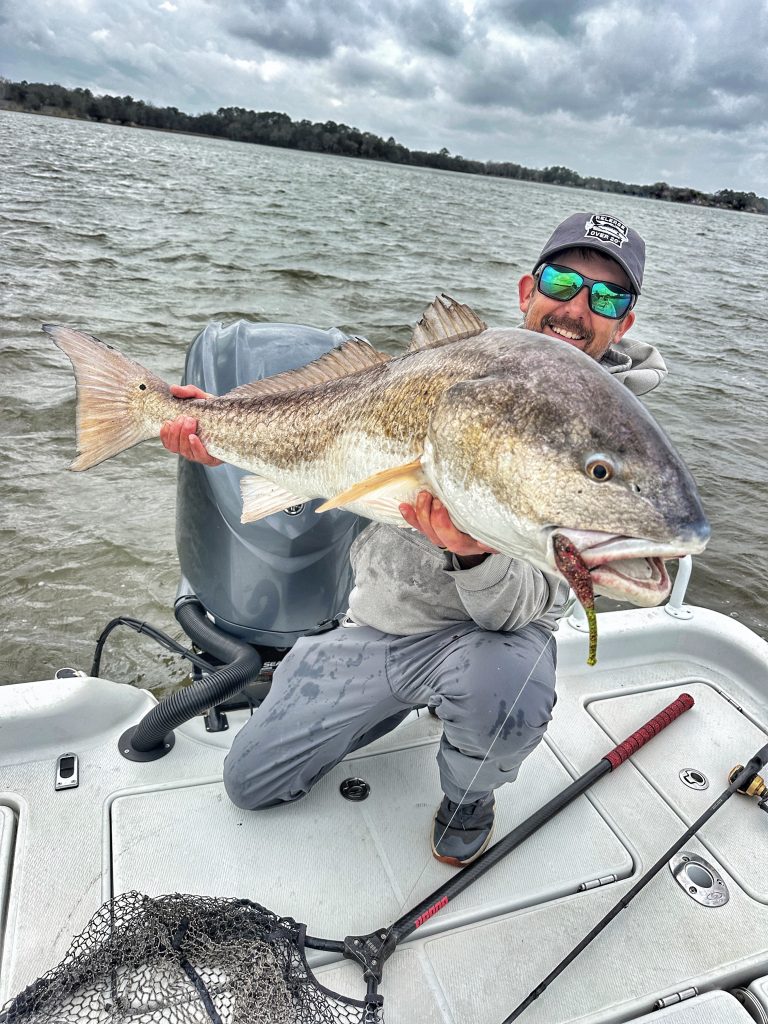
Sam has been mixing it up between productive dock-light trips and clear-water flats scouting. On the dock lights, winter redfish are pushing into rivers and creeks, and the lights can turn into a visual, close-quarters fight. Sam noted that both underwater green lights and traditional overhead lights can hold fish, even when you are not seeing obvious surface activity.
A big takeaway: do not leave a light too quickly. Some fish are holding deeper, and letting your offering sink (literally counting it down) can reveal bites that are not showing on the surface. Sam’s go-to pattern has been a weighted mullet-style fly, especially a “Gravity Minnow” profile that imitates finger mullet and gets down in the water column.
He also mentioned stripers showing up around the lights this time of year, though reds can out-compete them when both species are together. When stripers and reds share a light, that competition can make the bite more aggressive, but it can be hard to get the fly past redfish that want to eat first.

Wind is always a factor on a fly rod, but Sam’s advice was practical: use structure and protected water to your advantage and learn to handle wind instead of reaching for a spinning rod every time. The skill that changes everything is learning to double haul to increase line speed and punch casts through the breeze.
On the clear-water flats, Sam found a mix of redfish and black drum. Many fish were spooky and required longer leads and softer presentations. Bombing a cast right on top of fish was not producing. The best approach was leading fish by a good margin, letting the fly settle, and using subtle one-inch strips rather than aggressive movement.
Practice tip for anglers wanting to get into fly fishing: aim for consistent accuracy at moderate range. Sam recommends being able to reliably land a fly into a “hula hoop” target at roughly 40 feet, and also reducing false casts. Too many false casts and overpowering the final delivery are common mistakes that cost fish in shallow, clear water.
If you are near Gulf Shores, Sam also hosts monthly fly-tying nights at the shop and highlighted the Gulf Coast Classic fly fishing event in May at Gulf State Park.
Gear mentioned in this segment: Sam’s “all-water” beginner fly setup recommendation was a 7 or 8-weight, 9-foot fly rod with floating line, a 15 to 20-pound leader, and a small starter fly selection. For deeper work, he discussed intermediate and full-sink lines (sink-rate lines such as sink 3, sink 5, sink 7) to keep flies in the strike zone longer. For dock lights, he leaned on a weighted mullet profile like the Gravity Minnow, often in white, with darker colors as water muddies.
Mobile Bay and delta trout movement with Capt. Patric Garmeson (Ugly Fishing)
Capt. Patric described the delta bite as “really good” leading into a major rain event. Salinity had climbed into the 20s in parts of the system, water quality was exceptional, and speckled trout were spread through the lower delta. After the rain, river levels jumped rapidly upstream, and the resulting discharge pushed a strong surge of freshwater down the system. Patric’s on-the-water assessment was blunt: previously productive zones looked flushed and lifeless during the crest.
When the delta gets blown out, Patric’s approach is to expand and hunt cleaner water. That means checking the Mobile River, Dog River, and other nearby tidal systems, understanding that fish may not “show up overnight” but can trickle in as conditions stabilize. He watches gauges for the crest and the start of the fall, then begins checking earlier spots again as salinity rebounds.
In Dog River this week, surface temps were cold (upper 40s) and the bite demanded patience. Patric noted that slowing down even more than you think you should can be the difference between zero and a limit. He also described a common winter frustration: bites that start aggressive can transition into subtle bumps and short strikes, where fish come unbuttoned near the boat unless you adjust.
Another important note for the weekend: Patric expects more time fishing an incoming tide (with lows around daylight). Historically he prefers the falling tide for cooperation, so his advice was to spend time ahead of the weekend figuring out an incoming-tide plan. As always, he stressed paying attention to bait (mullet and small bait balls) and letting the presence of food narrow the search.

Gear mentioned in this segment: Patric credited the Slick Jr as a major player, rigged on a 1/4-ounce jig head—specifically mentioning the Eye Strike jig head. He also referenced a MirrOlure producing early, and discussed how a slower gear-ratio reel can “handcuff” you into the crawl-slow retrieve needed when water temps drop into the 40s.
Offshore Notes
Offshore opportunities still exist, but timing is everything. Angelo mentioned reports of boats running west and finding true “sea monster” class tuna on surface presentations during a weather window, including fish well over the 200-pound mark. The takeaway for anglers making the run is to gear up appropriately to apply heavy pressure, especially when sharks are part of the equation and fish need to be brought up efficiently.
Gear mentioned in this segment: For anglers chasing big tuna out west, the conversation leaned toward heavier setups that can apply serious heat, including larger conventional reels and beefed-up spinning gear, plus oversized topwater options like big poppers and large “spook-style” surface baits.
Helpful Reminders and Local Opportunities
Sam invited anglers to join monthly fly-tying nights at Community Fly Shop in Gulf Shores and to keep an eye on the Gulf Coast Classic fly fishing weekend at Gulf State Park in May. Patric noted March is a prime window to think about sheepshead trips, and his calendar tends to fill early for that season.
