

Baiting for deer and other wildlife is a major topic of debate. In the world of deer hunting, deer management, and broader wildlife discussions, opinions are sharply divided. Much like modern politics, about half of people support baiting while the other half oppose it. Still, the question remains: is baiting bad for wildlife?
What Is Baiting?
Baiting is the use of feed, mineral, or other food-based attractant that deer and other wildlife consume. These products are offered in a manner that tends to concentrate deer and other animals in a relatively small area.

From a hunting regulation perspective, baiting is legal in approximately half of the United States. That said, “baiting” is defined slightly differently from state to state. Furthermore, the regulations on how hunters and land managers can use bait are very different from one to the next, too.
When to Start Baiting for Deer
Start by consulting state and local regulations around baiting. Oftentimes, these influence when people can and cannot bait. That aside, from a wildlife health perspective, keep in mind each of the important factors (found below) to determine when to start baiting.
When considering hunting efforts, regulations permitting, it’s best to establish bait sites at least two to three weeks prior to hunting. Generally, the longer the better, as it gives deer more time to discover the bait station and hopefully showcase a reliable pattern.
Is There a Right Way to Bait?
When determining the “right” way to bait, it’s important to consider numerous factors. For example, think about state and local regulations, presence of disease (or lack thereof), time of year (more on that later), deer management goals, hunting efforts, and more.
Pros:
- Drawing deer in for shot opportunities.
- Improved gauging of animals to make better harvest decisions.
- Supplying supplemental feed and nutrients.
- And more.
Cons:
- Potentially spreading disease (if done the wrong way).
- Negatively impacting other wildlife (if done the wrong way).
- Increasing predator-prey encounters (leading to greater mortality).
- And more.
Weighing all relevant points, then decide the “right” way to bait while considering all pros and cons. This will help determine the best decision to bait or not. Then, if doing so, the best manner in which to accomplish it.
How Can Baiting Deer Impact Other Wildlife?
In some instances, baiting can have impacts (positive or negative) on other wildlife. Some biologists and other wildlife experts theorize that deer baiting might be contributing to wild turkey population declines. This is largely due to aflatoxin, which is a fungus that grows on corn. Oftentimes, fungus growth amplifies in late spring, summer, and early fall. It is most prevalent during warmer months, and as corn lies on the ground and gets wet or moist, this process accelerates. While aflatoxin isn’t prevalent the first few days, after corn has been on the ground awhile, levels rise sharply and quickly.
Unfortunately, wild turkeys are very susceptible to aflatoxin. It’s especially dangerous for younger poults. In short, it can lead to immune system issues, liver dysfunction, and more. Additionally, in time, other molds and toxins might prove to impact turkeys, too.

Because of the above issues, it’s best to not feed corn during warmer months. If you do, from a wild turkey perspective, it’s best to not feed it on the ground in large quantities. Instead, wait until early fall. If you choose to feed in summer (regulations permitting), consider a spin-cast feeder that deposits limited amounts of corn that deer clean up each day. Or use a free-choice gravity feeder that doesn’t apply much corn onto the ground at one time.
Bait sites can also increase predator-turkey encounters, resulting in greater predator mortality. Considering that bait sites improve hunting abilities for hunters, it can work the same way for other predators. Of course, predator encounters can increase with other wildlife species, too, including whitetails.
Additionally, nest predators, such as raccoons and opossums, congregate around feeders, too. Consequently, they encounter more nests, especially if hens are nesting closer to feeders.
Baiting for Deer Consequences
Baiting has the potential to impact deer and other wildlife for the better. It can also impact them for the worse. For whitetails, this is in large part due to the microorganisms found within the digestive system of deer. These change as the whitetails’ diet changes, and the latter shifts throughout the year.
Therefore, a sudden shift in diet can negatively impact deer. That said, this is usually only a concern in winter. At that time, deer are mostly feeding on woody browse. If located in an area that does not offer agricultural waste grain, or in areas where land managers haven’t been feeding corn, sudden availability mid-winter can cause a major disruption within the digestive system.
In worst cases, deer can starve to death because they can’t digest the corn, even with a full belly of it. This is because the microorganisms that have been breaking down high-fiber woody browse (the bulk of a deer’s wintertime diet) cannot also digest corn. It can take up to two weeks for the ruminate system to acquire and develop the microorganisms needed to digest the corn.
Suddenly introducing bait such as corn or hay to deer in winter can have other negative effects, too. In short, it concentrates and condenses deer during a time when they don’t need additional stress. Condensing deer can also damage habitat quality. Changing typical deer travel patterns and wintering areas is also a concern. Other negative outcomes exist, too.
Furthermore, it can create predator hotspots, and make it easier for predators to bring deer down. Of course, it can increase risks of disease transmission as well. Chronic wasting disease (CWD) is especially more likely to spread.
Bait Deer the Right Way
Those who plan to feed deer should do so in a proper manner. Those who feed deer should never start doing so suddenly in winter. Instead, gradually begin feeding in fall and carry that effort through winter months until spring green-up (as permitted by agency regulations). Don’t suddenly introduce or remove feed, as both moves can harm deer.
Next, consider feeding deer in a manner that doesn’t condense many deer in one location. Offer multiple feed sites in wintering areas, rather than a single spot.
Furthermore, consider broadcasting feed over a larger area instead of dumping in one location. This spreads deer out and makes feed consumption less likely to spread disease.
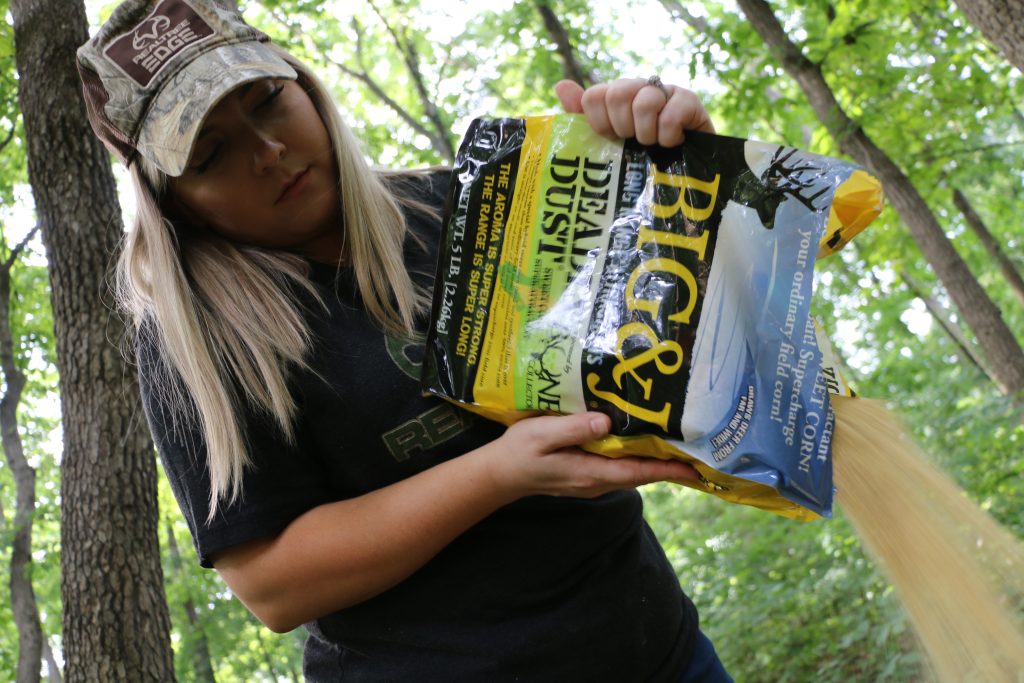
If you haven’t already been feeding deer corn (or other items they can’t readily get in their environment), and winter hits, consider providing a food source they’ve already been consuming. For example, deer eat woody browse (i.e.: tree buds). To provide better access to these, consider hinge-cutting a few trees. Of course, only do so if you own the property or manage it with permission. According to Kip Adams with the National Deer Association, red maple, yellow birch, and others that don’t produce mast, and have high tree bud counts, are great options for this.
Additionally, consider feeding deer well away from roads to decrease risk of car collisions.
Regardless of whether you bait for wildlife or not, keep the resource in mind. If it’s a situation that feels as if it might do more harm than good, don’t bait. If the net positives seem to outweigh the negatives, and it’s legal where you hunt, go for it.