

The modern crossbow market can feel like walking through an outdoor superstore with a credit card and no compass—overwhelming. Every model boasts impressive numbers, flashy tech, and new buzzwords. But when your goal is simple—putting meat in the freezer—some of those features matter a whole lot less than manufacturers would have you believe. This article cuts through the noise and highlights what actually makes the best crossbow for deer hunting effective in real-world scenarios.
Speed and Kinetic Energy: Do You Really Need 500 FPS?
There’s a growing obsession with feet per second (FPS), with some manufacturers now pushing crossbows that shoot upwards of 500 FPS. But is all that speed necessary to take down a whitetail?
In short: no. Speed helps, but it’s not everything.
Yes, a faster arrow means a flatter trajectory and less time for the animal to move before impact. It also gives you a bit more forgiveness when misjudging range. But most modern crossbows are already fast enough. Many deliver far more speed and energy than compound bows—and people have been ethically harvesting deer with traditional bows at under 200 FPS for decades.

The key metric tied to lethality isn’t speed alone—it’s kinetic energy (KE), which determines how effectively an arrow penetrates. Even slower crossbows, in the 300 FPS range, generate enough KE to drive expandable broadheads cleanly through a whitetail. A good example of this balanced approach is the Barnett Hyper Raptor T-REX, one of the best crossbows for deer hunting, which delivers plenty of speed and energy for ethical hunting without chasing headline-grabbing FPS numbers.
So why the push for 500 FPS? Marketing. At those speeds, crossbows become louder and more prone to spooking deer at the shot—especially because sound travels faster than the bolt. The real-world effective range for a hunting crossbow remains relatively short, regardless of the FPS rating.
In over 100 deer and countless wild hog harvests, our expert hasn’t encountered a single scenario where a faster bow would’ve turned a bad shot into a good one. Shot placement, range, and understanding the animal’s behavior are what count.
Size and Weight: Maneuverability in the Field
Crossbows are notoriously awkward to carry. Unlike rifles, which run lengthwise, crossbows span both vertically and horizontally, making them a chore to haul through brush or up into a stand. If you’re searching for the best crossbow for deer hunting, keep portability high on your list of priorities.
Compact designs are a game-changer. Narrow axle-to-axle widths and shorter overall lengths make navigating thick cover easier and help avoid the dreaded “limb bump” against tree trunks, branches, or blind windows. This becomes even more critical with the rise of tree saddles, where movement space is tight and limb clearance is limited.
As one experienced hunter put it: given the choice between a slower, compact bow and a faster, bulky one—he’ll take compact every time.
Trigger and Safety Systems: Precision Under Pressure
Trigger feel can make or break your accuracy. Unlike rifles, which release a light firing pin, crossbow triggers must hold back substantial draw weight. A mushy or inconsistent trigger can lead to flinching, torque, or poor shot execution—especially because bolts stay on the string much longer than bullets stay in a barrel.
Modern crossbows have made huge strides here. A crisp, predictable trigger is now more common—and crucial for consistent accuracy. The Barnett Raptor T-REX is one example, offering an upgraded trigger system with anti-dry fire technology and a smooth, consistent break designed specifically for hunting scenarios.
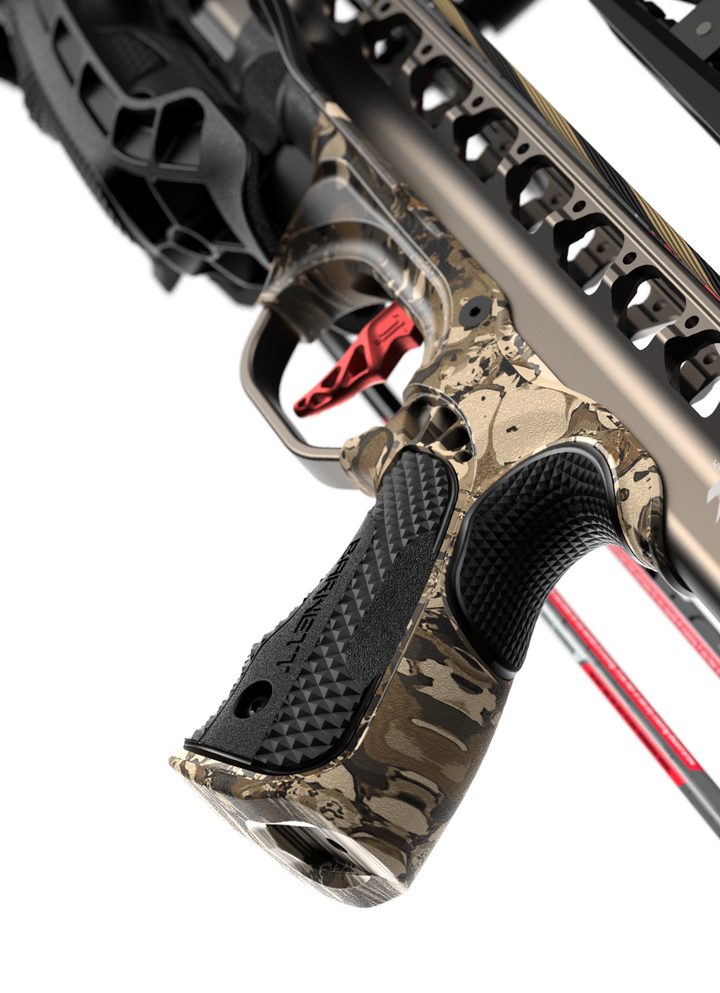
Safety features matter too. Anti-dry fire systems, auto-engaging safeties, and well-designed triggers protect both you and your gear. While safety ultimately falls on the hunter, having reliable built-in safeguards is non-negotiable, especially when navigating in the dark or cocking a bow in awkward positions. Just be aware that cheap or poorly maintained safety mechanisms can fail—keep them clean and inspect them often.
Noise and Vibration: Staying Stealthy
Nearly every deer shot with a crossbow reacts to the sound. That’s the reality. Even well-placed, lethal shots often come with a flinch or jump because crossbows are loud—louder than traditional or compound bows by far.
While string dampeners and limb silencers may make a crossbow quieter to shoot, they often don’t make enough difference in the field to affect whether a deer reacts. They improve the user experience more than they increase effectiveness. In fact, many manufacturers are moving away from these features altogether.
So while a quieter crossbow is nicer for your ears, don’t expect it to make you invisible to the animal.
Cocking Mechanism: Ease of Use in the Woods
Cocking systems have come a long way. Rope cockers were once the go-to, but newer integrated crank systems have taken over—and for good reason.
Rope cockers require physical strength, balance, and room to work—all hard to come by in a treestand or ground blind, especially in freezing weather or muddy boots. Crank systems are easier, safer, and now much more reliable than they used to be. If you’re looking for the best crossbow for deer hunting, pay attention to models like the Barnett Hyper Raptor T-REX, which come ready for modern crank cocking to make drawing and decocking simple even in tight or awkward hunting positions.
Bonus: some crank cockers allow you to safely decock the bow, which can be a game-saver after a long, fruitless sit.
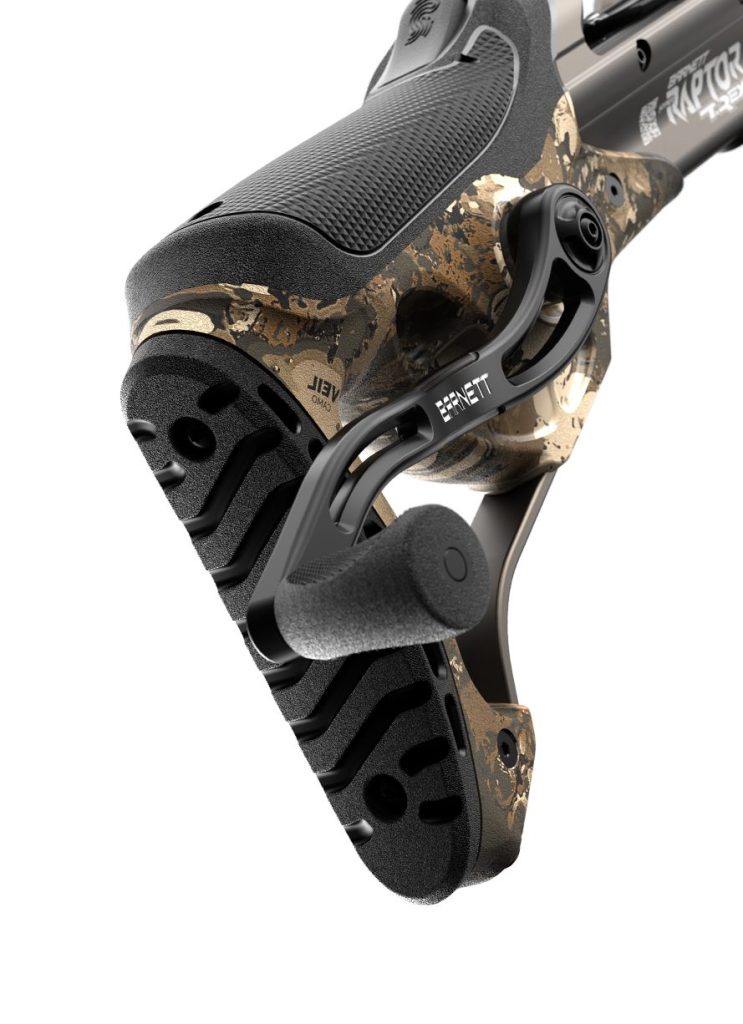
One cautionary tale involved a hunter derailing his crossbow cams while decocking with a rope cocker. It nearly ended a once-in-a-lifetime hunt. The fix required specific knowledge, tools, and a trip to the hardware store—highlighting how a poor cocking system can ruin a hunt if you’re not prepared.
Optics and Accuracy: See It, Hit It, Recover It
Crossbow optics have improved drastically. While many included scopes are still basic, some manufacturers now offer surprisingly capable packages. What really matters?
- Light gathering: Critical for dawn and dusk.
- Field of view: Wide views help in dense woods and close-range scenarios.
- Durability: Crossbows produce unique recoil; cheap scopes often fail to hold zero.
For tight woods hunting, a reflex or red dot sight can be a solid option. They’re lightweight, fast to acquire, and surprisingly accurate out to 40 yards—especially when zeroed at 30 yards. Simplicity often wins in the field.
Durability and Weatherproofing: Built for the Hunt
Modern crossbows are impressively weather-resistant. Synthetic strings repel water, and most scopes are sealed and fog-proof. Still, there are vulnerable points—particularly around the trigger group and scope mounting hardware.
- Keep your trigger clean—use compressed air and avoid mud buildup.
- Wax your strings regularly to prevent moisture intrusion.
- Check your bolts—cheap plastic arrow retainers can fail in the field.
- Tighten your optics—scope screws can loosen over time, especially without thread-locking compound.
Durability often comes down to user maintenance. Take care of your gear, and it’ll take care of your hunt.
Value vs. Gimmicks: Where to Spend and Where to Skip
Not all upgrades are worth the price tag. Rangefinding scopes, multi-reticle setups, and ultra-high-speed limbs may look impressive, but they rarely translate into more deer on the ground—especially in wooded environments.
Instead, prioritize:
- Trusted brands with solid customer service
- Compact, reliable designs over speed-demons
- Proven cocking systems (crank > rope)
- Durability over flash
Gimmicks often shine on the range but stumble in the field. When deer can appear from any angle and only pause for seconds, fast and intuitive operation matters more than complex tech.
Closing Thoughts: Fit the Crossbow to the Hunter, Not Just the Hype
Ultimately, the best crossbow for deer hunting isn’t the fastest or the fanciest—it’s the one that fits you.
Make sure you can cock and uncock it safely. Check how it feels in your hands. If you’re hunting from a tree or stalking through thick brush, go compact. If you’re in open fields with calm deer and longer shots, consider a bit more speed and range.
Regardless of where or how you hunt, a crossbow should be simple, dependable, and tailored to your body and style. Shoot several if you can. Trust your instincts. And remember—specs might sell bows, but it’s comfort and confidence that fill tags. For a closer look at a balanced, real-world hunting option, check out the Barnett Hyper Raptor T-REX here.