

A controlled burn has been documented through research to provide the most cost-efficient means to provide both total forage and total protein to wildlife. In addition to these benefits, the aesthetics produced by regular prescribed fire can enhance your property’s value and marketability. Denson Helms, a real estate appraiser with First South Farm Credit, explains how the recreational value of a property affects the overall value.
“The recreational value takes into consideration the overall utility and appeal of the property,” he notes. “Burning enhances the overall view and utility of a property. While increasing a timber stand’s health and productivity, burning also opens up the landscape for hunting and overall recreational enjoyment.”
If you’re skeptical, think of it this way. If a bank will lend you money on land improvements such as installing firebreaks, timber stand thinnings, and prescribed fires, as First South does, then it would stand to reason that the math has been done on whether or not a management practice will help add value to a property.
“Markets and landscapes are different, but overall I would say that a property that has been burned would sell faster and potentially at a higher value than a property that has been left idle,” Denson says. “With that being said, a property’s burn application should be set up in a way that it still can support the local wildlife. With sectional burning each year, ample green browse and wildlife cover will be available for wildlife. As we all know, wildlife is a desirable asset on a rural property.”
Controlled Burns Before You Start
So, if you’re a landowner or even a leaseholder (yes, leaseholder’s do have the ability to burn in some cases), controlled burning is a great option for you to cost-effectively enhance your property’s recreational and commercial value.
Ready to learn how to conduct one on your property? Let’s learn from an expert prescribed fire practitioner, Ted Devos.
Ted is a partner in Bach and Devos Wildlife Services, and he and his partner burn more than 13,000 acres annually. I recently sat down with him on the Huntin’ Land Podcast to pick his brain about what you need to know to get your first burn going.
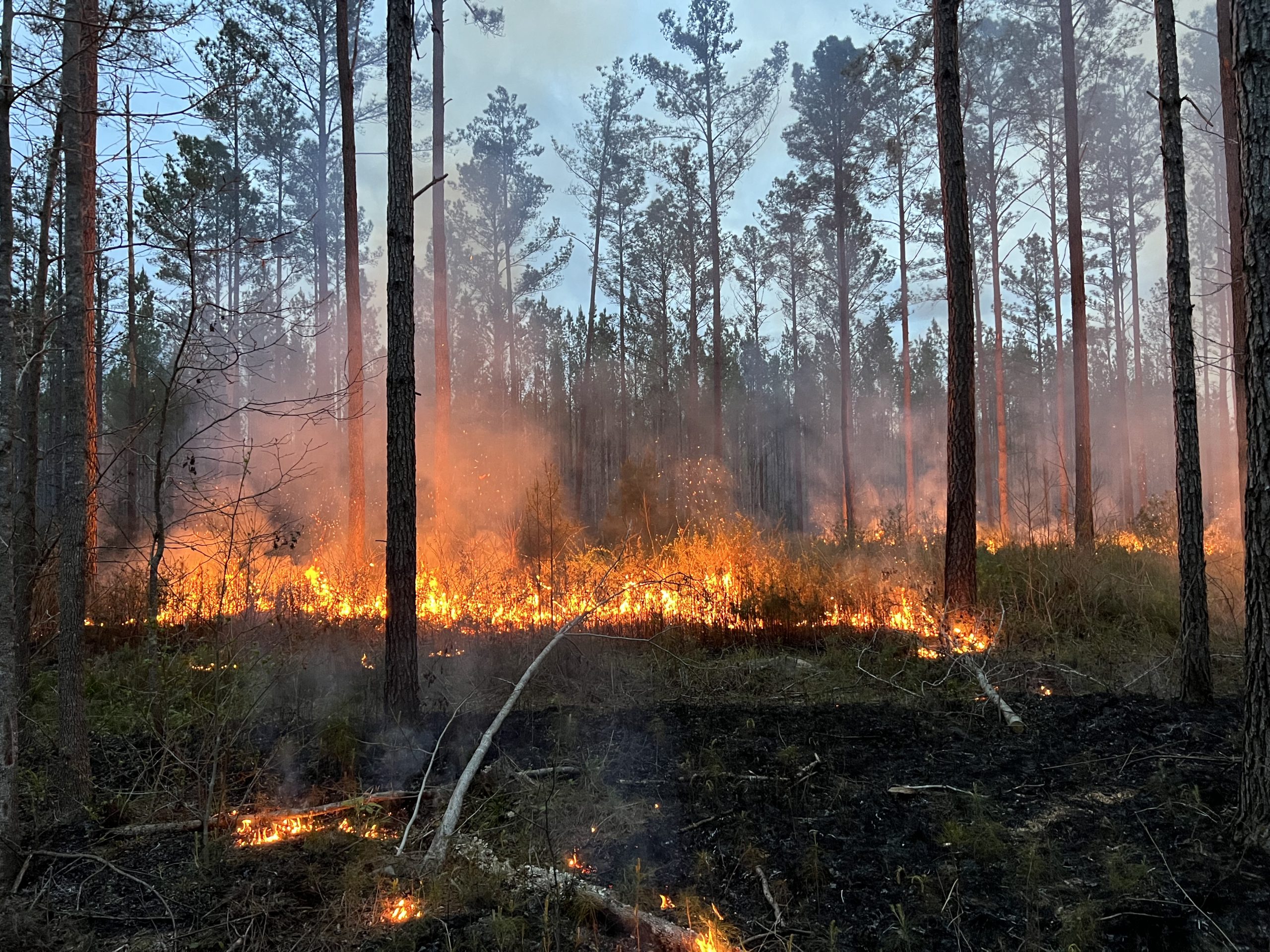
“Even after 20 years of doing it intensively, and 40 years of doing it, I still get butterflies in my stomach,” says Ted. “You know the risk is there, I get a little nervous until the fires have been burning for a little while and you know what you’re up against. There’re always variable conditions that you’re not expecting. And that’s kind of the fun of it. But it’s also the scary part of it. And when you’ve done it a long time, you start seeing those places where you’re gonna have problems.”
A solid plan for where problems might occur, where firebreaks need to be, and how you’re going to handle potential problems is paramount. If you’ve never burned before, you should consult with professionals to help you put together this burn plan and conduct the burn.
Prescribed Burning Learning
When I conducted the first few prescribed fires on my property, I was just the help. I plan to continue to be led by a professional until I feel comfortable. I’m burning roughly 60 acres every year, in 10-15 acre sections, so that means it may be many years before I feel like I understand what I’m doing with enough authority to do it alone. That learning curve may not be fast enough for you, or you may not have any interest in leading the charge. In either of those two scenarios, there are some options to help you learn faster or even conduct burns without your involvement.
The first option is to talk to your Consultant Forester. If you don’t have a relationship with one, create one, as it will benefit you in many ways. If they do not conduct controlled burns themself, make sure he has a trusted team that he can contract this work to. A key consideration is making sure that your forester or the team he uses are certified prescribed burn managers.

Another option is to work through your state’s certified prescribed burn manager training program to obtain your certification. This program is typically administered by your state’s forestry commission. In most states, the law is that to have liability protection, the supervisor of your burn has to have this certification. These courses typically cover the discussion of fire behavior, burning methods, safety, planning, smoke screening and state fire laws.
The last option is to join a prescribed burn association. In my area, the Central Alabama Prescribed Burn Association is a great option for neighbors to help their neighbors with conducting prescribed burns on each others’ land. The goals of these types of associations are centered around teaching competence in safe burning, providing public awareness about the benefits of prescribed burning, and pooling resources to provide an economical method for small acreage landowners to burn safely, effectively, and regularly.
Funding A Controlled Burn
“If you’re working with contractors like us that charge to burn somebody’s place, that cost will vary depending on where you’re at. It might be $15 to $25 an acre for understory burning,” says Ted Devos. “I know that’s a big window. But it depends on who you’re contracting with. If you’re in South Alabama, it’s going to be different than if you’re in North Alabama.”

Although burning arguably pays for itself in terms of pest and disease resistance in your timber and by reducing competition from deeper rooted competitive vegetation, it is not free from a cash flow perspective. Here are some programs that will help share the cost or pay for it entirely.
Government Cost Share For Prescribed Fire
As a first course of action, it’s wise to inquire with your state’s forestry commission and local USDA office to determine if you are eligible for their cost share programs. One example is Alabama’s Southern Pine Beetle Prevention Cost-Share Program. Federal cost share is available through your local USDA NRCS office. There are many programs that offer landowner assistance for a wide variety of conservation activities. You help fund these programs, apply for them and take advantage of them where you can.
Land Improvement Loans
In addition to a $15-$25 per acre burn cost, firebreaks can be a significant expense, depending on the property. Putting heavy equipment such as bulldozers and excavators on your property may require additional capital that you don’t have access to until your next timber harvest. If you’re like me, while you’ve got that equipment on the property, you probably have a laundry list of other land clearing projects you might like that operator to knock out while he’s there. I recently had some firebreaks installed, food plots cleared and root raked, and roads established on my property. I would tell you to expect $2,000 +/- in land clearing costs per acre. If this is outside your reach, a lending institution like First South Farm Credit offers land improvement loans to help you manage your property to its best potential.

Final Thoughts On Prescribed Fires
Prescribed burning has been around for thousands of years. The native wildlife and plant communities as well as the commercial timber interests on your property will flourish from the application of properly administered controlled burning. There are many ways to cost share if not pay for the cost of burning entirely no matter how small your property may be. I’ve heard just about every excuse from landowners not to controlled burn, and aside from tracts located near sensitive urban areas or roads, there aren’t any problems I’ve heard that there isn’t a solution for.
Smokey the Bear had some things wrong, burn your land!