

By Andrew Maxwell | Guest Contributor
I slinked down to the base of an ancient white oak, eyes locked on the brush ahead, trying to relocate the flash of movement I thought I had seen. I had been on this stalk for the better part of 15 minutes, and my patience was beginning to wane. It was early February, and I was 17 years old. I had just begun venturing out on my own in our local WMA, exploring new territory in hopes of learning more about deer bedding areas and what I might be missing.
At that time, Alabama’s deer season still ended on the last day of January. I had just begun venturing out on my own in our local WMA, and like most other young hunters, I had picked a beautiful section of hardwoods to hunt—and then proceeded to hunt it relentlessly throughout the entire season.
It had been a tough deer season for me, and I was eager to explore parts of the woods I hadn’t yet visited, hoping to figure out what I was missing. Being an opportunist, I had my .22 with me in case I came across a squirrel or rabbit.
The movement I saw was from the squirrel I was trying to get a shot at, but it never re-emerged; it made it home to its hole. As I accepted my defeat, I looked down the hill toward the creek, which was the color of milk chocolate from all the recent rains. Something caught my eye on the creek bank. I instantly knew what it was—a shed antler, and a good one!
I ran down the hill like an excited schoolchild and found both sides of a beautiful 8-point buck. Thick, gnarled chocolate bases gave way to stunning ivory-white tines. There I stood, holding a piece of the buck of my dreams. I could hardly believe my eyes; I had barely seen any does in this area, and I was in shock at the quality of this deer.
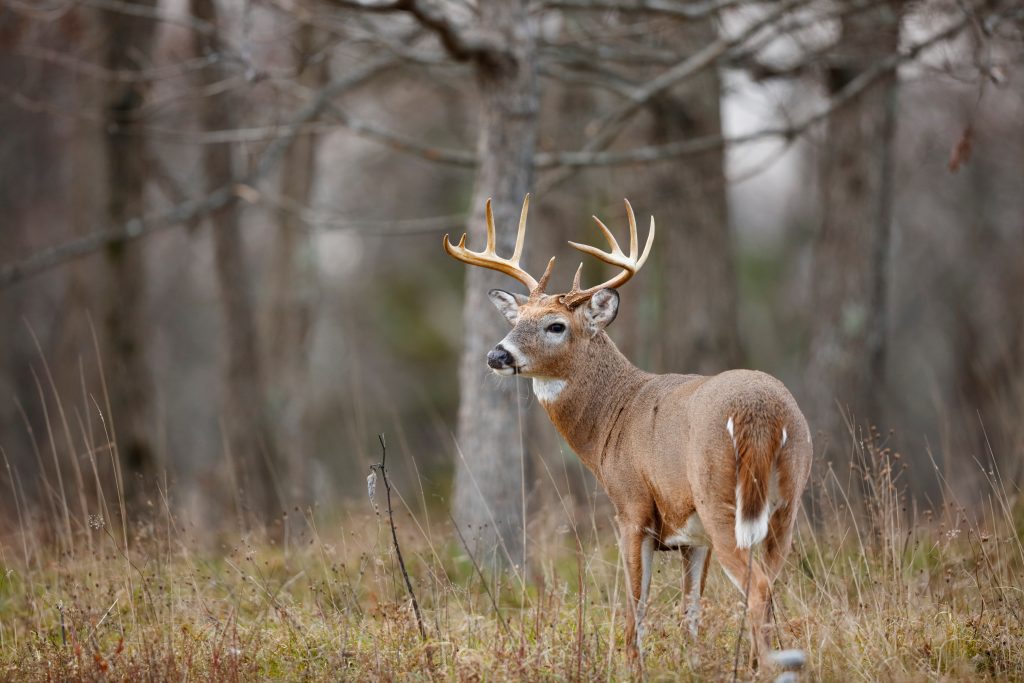
Finding those sheds kickstarted a years-long obsession with that buck, who I named Honey Bun after everyone’s favorite hunting snack in the Deep South. Predictably, I never killed him. I did get him on camera the following year, and I heard tales of his whereabouts from other hunters I encountered in the area.
Many days, I sat in his woods, only to leave empty-handed. His sign was there, and I captured some pictures of him, but he never showed up when I was there. One question continually plagued my mind: Where the heck is he right now?
Every deer hunter has had a similar thought. We scout our spots, hang our stands, prep our blinds, and hunt accordingly in the fall. But every once in a while, as you sit in the woods and gaze across the home turf of the buck you’re hunting, you can’t help but wonder, I wonder if he’s laid up in that thicket right now.
When I was growing up, the subject of buck bedding never came up. Bedding areas? Yes. Specific beds? No.
I’m not even sure I heard the phrase “buck bed” until I was in my 20s. I fully believe this is a function of geography. The North and Midwest have a long history of “bed hunters”—Dan Infalt, Andrea D’Acquisto, and others come to mind.
Are there people in the Deep South who focus on buck bedding and deer bedding area strategies? Of course, but it’s not nearly as common as it is up North, and for good reason.
Buck Bedding, Explained
If you consume any public land or mobile hunting media on YouTube or in Facebook groups, you’ve likely seen a lot of talk about leeward ridges, bucks bedding with a sight advantage, bucks always bedding with the wind to their back, etc.
The basic theory on buck bedding is this: A mature buck narrows down his bedding to a handful of specific spots within a preferred deer bedding area. He has been around long enough to know where he is safe and how to avoid hunters. Generally, bucks like to bed with cover to their back, usually where they can see down in front of them. They almost always bed with the wind at their back. This setup allows them to see everything in front of them and smell everything behind them.
As deer hunters, we constantly deal with the random and unpredictable. This theory is so satisfying because, if true, it provides a framework that allows you to look at your map, check the weather forecast, and drop a pin showing exactly where that buck should be today.
Eager to outsmart the buck I had become obsessed with—or any buck for that matter—I quickly took to the woods with some buddies who shared the same obsession with “buck bedding tactics.” We were all in on this tactic for several years, but it never worked out for us. Meanwhile, we could see it working for guys we knew in the Midwest.
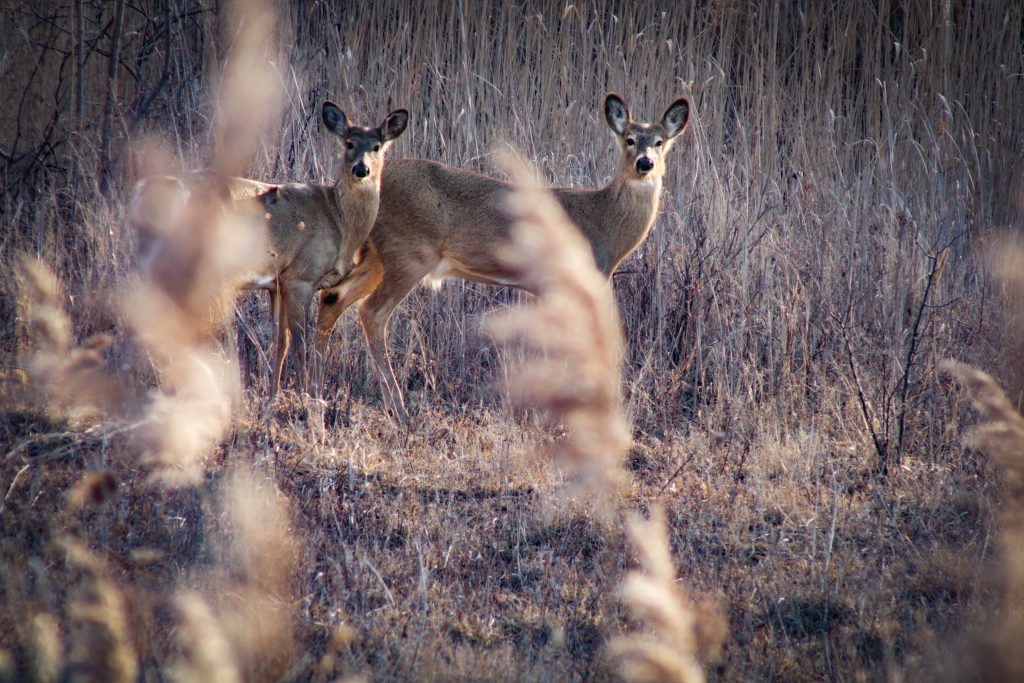
We became frustrated. The beds were there. On any given hunt or scouting trip, we could reliably look at a map, go to the woods, find a deer bed, and pick fresh hair out of it. So why was this not translating to actual success in the deer woods?
One cold January day, I was speeding up I-65, headed to Indianapolis, Indiana, for a trade show. We were just south of the city, marveling at the seemingly endless agricultural fields around us. This was the land of giants, and none of us in the car had ever had the opportunity to hunt land like what we were driving through. Looking out across the vast expanses of barren fields, we could see small woodblocks and brushy ditches on the horizon. Someone said something like, “Where do the deer live out here? There’s no cover!” A light bulb went off in my head.
The WMAs we frequented back home were typical of the Deep South: pine plantations, clear cuts, and briar thickets galore. There was no agriculture to be found, and the only hardwoods on the landscape were down in the SMZs (streamside management zones—a strip of timber that logging companies leave around creeks to prevent erosion). On any given WMA or lease where I’m from, it’s a safe bet that at least 50% of the land could be reliable bedding cover for a deer.
Contrast this with much of the Midwest, where most of the landscape is agricultural fields with the occasional brushy ditch, woodlot, or CRP field. In those areas, there is drastically less cover for deer to choose from.
The crux of the buck bedding theory, as I understand it, is that a buck can only become mature by finding those little nooks and crannies where he is almost unkillable to the average deer hunter. In agriculture-dominated areas, this makes a lot of sense—cover is extremely limited, so there are very few areas a buck can go to escape hunting pressure.
In the Deep South, the exact opposite is the case. We have an abundance of cover that a buck can use to escape. In some of the places I hunt, a buck could run in any direction and be in good cover within 100 yards. Contrast that with any agriculture-dominated landscape, where you’re dealing with brushy fencerows and overgrown lots rather than 200-acre pine thickets.
In my opinion, this is why we can find “buck beds” in the Deep South but struggle to find any consistency with them.
Data
A few years into my quest to become a master hunter of deer bedding areas, I stumbled upon a textbook bed on public land in central Alabama.
A massive tree had fallen at the head of a rocky ditch, which led to a thick bottom. Briars and vines grew up and over the tree trunk, forming a perfect pocket big enough for a good nap. This pocket held a monstrous bed—worn down to bare earth and covered with fresh deer hair. The area around the bed smelled like a barnyard.
I placed a camera in the area, pointed directly at the bed, and left it for the entire season.
I was shocked when I checked the camera after deer season. Only one decent buck had used the bed, and in the four months the camera was out, he only showed up twice. The bed had many other tenants, ranging from spikes to does.
Over the last six and a half years, I have recorded over 600 podcasts with some of the best deer hunters across the Southeast on The Southern Outdoorsmen. Of all those great hunters I’ve spoken with, very few target specific buck beds.
The consensus among most Deep South deer hunters is to take a more general approach to bedding—find the thickets he prefers and base a pattern off that. Don’t get bogged down by individual beds based on certain conditions—we simply have too much good cover for a buck to be forced to use any one bed at any given time.
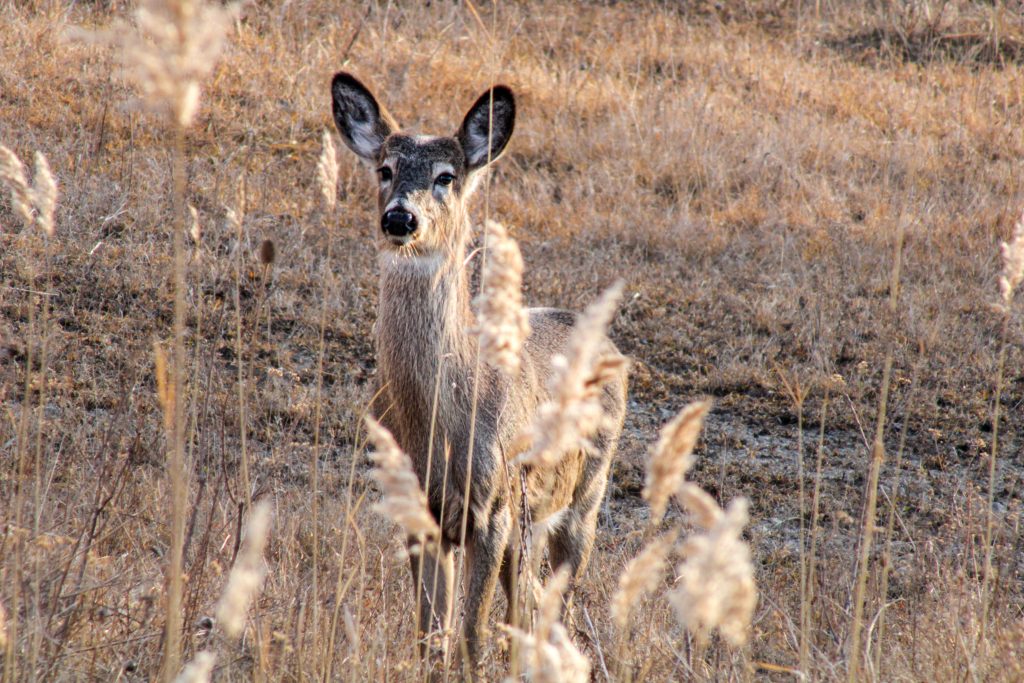
At the same time my trail camera was watching that bed, several GPS studies were being conducted across the South by universities. Notably, both Auburn and Mississippi State universities had GPS collars on free-range deer in Alabama and Mississippi.
In a recent interview with Dr. Bronson Strickland of Mississippi State University, I asked if they had seen bucks using the same bed repeatedly in their GPS data. He replied:
“In terms of going to deer bedding area day after day, I was not seeing that at all. So think of it as… yeah, a buck may be coming back to an area over and over, but don’t think of it as a tenth of an acre or the size of a truck bed. Think of it as a 20-acre block or a 50-acre block or a hundred-acre block or something like that.”
Not only are the patches of cover in the South large, but there are also a lot of them. Rather than a buck having 5 or 6 beds he frequents, he has 5 or 6 bedding areas—which could range in size from 10 acres to over 100 acres!
Application
In a land where cover is everywhere, how do you know which thickets the buck will prefer? There are a few criteria that elevate one thicket over another.
Visual obstruction. If you can see very far into it, it’s not great cover. Imagine tossing a basketball about 15 feet into the woods—if you can still see the basketball lying on the ground, it’s probably not thick enough. Find the kind of thicket you’d turn a pack of beagles loose in for a good rabbit hunt—if it’s thick enough for rabbits, it’s perfect for bucks!
Cover that is also food. It’s possible to find a thicket that provides good visual obstruction but lacks food. This is particularly true with loblolly pine stands, which are extremely common across the Deep South. However, the best kind of deer bedding area offers both cover and food. Honeysuckle, greenbriar, jasmine, and a host of other green, viney plants provide not only visual obstruction but also excellent forage for deer. This combination is one of the main factors that makes one bedding area more appealing than another for bucks.
Pressure. Bucks will always seek out areas where they are least disturbed, but that doesn’t necessarily mean they’ll be in the most remote location possible. Hunters often walk right past great bedding thickets to get to a food plot or a nice hardwood bottom on the other side.
Simply put, it’s always best to find diverse areas that have everything a buck might need. The buck is acting on pure instinct, and his instincts drive him to seek out the best resources in the smallest area that is safe for him. The ideal deer bedding area offers thick cover, available food, and minimal pressure. Identify which thickets in your area meet these criteria, then put in the footwork to figure out how bucks are moving between them.