
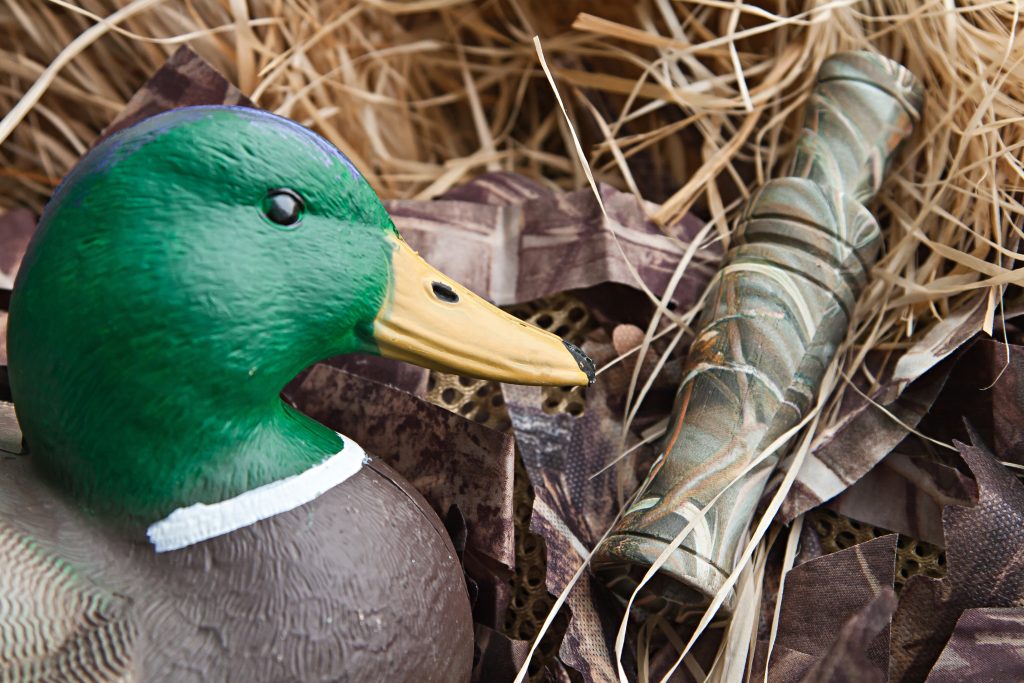
Waterfowlers will carry anything if there’s even a possibility that it might help them shoot more ducks. But the truth is, the best blind bags aren’t just stuffed with trendy duck hunting gear. They’re carefully built, tested in real hunts, and refined over years in the field.
To find out what really earns a place in the bag, we sat down with three hardcore duck hunters who each work a different corner of the country and approach the waterfowl game in their own way. Rod Haydel, president of Haydel’s Game Calls, has spent a lifetime chasing birds in the marshes of Louisiana at the southern tip of the Mississippi Flyway. Peyton Spires, owner of 157 Outfitters in Wyoming, guides clients through brutal wind, snow, and ice in the Central Flyway. And Robby Jones, founder of Biskit Built 3D and creator of the revolutionary “Decoy Doctor” motion system, hunts the storied waters of the Chesapeake Bay in the Eastern Flyway.
Each of them has spent countless hours fine-tuning their kit—not just for efficiency, but for comfort, safety, and the little rituals that make a day in the blind better. This is a deep-dive into their blind bags: the proven essentials, the unexpected lifesavers, and the quirky personal touches that reveal how seasoned hunters think about their gear. Whether you’re new to the sport or looking to sharpen your setup, their insights will help you pack smarter, choose better duck hunting gear, and hunt longer.
The Blind Bag Itself
Before you even think about what to put in a blind bag, it’s worth asking: how do you hunt most of the time? The way you access your spots—by boat, ATV, or on foot—will dictate what kind of bag works best, how much it should hold, and how rugged it needs to be. The three hunters we spoke to have each dialed in a setup that matches their environment and style.
Rod Haydel doesn’t even bother with a traditional bag. “I do not use a blind bag… I use a box,” he says with a laugh. “It’s a cheap, hard-sided Plano box about as big as two gallons of milk.” Rod prefers this to a bag because the rigid shell shrugs off rain, keeps gear from being crushed, and even doubles as a seat or step for kids in the blind. “I can shove that thing in a boat, and if somebody knocks it over or steps on it, nothing’s going to happen,” Rod explains.
Peyton Spires, who can drive directly to most of his Wyoming pits, isn’t concerned with portability but demands weather protection. He uses waterproof ammo pouches or waxed-shell bags to keep snow and mud from ruining shells, swapping between water and field setups. In water, “everything being waterproof is important,” he says. In the field, the goal is efficiency—gear organized so clients can grab what they need without slowing down the hunt.
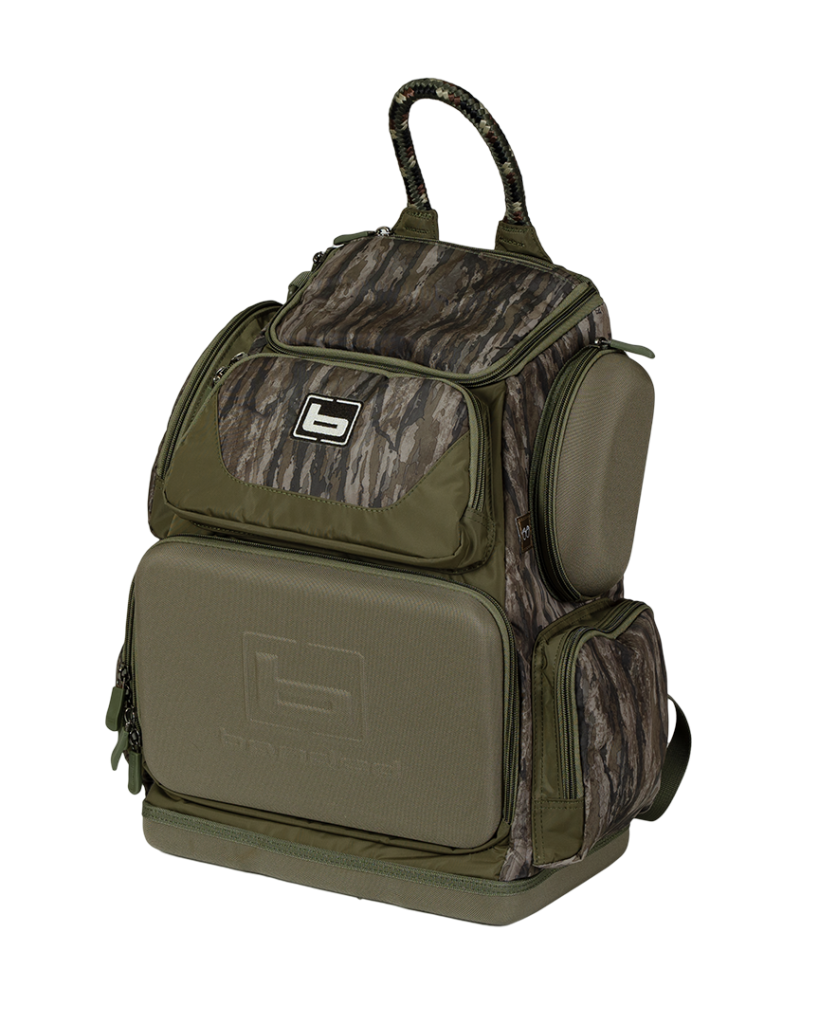
Robby Jones prefers a modern hybrid: the hard-shelled Banded backpack he picked up last season. “It’s got an upper and lower tier inside your bag,” he says. “I can put ammo down in the bottom, calls and other items in the top, and it stands upright on its own.” Before this upgrade, he cycled through traditional blind bags from Drake and Rig’Em Right, but carrying them over one shoulder “became a pain” when climbing steep ravines to reach a hunt spot.
Different flyways, different challenges—but in each case, the choice of bag reflects how they move through their hunting environment and how they want to work once they’re set up.
The Duck Hunting Gear Basics
No matter where you hunt—marsh, field, timber, or open water—there’s a short list of duck hunting gear that belongs in every waterfowler’s kit: a headlamp, gloves and face concealment, calls, ammo, first aid, gun maintenance items, and blind improvement and repair tools. Our three hunters may work very different terrain, but they all carry some version of these essentials every time they step into the blind.
Headlamp
If there’s one piece of gear—other than your shotgun and shells—that you should never leave home without, it’s a headlamp. Being able to work hands-free in the dark can be the difference between a smooth setup and a frustrating fumble-fest. Keep it somewhere you can grab instantly, not buried under decoys or extra layers.
Peyton says the value goes beyond just convenience: “We’re setting out spreads before daylight, in the snow, in the wind… if you can’t see what you’re doing, you’re going to lose time or hurt yourself.”
Gloves and Face Concealment
Just behind “Show up on time,” and “Don’t shoot the dog!,” are two fundamental rules to duck hunting: stay warm and stay hidden. Gloves keep your hands functional through cold, wet mornings, while face concealment breaks up your outline when birds are working close. These are simple but essential pieces of duck hunting gear, and all three of our experts carry them in their blind bags, regardless of when or where they’re hunting.
In Wyoming’s brutal January weather, Peyton warns, “You pretty much can’t pick up decoys in January without gloves, or else your hands will freeze to the metal.” Rod keeps extra gloves and face masks ready in his box for himself or a guest. Robby takes a layered approach—thin gloves early season for dexterity, heavier ones when the temperature drops—and starts with a lightweight face mask but always carries his backup: “If the mask is annoying me, I take a wine cork, burn the end with a lighter, and rub the soot on my face. Done.” Peyton favors full balaclavas on the coldest days—“pretty much just your eyes sticking out”—especially when the wind is blowing snow into the blind.
Calls
When it comes to calls, start with a core setup that covers the situations you encounter most often. Rod Haydel—president of Haydel’s Game Calls—has spent a lifetime fine-tuning his. “Anywhere you go in the country, there’s a need for a whistle,” he says. “Pintail, green-wing teal, mallard drake…you can just do a whole lot with a whistle.” As an added bonus, a whistle makes a great “brother-in-law call” or a small kid entertainer. “You can hand a kid a whistle, and he could play Mary Had a Little Lamb on it and it’s not gonna flare any ducks.”
Beyond the whistle, Rod carries two mallard calls: an acrylic double-reed he uses for most of his calling, and a Haydel Quiet Quacker for soft, close-in work without echo. “When you want to be quiet, like on a windless day or in the fog, that call’s not going to echo. It just spreads the sound out and doesn’t spook birds in tight cover.”
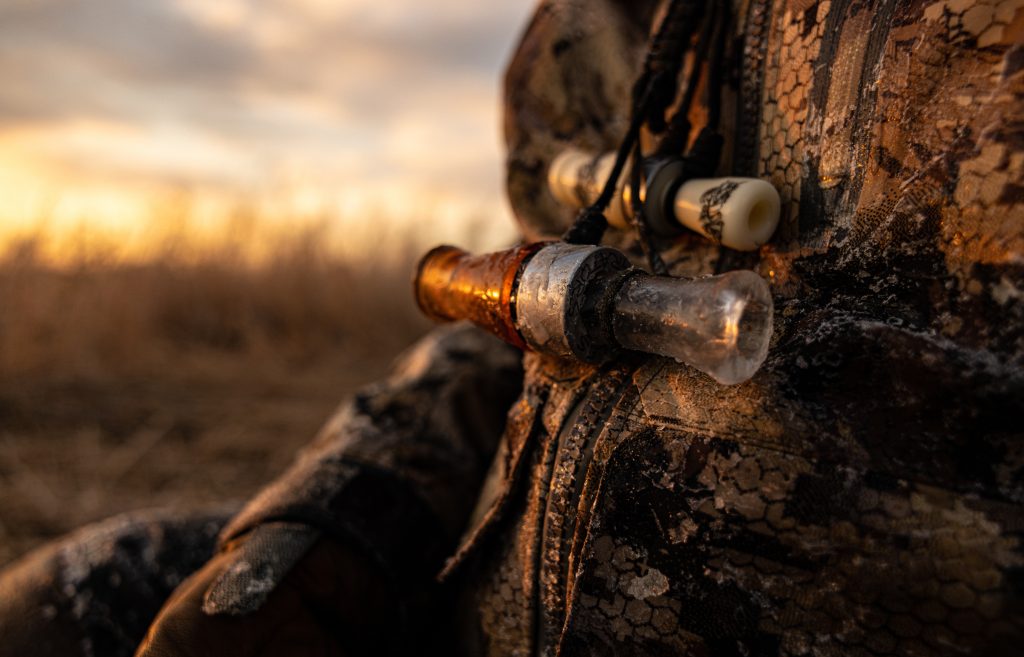
Both Robby Jones and Peyton Spires echo Rod’s philosophy of keeping the lanyard light. “I got sick and tired of all that crap hanging off my neck,” Robby says. “Now I just carry a single-reed, a double-reed, and a goose call.” Peyton follows the same approach, always packing a mallard call and whistle first, then adjusting for the day’s conditions if needed.
The takeaway? Bring the calls you’ll actually use on most hunts.
Ammo
We’re not going to wade into the debate over which shells are “best” here—that depends on too many variables: the species you’re hunting, your skills as a decoyer and shooter, and plenty more. What all three hunters agree on is this: whatever you shoot, it needs to stay clean, dry, close-at-hand, and organized.
Peyton avoids cardboard boxes entirely: “We definitely roll with shell bags for everybody… you just waste so much ammo whenever a box falls off in a pit or in a blind and gets muddy.” Rod’s shells ride inside his waterproof Plano box so they’re protected no matter the weather or the ride in. Robby keeps his in the lower tier of his Banded backpack, where he can grab them without digging.
Rod also points out that with experience, you learn to carry only what you truly need. “When I was younger, I’d go to the blind with four boxes of shells,” he says. “Nowadays, if I have one box with me, I’m good to go.” It’s a philosophy that keeps his kit lighter and his setup more efficient.
First-Aid Kit
Even the most careful hunter is going to pick up a few cuts, scrapes, or bruises along the way; or wake up to a sore throat and the sniffles. A compact first-aid kit won’t take up much room, but it can keep a small injury or minor illness from turning into a hunt-ending problem.
Rod Haydel keeps his kit simple and effective: “I’ve got aspirin, bandages, alcohol pads, and instant super glue,” he says. “You can put that instant super glue on a cut and seal it, because a lot of times we’re pretty good ways from the launch.” Peyton’s kit includes many of the same basics, plus chemical hand warmers for added comfort in frigid conditions. Both agree that the goal is to be able to clean and protect a wound quickly so you can stay in the blind and finish the hunt.
It’s also smart to keep a basic kit in your blind bag and another, more comprehensive, kit in your boat or truck, just in case. And if you’re trained to use them, consider packing advanced supplies—tourniquets, CPR masks, or other trauma gear—especially if you’ll be hunting in remote areas or alone. While it’s not pleasant to contemplate serious injuries such as gunshot wounds, the day may come when you’re glad that you thought of such a scenario though, and prepared for the worst.
Gun Maintenance Kit
A jammed or frozen gun can end your hunt fast, especially when you’re miles from the truck. Among all the duck hunting gear you carry, a compact gun maintenance kit can be the difference between finishing the day strong or packing it in early. Peyton, who guides in Wyoming’s dust, wind, and deep cold, carries a small tool roll in the field: “We essentially will have to… field-strip guns, pull them out, use a small toothbrush to get all the dirt and grime out, and then a small applicator bottle of either graphite powder or oil to get the guns running again. If it’s going to be super cold, we’ll run them dry so nothing freezes in the action.”
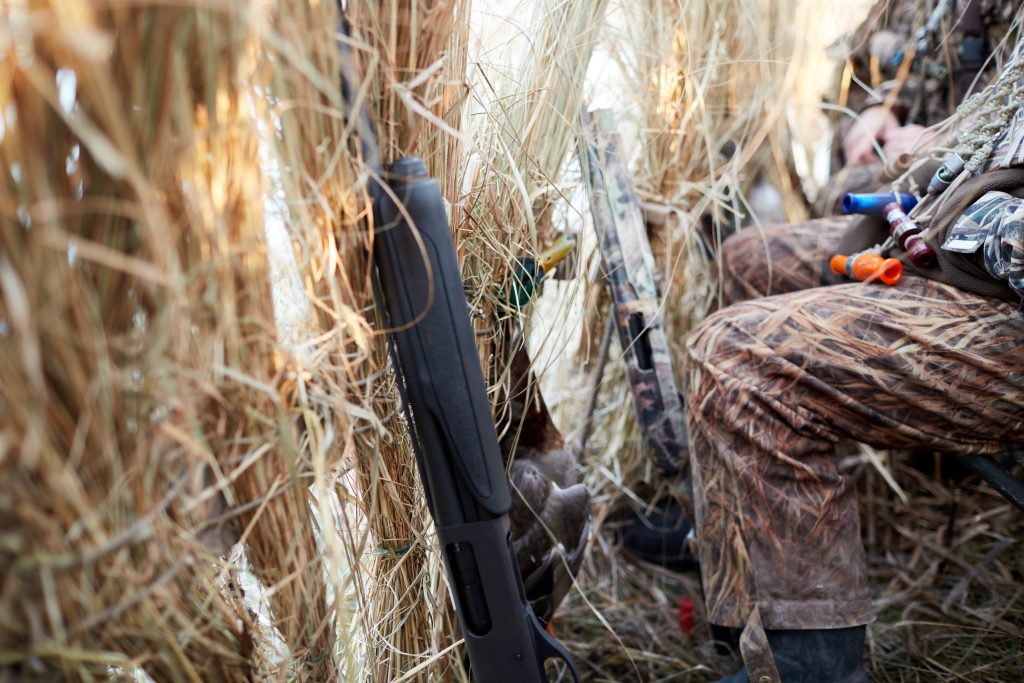
Rod keeps his maintenance gear lighter—just a small bottle of gun oil and the parts most likely to fail on his Winchester Super X1, like spare O-rings for the piston seal. Robby doesn’t often need to work on his gun in the field, but he always has a multi-tool with a Phillips head screwdriver for maintaining his Decoy Doctor motion rigs, and he keeps a choke wrench in his gun case.
Duck Hunting Gear Creature Comforts, Tech Tools, and Other “Odds-and-Ends”
All three hunters stressed the same point: keep clutter and useless doo-dads out of your blind bag. A heavy, disorganized kit slows you down and makes it harder to find what you actually need. But they also agreed that a good blind bag should leave room for a few creature comforts, some “niche” tools that solve specific problems, and a handful of items meant purely to make the day more enjoyable—especially when the shooting is slow.
Caffeine and Nicotine Fixes
Let’s be real, (legal) stimulants are nearly as essential to duck hunting as steel shot. Peyton’s guiding experience has taught him that well. says, “Most older guys will make a big pot of coffee in the morning before you head out of the lodge,” he chuckles. “Younger guys have their White Monster…it’s always a White Monster!”
Nicotine has also been part of the waterfowling tradition for generations. In our interview, Rod recalled keeping a cigar cutter in his blind box as a relic of the days when a celebratory smoke was part of the hunt. But many hunts are rethinking what their post-hunting weekend rituals look like.
Robby and his brother, for example, have recently started using tobacco alternatives. “We used to smoke cigarettes,” he says, referred to himself and his brother, his most avid hunting partner. “Five or ten into each hunt, one of us would fire up a cigarette.”
Recently, however, they’ve been using nicotine pouches that dip like moist smokeless tobacco without the tobacco leaf or stem.
But one thing isn’t changing in their routine. “The Monster Energy and the coffee is definitely sticking!”
Whether its a thermos of coffee, a can of Monster, or a pinch of dip, these rituals set the tone in the morning for when the birds finally work the decoys.
Tech Tools
Modern waterfowling often blends old-school skill with just enough technology to keep the day running smoothly. Rod keeps “a phone charger cable, some batteries, and an extra battery pack for a Mojo Decoy” in his bag, along with “a couple of memory cards in case he’s filming a hunt. Robby keeps it simple but effective, always packing a multi-tool with a Phillips head screwdriver so he can crack open a Decoy Doctor motion rig if one of his swimming decoys stops working.
While purists may grumble, high-tech gear is here to stay, and if you utilize it, it’s best to be prepared to keep it running.
Something for Man’s Best Friend
Not everyone hunts with a retriever, but if you do, it’s worth giving some thought to their needs before you head out. Long days in the marsh or timber can be just as tough on a dog as they are on you, and sometimes more so.
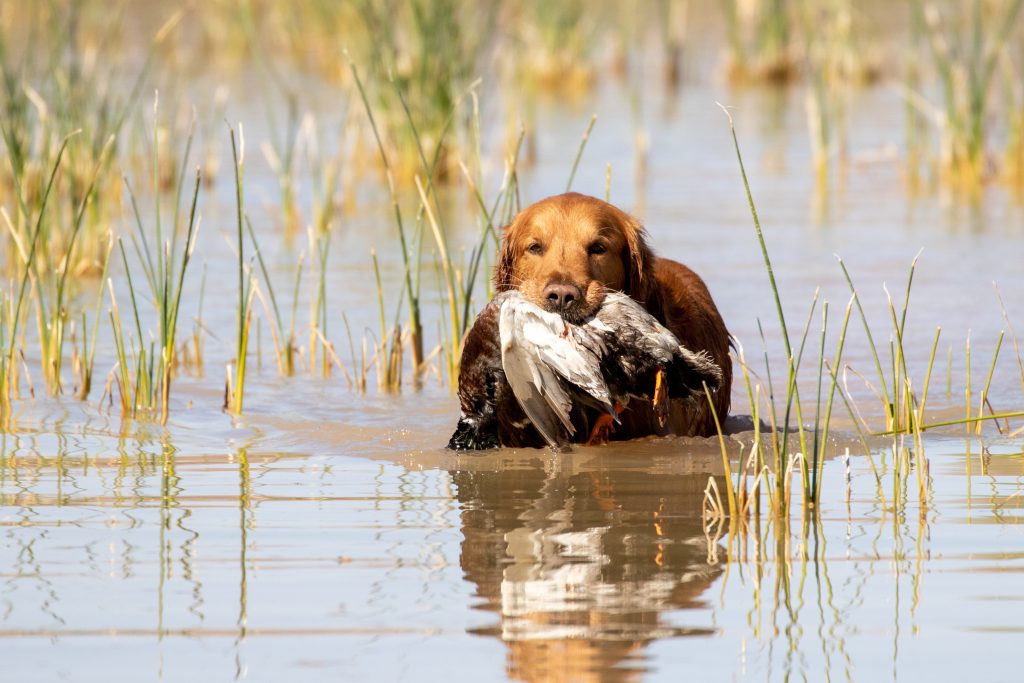
Robby keeps a collapsible food and water dish combo in his kit, something he’s had since he first got his dog. “Just so if I need to get him some water,” he says. His retriever always wears an e-collar and a vest, no matter the temperature. “Even if it’s not cold enough to need one, I like him wearing a vest because it provides some protection. Some of the areas I hunt are pretty rough for a dog, with lots of stuff like, say, spikes below the water from where beavers chewed them off. The last thing I want is him getting a puncture or impalement or something when he jumps in the water.”
If you’ve ever worked with a good dog, then you know that they’ll work their hearts out for you. The least you can do is look after them.
Personal and Fun Items
Not everything in a blind bag has to be purely functional.
“I’ve got some fun, rubber wrist bands that I keep in my box,” Rod says. “I’ve got some of them that say ‘Participation’ on them, or that have little in-jokes between my friends and I on them; just stuff to have fun with and break the boredom when you’re having a slow hunt.”
When kids are in the blind, Peyton focuses on making it fun and getting them involved. He sometimes hands out shaker calls (“pretty hard to make them sound bad”), sets boxes so they can see over cover, and makes sure they have youth-model gear so they can take part in the action.
Remember, at the end of the day, we hunt because it’s fun. A good blind bag should make a little room for that.
Final Thoughts
In the end, a blind bag isn’t just a place to stash your duck hunting gear, it’s a reflection of how you hunt. The best setups balance efficiency, comfort, and reliability without weighing you down. Whether you’re chasing mallards in flooded timber, geese in snowy fields, or divers on big water, packing with purpose will keep you ready for whatever the day brings. Learn from seasoned hunters, refine your own system, and remember that the right gear in the right bag doesn’t just help you shoot more ducks—it helps you enjoy more of what makes waterfowling special.