
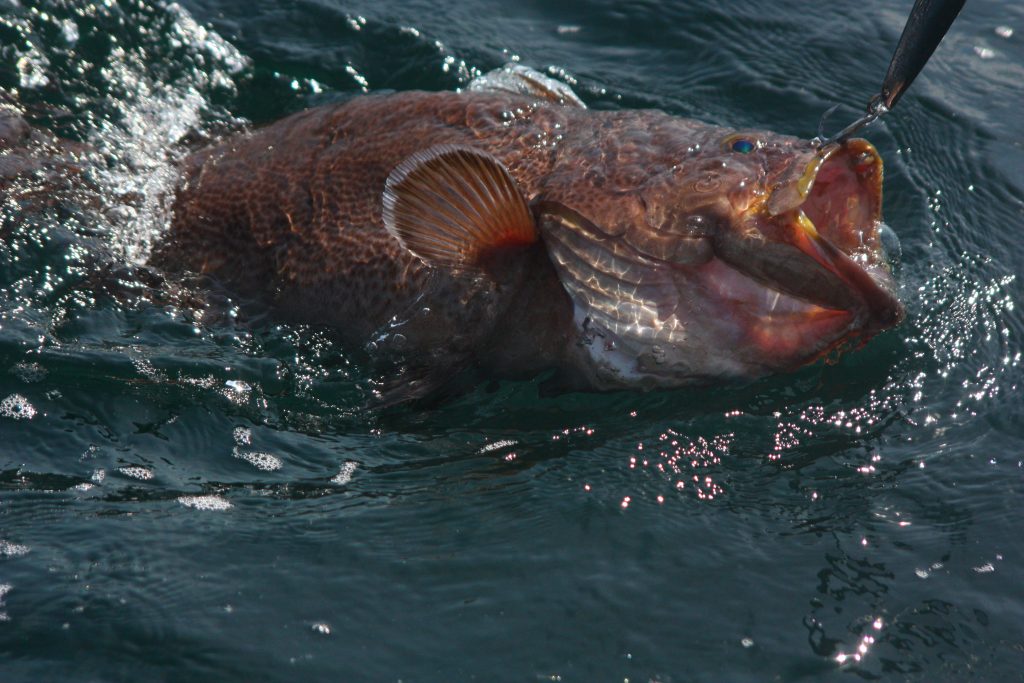
When it comes to grouper, size matters. Let’s be honest. Size matters a lot. Most anglers who go offshore for red snapper or other reef fish will encounter grouper accidentally. We’re talking now about fishing on purpose for GIANT grouper. These are the massive fish that make strong men sweat to bring them up from their deep water homes. Sometimes, the giant grouper can be encountered in shallow water, too.
Let me tell you all about my most recent encounter with one of these giant groupers. I was anchored under the Pensacola Bay Bridge, and I was having a ball catching bull redfish. I had a load of pogies for bait, and I had my reliable level-wind bull redfish reel and thirty-five pound line and enough weight to take the pogie down to the bottom where the bulls were holding.
I dropped a lively pogie down, and my line came tight. I set the hook and got ready for that first scorching redfish run but that run never happened. My rod tip was pulled slowly down, down, down until it was in the water. My reel’s drag was pretty tight, but it gave line and kept on giving line. I tightened the drag down as far as I could by hand and the line just kept pulling off. It was not a hot run, but I could not do anything to slow it down. The line peeled off my reel and then when the fish below reached the bridge piling, there was a tug, and then the line came back in. Hook gone. Bait gone, leader and rig gone. Big old fish gone. That’s the way anglers are treated when they encounter giant grouper without adequate tackle. This giant fish that took me apart was no doubt a massive goliath grouper, a protected species, but there are other grouper species which also grow to impressive sizes.
We wanted to talk with someone who knows about catching these massive hard-pullers. Captain Delynn Sigler is well-known and highly-regarded for his knowledge of giant grouper and for his skill in putting anglers in contact with the big hard pullers. We talked with Sigler and got his thoughts on successful fishing for giant grouper.
The Lowdown on Giant Grouper
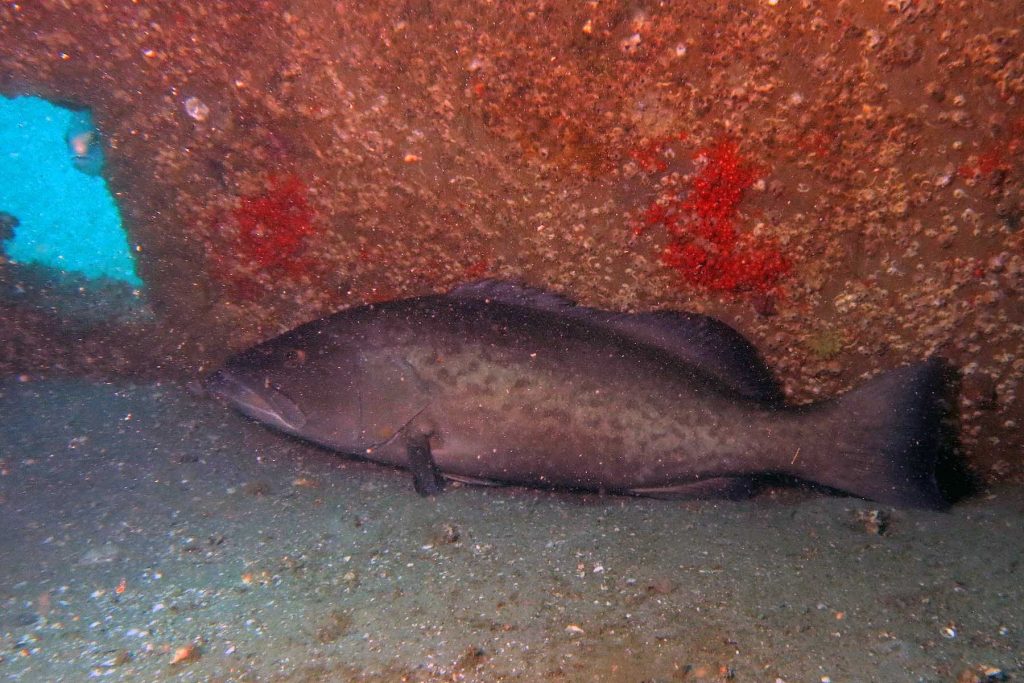
All grouper can get big, but the big three species in our waters are the gag grouper, which is common on snapper reefs and other close-in structure, Warsaw grouper which live farther out, and goliath grouper, the biggest of all—and these monsters live wherever they want to live—sometimes in surprisingly shallow inshore waters.
“The biggest gag I have put a client on weighed 73 pounds, and I’ve had a lot of 50 pound gags come in for us,” Sigler said.

Warsaw grouper commonly reach weights of well over a hundred pounds, and there are much bigger Warsaw grouper out there on the far reefs and wrecks.
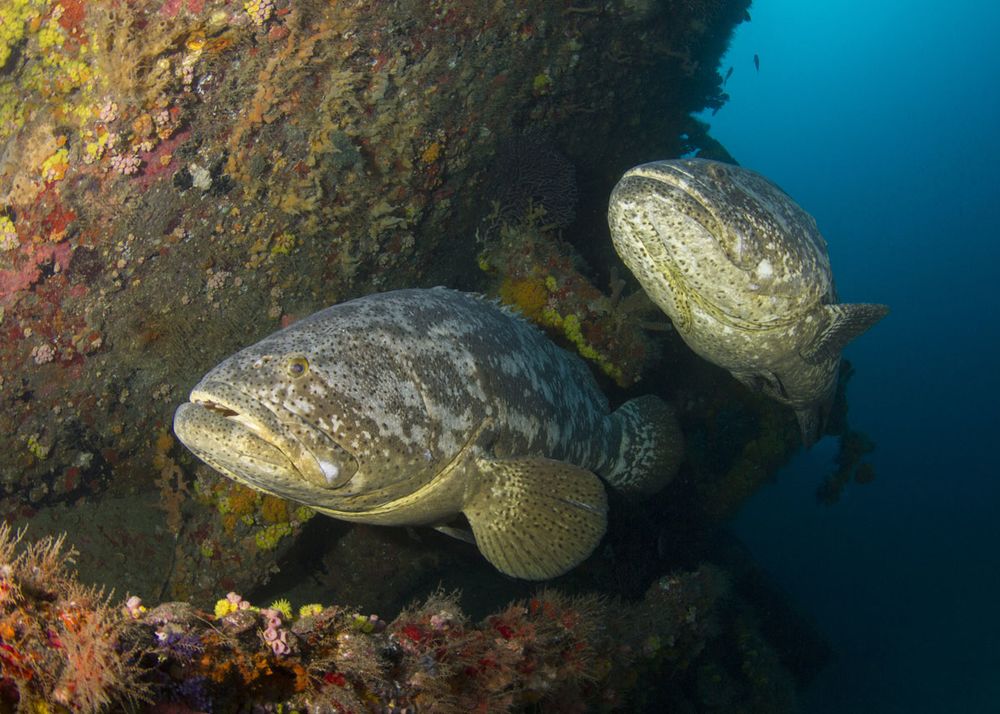
Goliath grouper are, just like their name, giants. These grouper, which love to hold around rough and nasty structure, can often go over 500 pounds, and fish of this size are a real struggle to land at any time. Anglers are reminded that goliath grouper are totally protected and they can’t be kept by anglers. Caught—yes, kept—no.
Finding the Giants
Anglers who want to locate the big grouper need to be prepared for a long boat ride—or not.
“Big grouper are found throughout the U.S. From shallow water (a few feet) to 1000 feet. It really depends on which one you target. Goliath grouper like shallow water—5 to 150 feet, while Warsaw grouper like 250 plus,” Sigler explained. They all like some kind of structure which can range from mangrove roots, coral, limestone and artificial reefs.”
Out of Pensacola, anglers will usually have to run out thirty miles or more to catch big Warsaw grouper.
“The biggest Warsaw grouper I’ve brought aboard came in 250 feet of water. This fish weighed 99.8 pounds,” he said.
When it comes to season and time, Sigler says that the big grouper are generally catchable at all times of the year.
“The best season to me is winter and spring, but the big ones can be caught year-round. A little current is OK, but not so much that you can’t keep your bait where you want it. They do feed more at night with a full moon, but they can be caught day and night,” Sigler explained.
What to Feed the Giants
This is probably the easiest part of the giant grouper game.
Big grouper don’t get big by being picky eaters. Goliath grouper in particular will eat just about anything that comes their way that will fit in their mouths—and they have big mouths.
“They will eat anything and everything—large or small, dead or alive. I know elephants eat peanuts, but I like a bigger bait for giants. Pin fish, mullet, ladyfish, bluefish, Boston mackerel—live or dead will work,” Sigler noted.
Rigging for the Giants—Crucial
Having the right tackle when seeking giant grouper is perhaps the biggest key to success than any other factor. The giants are not fast, but they are big, and they have a lot of pulling power. Gear and angler need to be able to put a lot of pressure on really big fish, and tackle which is too light is a recipe for failure.
When asked about rigging up for giant grouper, Sigler advised that if you are going with a charter captain use his gear because he will be rigged for big fish.
“I use those old Penn Senator 4/0 to 6/0 star drag reels. I’ve used these reels for twenty-five years. And I use the older models—they’re better made. The new models of these reels are not as good as the older ones,” Sigler explained.
For rods, Delynn recommends a solid fiberglass boat rod. They are harder to break than hollow rods. But even though the solid rod needs to be tough, it also needs to bend well.
“A strong rod that bends is easier on the angler and there will be fewer pulled hooks.”
According to Sigler an angler should be able to get a good reel and rod for around $250.
“I like a slip-lead Carolina rig with a six-foot leader. My leader is usually the same size as my braid main line. Eighty-pound is a happy medium,” Sigler said. “For giant grouper, I use Ande monofilament for my leaders.”
Hooks for giant grouper should be stout, solid hooks. They will be under a lot of stress when a big grouper takes the bait.
“A Demon Perfect Circle hook in 8/0 size is great,” Sigler advised.
And Let’s Talk about Butts—Winthrop Butts, That Is
Anglers who hook up with a giant grouper will need every advantage they can get to land that giant. Traditional straight rod butts are points of the rig which can cause pain to anglers when a big fish goes the other way with power. Traditional straight butt rods can put a lot of pressure on anglers in places which are not made to withstand a lot of pressure. Having a rod with an adjustable butt can make fishing for giants a lot more pleasant.
The Winthrop Adjusta-Butt is made from machined aircraft grade aluminum with a hardened stainless steel positioning mechanism to allow quick, secure adjustments from straight position to bent position after that giant grouper is hooked and going the other way. This butt is created to accept reels from #30 to 130 class.
Basically what this butt provides anglers is the ability to push a button and position the rod from a straight position to a bent position to fight the big fish more effectively.
Sigler points out that there is another important advantage to the Winthrop Adusta-Butt outfit.
“Also, you can put it in the rod holder to reel him up if you get tired,” he concluded.