
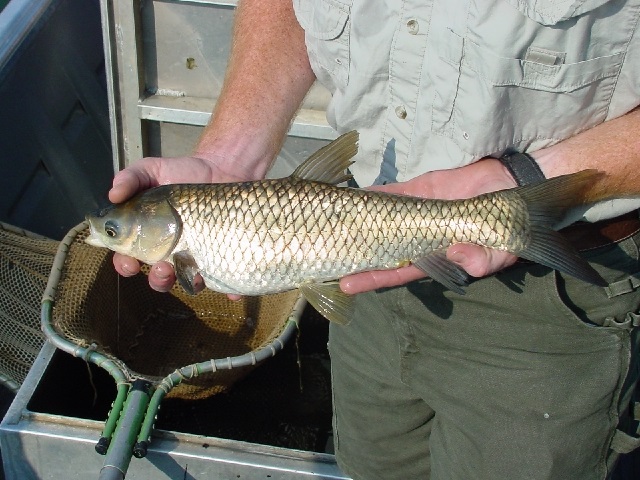
A well-balanced pond ecosystem requires clean water, healthy fish and thriving plants, but that ecosystem can be easily disrupted when weeds or algae get out of hand. Excessive aquatic plant growth is a common concern and can interfere with the intended uses of a pond. At some point, most pond owners will have to deal with excessive weeds or algae. In small ponds, even a few weeds can quickly take over, resulting in an overgrowth. Too many weeds can deplete oxygen, which can lead to a fish kill. Good pond management requires controlling the vegetation. Herbicides are one solution, but a more sustainable, environmentally friendly solution is stocking grass carp.
Grass carp, unlike common carp, do not muddy ponds by feeding in the sediment. They eat only vegetation and can eat up to two to three times their own body weight per day.
What Are Grass Carp?
A species of large herbivorous freshwater fish in the family Cyprinidae, the grass carp is native to the Pacific Far East, with a native range stretching from northern Vietnam to the Amur River on the Sino-Russian border.
Scott Cherones, vice president of Southeastern Pond Management, a leader in pond and lake management services since 1989, says grass carp are often lumped into the big three Asian carp group, but should not to be confused with the silver carp and big-head carp that are causing problems in the great lakes area and Midwest.

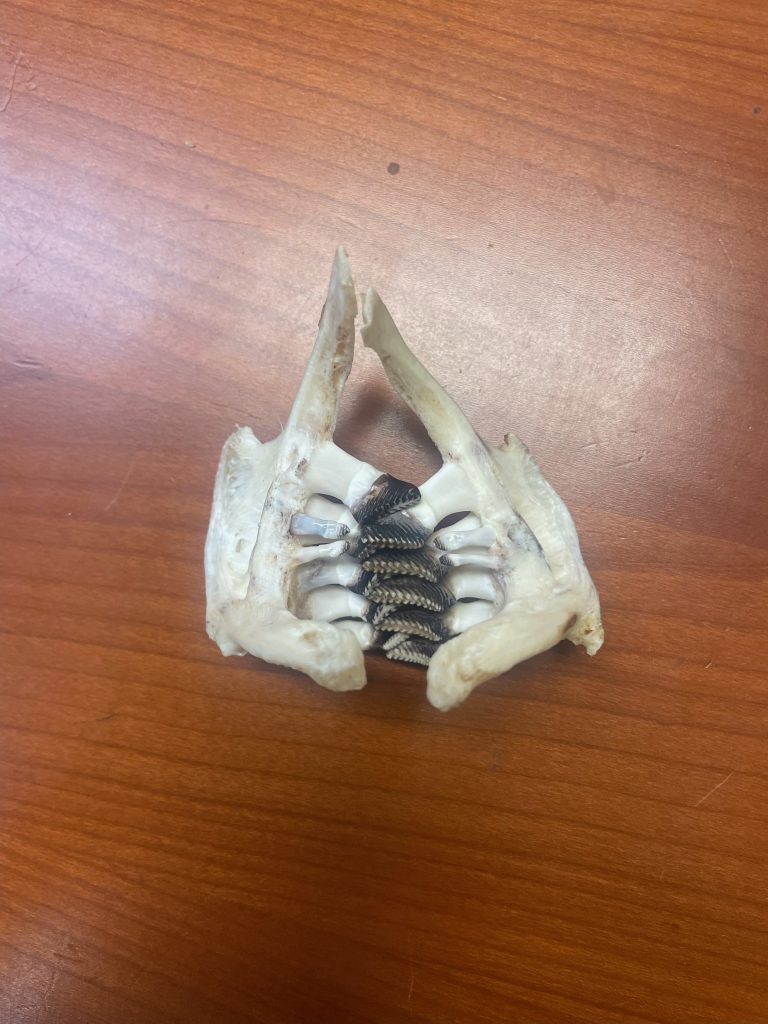
“They were brought to the US in the 1960’s to control aquatic plants in reservoirs and aquaculture farms. As a marketing ploy to make them sound more appealing, some hatcheries gave them the nickname ‘White Amur’ after the Amur River where they can be found. The scientific name for grass carp is Ctenopharyngodon idella and a somewhat loose Latin translation of the genus would be ‘comb throat’ because they have what are known as pharyngeal teeth in the back of their throat that fit together like a comb. These strange teeth allow them to grind up cellulose fine enough for them to digest and glean nutrients out of higher plants,” Cherones said.
Grass carp grow extremely fast, up to 20 pounds in the first two to three years of their lives, and can reach almost 100 pounds.
What Do They Eat?
Grass carp primarily eat both higher aquatic plants and submerged terrestrial vegetation, but may also eat small insects and other invertebrates. They can consume up to three times their own body weight daily.
“Once grass carp have cleaned out a pond of weeds, they get hungry and will become a little opportunistic. I have seen them follow a lawn mower down the bank eating grass clippings for example. I have also watched several grass carp hang out under a large oak tree in the fall and eat acorns as they dropped into a pond. Also, once a pond has been cleaned up and is free of aquatic weeds, they will, unfortunately, train on fish feeders that are intended for feeding bluegill. This is their one major drawback. In ponds that do not use automatic feeders, there is no drawback to stocking them,” Cherones said.
World Record Grass Carp
A massive grass carp weighing 92 pounds and measuring 49.5 inches long was caught in Louisiana’s Lake Concordia on March 11, 2024. According to a press release issued by Louisiana Department of Wildlife and Fisheries, state biologists caught it during a routine spring electrofishing sampling of the lake.
Had this carp been captured by traditional fishing methods, it would have bested the current IGFA All-Tackle World Record by 4 pounds, which was caught in Bulgaria in 2009. It would have tied the current Bowfishing Association of America World Record, which was caught in Alabama in 2015.
Stocking Them for Weed Control
Cherones says grass carp are a wonderful tool for weed management in ponds, however they are slow to take effect.
“If someone needs immediate relief from a bad weed problem, an herbicide application is probably a better choice. I like to think of grass carp stocking as a preemptive strike against next year’s weed problems. They are not fast enough to wipe out an existing weed problem, at least at standard stocking rates of five to 30 per acre,” Cherones said.
Higher stocking rates are needed in ponds that have a high percentage of the surface acres taken up by shallow water (less than 3-feet deep) and/or significant weed coverage over a large portion of the pond area.
“In some situations, we recommend first applying herbicide and then stocking a lower rate of grass carp to decrease the likelihood of weed re-growth,” Cherones said.
The Importance of Sterile Grass Carp
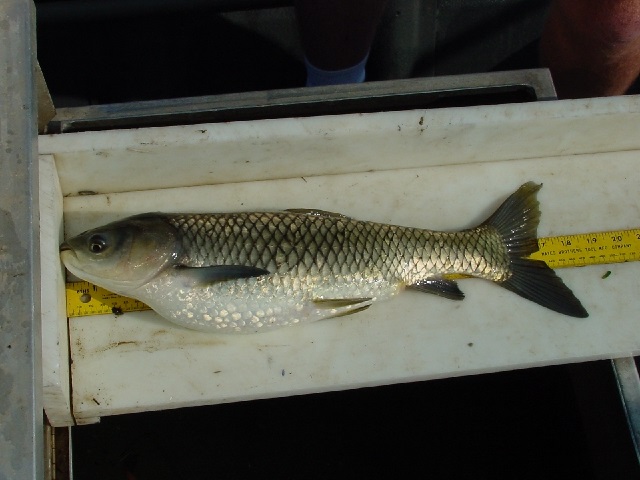
There are two types of grass carp available for stocking, diploid (normal) and triploid (sterile). Triploid grass carp (meaning they have an extra set of chromosomes so that they are incapable of reproduction) are produced in a lab at the hatchery. Immediately after the eggs are fertilized, they are placed under hydrostatic pressure in a chamber which causes the chromosomes to divide an extra time.
Sterile carp are required by several states, along with a triploid certification and a stocking permit (Alabama and Mississippi do not require triploid carp). The additional work involved with their production, as well as the extra hassle and cost of the permitting process, causes triploid carp to be significantly more expensive to stock.
“Pond and lake owners should realize that these state requirements have nothing to do with the fish population in their pond. These triploid fish are required in those states in case they were to escape the pond and end up in a large river system. Grass carp eggs in nature require several miles of uninterrupted flow for their eggs to survive and develop so there is no chance of grass carp reproduction happening in a static pond environment. So even if normal diploid carp are stocked in a pond, the number that are stocked, minus natural mortality and predation is the number that will be in the pond in the future,” Cherones said.
Where to Buy Them
Grass carp may be obtained from commercial fish producers. Southeastern Pond Management sells both diploid and triploid grass carp. Visit www.sepond.com for more information.
How to Catch Grass Carp
A secondary benefit to stocking grass carp is the fun of catching them with hook and line. They can get large and aggressive and are known to put up a good fight, making them a favorite among anglers to target.
“Carp are great fun to catch on light tackle or fly rods. They are usually the largest fish a pond angler has the opportunity to tangle with. One of the best ways to catch a grass carp in a pond is to fish for them around fish feeders. I use a small (strong) hook and take a piece of wheat bread (wheat instead of white so that it is brown like a fish food pellet) and ball it up tightly around the hook and quietly float it near the surface when the carp are around. There are fly’s known as Purina bugs that are made to mimic a fish food pellet as well,” Cherones said.
Grass carp can play an essential role in maintaining a well-balanced pond, offering a long-term and non-chemical solution to vegetation control at a relatively low cost. Not to mention, they are fun to catch and taste delicious, although they are full of what is known as “Y” bones, so even though they have firm white meat, eating them is a challenge.