
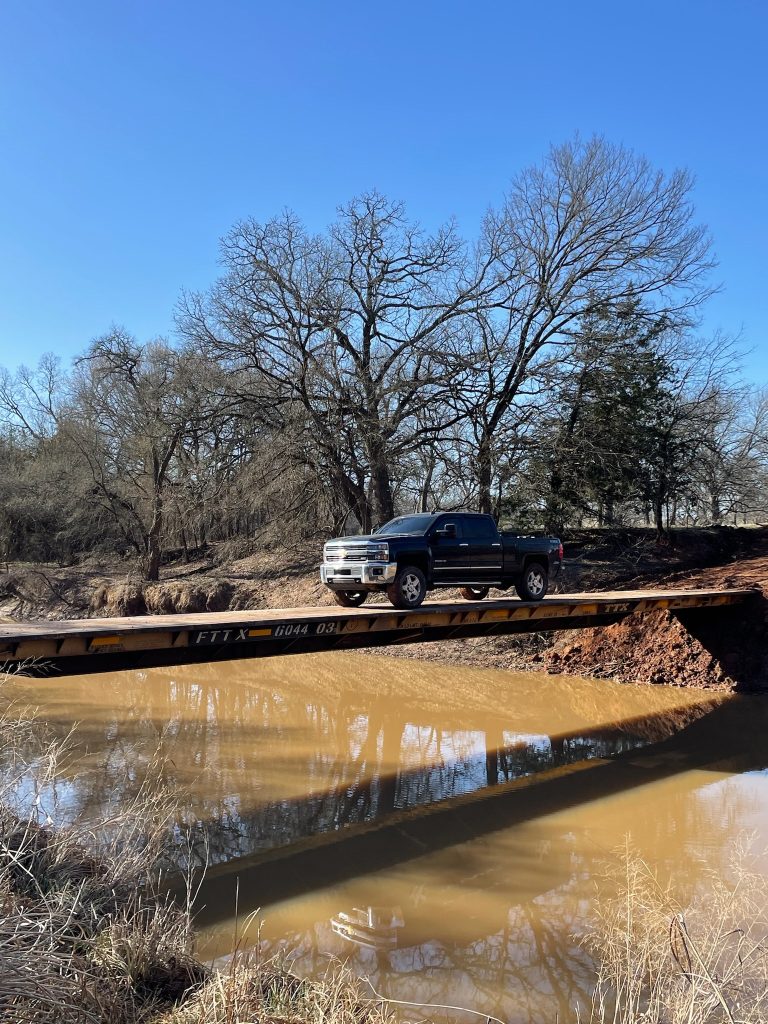
A bridge definitely adds a certain appeal to rural property, but the structure can provide numerous advantages far beyond its pleasing aesthetic. Not only can it keep your boots and tires dry, but it can create more opportunities for efficient land use. A bridge’s obvious purpose is enhanced accessibility. Private properties can often span vast acreages, and large creeks can pose significant barriers to efficient movement of equipment, livestock, and personnel. By bridging these gaps, landowners can streamline daily operations, reducing the time and effort required to navigate the property.
Economic Opportunity
Lee Roberts, owner of Innovative Bridge Company, which offers railcar and custom bridge solutions throughout the Southeast, says building a bridge is nothing to take lightly. There’s a lot to consider including the cost and economic opportunity the bridge can provide.
“You must first consider how much that access is worth and what goal you hope to accomplish by building the bridge. Is it for recreational use? Industrial logging? What type of vehicles will cross? How much land access do you hope to gain? If you just hope to gain access to a few acres of land on the other side of a wide creek, the cost of a 90-foot bridge may not be worth it. But if the bridge will provide access to 100 acres of land and $100,000 worth of timber, then it’s likely a wise investment,” Roberts said.

Installing a bridge on your property can lead to significant economic opportunities. Improved accessibility can increase the overall utility and attractiveness of the property for various uses such as agriculture, residential development or recreational purposes. In addition, enhanced accessibility can lead to increased property value because properties that are easily accessible are typically more desirable in the real estate market.
Improved access can allow easier transportation of equipment, livestock, and produce, which translates into cost savings and increased productivity.
Financing a Bridge
Brandon Simpson, vice president branch manager of First South Farm Credit, a financial cooperative that provides a steady flow of credit to eligible borrowers in Alabama, Louisiana, and Mississippi, how bridges are financed depends on each situation.
“One way of financing the bridge is using the equity for the collateral to finance the improvement to the property. If there is little or no equity in the property, then the landowner may want to consider the value the bridge will add to the property for attempting to acquire a loan. Just like adding a pool or a fence to a home property, those items no doubt add value, but the value isn’t always a match dollar per dollar value. Just because you spend $50,000 on a pool doesn’t necessarily make your property worth $50,000 more. If the bridge provides access to a large tract of land you are unable to access otherwise, then it may,” Simpson said.
He explained that the property may have to be reappraised or a current appraisal done based on an as-completed value in order to determine how much can or cannot be financed.
“We can provide short-term, intermediate and long-term financing for a bridge, especially in cases where we’re taking a lien on the property. A bridge is not like a piece of equipment that devalues overtime. It’s considered a fixture to the property, which will allow it to be financed not only short term, but long term out to 15 or possibly 30 years,” Simpson said.
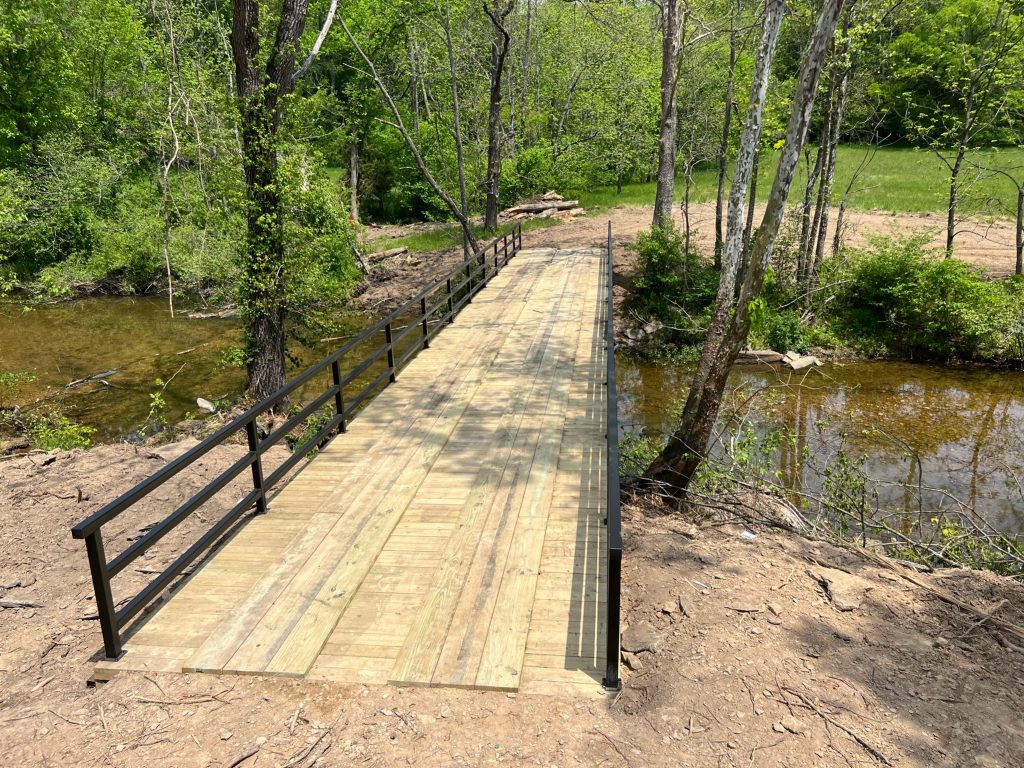
Overcoming Obstacles
Without a bridge, a creek can act as a barrier, isolating parts of the property and making it difficult to traverse. This can be particularly problematic for agricultural operations, where the ability to move equipment and livestock efficiently is crucial.
A bridge can connect different areas of their property, making it easier to access amenities or recreational spaces. Whether it’s providing a direct route to a garden, a barn, or even a separate parcel of land, a bridge ensures that the entire property is usable and accessible year-round, regardless of seasonal changes or water levels.
On larger tracts of land, especially those used for farming or ranching, a bridge can allow for the seamless movement of machinery, vehicles, and animals. It enables farmers to rotate crops more effectively by providing access to fields on both sides of the creek. Similarly, ranchers can more easily manage their herds and maintain fences.
A bridge can also benefit the environment. Properly constructed bridges can prevent erosion, maintain water quality by reducing sediment runoff, and preserve aquatic habitats crucial for local biodiversity.
Planning and Preparation
When assessing the site to determine the bridge’s purpose, consider if the bridge will provide access for vehicles, equipment, or pedestrians, or serve as a connection between different parts of your land. Think about the frequency and type of traffic, as well as any environmental impacts. Additionally, think about how the bridge will fit into the overall landscape and whether it should complement or enhance the natural beauty of the creek.
Local Building Codes
Once you decide to construct a bridge on your property, you’ll need to consider environmental regulations, permitting requirements, engineering feasibility and cost considerations.
Roberts said it’s important to understand your local building codes and that they differ by state. Most jurisdictions require a building permit before you can start construction. Your bridge design must be reviewed and approved by a licensed engineer. During and after construction, your bridge will likely need to undergo inspections to verify that it complies with the approved plans and codes. This is where it comes in extremely handy to have a professional’s help who understands the codes, permits and environmental requirements for your area.
Environmental Regulations
Adhering to environmental regulations is also crucial. These regulations help protect natural resources, wildlife habitats and ecosystems. If your property contains habitats for protected species, such as endangered plants or animals, you may need special permits or modifications to your bridge design to protect these species.

“The DNRs in each state play a role in making sure no endangered species are impacted by your bridge. If they can determine it will not negatively affect the environment, they will give you a permit. Some counties, such as those in Tennessee and Kentucky, have a bridge permit that you can apply for like a driveway permit. Overall, the permit process is fairly simple and we handle that for our customers,” Roberts said.
How to Measure
Building a bridge to span a creek involves meticulous planning to ensure the structure is not only functional but also safe and durable. Before taking measurements, figure out the creek’s flow patterns, seasonal variations and any potential environmental impacts.
You can use a tape measure or a laser distance meter to determine the creek’s width at the planned crossing point. For a more accurate measurement, take multiple readings at different points across the creek. Roberts says he relies heavily on a rangefinder for measurements.
You’ll also want to measure the depth of the creek at several points along the width to account for any variations with a marked rod or a depth gauge. Pay attention to the flow direction and any variations. These patterns will influence the bridge’s foundation and support structure. Pay attention to the stability and composition of the creek banks while noting any erosion, vegetation, or potential instability that could affect the bridge’s supports.
“Generally, the Corps of Engineers will let you install a bridge over a creek as long as you free span it. That means no pylons less than 6 foot back from shoreline. It’s an easy calculation. For example, a 20-foot creek will require a 32-foot bridge,” Roberts said.
Height Requirements
Determine the minimum height required for the bridge by considering the highest expected water level and any potential debris. Make sure to account for seasonal variations and flood conditions. Elevate the bridge to accommodate the highest anticipated flood level to prevent damage or obstruction.

Roberts said if you can’t build the bridge above the flood line, especially if you’re in a wetland area, then building one just doesn’t make sense.
“During a flood, trees and debris will collect around the bridge and push the water up over the banks. You need to work with Mother Nature and not against her. If you try to fight Mother Nature, she’s going to win,” Roberts said.
Choosing Materials
The material you choose depends on your budget, environmental conditions, expected traffic load and design preferences. Each material has its pros and cons.
- Concrete is strong and durable but is more costly and requires longer construction times.
- Steel is flexible and strong but requires protection from corrosion and can be costly.
- Wood has a nice natural aesthetic and is more affordable, but needs regular maintenance and is less durable.
- Composite materials are low maintenance and durable but are costly and less familiar to many builders.
- Aluminum is lightweight and resistant to corrosion but is generally more expensive and not as strong as steel.
Designing the Bridge
The design of your bridge will depend on the span length, load requirements and aesthetic you want. Acquire the help of an engineer or architect to determine the creek’s width, depth, and flow characteristics, as well as the surrounding terrain and environmental considerations. The expert can then create preliminary sketches outlining the bridge’s dimensions, structure and materials, while keeping in mind load-bearing capacity and aesthetics.
Common types include:
- Beam Bridges: Simple and cost-effective, suitable for short to medium spans. They consist of horizontal beams supported by piers on either side of the creek.
- Arch Bridges: These offer aesthetic appeal and can span longer distances without needing as many piers. The arch design distributes the load effectively and is often used in scenic or historic settings.
- Suspension Bridges: Ideal for longer spans, these bridges use cables suspended between towers and hold the deck by vertical cables. They are less common for small creeks but useful where a large span is required.
- Truss Bridges: Composed of interconnected triangles, truss bridges provide strength and stability. They are suitable for various spans and are often used for both road and rail bridges.
Roberts says Innovative Bridge Company’s railcar bridges come in a variety of sizes and options and are an ideal solution because they are strong, durable, sustainable and built to last a lifetime.
“As long as they are painted and rust is prevented, they offer a lifetime solution,” Roberts said.
Gathering Tools and Equipment
Essential tools include surveying instruments like total stations and GPS systems for accurate site assessments, along with excavators and backhoes for digging and site preparation. Crane systems and hoists can be used to lift and place heavy materials such as beams and pre-cast concrete segments. Concrete mixers and pumps help create and pour the bridge’s foundation and deck, while welding machines and hand tools can be used to assemble steel components. Additionally, safety gear like hard hats, harnesses and safety nets protect workers throughout the construction process.
A bridge built to cross a creek on private property is more than just a practical structure; it’s a multifaceted solution that addresses accessibility, land management, environmental impact, cost-efficiency, property value and safety. A well-designed bridge enhances both the functionality and enjoyment of the property.
