
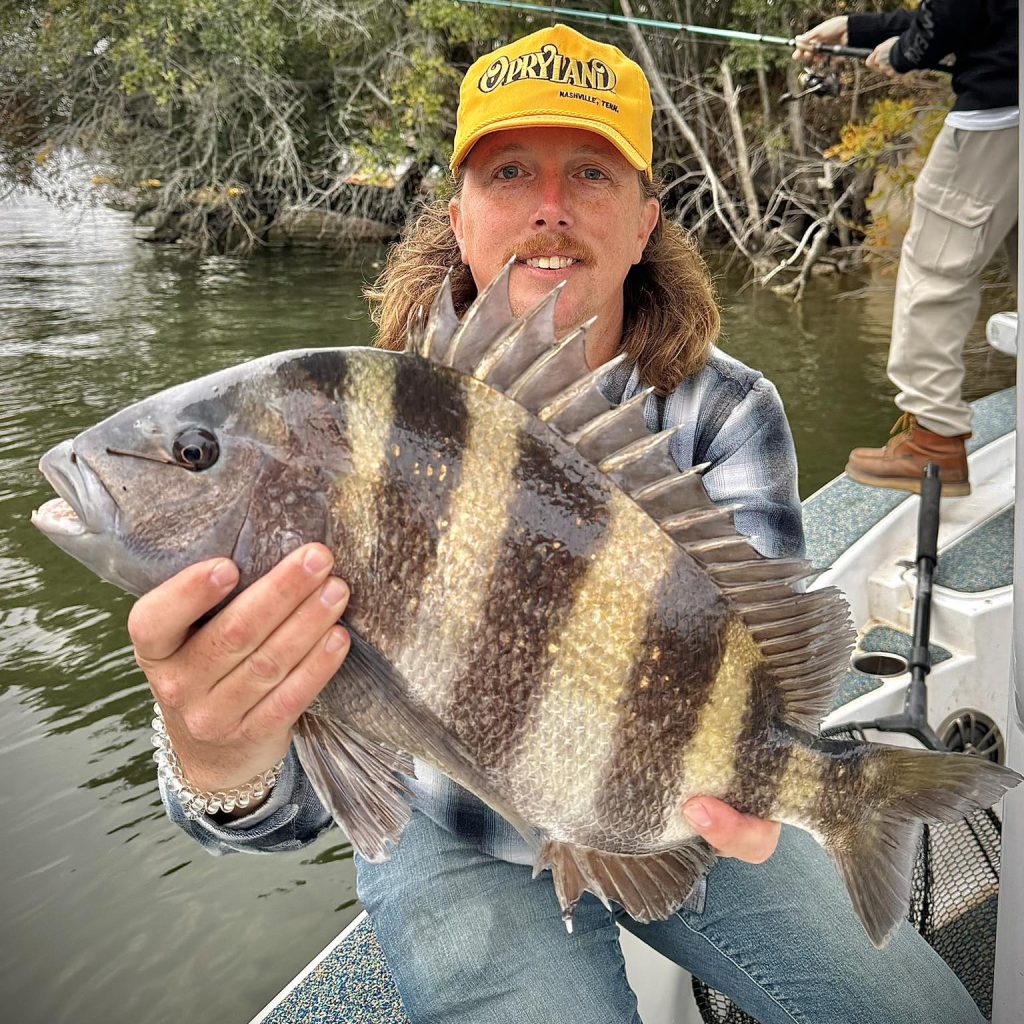
Sheepshead fishing is one of those Gulf Coast treasures that often flies under the radar. These fish put up a scrappy fight, they’re delicious on the table, and once you learn how to catch sheepshead and target them properly, the action can be downright addicting.
We caught up with avid sheepshead angler Drew Giles, owner of Giles Custom Installations and The Fever, for an in-depth breakdown of his personal approach to finding, hooking, and landing these hard-fighting, structure-loving fish. Drew’s passion for fishing runs deep. While he’s got plenty on his plate running multiple businesses, he always carves out time to chase sheepshead during the cooler months.
“I love the sheepshead fishing,” Drew told us. “To me, it’s way easier than chasing trout down. And they fight good and they taste good.”
When to Target Sheepshead on the Gulf Coast
While many folks don’t really start thinking about sheepshead until the spring spawning season, Drew has found success much earlier in the year. He begins targeting them in early fall and stays on them through the spring.
“They’ll start moving in from the Gulf back into the rivers and bays when the water temps hit the 70s,” he explained. “Usually around the end of September, early October. I’ve gotten on them as early as September, but October is when it really starts picking up.”
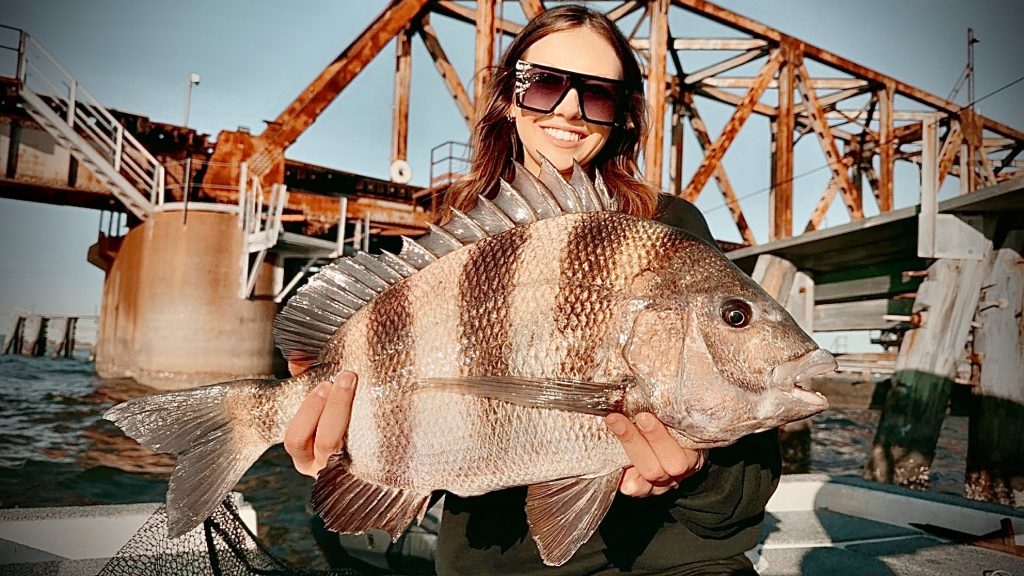
Once they’ve pushed into the rivers, he said, they tend to hang around.
“Once they’re here in the rivers, I don’t think they’re leaving back out into the Gulf. They may change the bite a little bit, but they’re still going to be around.”
He’s also started fishing for them offshore during the spawn in March and April.
“Catching them on the rigs is a blast,” Drew added. “There’s so many out there, and usually the bigger ones too. It doesn’t get much more fun.”
Rigging Up for Sheepshead
Drew’s tackle setup changes depending on the size of fish and the conditions he’s facing. If he’s chasing smaller “eater” fish, he’ll go with a 2500 reel, 20-pound braid, and a 20-pound fluorocarbon leader. But when he’s after bigger sheepshead in heavy structure, he sizes up to a 4000 reel.
“Those bigger ones, if you’re on light tackle, they tend to get into that structure before you can crank them out,” he said. “And there’s nothing worse than knowing you have a big one on and not being set up for it.”
He also prefers using a swivel to connect braid to leader. “It’s quick, it’s easy, and if I have people on the boat, it’s a lot easier to re-rig. You’re going to get broke off. It’s not if, it’s when. So speed matters.”
When it comes to hook style, Drew has moved toward using weighted jig heads, sometimes called knocker jigs, instead of swing jigs. “I like the straight J hook with the weight on it,” he said. “As soon as you snatch it, it’s in his mouth. With the swing jig, that little pivot gives them time to back off it. I’ve had less hookups that way.”
For beginners or those prone to premature hook sets, he often uses Mustad Live Bait Circle Hooks in size 1. “With bass guys, they feel that first little thump and just hammer the hook set. But with sheepshead, that thump is just them crushing the bait, then they back off. You’ve got to wait for them to suck it in. Circle hooks help people land more fish.”
Understanding Water Clarity and Salinity
Water clarity plays a huge role in Drew’s decision-making. He shared a recent example where he’d been consistently catching sheepshead from a favorite spot until heavy rain muddied the water.
“I’ve been going to this place every trip and catching fish,” he said. “But the water got so muddy, we literally couldn’t buy a bite. We left and ran over to Mississippi, and the water was crystal clear. We had five to six feet of visibility at the launch, and it made a huge difference.”
His ideal clarity is two to three feet. “When it’s slick calm and super clear, they get finicky. But with a little wind and a couple feet of visibility, they’re a lot more aggressive.”
While clarity is a top factor, he also pays attention to salinity. “All that freshwater from the rivers and creeks can push them further out. I think salinity plays a big role in where they move.”
Where to Find Sheepshead
When Drew starts searching for fish, he looks for structure with natural bait sources. These include barnacles, mussels, oysters, or crustaceans.
“If there’s structure with bait on it, there’s going to be fish there,” he said. “I like clustered structure. Like a group of four pilings instead of just one or two. That holds more fish.”
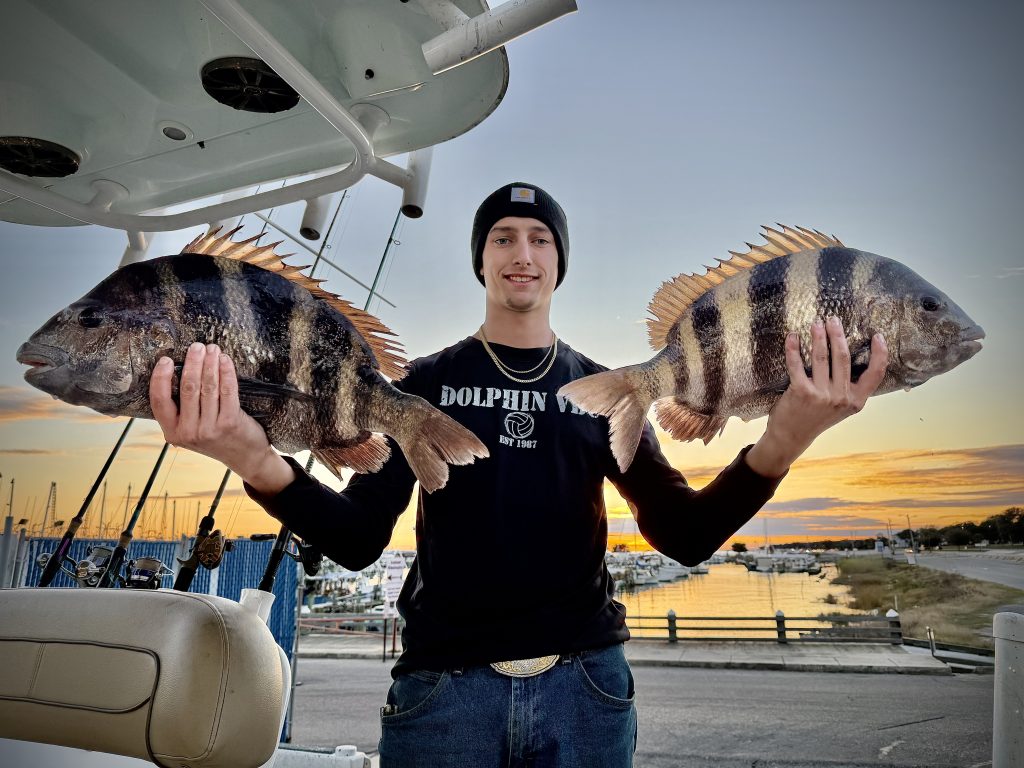
He always begins fishing near the bottom and works his way up the water column.
“I drop all the way down and give it 30 seconds to a minute,” Drew said. “If I don’t get a bite, I reel up a few cranks and try again. Once I find them in the water column, I stay at that depth.”
Out on the rigs, water column variation is even more important. “Too deep, and you’re getting juvenile snapper. Mid-depth is sheepshead. Go higher, and it’s baitfish. Knowing where to be in the column really matters.”
Importance of Tides and Current
Drew plans most of his trips around moving water. “I constantly watch the tide chart,” he said. “I try not to fish during slack tide because the bite slows way down. If you can find spots where the current is moving around the structure, that’s usually where the fish are.”
When setting up on a rig or dock, he positions the boat to fish the down-current side. “They sit there waiting for stuff to sweep by,” he explained. “Whether I’m using my trolling motor or tying off, I get as close as I can. You’ve got to get up on that structure if you want to catch them.”
Best Baits for Sheepshead
For Drew, fiddler crabs are the go-to bait. “They’re my favorite because you get minimal bycatch,” he said. “Shrimp will catch fish, but if you’re targeting sheepshead, they’re not the best choice.” When crabs aren’t available, he’ll scrape barnacles or mussels from the structure and use those. “That’s what they’re eating naturally, but they see that all day. When you drop a crab down there, it stands out.”
When to Stay and When to Move
Sheepshead fishing isn’t a “set it and forget it” game. Drew moves frequently to stay on active fish.
“I usually give a spot 15 to 20 minutes,” he said. “If we’re not getting bites, I move. While I’m there, I’m working different parts of the boat, trying to bounce bait around and find them.”
He also uses chumming tactics to help draw fish to his bait.
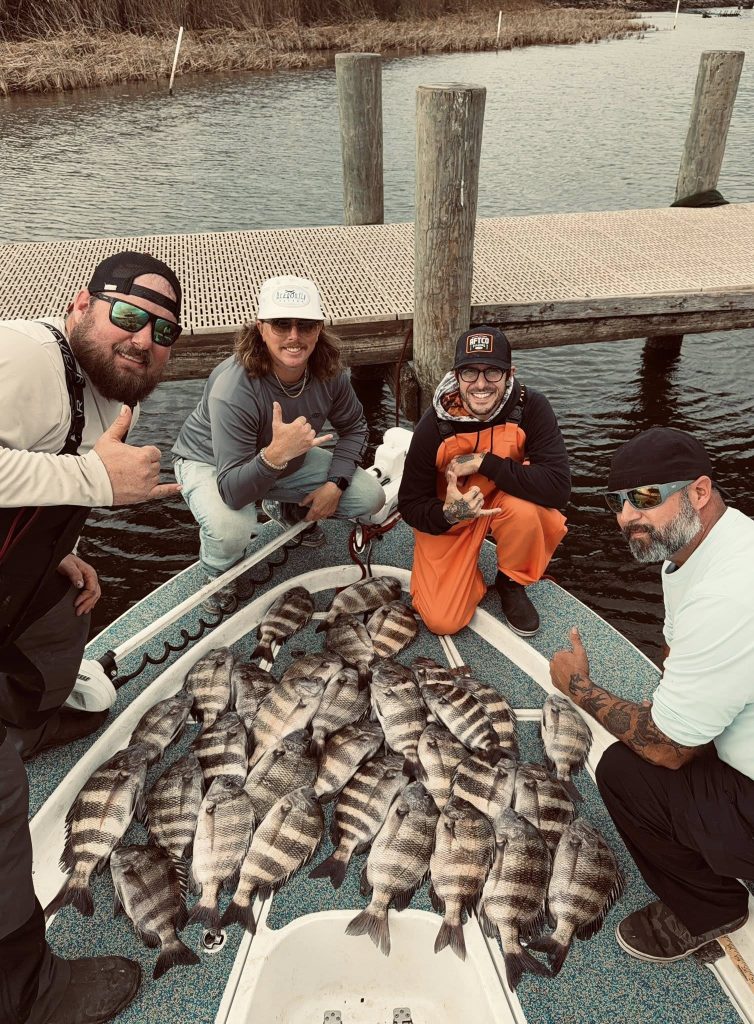
“If we’re not getting bites, I’ll scrape barnacles or toss chum. It makes a difference, especially if they’re there but not active.”
Old School Methods Still Work
Despite having side-scan sonar on his boat, Drew prefers to rely on experience and intuition.
“I don’t use my electronics to find fish,” he said. “I pull up, fish the spot, and move. My electronics are for navigation. I grew up fishing without them, and it still works.”
Final Thoughts
Catching sheepshead is all about understanding the fish, reading the conditions, and staying persistent. Drew Giles brings an old-school attitude with a modern understanding of patterning fish, and it’s a deadly combination.
“You’ve got to be willing to get up on that structure,” he said. “That’s where the fish are.”
If you’re looking to up your sheepshead game this season, follow Drew’s lead. You can find him sharing tips and short videos on Facebook and Instagram. He’s not out there just for clicks. He’s out there because he loves to fish and help others do the same.