
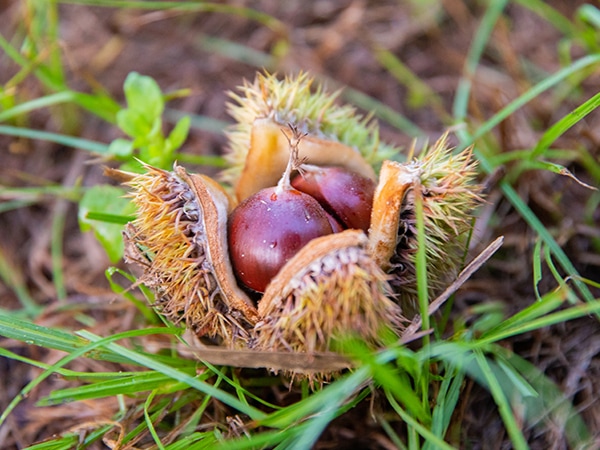
The chestnut is widely recognized as the No. 1 food plot tree, producing the most nutritious and wildlife-attracting nuts on the planet. Sadly, few have actually even seen a real chestnut because a blight wiped out the American chestnut in the early 1900s. Fortunately, scientists and chestnut advocates worked to bring them back in a blight-resistant hybrid chestnut that can now be purchased and planted to provide the wildlife on your property with the nutrient-dense nutrition they need and crave. The hardy trees can thrive in most habitats found throughout the eastern region of the U.S., making them an ideal choice for your property, especially if you want to attract and hold wildlife, such as deer and turkeys.
The History Behind Hybrid Chestnut Trees
The American chestnut was once one of the most abundant and valuable trees throughout America’s eastern forests. Approximately three billion chestnut trees comprised around a quarter of the standing trees in the Appalachian Forest. In addition to providing delicious and nutritious nuts for humans and wildlife, the trees provided timber for houses, fences, barns and other structures as the straight-grained wood was easy to split and work with hand tools. The nuts were also used as tannin for the leather industry.
Sadly, in what many recognized to be the worst ecological disaster in American history, the American chestnut was almost completely wiped out by a bark fungus, known as the Chestnut Blight, accidentally introduced from the Orient in 1904. In a span of 40 years, the Chestnut Blight killed more than 30 million acres of chestnut trees from Maine to Georgia and west to the Mississippi.
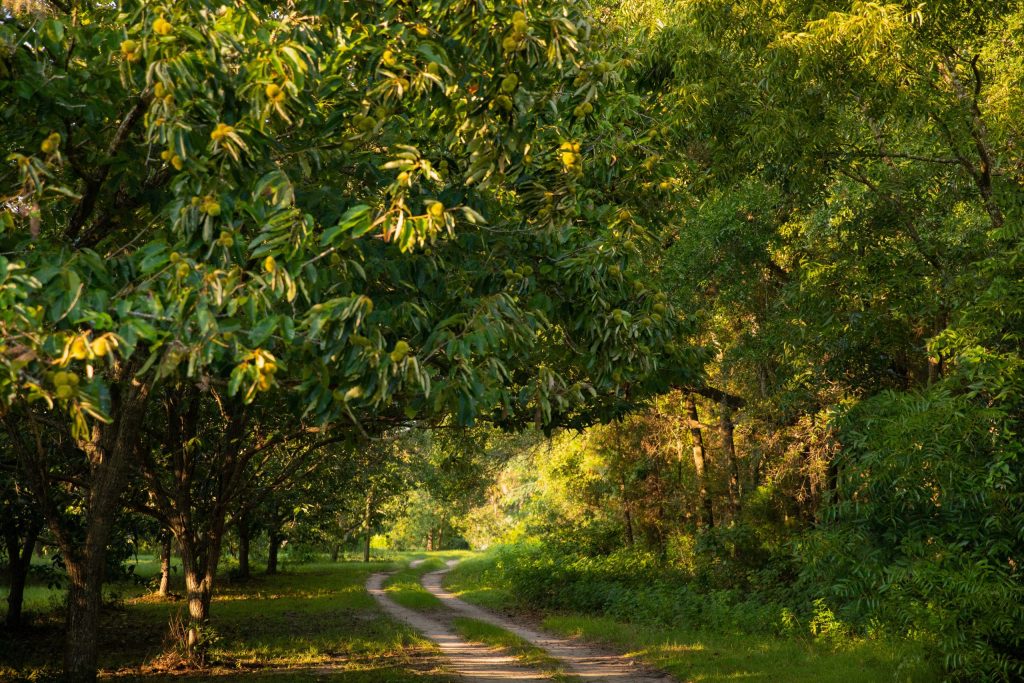
Iain Wallace, the CEO of Chestnut Hill Outdoors, a nursery and tree farm famous for supplying the Dunstan chestnut tree, explains that the chestnut’s rapid disappearance was especially devastating because chestnut trees produce delicious nuts that provide essential nutrients that play an important role in the diet of many wildlife species, such as bear, deer, elk, squirrels, turkeys and more, especially as they prepare for winter.
The Comeback
Wallace says that fortunately, in the 1950s, James Carpenter discovered a surviving American chestnut tree in a grove of dead and dying trees in Ohio. He sent budwood to Dr. Robert T. Dunstan, a well-known plant breeder, who took stock cuttings from the blight-resistant tree and crossed them with a Chinese chestnut, which was naturally resistant to the blight. Dunstan then crossed the seedlings from the first cross back to both parent trees.
“These future varieties would eventually become known as Dunstan Chestnuts, which are now widely considered the No. 1 food plot tree in America,” Wallace said.
The Dunstan chestnut was bred specifically for orcharding, meaning high-production. It produces large-size quality nuts with a sweet taste that are easy to peel. Most importantly, it is resistant to the blight.
Chestnut Hill Nursery in Alachua, Fla., has the original trees from the original breeding program because Dunstan moved to Florida after the initial planting site and brought the genetics with him.
Wallace explains that all of the trees on the farm are produced from the original blight-resistant trees and Chestnut Hill is the only place that produces the Dunstan chestnut.
“Other places that claim to sell Dunstan chestnut trees either aren’t actually producing Dunstan chestnuts or they are many generations removed,” Wallace said.
Benefits of Planting Hybrid Chestnut Trees
If you only have the time and budget to plant one tree, Wallace says without a doubt, the No. 1 best tree to attract deer and other wildlife is the Dunstan chestnut tree.
“Dunstan chestnuts are the perfect food plot tree,” he said. “This hardy, fast-growing tree has a vast growing range that stretches from Florida to Wisconsin. Chestnuts bear nuts in three to five years, compared to 10 to 20 years for oaks, and can produce up to 2,000 pounds per acre at maturity. Chestnut also produces nuts annually, whereas oak only produces nuts every other year.”

Wildlife particularly love the sweet-tasting nuts because they are high in protein and carbohydrates and have no bitter-tasting tannins like acorns, which have a lot of tannic acid. Tannins act as a natural deterrent for animals to help prevent them from consuming all of a tree’s seeds.
In addition to tasting better than other mast crops like acorns, the chestnut has more nutritional value as well. The acorn is high in fat, while the chestnut is higher in carbs. Chestnuts are composed of approximately 40 percent carbohydrates, 5 to 8 percent protein and 2 percent fat. The protein has been compared to an amino acid complex similar to eggs because it is high-quality protein that is easily digestible. It’s a wonderful nutrition source for wildlife in a key time before winter when the deer need it most.
Considerations Before Planting
Wallace says to remember that fruit-bearing and mast-bearing trees typically do better in full sunlight, so an open field or clearing is best for planting chestnut trees.
“Fruit and nuts require sun for the plant to grow the nutrients it needs. The more sun, the better. However, they’ll also grow in partial sun. If you have a tree line that you want to plant along, that is giving partial sunlight instead of full sun all day, you can plant there,” he said.
Soil Requirements
Hybrid chestnut trees are hardy and adaptable and grow well in all types of soil. They can grow in sandy soil, clay soils and sandy loam, but it is important to plant them in well-drained soil.
“Standing water will kill a tree at any time during the year, so if you can plant your trees on a slight slope, that’s a good plan as the soil will likely drain well,” Wallace said.
Wallace says he doesn’t recommend amending the soil when planting.
Fertilizer
“Adding a different type of soil is not necessary. I recommend taking the tree out of container and planting it with the soil it came in. If you are planting a bare-root tree, just fill the hole back up with local soil. There is no real need to add anything. I think the trees do better if they are just planted with the same soil that they’re going to be living in from the get go. I do recommend that you fertilize the trees regularly, but don’t start fertilizing until a couple of months after it’s planted, because the fertilizer could burn the tinder new roots. Fertilize once with a balanced 6- to 9-month time release fertilizer after the average last frost date in spring. You can also use a simple instant release fertilizer after the average last frost date, and again a couple months later in the summer.
Be careful not to fertilize too close to fall because it can encourage vegetative growth when the tree should be going dormant. This can be a risk for frost damage in early fall. If you plant trees at a distant property that you’re not able to access frequently, then once a year is fine,” Wallace said.
Water
Wallace said to water the young tree weekly for the first year or two at least. He said those who plant trees at a site they can’t frequently service run the risk of losing the trees.
“Yearling trees needs to be watered for at least a year. They need a gallon of water once or twice a week, and maybe more if its dry or hot. Planting in the fall can help with that problem. Trees go dormant when the temperatures dip. When they’re dormant, they don’t require as much energy and water. The roots grow and come out of dormancy more established and the tree is more likely to survive through the summer,” Wallace said.
Climate Adaptability
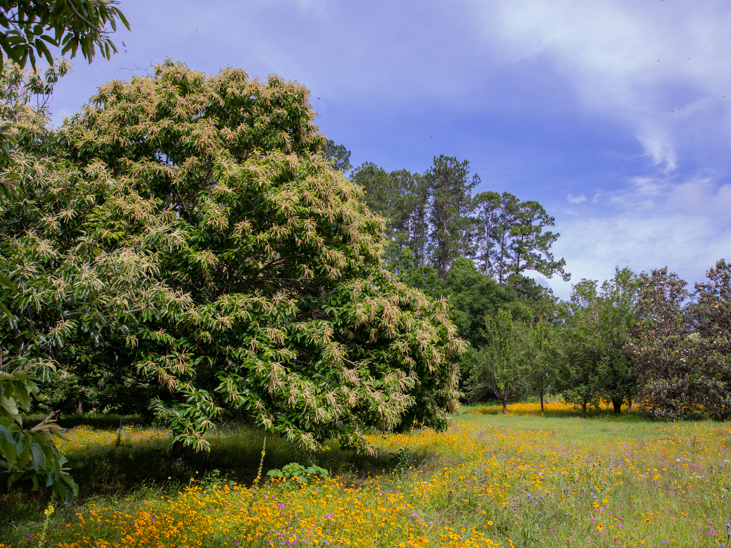
Chestnut trees grow in USDA zones 5 through 9, which spans Central Florida to Michigan or New York.
A good rule of thumb to remember is that chestnut trees will grow well in most environments and will do well in locations where you can also find oaks, wild persimmons or wild mulberry. In fact, chestnuts will likely outperform those trees once they start producing.
“We’ve seen some success in Zone 4. Some people plant them in Minnesota, but Zone 5 is the most northern they’ll typically grow. If the temperature falls to -20 degrees, there’s a good chance the tree will freeze in the early years. A young chestnut tree can’t survive extreme cold, but once the wood is older and has hardened, it’s hardier. Plant in Zone 4 at your own risk. There is a western border where it gets too dry to grow chestnut trees. The line runs along Oklahoma, Texas and Kansas. You can tell where they will grow based on the local ecology. If you have a variety of large oak trees, chestnuts should grow well. But if you see more shrubby oaks and the environment is dry, chestnuts will need water supplementation to grow,” Wallace said.
When planting, Wallace recommends spacing the trees at least 35 to 40 feet apart, as they’ll grow to approximately 40 feet wide at maturity.
Where to Find Hybrid Chestnut Trees for Sale
You can order Dunstan Chestnut trees online and select 1- to 1.5-year-old trees from 18 to 36 inches. They are shipped all over the eastern United States. The time of shipping depends on your USDA zone. Depending on whether you specify shipment in spring or fall, Chestnut Hill will ship during the best time to plant in your USDA zone. You can also buy Dunstan Chestnuts at Walmart and Rural King where you can purchase 2-year-old (5-foot) and 3-year-old (7- to 9-foot) trees.
When it comes to attracting wildlife and holding it on your property, you can’t beat hybrid, blight-resistant chestnut trees. They are hardy and easy to grow in a variety of locations and produce a heavy annual crop that is both delicious and nutritious for the local wildlife.