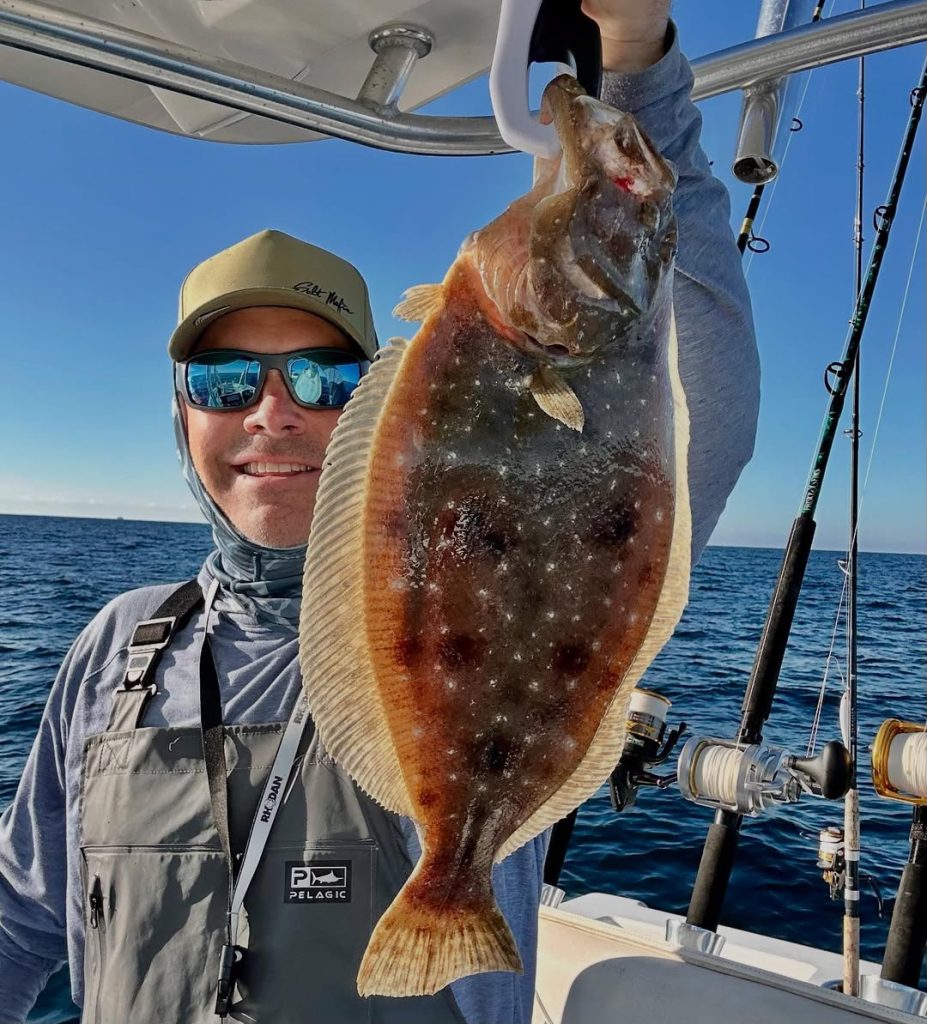
When most anglers think about flounder fishing along the Emerald Coast, they picture shallow bay systems, sandy flats, and autumn runs through the passes. But as Captain Justin Leake of Panama City Inshore points out, there’s another game entirely taking place just a few miles off the beach. Offshore flounder fishing in the Gulf isn’t new, but it’s one of those open secrets that remains quietly productive long after the bay bite cools down.
Why Flounder Push Offshore in Winter
Leake says that as the weather turns cold and the bait migration pushes offshore, the flounder follow. “I’ve caught them really good around natural bottom and wrecks,” he explained. “It does seem like they like to be in that same depth range—about sixty to seventy feet of water. I think it’s all tied to the bait migration.” That layer of natural limestone bottom, starting about two miles off Panama City Beach, becomes an all-you-can-eat buffet for predators. Bait that has spent the summer inshore funnels through the passes and settles over reefs, wrecks, and ledges just off the beach. The flounder move right in behind it.

Leake believes many anglers underestimate just how mobile these fish can be. “Traditionally, we’ve always thought flounder left the bays and went out into the Gulf in the fall, and while that’s true, I think some come from even farther offshore. There’s probably some that live out in two hundred feet of water, and this time of year they hit the beach because that’s where the bait’s at.” That theory gained some backing recently when a tagged flounder caught off Panama City was discovered to have been originally tagged more than four hundred days earlier in Dog River near Mobile Bay—over two hundred miles away.
Finding the Right Structure and Bottom
Whether those fish are migrating from local estuaries or the distant continental shelf, they seem to concentrate in the same general zone. For Leake, that nearshore band of structure—what he calls “natural bottom”—is the sweet spot. He fishes both reefs and limestone patches, focusing on the sandy perimeter rather than the hard structure itself. “The flounder aren’t on the wrecks or hard bottom. They’re typically on the sand around them,” he said. “If you’re getting worried about triggerfish biting everything off, you’re probably too close to the structure anyway.”
Tackle, Bait, and Method
Leake’s tackle is simple but precise. He uses light spinning gear—a seven-foot medium-action rod with a 3500-size reel spooled with fifteen-pound braid. His go-to rig is a two-ounce egg sinker above a short, twelve-inch, twenty-pound leader. “There’s no reason to go any longer,” he said. “You want that bait pinned close to the bottom.” For bait, he likes whatever’s freshest and available—pilchards if they’re still around, small cigar minnows, or the classic bull minnow from the tackle shop.
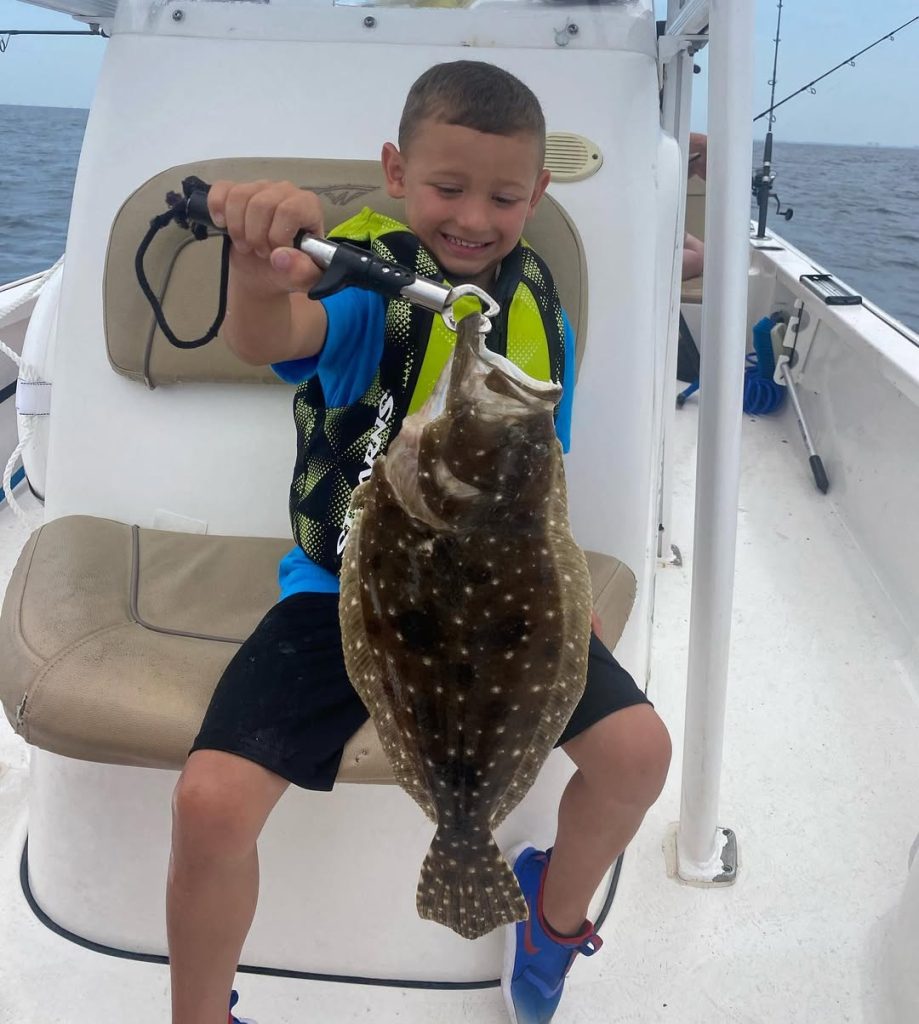
Patience is key. Offshore flounder fishing is less about covering water and more about waiting them out. “They’ll find you,” Leake said. “They’re aggressive and will come search your bait out. You don’t have to cast around—they’ll smell it and move to it.” It’s not uncommon to sit for several minutes without a bite, only for multiple rods to suddenly double over. “They never swim alone,” he added. “Once you catch one or two, the rest start showing up.”
Dealing with Triggerfish and Harvesting Responsibly
One challenge in recent years has been the sheer number of triggerfish. “They’ve made it almost impossible to catch flounder the traditional way when you’re around structure,” Leake admitted. His solution is to use those pesky triggers as a guide. If they’re thick, drift farther off until the screen clears and the sand returns. That’s where the flounder will be.
Leake keeps his harvest modest, usually taking two or three fish per person and focusing on quality over quantity. He also cautions spear fishermen to use restraint. “It’s really popular this time of year, but it’s not very sporting,” he said. “They kind of don’t stand a chance, so stick a couple and bring them home for supper, but leave some for next time.”
The Bottom Line for Offshore Flounder Fishing Success
With cool weather settling over the Gulf and the bait migration in full swing, the nearshore reefs off Panama City and beyond are quietly holding some of the best flounder fishing of the year. Whether you’re vertical-dropping a bull minnow or drifting a live cigar minnow along the sand, the bite is simple, patient, and rewarding. As Leake puts it, “If it’s November or December, you’re anywhere in the Gulf in sixty to seventy feet of water and there’s bait around, there are flounder on the bottom there. Drop down, be patient, and you’ll get ’em.”