

Carrying a massive rack atop its head, a monstrous whitetail steps out of the timber, walks through the bushes and lush native grasses, and enters the green food plot. It rips a turnip out of the ground, chews its vegetables with an open mouth, and heads back in for another bite. It’s a sight every southern bowhunter wants to see but few will. And that’s not because they don’t have the hunting skills; rather, it’s because they aren’t putting enough stock in the “where” of locating a Pope & Young whitetail in the South.
Some hunters are experienced and grasp the “how” of killing bucks. But killing a record-book buck is about more than hunting skills. A big part of it is “where” you hunt. In this article, I’ll talk about how you can increase your odds of bagging a P&Y buck by simply hunting where there are more of them to pursue.
Of course, some states produce more (and bigger) P&Y bucks than others. For example, while some Florida hunters kill P&Y bucks, most do not. Any state in the Midwest, and many in the Northeast and West, produces far more of these. (Wisconsin is king.)
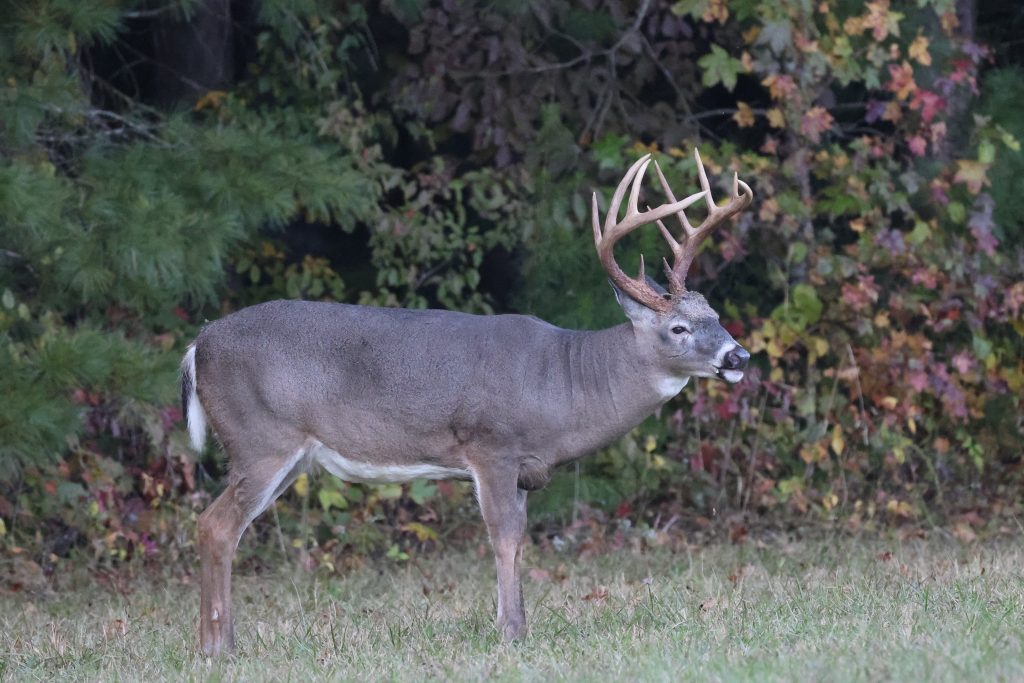
We know that just because hunters kill more and bigger deer doesn’t mean they are better hunters. It just means they have better land and better access to larger deer. As such, locating a P&Y whitetail in the South becomes an important part of the process. Here is what you should know.
Minimum Score for a Pope & Young Whitetail Minimum scores are designed to set record-keeping thresholds for the P&Y record books. Every big game animal has a minimum score it must meet to be eligible for entry into the P&Y records book and online database.
For whitetails, the minimum score for typical white-tailed deer is 125 inches. The minimum score for non-typical white-tailed deer is 155 inches. Of course, there are other eligibility requirements, which are found here. The animal must have been killed in a fair chase manner.
If eligible for entry, hunters should find a measurer. The measurer will then score the deer, record the measurements on a score sheet, and then the submission process takes place.
Recent and historic whitetail studies have determined a whitetail’s best antler growth years are 6 ½ to 8 ½. Due to hunting pressure, disease, and general mortality, most bucks don’t reach those ages, though. Therefore, many hunters manage for more reasonable age classes, such as 4 ½ or 5 ½.
That said, hunters should know that, in some places, bucks might top out at lower P&Y limits, or even below the minimum threshold, even at their most mature and best antler growth ages. In other areas, deer can hit that 125-plus mark at a relatively young age (i.e., 2 ½ or 3 ½).
How to Find Pope and Young Whitetail Bucks
Finding a P&Y buck is no simple task. In the South, that’s even truer. However, there are certain methods and resources available that can make it easier.
Accessing and Analyzing the P&Y Database: The P&Y database is an excellent tool for determining key areas where P&Y bucks tend to be more common. It can help identify states and counties within states that are more likely to produce bigger-antlered deer. Of course, while this doesn’t guarantee every property will hold P&Y deer, the odds are greater that the property you secure hunting permission to, lease hunting rights for, or own will offer bigger deer.
Comparing That Information with State Harvest Records: Wildlife agencies also produce harvest data. This too can be a great tool when deciding where to focus your efforts. Studying data on the state and then county levels are the first two steps in finding P&Y bucks. Then, it’s more possible to find deer in counties that tend to produce.
Identifying Huntable Land in Areas that Historically Produce Records: Specific bucks that are harvested and shared via print and digital media outlets can aid in this effort, too. Find stories of big deer that are killed by hunters. Research enough of these anecdotal encounters, and patterns can emerge. Comparing these singular but specific bucks (data points) to large-scale state- and county-based data can be quite effective.
Scouting from the Road: Never should a hunter “hunt” from the road. This is true whether you have access to the property or not. However, “scouting” from the road is often permitted. To that point, many accomplished big buck hunters will drive roads in the evening and glass for deer. When they see a big buck, they work to gain hunting permission or lease the property for hunting. This practice is far more common than many hunters realize.
Best Southern States for Pope & Young Whitetail Bucks
As alluded to, some southern states are better than others for P&Y bucks. Focusing on these states certainly increases the odds of encountering record-class deer.
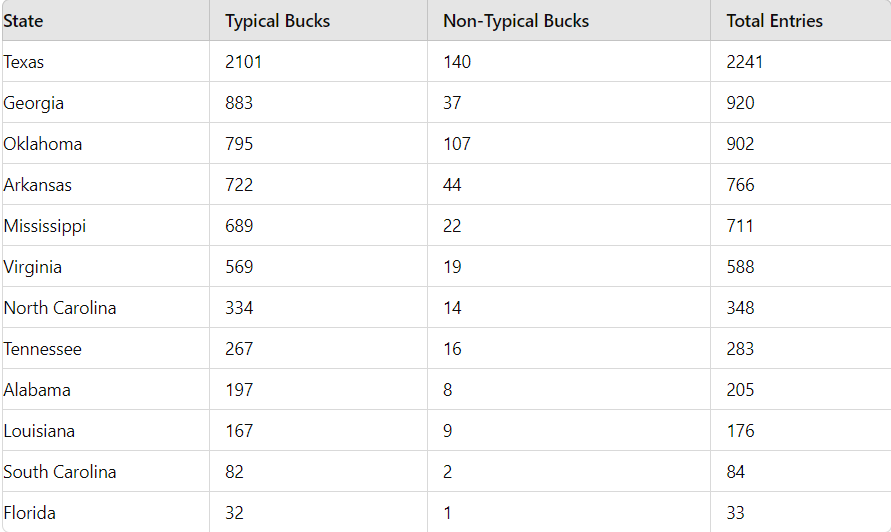
We’ve included a table for this article, ranking states from most P&Y bucks on record to least. The information isn’t shocking. Texas does well, in part thanks to a history of private hunting preserves stocked with genetics freaks. The rest of the top states are those that are home to the Mississippi Delta, whose rich soils grow more than just corn and soybeans. States with sandy soils and smaller osceola subspecies of whitetails rank poorly.
It’s important to note that simply comparing P&Y harvests only paints a particle picture. Georgia scores highly no doubt in part to the fact that it has a high population density thanks to Atlanta. More hunters, more dead deer. More money and therefore more highly-managed private preserves is another factor.
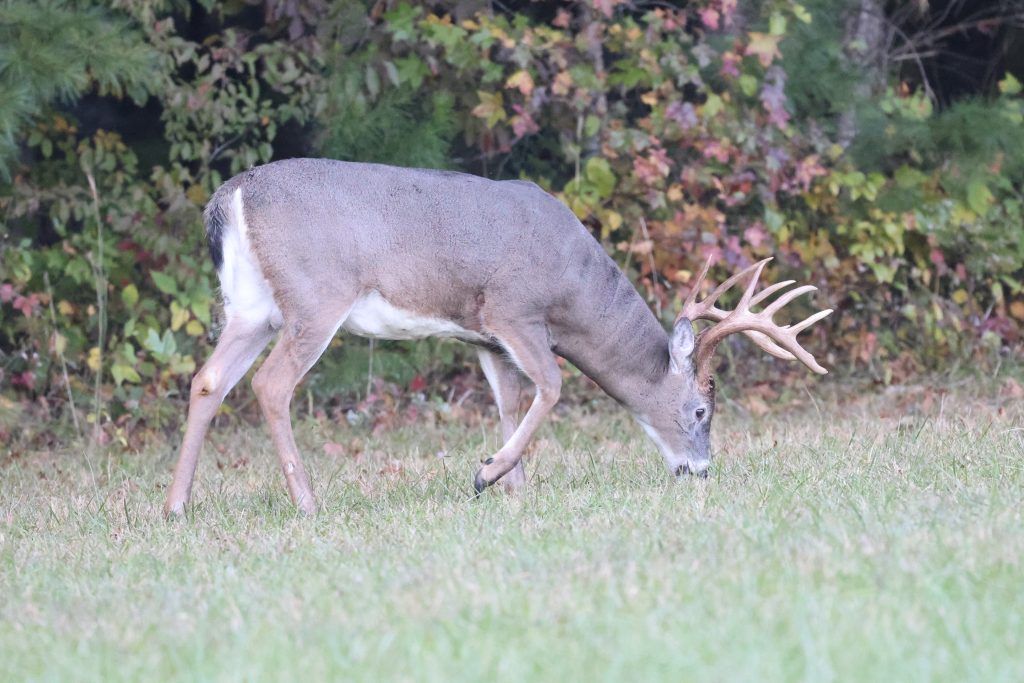
You can refine your search by accounting for these factors. If you create your own table, include a column for “P&Y Bucks harvested per person.” As you continue to dig, isolating counties with high P&Y numbers relative to their population, gems start to emerge. From there, you can identify which counties have public land or private leases that suit your budget.
If you’d like to do P&Y data searches of your own, simply go to its website, create an account (a yearly membership costs $35), and start researching. Do that, and you’re well on your way to locating a Pope & Young whitetail in the South.
Final Thoughts
Regardless of the state, other factors matter. As mentioned, age, and letting bucks reach maturity, is the No. 1 factor in seeing and harvesting bigger-antlered deer. Good soil, ample nutrition, proper deer densities, acceptable buck-to-doe ratios, great buck age structures, low-stress levels, and more are important as well. Check most of these boxes, and you should find a big deer this season.