

If there’s one way to prepare seafood that truly captures the essence of the Southern coast, it’s a classic seafood boil. Take a mix of fresh seafood, vegetables, and seasonings, put them in a big pot of boiling water over a roaring gas burner, and you’ve got something special.
However, for many, doing a seafood boil can seem intimidating—the rolling, boiling water, spiny shrimp and crabs, and the sharp smell of seafood seasoning can deter some from trying it at home. And, of course, due to the nature of the boil, it should be done outside. The propane burner and large stockpot will generate heat, steam, and strong seasoning aromas, so it’s not a good idea to attempt this indoors.
We asked professional chef Brody Olive from Voyagers Restaurant at Perdido Beach Resort for his advice and methods for a successful seafood boil. Chef Brody shares his thoughts for those just getting into this beloved Gulf Coast tradition.
Choosing Your Seafood
For most Gulf Coast seafood boil enthusiasts, the seafood choice begins and ends with fresh shrimp. These shrimp don’t have to be the biggest or most expensive—smaller shrimp work just as well. Shrimp are easy to find at seafood markets since they’re a Gulf Coast staple. Look for fresh shrimp that are firm with no slipping shells and a good, clean smell.
Many boil fans also include blue crabs in their ingredients. Smaller crabs work well for boils, too. Fresh blue crabs are less commonly found in seafood markets, so for the freshest crabs, it’s best to go out with a net and catch your own—this can be fun for kids and guarantees the freshest blue crabs.
Chef Brody says, “Crawfish is at the top of my list, followed by shrimp and blue crab. Whichever you choose, I ask one thing: make sure you are purchasing domestic seafood!”
Other Ingredients
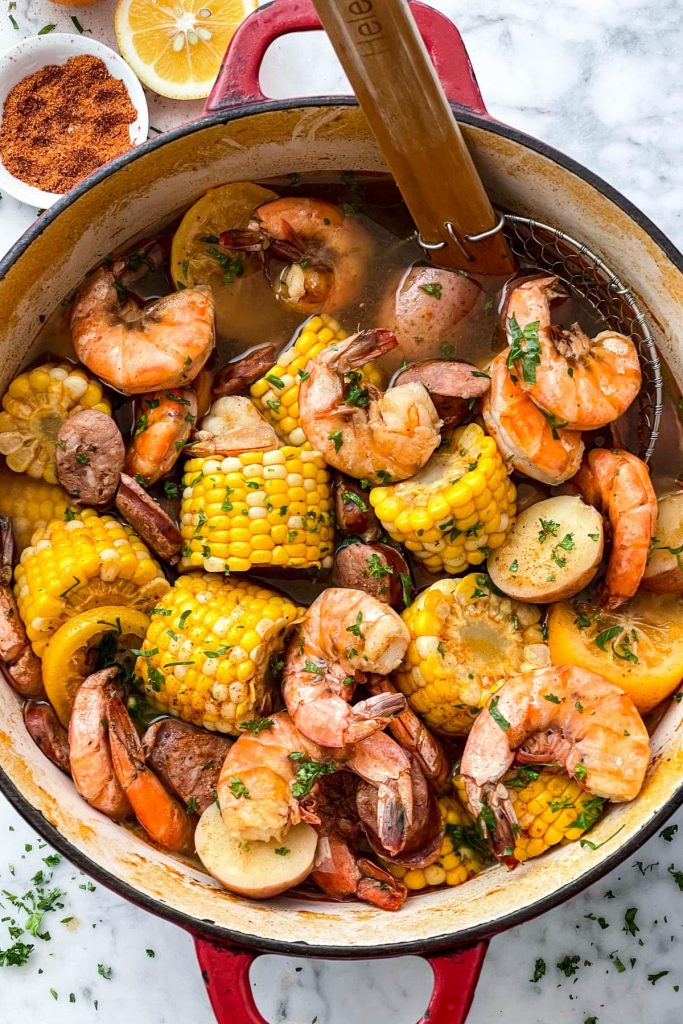
A common addition to seafood boils is sausage, which can be Polish, smoked, or even Cajun-style boudin, a spicy sausage that adds flavor to the boil. For vegetables, cut them into smaller portions to make them easier to eat. Whole ears of corn take longer to cook and can be hard to handle, especially when your hands are slippery from shelling seafood. Small new potatoes work well, but larger potatoes should be halved or quartered to cook faster.
“If I were in a CAT scan when asked this question, it would be lighting up all kinds of colors!” says Chef Brody. “Start with the basics: yellow onions, corn (fresh when available), whole heads of garlic, butter, red potatoes, lemons, and your choice of smoked sausage—Monroe, Conecuh, or Andouille. Then, have some fun! If peanut harvest season is happening, I like to add 10-15 pounds of green peanuts at the beginning of the boil. They typically take around three hours, so monitor your water level. Hearty vegetables like mushrooms, Brussels sprouts, or artichoke hearts pick up the boil’s flavor nicely too. And Little Smokies or hot dogs are always a hit!”
Seasoning the Seafood Boil
Seasoning is essential for any seafood boil, and there’s a wide range of options—from powdered to liquid to bagged seasonings. What they all have in common is potency. These seasonings emit a strong, sharp scent that can cause coughing or choking if inhaled deeply, which is why boils are best done outdoors.
Chef Brody prefers granulated seasoning over liquid, saying, “I like Louisiana or Zatarain’s seasonings; they list the water-to-seasoning ratio on their packaging.”
Setting Up the Seafood Boil Equipment
The tools needed for a seafood boil are simple: a propane burner, a tank, and a large stockpot (at least three gallons). A long-handled spoon or fork for stirring and testing doneness is helpful, and a sturdy prep surface is also useful.
“Your local hardware or sporting goods store will have plenty of options,” says Chef Brody. “For the burner, I prefer stainless steel or cast iron for coastal environments since they hold up well under weight. As for the pot, invest in one with a heavy bottom. Stainless steel is my go-to, and Webstaurant is a great online wholesale store to check out.”
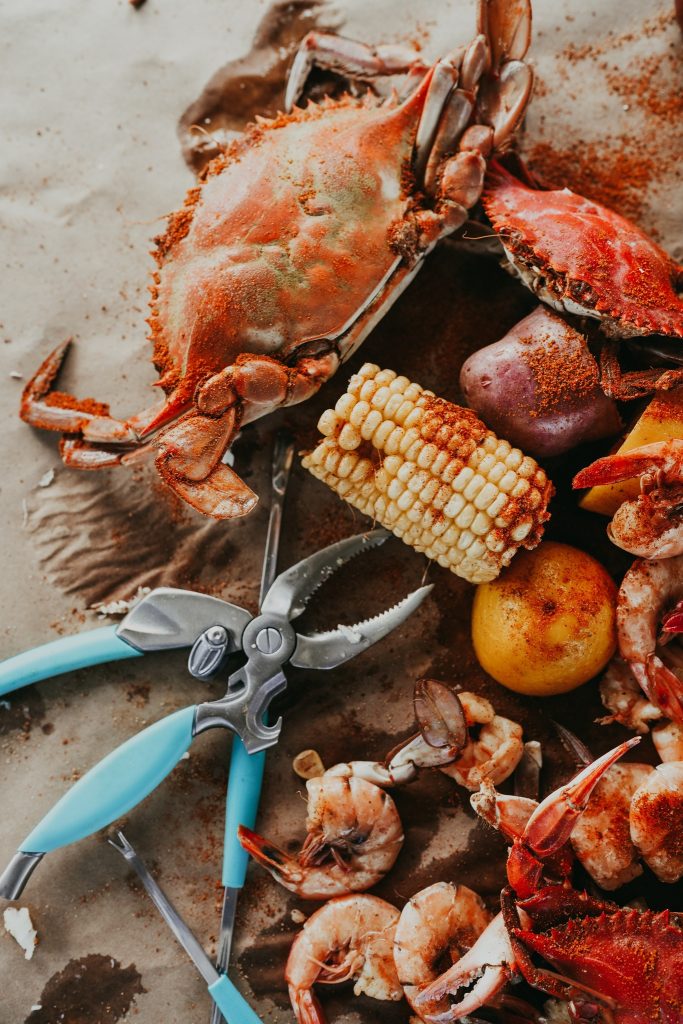
A long-handled fork is particularly useful for testing vegetable doneness, and Chef Brody recommends the Seafood Fork from Toadfish, which is made of stainless steel with a heat-safe, soft-grip handle. For prep work, the Toadfish Stowaway Folding Cutting Board is another great tool—compact, sturdy, and equipped with non-slip feet and a built-in knife sharpener.
Additionally, Toadfish’s sharp knives make it easy to prep your seafood, while their efficient crab claw cutters ensure you get every bit of delicious meat from your seafood boil.
The Boiling Process
The boiling process is straightforward, but the challenge lies in determining which ingredients go into the pot first. Chef Brody advises, “Always start with your hearty vegetables first—potatoes, heads of garlic, and onions. Put these in cold water, then bring it to a boil. If it grows underground, start it in cold water. Once the water reaches a boil, add your corn and sausage. By the time the potatoes are fork-tender, everything else will be ready. Then, add your seafood. Boil for an additional two minutes, kill the heat, and let everything soak for four to five minutes. Watch the shrimp—when they start to curl, get them out. You don’t want them curled all the way, with the head touching the tail.”
Serving the Seafood Boil
Serving a seafood boil is as messy as it is delicious, which is why doing it outdoors is ideal. The simplest method is to cover a picnic table with newspaper or disposable paper, and dump the drained contents into a large container. Let everyone grab their preferred portion of seafood and veggies.
Have plenty of melted butter, cocktail sauce, and other condiments available, and let the feast begin. While drinks are up to personal preference, a cold can of beer—or two—pairs perfectly with a seafood boil.
Conclusion
A seafood boil may seem complicated, but it’s not rocket science. The beauty of a boil is that if your first attempt isn’t perfect, you’ll have plenty of opportunities to improve with each new feast. Practice makes perfect, and in this case, practice also makes a lot of great food for everyone to enjoy.