
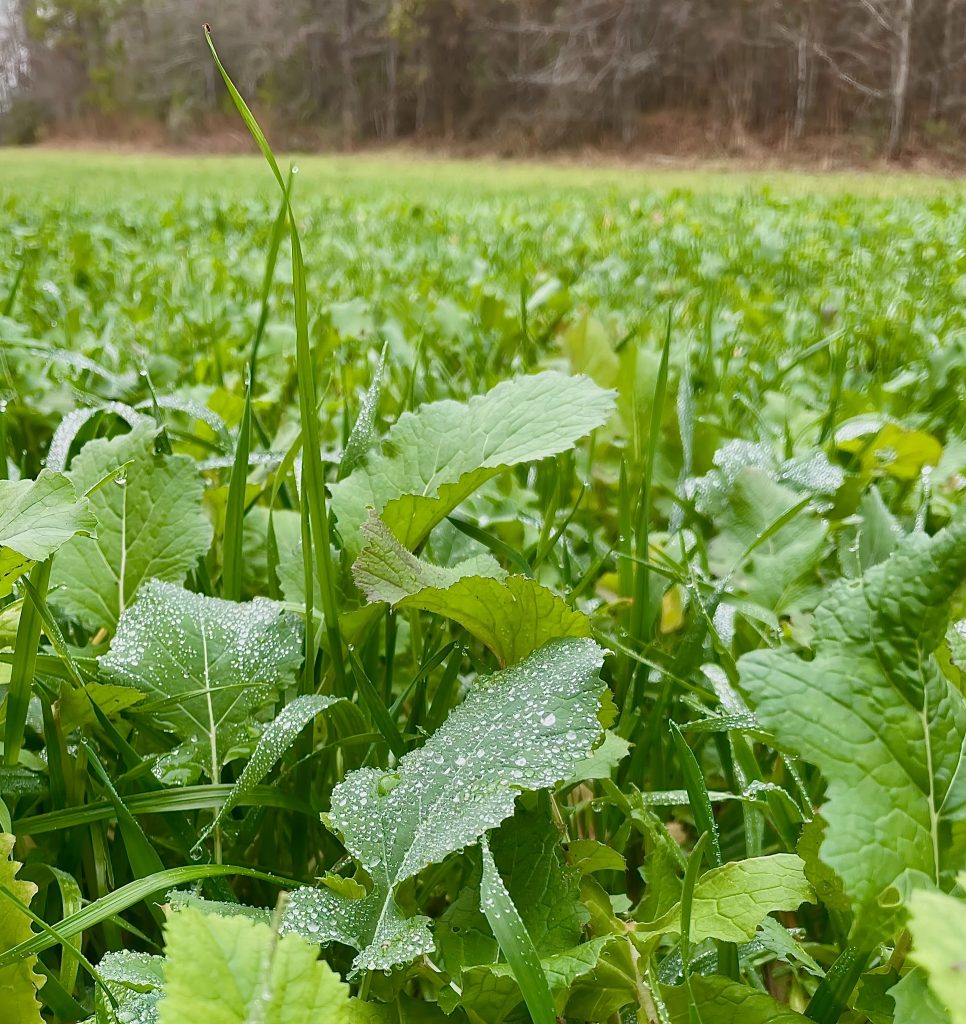
Wild animals have an innate ability to find the best forage available within their home range any time of the year. If you’ve ever tilled a garden, I’m sure you’ve noticed the fresh footprints that various members of your local wildlife community left behind as they investigated your newly cultivated soil. It would be great if deer and turkeys could tell us which plants they prefer, and which provide the best nutrition for antler growth and healthy fawns. With a bit of patience and persistence, they will let you know the proper mix for seeding food plots.
Seeding food plots with a good mix of greens on your property remains the most cost-effective means of providing nutrient-rich forage for your deer and turkey. Providing your local wildlife with their own garden can be a rewarding experience or fraught with a lot of trial and error. A little research can help you avoid a host of problems that many experience when trying to grow the perfect combination of plants in those green fields.
Hunting strategies involving food plots remain one of the most popular ways to attract and keep the local game on your property while providing nutrient-rich forage before, during, and after hunting season.
Understanding Your Land
I recently talked with Caleb Weaver at Southern Feed and Seed about where landowners should focus their attention and resources when preparing their wildlife food plots. With a background in Wildlife Management, Weaver has learned a thing or two about matching the best forage plants to specific soil types when seeding food plots. He said that understanding your soil is the key to maximizing the return on your investment. Your soil type, pH, moisture content, and drainage will help you decide which plants will work best in each field. Weaver said, “If your pH is off, you cannot unlock your soil’s potential. Nutrients come from the soil, through the plants into the deer.”
Many feed stores or your local county extension office provide soil test kits with detailed instructions on collecting samples and where to ship them. Providing the sample and what crops you intend to plant will result in detailed instructions for creating the perfect pH and the best fertilizer for maximum growth. The primary soil test cost around $10.00 and a more in-depth analysis cost around $17-$18.00.
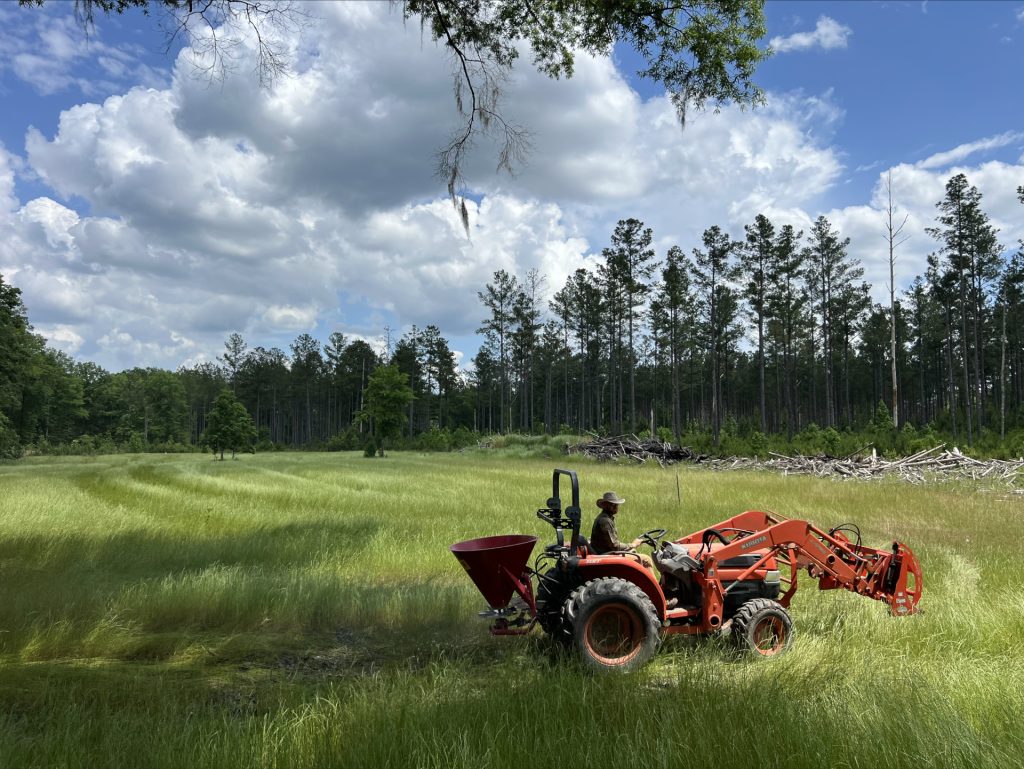
It’s also a good idea to look at the bigger picture. Depending on how much acreage you manage, what does the property that surrounds yours look like? Is yours an oasis within a large block, or are you directly competing with your neighbors for the available game in your area? Deer prefer palatable nutrient-rich forage and will often bypass greenfields with soil deficiencies.
Correcting your soil’s pH can take a few months, so sending a sample of their dirt to Auburn in the spring gives landowners time to amend their soil. Weaver said that his preferred strategy for growing healthy deer is overwhelming your deer with nutrition, and it starts with knowing your soil’s nutrient levels and pH.
According to Weaver, enhancing your property through controlled burning, adding mineral sites near each greenfield, and designating part of your property as a sanctuary or “No hunting zone” can accelerate your results and increase herd health within three generations.
Setting Goals For Your Food Plot
The size of a food plot, the prevailing winds, how often it’s accessed (pressure) and hunted, and expectations all contribute to a landowner’s goals. Sometimes, we hunters forget that the term trophy can be defined in numerous ways.
Setting realistic short and long-term goals is a good starting point for clubs and private landowners as they manage their time and budget to increase the numbers and health of their native wildlife. It takes an investment of time and money before a property can reach its full potential.
Ryan Basinger is a Certified Wildlife Biologist with Westervelt, and he also provided a few insights to consider before hooking up a plow. Basinger said that a proper evaluation of the natural forage on your property can be a critical factor in drawing up your long-term planting goals. Knowing what times of year quality forage is lacking on your property and surrounding areas is vital to formulating what to plant and when. He also said that an honest evaluation of any limiting factors, such as equipment, the size of one’s property, and budget, needs to be considered.
Calculating The Ideal Seeding Rate
Basinger said, “Be sure to plant based on PLS (Pure Live Seed), or seeding rates will be too low, particularly with pre-inoculated clover where much of the listed weight is coating material. Determine the desired rates for the planted forages and reduce them according to the number of species within the mixture. Calibrating your spreaders or drills is critical to dispense the preferred rates.”
All agronomic seeds have a recommended seeding rate that maximizes forage or grain production and minimizes seed costs. Planting seeds too heavily or too lightly is often a waste of time and money because it does not necessarily increase your forage production.
Your planting equation should include your sowing method, timing, depth, planter calibration, and seeding rate. After amending your soil and preparing your site, you must determine the proper seeding rate based on pure live seed rather than bulk weight. Bulk weight refers to the actual seed weight plus coating, allowable fillers, and impurities within the bag. This small detail is one aspect many people often skip or ignore.
Seeding rates are higher when broadcasting rather than when drilling or traditional planting, so following the recommended seeding rate for your planting method is essential. Recognizing the difference between bulk weight and PLS weight when buying seed will ensure you purchase enough seed to cover the entire area of your food plot.
Building The Perfect Seed Mix For Food Plots
When seeding food plots, using seeds with a proven track record in your area is a good starting point when figuring out the best mixture for your food plots. Basinger recommended learning “which species complement each other and their window of availability for wildlife.” He also said your choice of forage should align with the predetermined goals for your property and be compatible with the equipment you will use to cultivate and distribute your seed.
Weaver said Southern Feed and Seed grows and harvests many of the seeds they offer for sale on nearby Mississippi farms. He said they are constantly researching which varieties work best in local soils but cautioned that one must do their homework when formulating the type of plant mix that will work best in their fields.

Weaver said an easier route to the best seed mix for your plots is to take advantage of their years of research. They offer multiple blends that take the guesswork out of the proper seeding rate and work in almost any soil type.
Spring & Summer
Weaver said soybeans along with Iron and Clay peas are great choices for providing much-needed post-season nourishment for your wildlife.
Southern Buck, Spring & Summer Mix, is a blend of Brown Top Millet, Wild Game Sorghum, Stonewall Soybeans, Peredovik Sunflower, and Iron and Clay peas treated with the Delta Seed Coat.
This highly nutritional mix produces a blend of vegetation and seeds that will benefit turkey, quail, dove, and deer. This warm-season blend provides much-needed nutrients to improve your wildlife’s health and help keep them on your property. When planted from early March through July 15, this combination will begin to mature 90 days after planting and continue until the end of October.
Fall & Winter
Weaver said that oats, wheat, and cereal rye form the basis of many Fall seed blends. He recommends a blend they developed called
Southern Buck Super Buck – It’s a blend of Wheat, Forage Oats, Austrian Winter Peas, Trophy Rape, Balansa Clover, Crimson Clover, Daikon Radish, & Turnip. Southern Buck Super Buck provides early forage and will enhance your herd health for up to 8 months. He said the turnips help break up the soil as they grow to allow better moisture penetration. The planting rate is 50 lbs. per 1/2 acre.
Planting Tips
By mid-September or early October, disk your plot and drag it smooth, then apply mixed fertilizer and plant. 4-6 weeks after plant emergence, side dress with fertilizer. Use either dry fertilizer or Clarks Liquid Fertilizer.
Final Thoughts
I’ve always heard that the best time to plan your next deer season is the day after it ends. Since green fields have become integral to wildlife management, I think this adage applies equally well to them. The variety of plants designed specifically for food plots has increased significantly in the last decade. However, taking full advantage of the available seed offerings to maximize the available forage on your property takes considerable planning.
Whether you need a little help seeding food plots or a lot, take advantage of the latest research at Southern Feed and Seed. Visit or call one of the many retailers in East Mississippi and Alabama that carry their full line of offerings tailored specifically for our climate and soil.