

When it comes to managing deer herds in Alabama, especially when it comes to shooting does as part of that management, few hunters have the years of experience and the proven results that Albert Trousdale can claim. At sixty years old, Trousdale has spent a lifetime watching the state’s deer hunting evolve from scratchy public land hunts in the 1970s to the carefully managed private ground he oversees today. He cut his teeth in South Alabama, where management was “force fed” to him through strict standards and doe tags, and he’s carried those lessons home to North Alabama. “We got a lot of killing out of our system,” he explained, “and when I saw the effects of killing does, when I saw the effects of passing a deer, I got an opportunity to see what some management practices could do for you. I got it in my blood.”
For Trousdale, doe harvest is more than just a population control tool. It is the linchpin of a program that balances nutrition, herd health, and antler growth. “My theory has always been to be sure that my deer population matches the carrying capacity of my land,” he said. “If you want to see the best horns on your property, start by growing the healthiest deer you can grow, and that starts with nutrition and doe management.” He pointed out that a malnourished buck won’t dedicate what little nutrition he has toward antler growth—he’ll put it toward simply surviving. Only a deer with access to enough quality food will show his true potential in their racks.
Shooting Does on Open Fields to Minimize Pressure
The challenge for most hunters isn’t deciding if they should take does—but how to remove them without disrupting the rest of the herd. Trousdale believes the answer lies in being deliberate about where and how you take your shots. “We try to shoot our does on open fields,” he explained. “I want to drop that deer in her tracks, drive up to her, and take her to the processor. It’s the least amount of effort, and it doesn’t intrude into the bedding areas where bucks spend most of their time.”
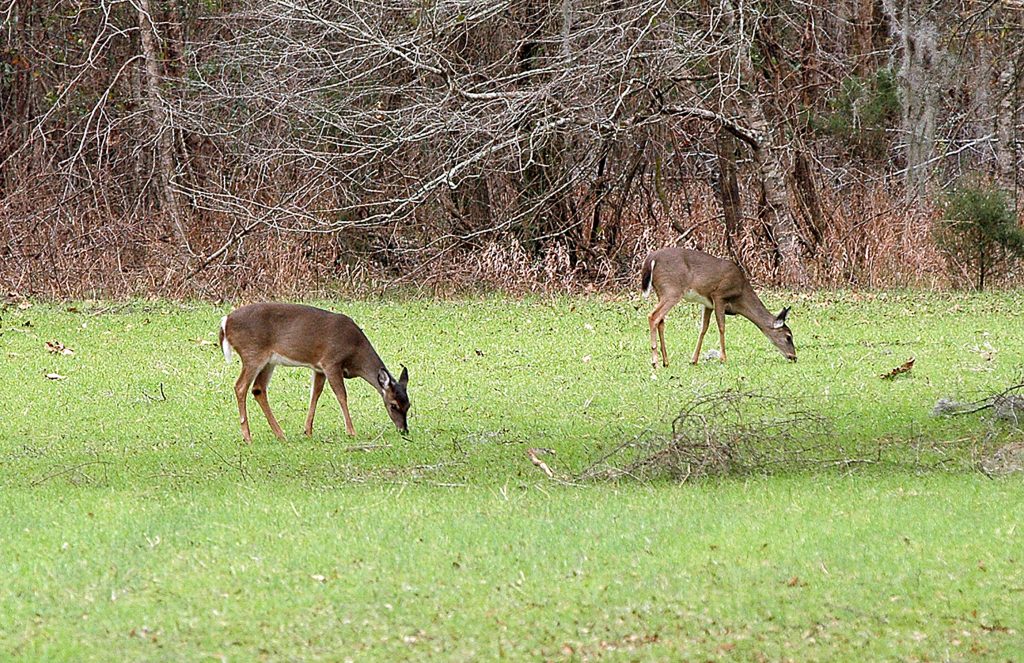
In his view, the gunshot itself isn’t what pressures deer. The real disruption happens when hunters enter bedding areas while tracking wounded deer, spreading scent, and bumping mature bucks from their safe zones.
Shooting Does Without Entering Buck Sanctuaries
Trousdale has seen this strategy work repeatedly on his own property. He and a small group of hunters take around fifty does a year, yet the land continues to produce mature bucks. “I can kill ten does on a field and go back the next day and see three- and four-year-old bucks using the same spot,” he said. “The greatest intrusion to a mature buck is getting down in his sanctuary with him. That’s what pressures your deer.”
By keeping doe harvest activity confined to open, easy-access spaces, he avoids disturbing the very areas mature bucks rely on during daylight hours.
Timing Matters
In North Alabama, Trousdale’s rut usually wraps up by mid-December, but hunters can continue pursuing deer into February. That late season window becomes his primary time to focus on doe harvest. “We’re not trying to kill all the does, we’re just thinning them down,” he said. “And let me tell you something—you’re never going to overcome Mother Nature. That buck is going to go where the does are during the rut. We just make sure the herd is balanced going into it.”
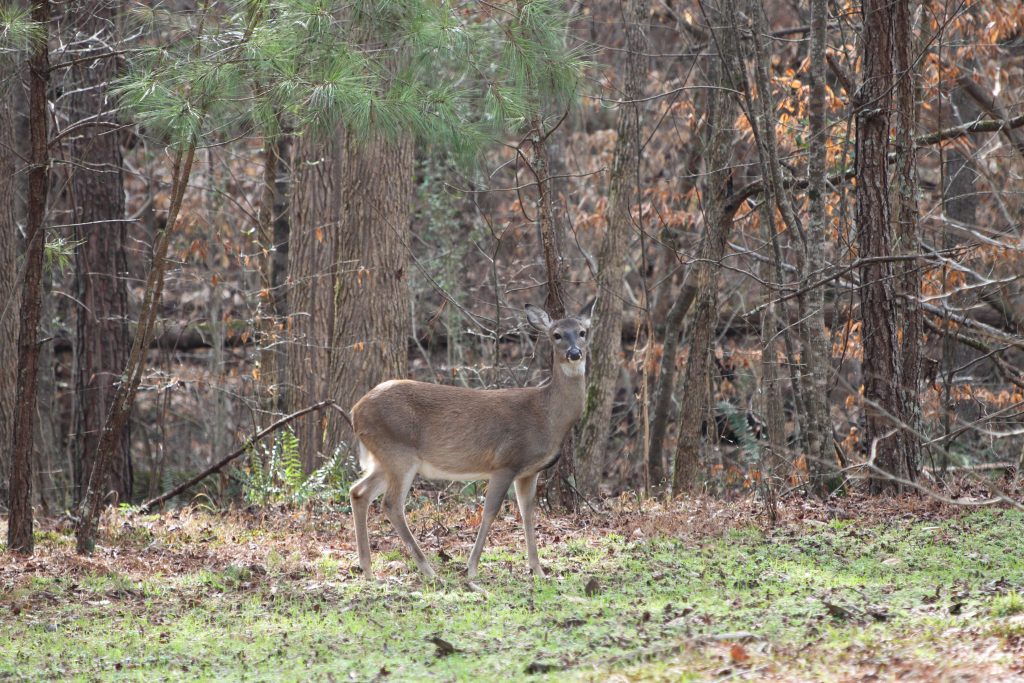
This timing allows hunters to harvest does once the rut’s chaos has settled and avoid interfering with buck patterns when they’re most vulnerable to pressure.
Cooperative Management and Shooting Does Strategically
Even with decades of experience, Trousdale emphasizes cooperation as much as personal discipline. He has built alliances with neighbors, sharing trail camera photos and agreeing on which bucks to let walk. “If I shoot that three-year-old, I know with certainty he’s not going to see four,” he said. “But if I let him go, he’s got a chance. My neighbor might kill him, but just as likely I’ll get a crack at him next year. That’s the whole point.”
In the end, shooting does without pressuring your property comes down to a mix of restraint, strategy, and trust. Kill them where retrieval is easy, avoid chasing them into bedding areas, and commit to the bigger picture of herd health. As Trousdale puts it, “If you’re giving them good nutrition and keeping the herd in balance, your time’s going to come. You just have to be willing to do it the right way.”