

Striped bass are prized for their fight and flavor. As “anadromous” fish, stripers typically live their adult lives in salt or brackish water, returning to freshwater rivers to spawn, much like salmon. However, stripers can also thrive entirely in freshwater, and today, there are hundreds of freshwater lakes across the country with thriving striper populations.
There are two primary strains of striped bass: the Atlantic Coast Strain, found mostly from Cape Hatteras northward to the St. Lawrence River, and the Gulf Strain, found primarily along the northern Gulf of Mexico coast. Recent successful stocking programs in the Southeast, particularly in Alabama, have focused on the Gulf Strain, creating some of the best inland striper fisheries in the nation.
Habitat Preferences of Striped Bass
Stripers can thrive in freshwater, but they are sensitive to high water temperatures. Biologists tell us that Atlantic strain stripers prefer water temperatures between 55°F and 68°F and avoid water over 75°F. Gulf strain stripers can handle higher temperatures but still seek out the coolest, most oxygenated water available during the warmer months in the South. Lake stripers are generally open-water fish, though they do hang around lighted docks and piers after dark to feed on baitfish.
Seasonal Movements and Behaviors
The Gulf strain landlocked stripers found in North Florida, Alabama, Mississippi, and Louisiana spend summer and early fall in the deepest, coolest water they can find. They also seek out submerged springs and oxygenated water near dam gates. By mid-October, as temperatures drop, they may be found anywhere from shallow bars to deeper waters, roaming widely and feeding heavily throughout the winter. However, occasional extended subfreezing cold snaps can slow the bite.
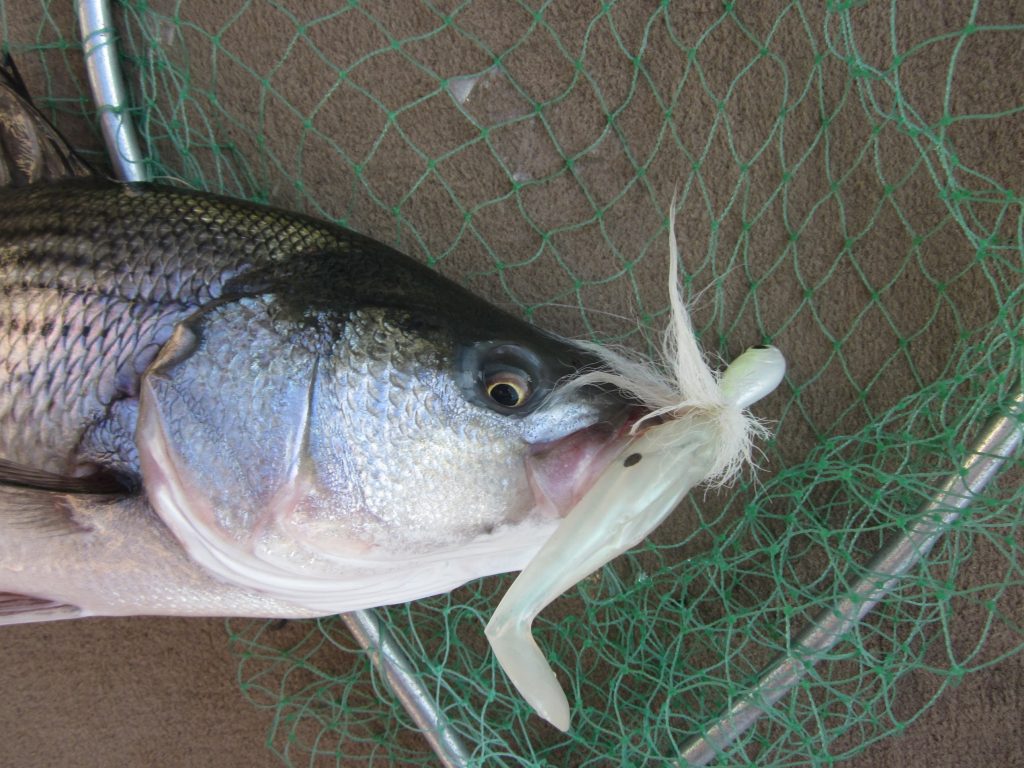
In spring, around the time redbuds start to bloom, these fish head up tributary rivers of the impoundments to spawn, sometimes venturing into knee-deep creeks in search of suitable habitat. After the spawn, typically ending by mid-April, the fish return downstream and feed heavily throughout the water column until the hot days of late June send them back to the depths or dams.
Feeding Patterns and Diet
Stripers primarily feed on shad in most lakes, though they seem to prefer blueback herring where this non-native species has taken hold. They seek out sizable baitfish that swarm in open water, where they can attack en masse. (Stomach studies show that stripers almost never eat largemouth bass, despite concerns from some bass anglers.)
Stripers often feed best in low light, making dawn and dusk prime times, especially when looking for schools chasing bait at the surface. Night fishing can also be productive around lighted docks, where the fish stalk minnows attracted to the light. During daylight hours in the hotter months, stripers may be found as deep as 50 feet or more if there’s adequate oxygen in the deepest water.
Top Lakes for Striped Bass
Alabama boasts some of the best freshwater striper fishing in the nation, thanks to a long-term stocking program. Many reservoirs hold fish weighing 10 to 15 pounds, with a fair number of potbellied female giants exceeding 30 pounds. The state record—and the all-tackle world record for landlocked stripers—is an enormous 69-pound, 9-ounce female caught near Gorgas Steam Plant on the Black Warrior River northwest of Birmingham in 2013.
The state’s top striper lakes are Lake Martin, an impoundment of the Tallapoosa River southeast of Birmingham, and Lewis Smith Lake, an impoundment of the Sipsey River northwest of Birmingham. Both lakes are relatively deep, with cool, clear water and plenty of forage fish. While other lakes in Alabama have striper populations, Martin and Smith consistently produce the best results.
Damon Abernethy, Assistant Chief of Fisheries for the Alabama Department of Conservation and Natural Resources (ADCNR), notes that most wild fish outside the state’s stocking program are a mix of Atlantic and Gulf strain stripers. “The only pure source of Gulf strain broodfish we have is in Smith Lake,” says Abernethy. “That’s where we collect our brooders every year for the hatchery. During most of my career, the Lower Mobile Delta has been stocked annually with pure Gulf strain fingerlings at a rate of 2–3 fish per acre.”
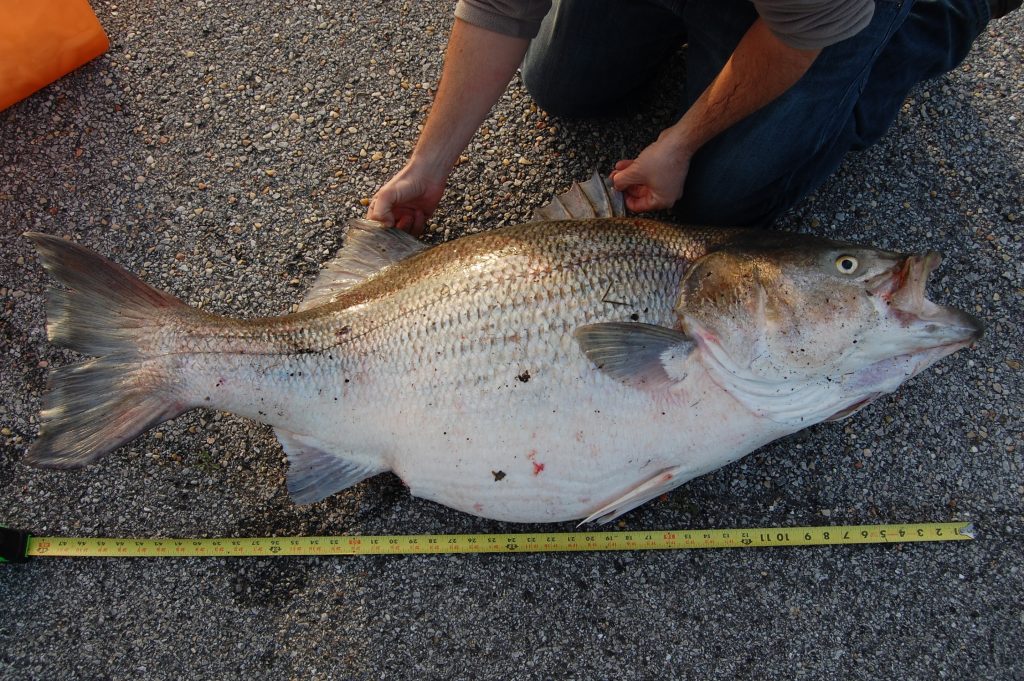
There’s also excellent fishing below many of the dams in the northern half of the state in March and April as the fish stack up, trying to migrate upriver. The Tennessee River and Tallapoosa River dams can be particularly productive. The state stocks over half a million fry-sized stripers each year in the Coosa and Tallapoosa river lakes, as well as in Lewis Smith Lake.
Other notable striper fisheries include Georgia’s Lake Lanier, West Point Lake, and Clarks Hill Lake, which all produce good numbers of big fish. The Savannah River on the South Carolina border is also productive. South Carolina’s Santee Cooper lakes, including Marion, Moultrie, Murray, and Wateree, are loaded with stripers.
In Florida, the prime striper water is the first few miles below Jim Woodruff Dam on the Apalachicola River, where the dam blocks their upstream progress. These fish are found here throughout the cooler months, especially in spring when they spawn. In summer, they head downriver and move into spring-fed tributaries. There’s also a limited striper fishery in the St. Johns River around the larger spring-fed rivers in summer.
Mississippi has a limited striper fishery, primarily in Barnett Reservoir on the Pearl River near Jackson, with good fishing below the dam in spring. The state also stocks Gulf strain fish in the Pascagoula River. Louisiana has stripers stocked in Caddo, Claiborne, and Toledo Bend, with Toledo Bend producing the state record of 47 pounds, 5 ounces in 1991.
How to Catch Landlocked Stripers
You can catch the occasional striper by running from gravel bar to bridge to rocky point and casting a big topwater plug at dawn and dusk in spring and late fall on Smith and Martin. Finding schools of fish on sonar and dropping a ¾-ounce jig with a 6” boot-tail soft plastic shad also works well.
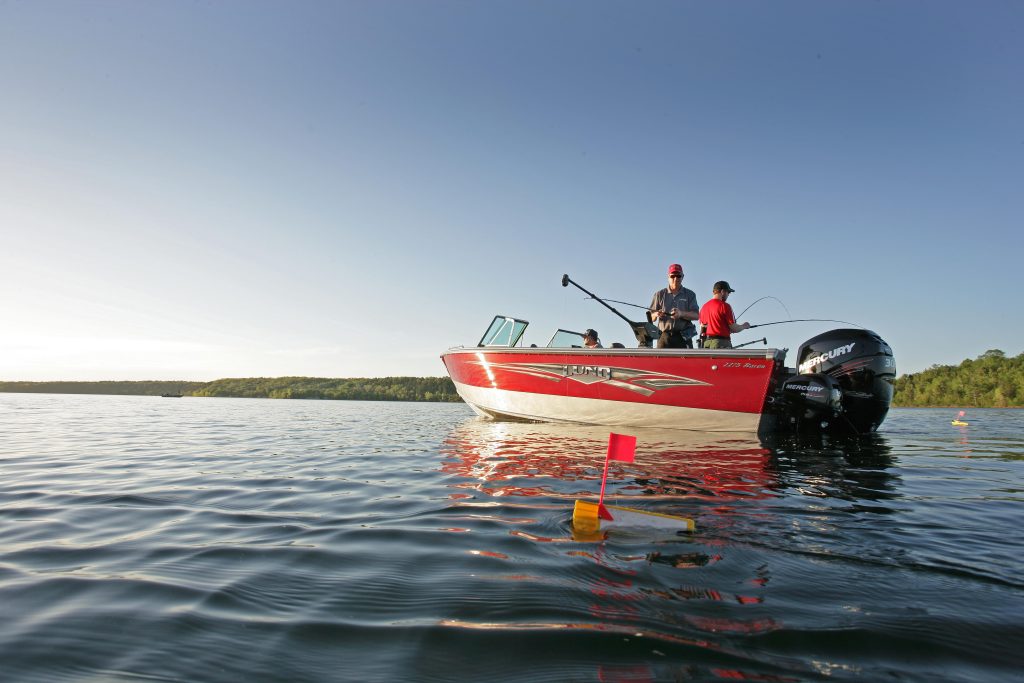
However, if you’re serious about catching stripers, live bait fishing in deep water is the way to go. Find shad schools on sonar or below dam outflows and capture them with a cast net. A livewell large enough and with enough flow to keep them alive is essential. For those who prefer not to go through the hassle, hiring a guide is a good option. Guides like Captain David Hare of Alex City Guide Service on Lake Martin and Captain Mike Walker of Fishing 24/7 on Lewis Smith Lake make it look easy and almost guarantee a busy day of reeling in monster stripers.
Tackle for Striped Bass
If you’re throwing lures for stripers, most of the fish you catch will weigh between 5 and 15 pounds, which can be handled with bass tackle—a 5000-size baitcaster, a 7’ medium action rod, and 15 to 20-pound test braid with a couple of feet of 20-pound test mono or fluorocarbon leader.
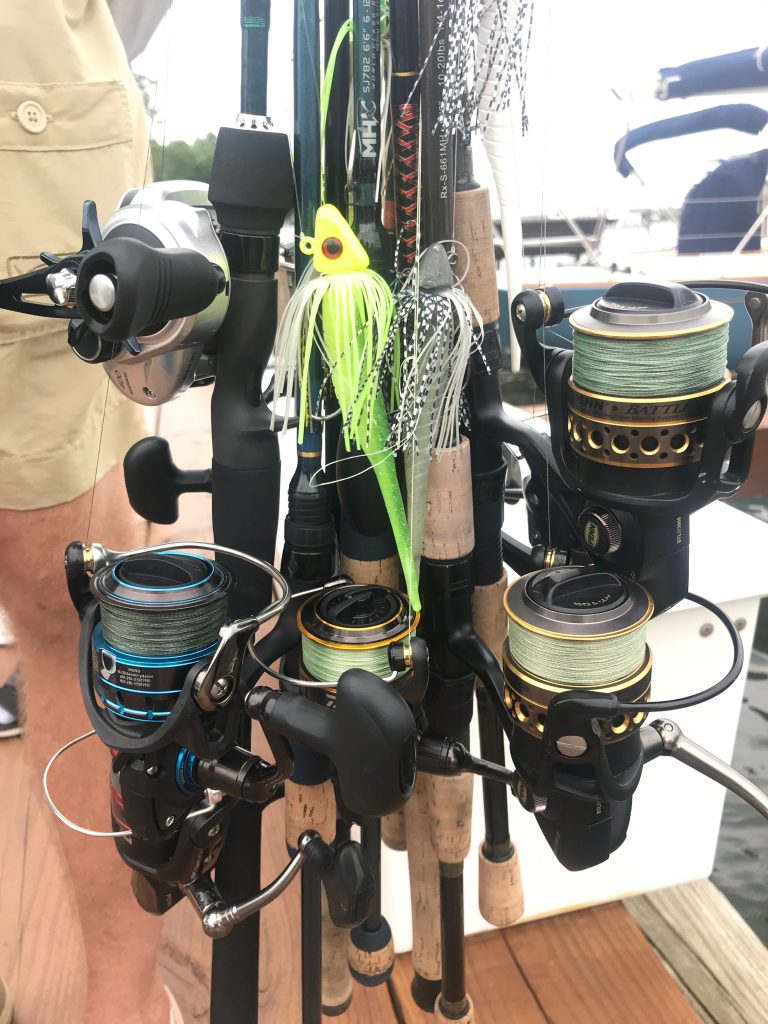
Among the productive lures are the Zara Spook, Gunfish 115, Strike King Sexy Dawg, and others—just make plenty of commotion as you fish them around bait schools. For jigs, any head with a 3x strong hook in the 4/0 or larger size will work. The tough ElaZTech tails, 5” to 8” long from Z-Man, are among the best to fit on these jigs. The Tsunami Swim Shad in 5” to 7” models is also effective.
If you’re fishing with live bait, you’re likely to tangle with larger fish, so heavier gear makes sense—a 6000-size reel, a 7’ medium-heavy rod, and 25-pound test braid with a 30-pound test leader should do the job. Comparable spinning tackle also works well. Most anglers use 5/0 or larger octopus-style hooks, again in 3x strong.
Conservation and Responsible Fishing Practices
Because landlocked stripers are stocked fish, keeping a few for the table does no harm, and they are delicious. However, you’ll probably catch more than you can keep once you get the hang of it, so proper release tactics are important. Several states also have strict limits on larger fish.
A big net with a stout handle is essential, as you’ll surely be handling fish of 10 pounds and up—possibly much larger. An efficient de-hooker is also important, so you can quickly scoop the fish, dehook it, snap a photo, and release it. Though stripers are powerful in the water, they are delicate when handled in the boat. Take what you need and release the rest to grow even larger and provide more exciting fishing next year.
Striper Cookery
Stripers have firm, white meat that’s excellent grilled, baked, or broiled, but it’s essential to skin the fillets and then cut away all the red line that runs along the outside of the muscle—that part tastes “fishy.” As with all fish, it’s important to kill them immediately upon harvest by bleeding, and then immerse them in ice right away—treat them right, and they’re hard to beat at the table.
Conclusion
Whether you’re chasing your first landlocked striper or honing tactics for trophy-class fish, the South’s reservoirs offer some of the finest freshwater striped bass fishing anywhere in the country. Stocking programs have transformed these impoundments into thriving fisheries, giving anglers year-round opportunities to tangle with hard-fighting, great-tasting fish. With a little patience, the right tackle, and a solid plan to find bait and structure, you can unlock the secrets of these reservoir hogs and enjoy some of the most exciting freshwater fishing the region has to offer.