

Creating consistent, year-round food sources is one of the most effective strategies for attracting and holding wildlife on private land. While food plots often get the spotlight, soft and hard mast-producing trees—those that bear fruit and nuts—offer something even more enduring, especially when selecting trees for deer that support long-term habitat. According to Iain Wallace of Chestnut Hill Outdoors, with the right planning, a property can offer wildlife a rotating buffet of mast nearly every month of the year.
Iain helps manage the operation at Chestnut Hill Nursery in Alachua, Fla., where the team produces everything from Dunstan chestnuts to native persimmons and southern-adapted apples. “In the South, it’s absolutely possible to have fruit available on your property all twelve months of the year,” he says. “We see that on our farm right now—we’ve got citrus dropping, deer are on it, and we know they’ll be back when other varieties come on later.”
Why Mast Has Long-Term Advantages
Iain emphasizes that hard and soft mast plays a critical role in building predictable wildlife patterns. Unlike food plots, which can be heavily weather-dependent or seasonal, mast-producing trees develop deep root systems and return year after year. “Food plots are great, but mast holds deer tight,” he says. That’s why establishing trees for deer is a foundational strategy for building consistent wildlife activity year after year. “Once you’ve got fruit or nuts consistently dropping, you teach your local wildlife that there’s always something to eat in that spot.”
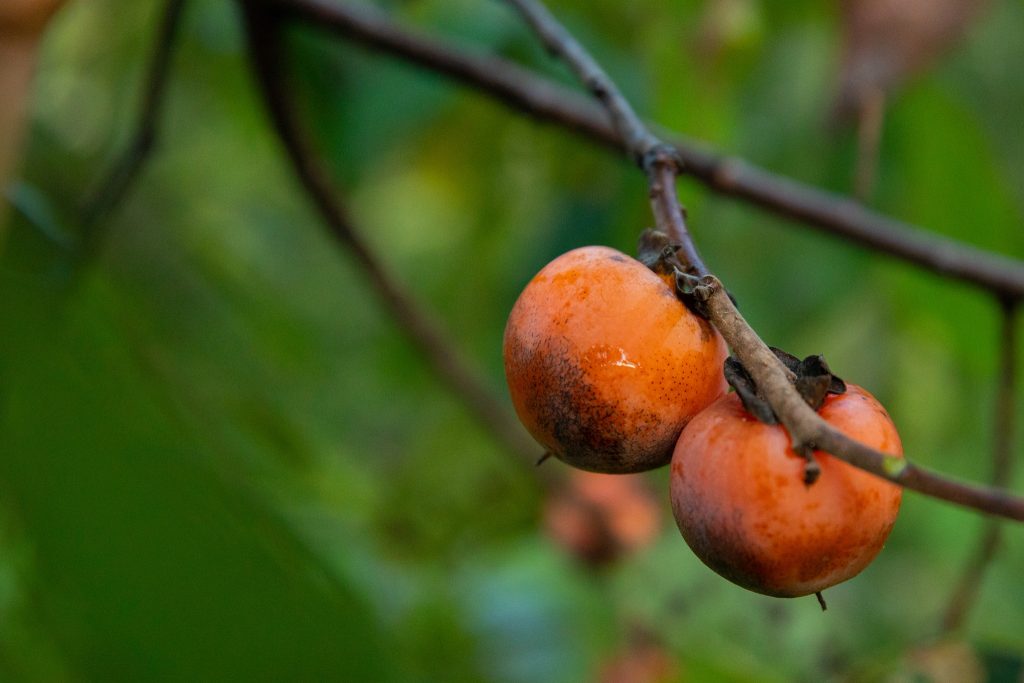
He notes that even within a single species—like oaks or persimmons—the drop times vary. “Some white oaks drop early, swamp chestnuts follow, then red oaks can hang on into winter. Same thing with persimmons—we grow early, mid, and late-season varieties to extend the draw window.”
A Month-by-Month Mast Calendar
To build out a year-round food strategy, Iain recommends plotting a fruiting calendar by identifying tree species that stagger their production across the seasons. At Chestnut Hill, their planting program includes:
- Late Winter–Early Spring: Mulberries are the first to ripen. “Some years, we’ll see black mulberries start in February,” Iain explains. “They’re heavy producers and support all kinds of wildlife—birds, squirrels, even bears.”
- Spring to Early Summer: Peaches, nectarines, and plums fill in next, followed by apples grafted to southern rootstock. “Apples can be tricky in the South,” he says. “But if you graft them onto southern crabapple and pick low-chill varieties, they’ll do great.”
- Summer: Figs, blackberries, blueberries, and dewberries dominate the hotter months. “Fig is one of my favorites,” Iain says. “It produces for a long time and is really tough.”
- Late Summer–Fall: Muscadine and scuppernong grapes are next, followed by chestnuts. “Chestnuts are our flagship crop,” he says. “On our property, they start dropping around the third week of August like clockwork.”
- Fall–Early Winter: Native persimmons, followed by oak acorns, take over as the dominant food source. “Chestnuts come on early, white oaks hit soon after, then red oaks carry it into December.”
- Winter: In southern zones, citrus like satsumas and sweet oranges can feed wildlife into January. “If you’re in South Florida, you can even grow mangoes and avocados,” Iain adds.
Selecting the Right Trees
The Chestnut Hill team grows a wide variety of native and adapted trees specifically suited to southern growing conditions. Many of these are ideal trees for deer, providing reliable nutrition throughout the seasons. “We started with the Dunstan chestnut in the ’80s,” Iain says. “It’s blight-resistant and fast-growing. We regularly see nuts in three to five years.”
Their offerings have expanded over time to include pawpaws, plums, peaches, pears, apples, mulberries, southern grapes, and more. Iain stresses that choosing the right variety is about more than just picking something from a box store. “A lot of big retailers don’t carry the right southern-adapted rootstocks,” he explains. “So you might plant something that’ll never thrive.”
He recommends checking both USDA hardiness zones and local “chill hours”—the number of hours per year below 45°F that fruit trees need to break dormancy. “It’s a lesser-known metric, but it’s really important,” he says. “Even just between North and Central Florida, chill hours can drop by a couple hundred. That can make or break your crop.”
When and How to Plant
For Southern landowners, Iain says fall is often the best time to plant. “That’s when we plant our orchards. It gives trees time to root out over winter without the stress of heat or high water demand.” Once dormancy sets in, the tree’s energy needs are minimal, and roots continue to grow underground through the cooler months.
Still, spring works too. “If you’re going to plant in spring, just know you’ve got to stay on top of watering,” he explains. “That’s the number one thing that kills young trees—people don’t water enough.”
For landowners focused on establishing trees for deer, early planning and water access are especially important for survival. He advises landowners planting in remote areas to get creative with water. “You can use five-gallon buckets with pinholes, drip bags, or even a soil moisture product like Hydretain, which we sell on our site. Anything that helps retain water helps survival.”
Tree protection is the second priority. “A $10 tree cage can save you years of growth,” he says. Grow tubes, rebar and welded wire cages, and even chicken wire around the base can all help defend against deer and bush hogs.
How Long Does It Take to Start Producing?
Timelines for production vary depending on whether a tree is grafted or grown from seed.
- “Grafted fruit trees like apples and persimmons will often fruit in two to four years.”
- “Seedling trees can take four to eight years, depending on the species.”
- “Dunstan chestnuts typically produce in their third to fifth year.”
- “Sawtooth oaks, one of the fastest oaks, take six to eight years, while native oaks can take 15 to 20.”
For landowners who don’t want to wait, Chestnut Hill offers older trees as well. “We sell all the way up to five- or six-year-old trees in 65-gallon containers,” Iain says. “They’re already producing—basically an instant orchard.”

Planting Strategy: Go for Variety and Density
When it comes to layout, Iain recommends planting several tree types in the same location. “People think in rows—five chestnuts here, five persimmons over there—but I like to mix it up. That way, animals learn that this one spot always has something to eat.”
He also recommends planting multiple trees of the same type for better pollination. “With chestnuts, you need at least two for pollination, but three or more increases nut set, especially in the early years when flowering is light.”
Three Tips for Success
After decades of experience, Iain has narrowed down the most critical factors for getting trees to survive and thrive:
- Water early and often. “This is the number one reason trees die. If you can’t be there to water, build a system that does it for you.”
- Protect your trees. “Whether it’s from deer, mowers, or the occasional clumsy operator, young trees need help to survive those first years.”
- Start with the right species. “Chestnuts are incredibly vigorous. If you’re planting remote or rough land, they’re your best bet.” If you’re targeting deer-specific forage, choosing proven trees for deer like chestnuts or persimmons is essential.
A Long-Term Investment in Land and Legacy
For Iain, planting mast trees isn’t just about managing wildlife—it’s about building something lasting. “I take my little girl out to pick citrus, and I know the deer will be there too,” he says. “It becomes part of the rhythm of the land. You build a place that works for you, the wildlife, and your family.”
He encourages landowners to view mast planting as a legacy project. “It’s not just about food this year—it’s about what your property will look like 10, 20, even 50 years from now,” he says. “Once those trees are in the ground, they just keep giving.”
For landowners ready to start planning, Chestnut Hill Outdoors offers a wide selection of fruit and nut trees suited for the Southeast, along with planting guides, chill hour maps, and an interactive fruit calendar. “Our Learning Center on the website has everything you need,” Iain says. “And if you’re serious about doing this, it’s never too early to start planning.”
Whether the goal is bigger bucks, better habitat, or a family orchard, one thing is clear—year-round mast isn’t just a dream. With the right plan and a few shovels in the ground, it’s an investment that pays dividends for generations.