

Fishing has become an expensive and gear-centric hobby, with all sorts of high-tech equipment and gadgets promising to land you the big one. I’m not necessarily opposed to that; I compile this publication’s New Gear list, after all. Shiny new toys are fun, and if you ever feel a bit sheepish about your latest acquisition you can always rationalize it as helping fisheries via the Dingell-Johnson act. But for this article, we’re taking a step back from all that complexity and cost, and exploring something a bit more down-to-earth and traditional – trotline fishing.
What Is A Trotline?
First of all, let’s start with what a trotline isn’t. I’ve spent years silently seething every time I see the malapropism “troutline” appear on a page or screen. Unless you’re looking to bait a line with 20, size 18 elk hair caddis flies and let it sit on a stream overnight in hopes of landing rainbow trout, you’re setting a trotline.
With that out of the way, a trotline is a type of setline. Setlines are baited hooks that are rigged and left alone while the angler goes and does other things. Other types of set lines are limb lines, bank poles, and mechanical “yo-yo” lines.
While there are variations that we’ll discuss later, a typical trotline consists of a stout line stretched from bank to bank, baited every few feet with a short leader and a stout hook. If you’re a conventional angler, imagine a high-low rig with about 20 hooks on it.
Trotline Fishing 101
Trotlines are all about efficiency. Their goal is to put fish in the freezer. They’ve lost a bit of a PR battle in recent years with the popularization of catch-and-release fishing, and are sometimes belittled as a “redneck” way to fish. But they require a good bit of knowledge and skill to “run,” and when used properly by conservation-minded fishermen are no more harmful to fisheries than any other method of fishing.
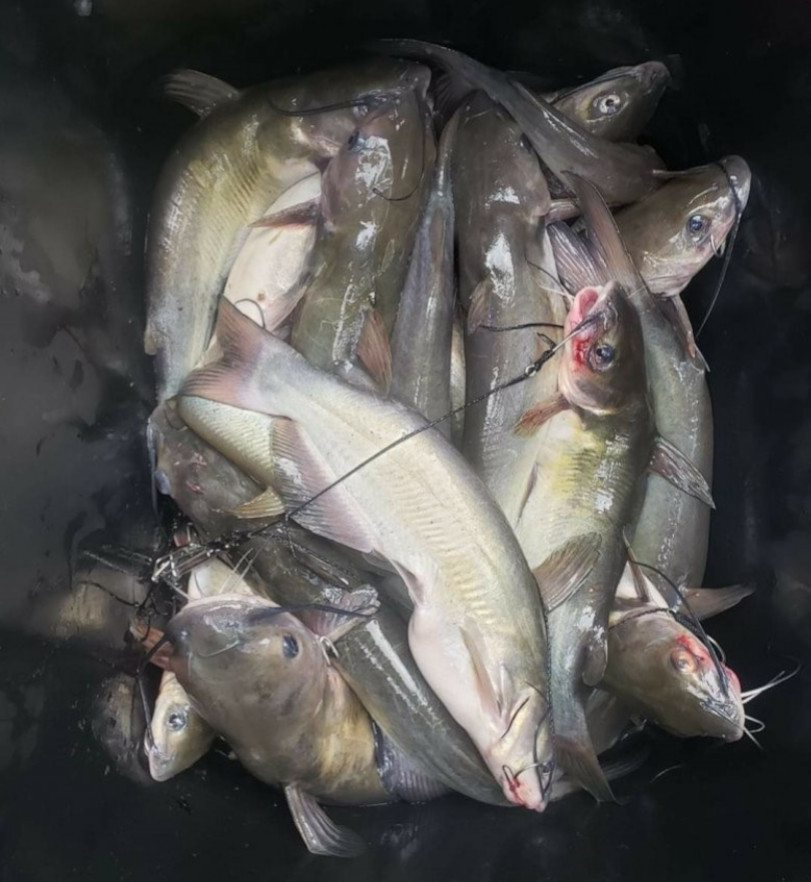
When trotline fishing, it’s best to think of yourself as a trapper. You survey an area, use your knowledge of your target animal’s behavior to envision how they’re utilizing it, bait your trap (or hook), and walk away. All of the work and strategizing takes place on the front end of the endeavor.
Catfish Trotline Components
A lot of the work and skill involved in trotline fishing is in assembling a good trotline. It can be tempting to use cheap components to build your line, but in my experience, doing so will always come back to bite you.
Trotline String
The string is the first place where most people go wrong when trotline fishing. You want a braided and tarred trotline cord. Braided, tarred line is only slightly more expensive than twisted, “plain” line; but it can be hard to find. This means that it’s tempting to forgo it and just buy whatever is on the shelf, but a good line will last longer and hold knots much better than the cheap stuff.
For the main line, you want the biggest possible diameter that will either thread through your dropper swivels or clip onto your trotline clips (more on those later.) Catfish are not line-shy, so there’s no point in going smaller. For your dropper line, it needs to be small enough in diameter to allow it to fit through the eye of the hook. If you’re using swivels, it also needs to fit through the eye of the swivel when doubled up.
Trotline Hooks
Since you’re not there to set the hook on a fish, good hooks are crucial on a trotline. I am personally a fan of Owner and Gamakatsu circle hooks, but any good, strong, sharp circle hook will work. Opinions vary, but I’ve concluded after lots of testing that circle hooks lead to more and better hookups than traditional J-hooks.
For general catfishing, I prefer a 5/0 circle hook. This hook is small enough to fit in the mouths of most catfish worth catching but strong enough to hold the occasional bigger fish. This size works well with the cut bait I usually use to target channel catfish and blue catfish. If I’m using live bluegill or bigger cut baits, I’ll size up to an 8/0. I don’t generally target big fish with trotlines, but sometimes I like to sneak in a dropper or two with a big hook and a lively bluegill “just to see.”
Trotline Clips
Trotline clips add some expense to your line, but they make life a lot easier because they let you easily add or remove droppers from the main line. This means that if a fish is proving difficult to unhook, you can just unclip him from the line and keep moving. It also allows you to bait droppers ahead of time, and quickly replace empty lines with fresh ones as you run the line.
Trotline Weights
Some anglers insist on weighting their trotlines, probably because they have an idea that catfish are bottom feeders. While catfish do feed on the bottom, they will feed voraciously throughout the water column at night, when most trotlines are run. I don’t personally use weights, because I prefer to fish my lines closer to the surface than most people. This makes it easier to keep the line under tension and improves your hookup rate. It also makes it easier to run the line and helps to keep fish away from submerged structures and out of trouble.
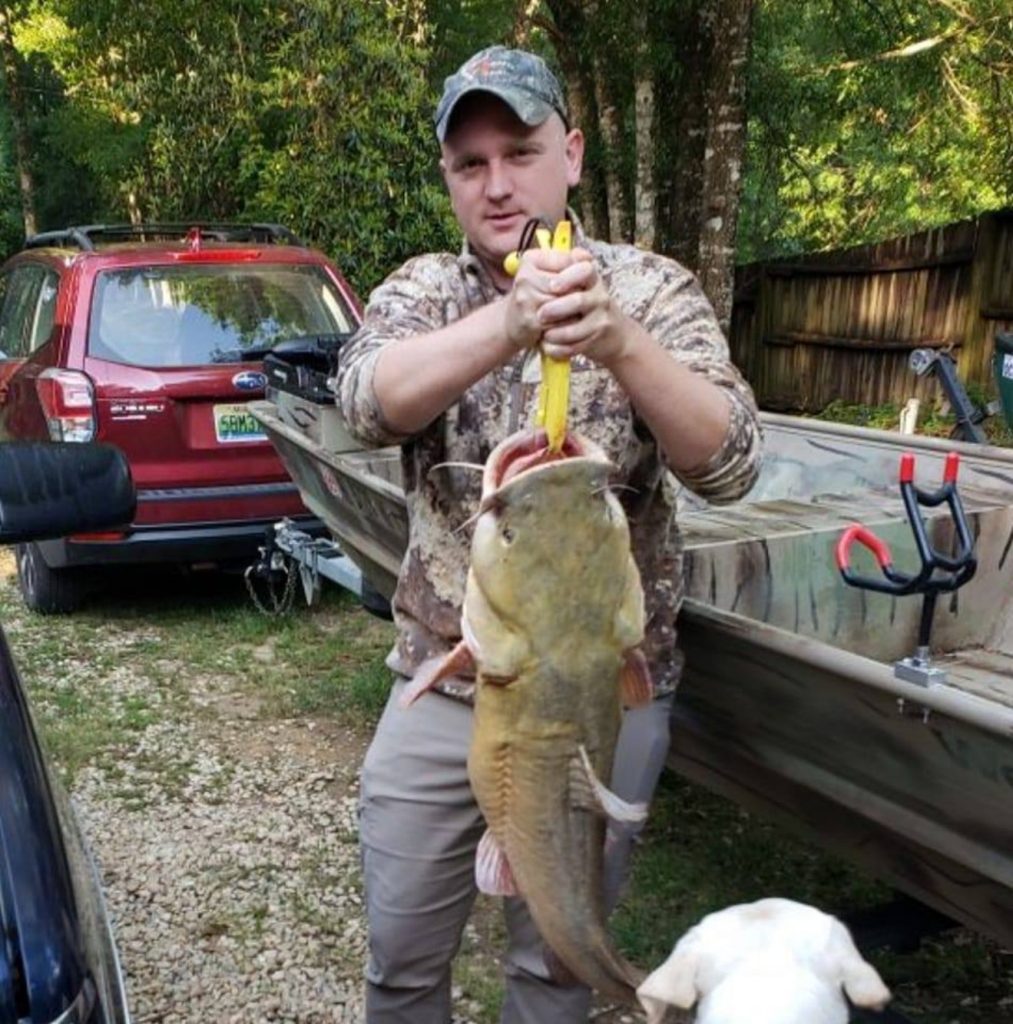
The only real reason I see to weight a trotline is to make sure that it stays low enough in the water to not get caught in an outboard. For this purpose, a couple of 2-4oz pyramid weights can easily be threaded onto a trotline clip and snapped onto the line.
Trotline Winder
Once you’ve built a good trotline fishing setup, you’ll need a place to store it. A cheap extension cord reel works well for this, allowing you to easily reel in a mainline once you’re done fishing a spot. I personally store droppers separately in a 5-gallon bucket with slots cut into the top to slip hooks into. Storing droppers separately from your main line makes running lines safer and much less tangle-prone.
Trotline Tags
Most states require anglers to tag lines with their name, phone number, fishing license ID#, or some other combination of information. The easiest and neatest way I’ve found to do this is with copper trapper’s tags. I typically zip-tie one tag onto each end of the main line.
How To Make A Trotline
Once you’ve assembled your materials, it’s time to build your line. I typically do this on rainy days and lazy evenings around the house. It’s time-consuming, but not particularly difficult.
For starters, you’ll need to tie two overhand knots about an inch or two apart every six feet along your main line. If you’re using swivels, you’ll want to thread them all onto the line and position them in between each pair of overhand knots one at a time as you go. I like to prepare a whole roll of mainline each year, and then throughout the fishing season, I can cut what I need off of it. When I’m done running that particular line, I just tie it back onto the piece I cut it from.
Once your main trotline fishing line is prepared, roll it onto your line winder and move on to the droppers.
I like to tie my droppers fairly short, about 14-16”. This allows them to fit neatly into my bucket. Begin by cutting lengths of dropper twine to length, allowing a few extra inches for knot tying. If you’re using swivels, you’ll want your line to be a little over twice as long as its finished length. This will allow you to basically tie a loop dropper, with your hook snelled onto one end and the other free to girth-hitch to the eyelet of your swivel. (Confused? Check out the image and it’ll make sense.)
If you’re using clips, a simple clinch knot can be used to tie the clip onto one end, and a hook can be snelled onto the other end. As you make your lines, drop them into the slots cut into the rim of a 5-gallon bucket, and put the lid on the bucket. Your lines are now safe and secure. I usually store 25-50 droppers this way, and you can store miscellaneous gear in the bucket as well.
Trotline Setup
Once your trotline is built, all there is to do is set it. I prefer to set my lines at the mouths of creeks or sloughs, or in sections of the creek where I’ve caught lots of catfish before on rod and reel. If your sonar shows fish in a creek, regardless of species, that can also be a good place to run a line. Catfish will feed during the night in areas where other species are common during the day.
I prefer to run my lines “bank-to-bank.” IE, I anchor my main line to one side of the creek, troll or idle over to the other side while letting out line, and then anchor the other side to the opposite bank. I like to try and keep the line fairly tight. Not so tight that it sits on the surface, but tight enough that it only sits three or so feet below the water.
Once the main line is set and each end is tagged, I then go down the line adding droppers. If at all possible, I prebait the droppers or have one person bait hooks and hand them to me to attach them to the line. Clips allow you to just “snap” the dropper onto the line. If you have swivels instead of clips, just thread the end of the loop opposite your hook into the swivel eyelet, and then fish the hook through that loop and pull tight. This is a simple but strong attachment that allows you to easily add and remove droppers to the swivels.
With the line set and baited, all there is to do is go home, eat dinner, get a good night’s sleep, and return early in the morning. I like to set my lines just after dark and check them first thing in the morning.
How To Run A Trotline
The first thing to remember when checking or “running” your trotline is to be careful. You’re dealing with multiple hooks, strong line, and quite possibly some current. If you’ve built your line properly, it’s more than capable of holding YOU should you happen to get hooked or tangled in the line. Always keep a sharp knife on your person, wear a life jacket, and use common sense and healthy caution. And don’t run lines alone. Safety aside, it can be a lot of work to run a line and an extra set of hands is extremely helpful.
With that out of the way, the first order of business is to locate the line. Some fishermen tie a buoy to the main line that they can grab and use to haul up the line. If your line runs to the bank, a piece of flagging tape can help you locate where you tied it off. If you’re fishing in an area where fish stealers or saboteurs are prevalent, however, it’s best to rely on memory or GPS coordinates instead of visible marking your lines. Shallow lines can be snagged with a broomstick that has a screw-in hook inserted into one end. Deeper lines may need to be hooked with a stout line that has a small kayak anchor tied to one end.

Once the line is located, pull it to the top and kill the motor. I like to just pull myself and my boat slowly along the line with my hands, checking the line as I go. It helps to have something that you can “hook” the line onto if you need both hands for a second in order to keep from having to fish it back up after you let it go. My jon boat has a couple of cleats strategically placed on the gunwales for this purpose.
When running the line, it’s important to work quickly and smoothly. If you did a good job setting your line, you’ll have multiple fish struggling on it. The longer you dilly-dally, the more likely you are to lose a fish. Some anglers like to use nets or a gaff to help secure fish, but I prefer to flip them into the boat and “flip” them off the hook with a dehooker tool.
If you’re going to be running the lines again and if your first mate is a seasoned hand, they can rebait any empty hooks as you remove fish. Otherwise, it’s best to run the line once to remove fish, and a second time to rebait.
Trotline FAQs
What is the best bait for trotlines?
That depends on what you’re fishing for.
If you’re targeting channel catfish, just about anything with a little smell and the ability to stay on the hook will work. Chicken livers are too flimsy, but I’ve had luck with cubes of deer liver, which are substantially tougher. Nightcrawlers will work as long as you set your lines after dark. Otherwise, bream, gar, and turtles will clean your hooks. I’ve caught fish on bubble gum, and Zote soap is actually a surprisingly effective trotline bait if you’re targeting 1-3lb “eatin’ size” channel cats. Cheap hotdogs cut into small pieces are also a cheap, clean, and fairly effective bait.
Another good option that is clean to use and that stays on the hook well is Fishbites – Catfish Bait. These bait strips can be quickly and easily cut with scissors, and don’t make your hands smell like roadkill.
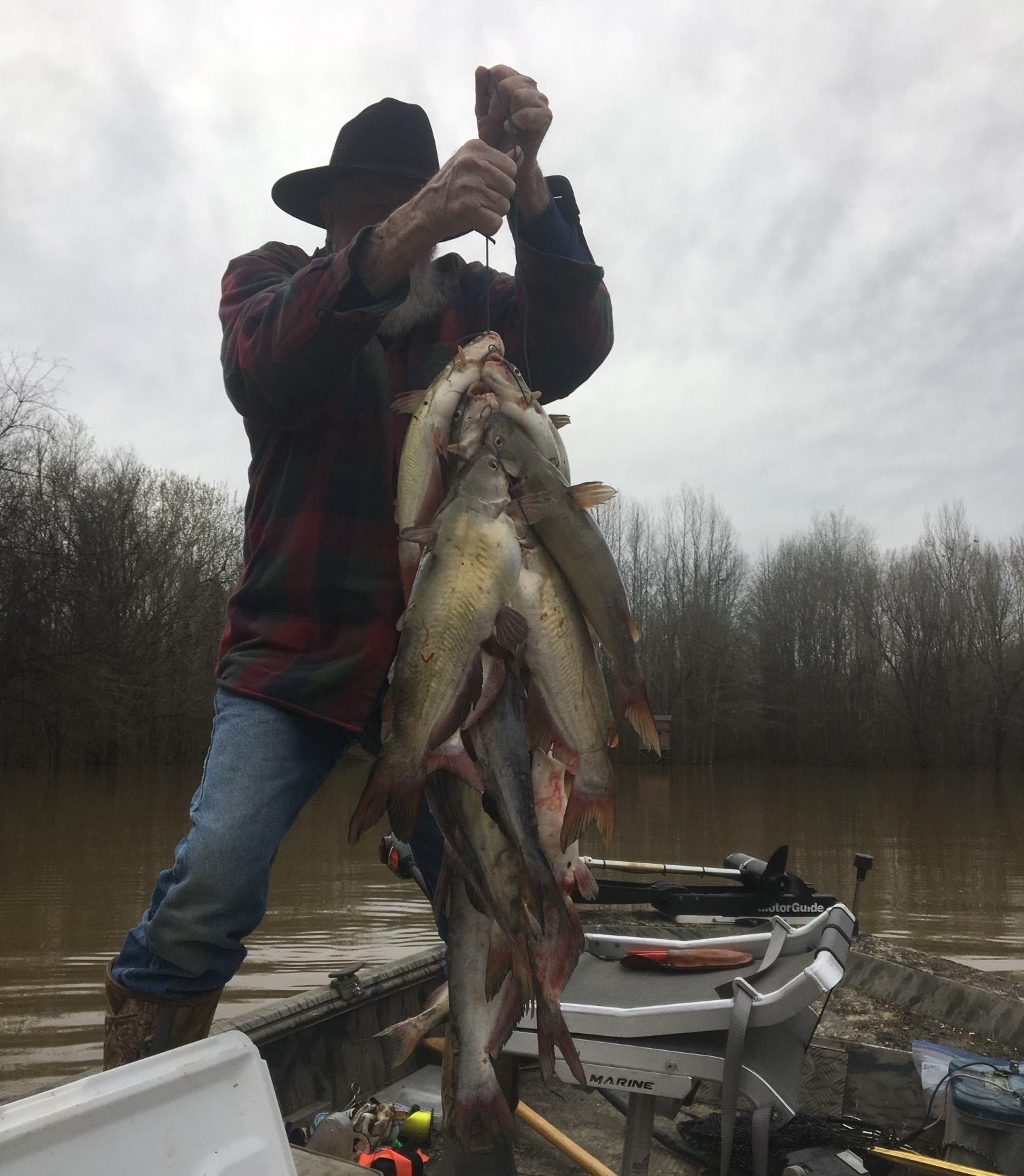
For blue catfish, think meat. Chunks of chicken or beef work, as does cut bait from the waters you’re fishing. In many waterways, skipjack, shad, bluegill, and mullet are great candidates for cut bait. The bigger the bait and hook, the bigger the fish you can expect to catch.
Flatheads almost always require live bait. I prefer a big bluegill, shellcracker, or green sunfish hooked through a nostril, but I’ve also used a small rubber band to attach a live crawfish to a hook with good results.
Are trotlines illegal?
It depends. In some states and on some bodies of water, yes. But trotlines are legal throughout much of the American Southeast and Midwest, where relatively low human populations and vast river systems support LOTS of catfish. Before you build your trotline, it’s a good idea to contact your local state conservation agency to verify the legality of using trotlines in your area, as well as any special requirements regarding construction and tagging.
Final Thoughts On Trotline Fishing
Before wrapping this trotline fishing article up, I’ll throw in a few final bits of advice. The more work you can do off the water when running a line, the better. Precutting your bait, and even prebaiting your droppers, will make the experience much easier. Keep your boat as clean and clutter-free as possible when working lines. Have a net or gaff handy for big fish. Don’t stop to take pictures or admire fish until the line is run. Hold off on trying to use live bait until you’ve run cut bait a few times. The added challenge of hooking live bait while handling the line and the boat can leave new trotliners hot, sweaty, and mad.
Finally, run lines responsibly. A line you’re not running anymore that’s left in the water is litter. A line running near where people swim is a hazard. And taking more fish than you need isn’t just poor conservation practice, it’s a sign of ignorance and low-breeding.
With all of that in mind, go out and run a few lines this spring. And be sure to take a kid or a new angler with you. A full trotline can be a very memorable experience, and it’s best shared with others.