

The sight of fly rods and reels at the boat ramp in the warm waters of the deep south often garner a confused stare followed by the phrase: “I don’t think there’s any trout in here”. I usually play along and act surprised and genuinely disappointed. Given the fame of movies like A River Runs Through It, fly fishing for trout became popularized among the masses. At some point, an indelible conclusion was formed that the pursuit of salmonids and char are the only finned beings worthy of being pursued with a fly. Fortunately, the dogma that fly fishing is only for trout is being torn down by the growing popularity of warmwater fly fishing.
Fly fishing is simply using a weighted line to cast a “weightless” fly, the opposite of conventional fishing where a weightless line is cast by a weighted lure. In some cases, this involves the proverbial size 20 dry fly with the correct shade of yellow thread needed to fool a wary trout, but there is a growing appreciation for the fly angler’s pursuit of large toothy predators like musky, drag-screaming carp, and the abundance of bass species that inhabit the many waters across the US. These robust fisheries are the new frontier in fly fishing and its users are demanding gear and tools specifically designed for the species they pursue in the habitats in which they live. Save the delicate presentations and tweed jackets for the trout streams, some of us want to fish for species with interactions that are more akin to a backyard brawl.
Many fly anglers become mesmerized by the challenge and size offered by musky and pike, but there is a scaled-down version readily available for much of the eastern US. Chain Pickerel have commonly been viewed as a nuisance species by serious bass anglers, but these backyard scrappers can yield consistent action for the fly angler. They aggressively attack flies in shallow water, hit hard, and provide a nice fight once hooked, complete with aerial acrobatics. What more can you ask for?
What Is A Chain Pickerel?
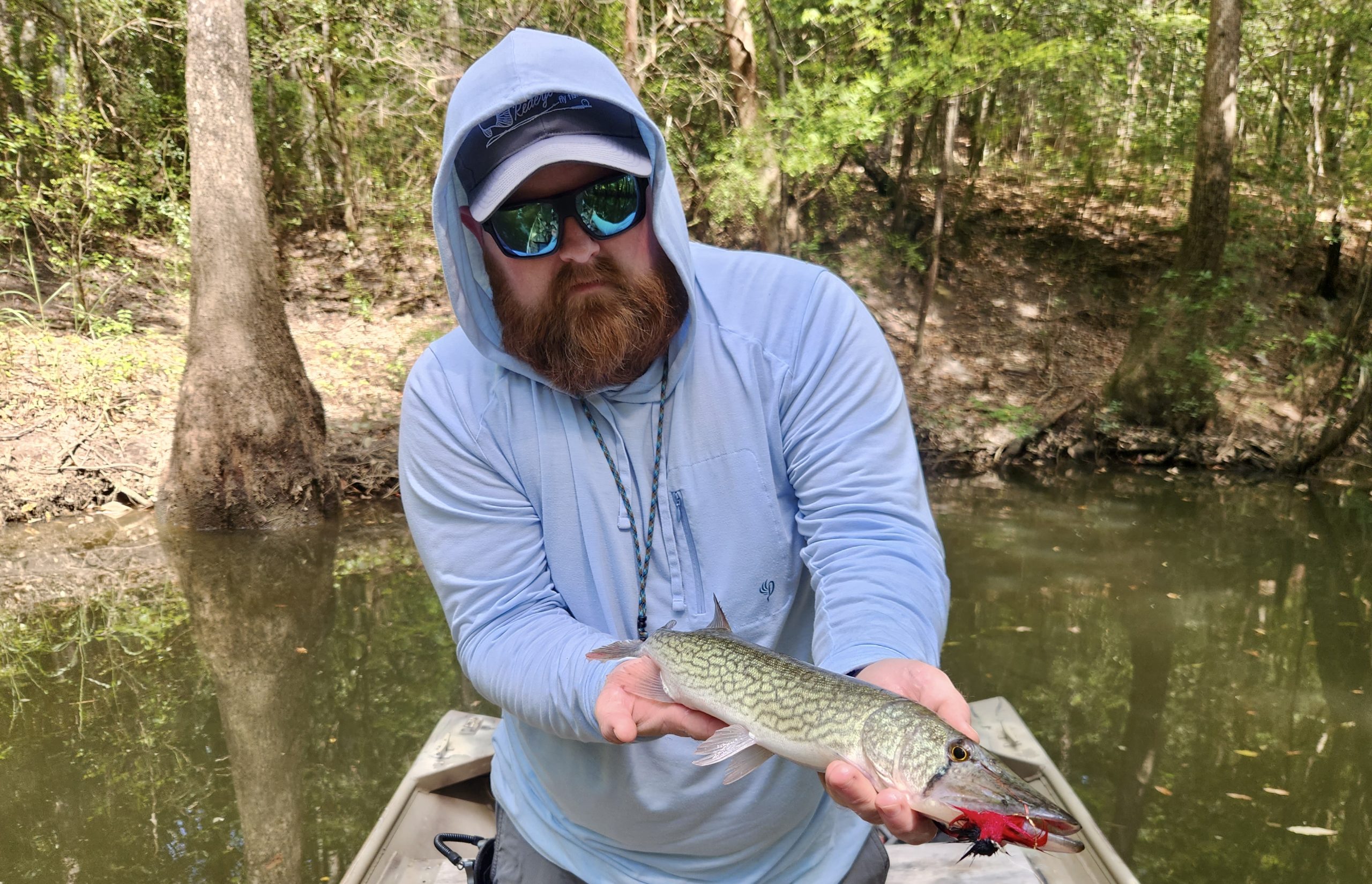
Chain pickerel (Esox niger), commonly called jackfish, are a popular gamefish that are closely related to the venerable musky and pike as members of the Esocidae family. They are elongated fish with large mouths full of teeth that make them quick and effective predators. They use their needle-like teeth to secure their prey. Their snout is sometimes referred to as “duck bills” due to its broad nature, and can easily distinguish them from gar in the water. Chain pickerel get their name from the dark, interlocking chain-like patterns along their sides which are accentuated by hues of green and bronze. They also have a dark vertical bar below their eye that resembles a ”teardrop”.
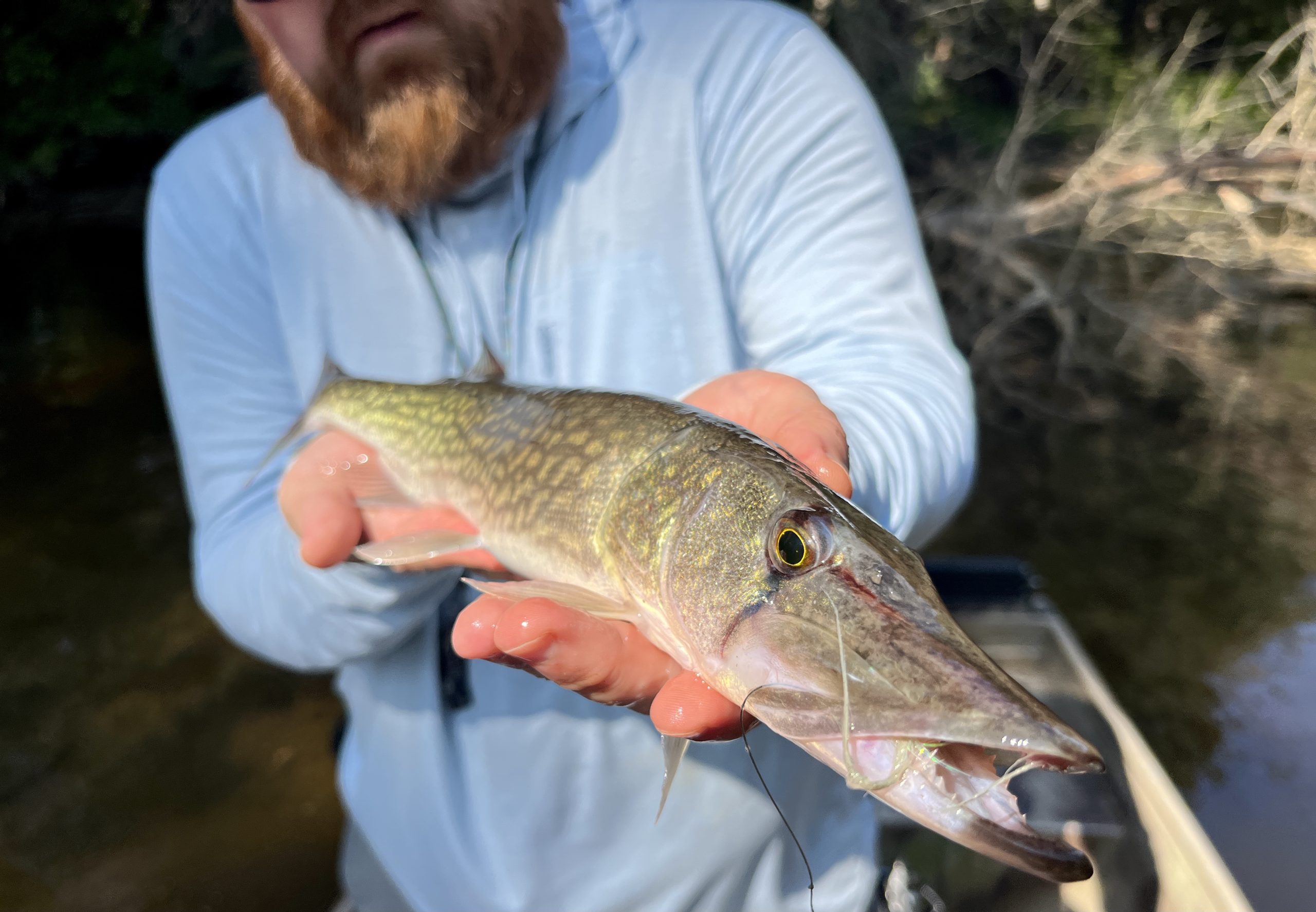
Chain pickerel are native along the Atlantic Slope from Maine to Florida and west along the Gulf coast from Florida to Texas. In southern latitudes they can extend as far north as Missouri. This wide distribution offers anglers an exciting variety of fishing opportunities across an array of habitat types from large, open lakes to small, intimate creeks. Although chain pickerel share many characteristics with their pike cousins, size is not one of them. They are the intermediate species in the Esox genus sandwiched between the larger pike that reach 55 pounds and the smaller redfin pickerel that top out around two pounds. The IGFA world record chain pickerel was caught in 1961 in Homerville, GA. That fish weighed 9 pounds and 6 ounces and since that record has stood for over 60 years now, it should be no surprise that fish that size are not common. Trophy chain pickerel are measured by lengths of 22 inches and typically top out around five pounds. However, what they lack in size they more than make up for with their aggression and willingness to take a fly. Average sizes in most populations consist of plenty of one-to-two-pound fish in the 14–18-inch range to keep a fly angler entertained for days.
Chain Pickerel Fishing Gear
Fly rod weights and lengths are best matched to the flies you intend to throw with them and by the areas you intend to fish them. Flies that are cast to chain pickerel will require a six- to eight-weight fly rod coupled with a weight-matched floating line (6-8 wt). Like most outdoor pursuits, you can spend as much money as you want on gear in fly fishing, but you can catch chain pickerel with a $40 Eagle Claw fiberglass fly rod or a $1,000 Orvis rod. The typical fly rod length is nine feet in length, and although a slightly shorter eight-foot or eight and a half-foot rod might allow for better maneuverability in the tight quarters of smaller creeks, a nine-foot rod is just fine for chasing chain pickerel. Rod action is a more important consideration as a faster action will allow you to cast the larger streamers and other flies needed to entice pickerel.
The terminal tackle should consist of six to seven feet of 30-pound monofilament tippet tied directly to the fly line with a loop-to-loop connection. The remaining two feet should be a 20-lb tie-able wire bite tippet by Rio or something similar. Pickerel are not leader shy, and they can easily slice through 30-50 lb monofilament and fluorocarbon lines, so the strength of the wire tippet is crucial to withstand the toothy strikes from these aggressive fish. Tie on the fly with a loop so that the fly action isn’t lost with the stiffness of the leader.

Chain pickerel readily consume fish, crayfish, frogs, and salamanders. Flies that mimic these abundant and common food sources are a sure bet. Effective topwater flies are foam gurglers and Dahlberg divers that create a large profile and move a lot of water when retrieved. The explosive topwater strikes from pickerel make this one of my favorite methods to pursue them. Classic streamer flies that resemble baitfish, such as the Clouser minnow, or newer flies like the articulated game changers work well below the surface. Flies with an erratic action, like rabbit strip, or lots of flash are more likely to elicit a strike as they can capture the attention of hungry pickerel and trigger their predatory instincts. In addition to action, for some reason the colors white, red, and black seem to work well for pickerel.
When To Catch Chain Pickerel
Chain pickerel can be caught year-round and are most active during the winter months when many anglers have abandoned bass fishing for deer and duck hunting, and in early spring. There’s a reason that they are a staple for ice fishermen in the north and that feature makes them common catches in early spring when many other warmwater species are still lethargic. Early spring offers the best possibility of catching a larger than average specimen as they are actively feeding to pack on calories in preparation for spawning. During these cool months, many warmwater fish are still in deeper waters, but as the sun rises, baitfish congregate in the shallows to warm up. This source of food is not lost on the pickerel and they are there, lying in wait around vegetation or drop offs to ambush the small minnows.
Regardless of the time of year, these are solitary fish so be prepared to do a lot of casting to find the fish, but once found they are not picky eaters. Chain pickerel are ambush predators and typically hold near structure where they can ambush unsuspecting prey that swims by. Chain pickerel rely on sight for hunting, so water visibility is one of the most important features to consider before even casting a fly. Focus your casts near downed trees or other structure such as weed patches in creeks and along the weedy edges of larger lakes. As waters warm in summer, spring-fed creeks remain cool and maintain active pickerel fisheries.
How To Catch Chain Pickerel
If you are not seeing fish follow your fly, keep moving to check other areas. Chain pickerel are usually the apex predators and are not scared to make their presence known. You will know if pickerel are present by the lightning-quick strike that seems to come out of nowhere or by the small submarine that suddenly appears beneath the fly to have a closer look before committing. The strikes can be very quick, and pickerel are notorious for smacking a fly and resulting in no hookset. Be patient and continue to work the fly because sometimes pickerel will attempt to injure their prey on the first strike and then return to consume the prey, so a missed hookset will usually result in another shot. The water depths where they’re commonly found is shallow to moderate, typically only 3-5 feet, which often allows you to see the flash when they strike adding to the overall enjoyment of fishing for these fish. Take note of what type of areas you catch them in and concentrate your casts to similar areas to increase your odds of success.
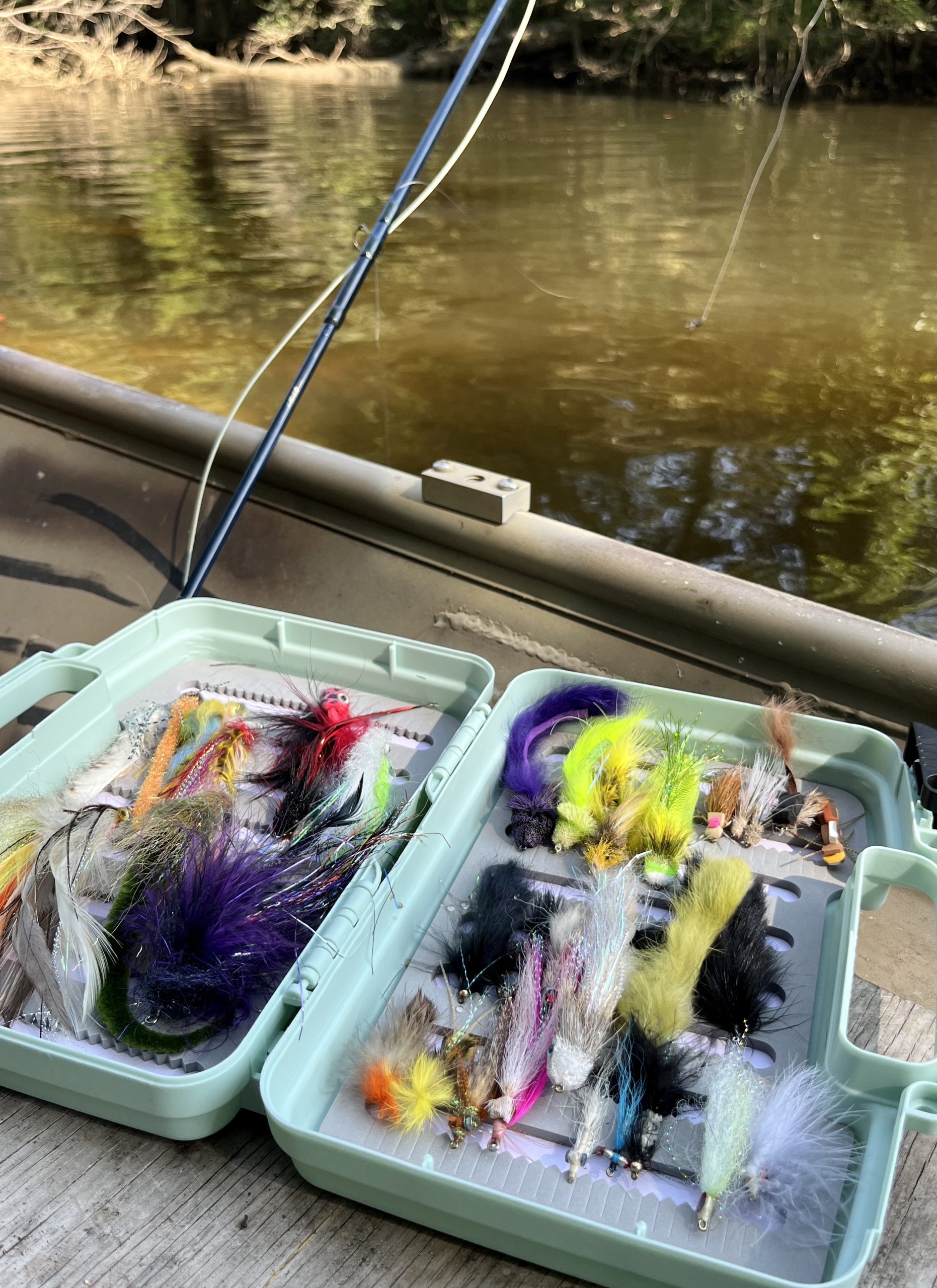
The action and speed imparted to the fly will have to be determined in real time on the water as the mood varies from day to day and fish to fish. Sometimes they prefer to strike during a pause while other days they want a quick retrieve. I recommend starting with short, quick strips and if the fish are following but not eating, start to let the fly sit still for a few seconds between strips. This slow pause is almost irresistible to chain pickerel and will often work when nothing else will. Regardless of the retrieve, make sure to maintain a constant connection to your fly line so that you can effectively strip-set as soon as the fish strikes. As mentioned, these fish are deceptively fast in striking and any slack in your fly line will hinder your ability to get a solid hookset.
Once hooked, pickerel will jump and thrash a lot in an attempt to throw the hook. A landing net comes in handy to quickly secure the fish before they throw the hook. Once landed, do not attempt to lip these fish like a bass or you may wind up in the emergency room to repair shredded fingers.
Are Pickerel Good To Eat?
Almost every article I have ever read regarding the edibility of chain pickerel has the same conclusion: “they’re no good to eat”. With many other options such as catfish and crappie that can easily be filleted, why bother with pickerel? Many people don’t, but unfortunately, they perpetuate the idea that they aren’t worth eating anyway. Chain pickerel are an excellent eating fish, but the problem usually arises with the added difficulty in cleaning the catch, not eating it. Chain pickerel have Y bones, and although some say that frying renders these bones edible, the normal cleaning and filleting methods are useless to achieve boneless fillets. An additional step is required to further remove the Y bones from the centerline of the fillet by cutting down and rolling your knife out away from the lateral line on the top and the bottom of the fillet. A visual aid is more effective in illustrating how this is accomplished and a quick YouTube search will provide many videos that demonstrate how to properly do this. Once deboned, the meat is white and flaky and said to be closer to walleye in taste than pike. The delicate meat takes on a wide variety of spices and seasonings to appeal to multiple palates and is conducive to many cooking methods from grilled to baked to fried.
Final Thoughts On Chain Pickerel
When pickerel eat a fly, they are anything but inconspicuous. They often cover large distances in a short amount of time and the push of water from their charge is exhilarating. Watching a predator engulf your fly and the explosive topwater takes are fascinating to witness and there is something to be said for those days when every two or three casts results in a feisty predator on the other end of the line.
Like musky fishing where success is measured by follows or eats, landing a chain pickerel is not a given. If for some reason the fish will not commit, or will only follow the fly, the spectacle of watching a pickerel follow a feathered offering is one of the most thrilling aspects of this type of fly fishing. They can be a nice change from the omnipresent panfish and bass. Also, learning how to catch them will improve your angling prowess.
Whether you’re a seasoned fly angler or a beginner, trout purist or saltwater fanatic, give fly fishing for pickerel a try. I guarantee you’ll have fun and it’s always fun to mark a new species off the fly-caught list.