
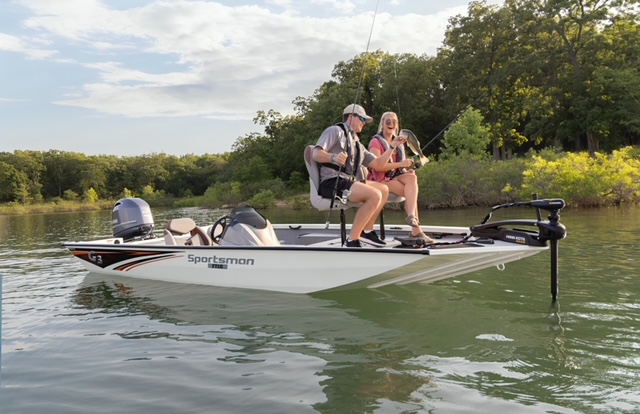
Many years ago, most recreational boats were made exclusively from wood, and the first aluminum fishing boats weren’t available until the late 1940s or early 1950s. The postwar aircraft industry was primarily responsible for introducing this lightweight, durable, and corrosion-resistant metal as an attractive alternative to traditional wood construction for recreational boats.
In 1938, the Owens-Illinois Glass Company merged with the Corning Glass Company to co-develop new technology and products as they refined their glass cloth manufacturing. Several new polyester resins made the lamination process faster and easier for aircraft modifications during WWII. In 1943, American Cyanamid introduced a two-part resin consisting of a hardener and an accelerator that cured at room temperature.
After the war, the increased availability of fiberglass allowed boat builders to experiment with various new hull designs. By the late 1940s and early 1950s, a post-war society eager to renew leisurely outdoor activities witnessed the beginnings of a new chapter in recreational boat design.
Aluminum vs Fiberglass Bass Boats
I recently spoke with Israel Britt about some of the pros and cons of bass fishing from an aluminum boat. His family is one of the three generations who have owned and operated Buck’s Island Marine near Southside, Alabama. He is also a Yamaha Master Technician and has spent a great deal of time rigging and fishing from various bass boats.
Britt discussed several of the reasons many fishermen choose aluminum bass boats over fiberglass when chasing bass. He said, “Choosing an aluminum or fiberglass bass boat depends on your priorities and fishing style.” Here’s a breakdown of some of the key differences we discussed.
When choosing between aluminum and fiberglass bass boats, there are several factors to consider, each material offering distinct advantages and disadvantages. Aluminum boats are known for their lighter weight, which translates to shallower drafting, better acceleration, fuel efficiency, and increased maneuverability in tight spaces. They are built with modern aluminum composites that are less prone to cracking, better withstand impacts, and can be welded or repaired with relative ease. Additionally, aluminum boats tend to be more affordable and require less maintenance than their fiberglass counterparts.
However, there are some downsides to aluminum bass boats. They often provide a rougher ride on choppy water because some aluminum hulls do not smooth out the bumps as fiberglass does. They can also be noisier due to the thinner material used in construction. Layout options in entry-level models tend to be more basic, though premium models can rival high-end fiberglass versions in terms of interior design and features.
On the other hand, fiberglass boats offer a smoother ride as the material naturally absorbs shock from waves, making it more comfortable in rough water conditions. They are also quieter than aluminum boats, as fiberglass construction helps dampen sound. However, these benefits come with a few drawbacks. Fiberglass boats are generally heavier, which can affect fuel efficiency and may require more horsepower to operate. They are also usually more expensive than aluminum boats and demand more maintenance, including regular cleaning and gelcoat care to prevent cracking. Additionally, fiberglass is more susceptible to cracking from impacts, which can be a concern in environments where collisions with underwater obstacles or debris are more likely.
In summary, aluminum boats excel in affordability, durability, maneuverability in shallow waters, and lower maintenance needs. Fiberglass boats, meanwhile, are preferred for their smoother and quieter ride, especially in rougher water conditions.
How to Choose the Best Aluminum Bass Boat
Aluminum bass boats are a popular choice for anglers due to their affordability, durability, and ease of maintenance. However, choosing the right one can be overwhelming, given the numerous models available. Here are some factors to consider when selecting the best aluminum bass boat for you:
Size
Aluminum bass boats are available in a variety of sizes, typically ranging from 14 to 21 feet. The size you select should depend on your specific needs and the number of people you plan to fish with. For instance, if you often fish with several buddies, a larger boat might be necessary to accommodate everyone comfortably. Additionally, the body of water where you plan to fish also plays a crucial role in deciding the size of the boat. Smaller ponds, streams, and rivers might be better suited for smaller boats, whereas larger lakes may require a bigger vessel for stability and safety. Another important consideration is storage and trailering; you need to ensure you have adequate space to store the boat and that your vehicle is capable of trailering the size of boat you’re considering.
Hull design
The hull design of a bass boat affects its performance in terms of stability, speed, and handling. Standard hull designs for aluminum bass boats include flat bottom, V, and deep-V options.
Features
Once you have determined the appropriate size and hull design for your boat, you can shift your focus to additional features that are important to your fishing experience. Consider how many live-wells you will need to keep your catch fresh throughout the day. Another key feature to look for is rod lockers; these provide a secure and safe place to store your fishing rods and protect them from damage. Additionally, casting decks are a significant aspect of bass boats, with decks at the front and rear offering excellent platforms for casting. Lastly, ample storage compartments are essential for organizing and stowing your gear efficiently. Each of these features enhances the functionality and convenience of your bass boat, making your fishing trips more productive and enjoyable.
Budget
Aluminum bass boats can range from around $10,000 to $60,000. Determine your budget to narrow down your options.
Whether you are in the market for your first aluminum bass boat or just looking to upgrade, look for a model that will check all the requirements for your style of fishing. The size and depth of the waters you typically fish and your targeted species will help determine the best hull design and size to suit your needs.
Aluminum Bass Boat Benefits
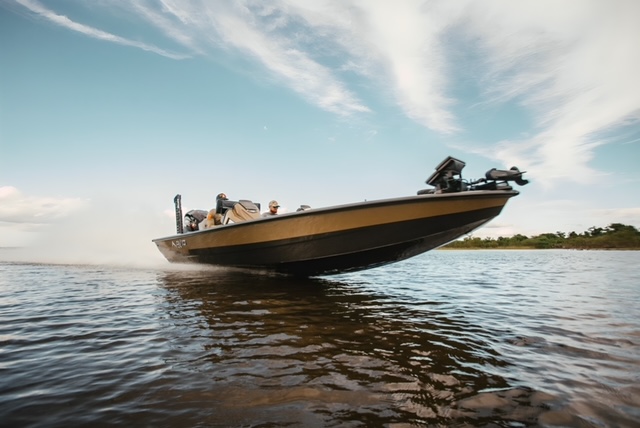
Aluminum bass boats offer a host of benefits that make them a popular choice among anglers, especially those who value durability, low maintenance, and cost-effectiveness. Made from modern, resilient, and corrosion-resistant aluminum, these boats are highly durable and well-suited for the rigors of freshwater fishing environments. Unlike fiberglass, aluminum is less susceptible to dents, cracks, and water absorption, which significantly reduces the need for frequent repairs or resurfacing, making them lower maintenance. Despite their strength, aluminum boats are relatively lightweight, which not only enhances fuel efficiency but also makes them easier to trailer and launch.
One of the distinct advantages of aluminum bass boats is their shallow draft, which allows anglers to navigate and access shallow waters that are often inaccessible to deeper-drafting boats. This feature is particularly useful for those looking to fish in diverse and shallow aquatic environments. Additionally, aluminum bass boats are generally more affordable than fiberglass models, providing a more cost-effective option for many anglers. These boats also offer excellent opportunities for customization; aluminum hulls can be easily modified to add accessories such as trolling motor mounts, live wells, and rod storage compartments.
Aluminum bass boats also tend to retain their resale value better than other materials, making them a good investment over time. The design of these boats typically features wide beams and stable hulls, providing a stable platform for fishing, casting, and moving around, enhancing the overall fishing experience. While aluminum boats may lack the sleek aesthetics of fiberglass models, their practical benefits, including stability and the ability to withstand environmental challenges, make them a favored choice for bass anglers who prioritize functionality and value over appearance.
Types of Aluminum Boats
Aluminum boats come in various types, each designed to cater to specific water conditions and boating needs. Among these, Jon Boats, Deep-V Boats, and Mod-V Boats are the most common, each offering unique benefits.
Jon Boats
Jon Boats are notably recognized for their flat bottom and straightforward square design. This configuration is intentionally simple, focusing on stability, a shallow draft, and low-cost construction rather than speed or performance in rough waters. The design’s primary advantage is its capability in very shallow water, making Jon boats ideal for fishing in shallow rivers and calm inland lakes. Their stability and ease of handling allow anglers to access remote areas with minimal water depth without the concern of damaging the hull on underwater obstacles, making them perfect for tranquil water fishing expeditions.
Deep-V Boats
Deep-V Boats, in contrast, feature a distinctly different hull design tailored for rough water conditions. These boats are equipped with a V-shaped hull that cuts through waves rather than riding over them, providing a smoother ride in choppy conditions. This design is commonly found in offshore fishing boats, performance boats, and other vessels that need to maintain stability and performance in challenging marine environments. The Deep-V hull balances these requirements, making it an excellent choice for anglers and boaters who face rough seas and still require good maneuverability and speed.
Mod-V Boats
Mod-V Boats represent a middle ground between the flat-bottomed Jon boats and the more aggressively contoured Deep-V boats. These boats feature a modified V-shaped hull that offers improved performance over a Jon boat while still providing greater stability and ease of handling than a typical Deep-V hull. This type of hull is a popular choice for those looking for all-around performance, providing a good balance of stability, speed, and handling. It’s versatile enough for both tranquil lake waters and moderately rough river or coastal waters, making it a suitable option for boaters who enjoy a variety of water activities.
Avid aluminum boats are made in Amory, Mississippi, and their bass series offers lengths from 18-21′ to satisfy anyone’s bass fishing needs.
Avid’s t21 XB ELITE is a tournament-ready model catering to the needs of seasoned tournament fishermen and competitive weekend fishermen seeking unparalleled fishability. With its exceptional live well capacity and horsepower rating of up to 250 HP, this boat empowers you to take on the most demanding fishing challenges.
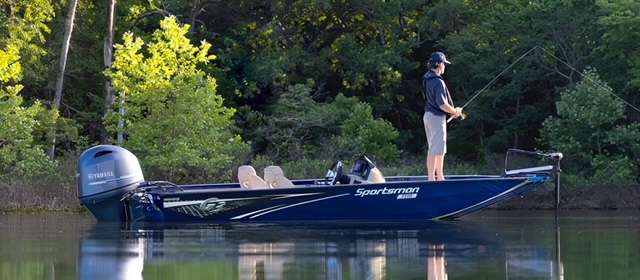
G-3: This line of all-aluminum, welded fishing machines are made in Lebanon, Missouri, and offers an extensive line designed for the most demanding angler.
Sportsman Series
- Sportsman 1610
- Sportsman 1610 SS
- Sportsman 1710
- Sportsman 1710 PFX
- Sportsman 1810
- Sportsman 1810 PFX
- Sportsman 1910
- Sportsman 2100
- Sportsman 2400
Aluminum Bass Boat Power and Motor Options
Because aluminum bass boats come in a vast array of shapes and sizes, each one will have its own “best” power and motor options.
Britt said their G3 series of aluminum boats offer a variety of widths and lengths that can handle motors from 90- 150hp. Buck’s Island also stocks a premium line of bass boats made by Avid that can handle motors from 90hp up to 250 hp.
Battery and electronic options are available for any fishing style, and there are several factory packages to satisfy most anglers.
Conclusion
Many factors come into play when purchasing an aluminum bass boat. Think about how and where you like to fish and the features you need to make your time on the water enjoyable and successful. Lastly, consider your budget.
When you have those criteria written down, take your list and call Buck’s Island Marine; better yet, visit their showroom and put your hands on a few of the many models they have in stock. They also offer test drives to help you choose the best setup for your fishing style and can recommend numerous motor and electronic options that will satisfy any fisherman’s budget.