

Classic boats like the Boston Whaler 13 were built in an era when two-stroke outboards reigned supreme. Lightweight and torquey, those engines matched the boats perfectly. But with the rise of modern four-stroke motors—often heavier and longer—owners of vintage hulls are facing some tough questions: Can today’s small outboard motors work without compromising performance or damaging the boat? Are modifications like jack plates and transom adapters now a must? Do I have to look for a needle in a haystack, used two-stroke that’s been lightly used?
To get a clearer picture on small outboard motors, we spoke with John Adam, General Manager of Tohatsu America Corporation, who’s been part of this shift for over a decade and knows the repower dilemma better than most.
Understanding the Shift from Two-Stroke to Four-Stroke
The disappearance of two-stroke motors didn’t happen overnight. It was driven by emissions regulations introduced in the late 1990s by the EPA. “Two strokes started passing those early regulations, but as the standards became more difficult, it became clear we had to go in a different direction,” John explains. “The four-stroke option was the easiest way to meet the regulations and still deliver the power boats need.”
But the shift brought challenges. Compared to two-strokes, early four-stroke models were significantly heavier and had a different performance profile. “The initial four-strokes didn’t have that same low-end torque,” he says. “It took time and engineering to improve that. Today, they’re smoother and more efficient, but it was a learning curve for everyone.”
Weight and Shaft Length: Why They Matter More Than Ever
For owners of boats built 30, 40, or even 50 years ago, weight and shaft length aren’t just technical specs—they’re critical to safety and performance. “If you add 20, 30, even 50 extra pounds to the transom of an old fiberglass boat, you’re asking for trouble,” John says. “These boats weren’t built for that kind of load, and the stringers and transoms may not hold up.”
Shaft length is just as crucial. While newer boats are designed for long shaft motors, most older boats were built for short shaft setups. “We saw a lot of problems when people started throwing long shafts on short shaft boats,” John recalls. “It seems simple, but it creates back pressure, leads to carbon buildup, and can even shorten the life of the engine.”

And it’s not just longevity—performance takes a hit, too. “You’ll have sluggish top-end, slower planning, and you’re basically dragging more lower unit through the water than necessary. It’s like pulling a drift sock behind your boat.”
Why Modifications Like Jack Plates Aren’t Always the Answer
Some boaters turn to jack plates to make mismatched shaft lengths work—but that’s not always a good idea, especially on vintage hulls. “Sure, a jack plate can let you put a long shaft motor on a short transom,” John says. “But it moves the motor weight further back, increasing stress on the transom. That’s not something you want to do on a 50-year-old boat with wood inside the fiberglass.”
Instead, he recommends keeping things as original as possible. “The best thing you can do is match the shaft length correctly and find a motor that’s within the weight range your boat was built for.”
How Modern Four-Strokes Stack Up Against Old Two-Strokes
There’s a common assumption that older 40-horsepower two-stroke engines are more powerful than today’s four-stroke engines, but that’s not always true. “Back in the day, horsepower was measured at the powerhead. Now, it’s measured at the prop shaft,” John explains. “So an old 40 might actually have the same real output as a new 30—or even less, if it’s worn down.”
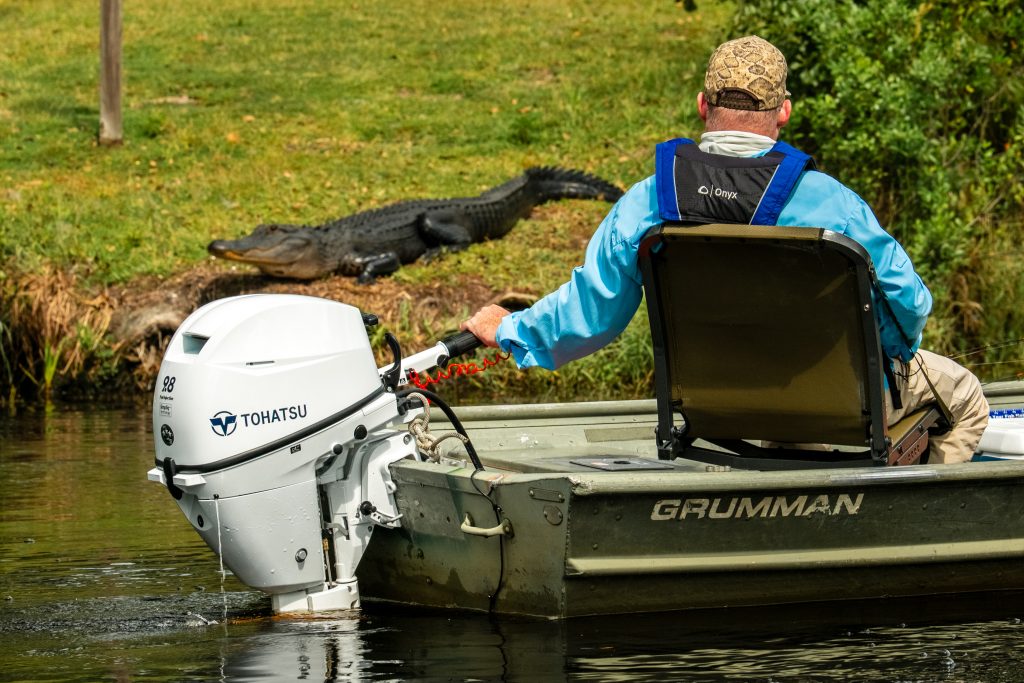
Plus, today’s four-strokes offer major improvements in fuel economy and reliability. “We’re seeing 30 to 50 percent fuel savings—sometimes even more,” he says. “I fish with a friend who still runs a two-stroke, and I always joke with him. I burn half the fuel he does on the same trip.”
Tohatsu’s Approach: Modern Performance in a Classic-Friendly Package
Tohatsu has carved out a unique space in the market by offering lightweight, short shaft four-strokes that fit classic boats without compromise. “We’ve worked hard to bring down the weight of our 25 and 30 horsepower models,” John says. “Now we’re in the low 130-pound range—that used to be two-stroke territory.”
This was no accident. Tohatsu strategically redesigned key components of small outboard motors to shave pounds without sacrificing durability. “We moved to plastic intake manifolds instead of aluminum, optimized the midsection, and even repositioned engine internals to shift the center of gravity,” he explains. “Then we tested it all in real-world scenarios—including running log strike tests—to make sure the strength was still there.”
Tohatsu’s Thoughtful Design for Repower Projects
It’s not just about the engine specs for their small outboard motors. Tohatsu also designed tiller configurations that work well on older boats. “A lot of the old boats had really short tiller handles,” John says. “Today’s boats have longer handles to offset weight and seating changes, but we knew we needed to support repowers. So we brought back a short tiller with modern features like power tilt and trim.”
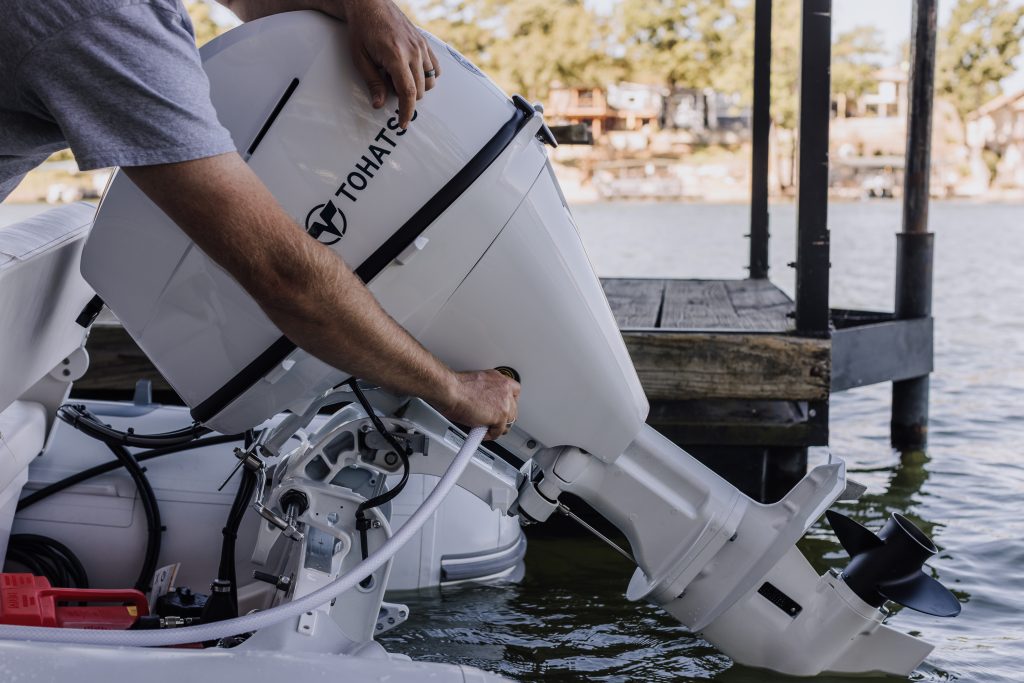
This attention to detail helps ensure that vintage boats can maintain their original character—without sacrificing comfort or function.
Owner Insight: Why the Right Setup Matters
As an example, I’m currently repowering my 1972 Boston Whaler 13 with a 2025 Tohatsu 30 hp. Like many classic Whaler owners, I had to be mindful of both weight and shaft length. The new Tohatsu weighs just over 130 pounds and is available in a short shaft configuration, which makes it a rare modern match for my hull without requiring structural modifications. I love that I’m going to be able to shed a ton of weight via a smaller cranking battery and by carrying less fuel, which is going to open up space aft and give me more load-carrying capacity.
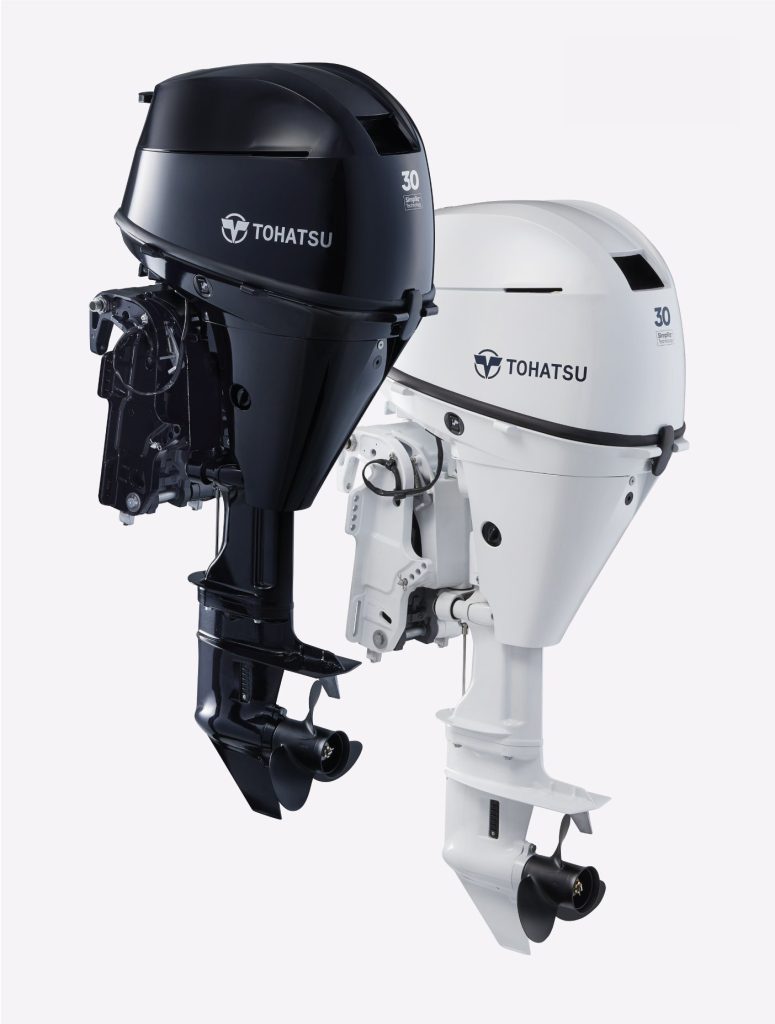
All of this while running quieter and cleaner, it’s a true win-win and will breathe new life into a beloved hull. For anyone looking to preserve the original ride and balance of a vintage Whaler, the right motor makes all the difference.
Propellers, Steering, and Setup: Don’t Skip the Details
Once shaft length and weight are sorted, dialing in the right propeller is the next step. “If you’re not hitting your wide-open throttle RPM range, you’re not getting full power,” John says. “That could mean the prop is too aggressive or the wrong blade design for your hull.”
He encourages owners to think about their specific application. “A jon boat might need more stern lift. A Whaler might need more bow lift. The propeller can make or break the setup.”
Advice for Boat Owners: Look at the Whole Package
So, what should a boat owner do before repowering?
“Check the transom,” John says. “Check the stringers. Look for stress cracks. If there’s any water intrusion in the wood core, you need to know before you add weight.” From there, focus on weight and shaft compatibility before anything else.
“Just because your old motor was a 40 doesn’t mean any new 40 is a drop-in replacement,” he warns. “Some modern 40s weigh 275 pounds. That’s a big difference if your old one was 200.”

And finally, don’t go it alone. “Our website is a great place to start—we’ve got weights, specs, and a dealer locator. But a good dealer who knows your boat type can make all the difference. They’ve seen it before, and they’ll know what works.”
A Modern Solution That Respects the Past
Tohatsu has struck a rare balance with their small outboard motors: modern, clean-running four-stroke motors that stay true to the lightweight needs of vintage boats. With options in the low 130-pound range and a continued commitment to offering short shaft models, they’re helping preserve classic boats without forcing compromises.
“If you match the setup correctly, you’re going to have a really good running boat,” John says. “It’s going to be smoother, quieter, more efficient—and in a lot of cases, it’ll run better than the two-stroke ever did.”
For owners of boats like the Boston Whaler 13, that’s the best of both worlds: classic lines above the water, modern reliability below.