

Powered by RedCircle
This week’s episode marks a new chapter as the longtime Alabama Freshwater Fishing Report officially becomes the Mobile-Tensaw Delta Fishing Report. Host Nick Williams explains the shift to a tighter, more detailed focus on the Mobile-Tensaw Delta, then checks in with two Delta regulars: Dip McMillian for a red-hot winter crappie update and Darren Shirah of Reel Time Outdoors with Darren for bass, brim, and catfish patterns (plus a quick hog-hunting detour). Expect practical winter tactics built around cold water, low tides, and where fish stack up when north winds blow the Delta out.
Conditions Recap
An arctic blast brought freezing mornings and even a few snow flurries in spots. Water temperatures were running roughly in the low-to-mid 50s, and strong north winds pushed water out quickly—leading to very low water at ramps and in shallow creeks. Recent upstream rain had the rivers up, but the north winds helped flush things back down fast, improving clarity and fishability in many areas.
Crappie Report with Dip McMillian
Dip says the crappie bite has been outstanding, with fish stacked in creek channels and feeding heavily on shad. The key is finding the right depth and staying around bait. He was targeting fish in 14–20 feet and catching quality slabs (including 12–15 inch fish) when he dialed in the depth and located shad.
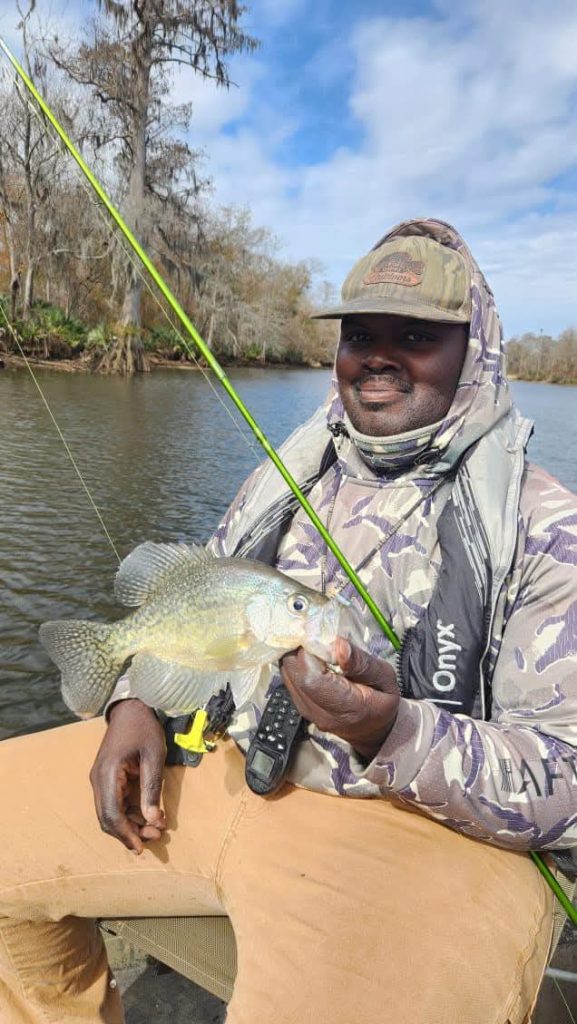
Pattern: suspended fish relating to shad, often not glued to obvious structure. Once you get your jig in front of them, they’re reacting fast and “turning up on it.” Dip leaned on natural-color crappie jigs (including “Old Smokey” style colors) to match the winter bait profile.
On-the-water note: This is a time of year when staying warm matters. Dip mentioned bringing a Mr. Buddy heater on the boat for hand-warming, along with full winter layers (coveralls, face mask, and wind-blocking outerwear) to keep fishing effectively through the cold.
Bass and Panfish with Darren Shirah
Darren’s winter theme is simple: low water concentrates fish. When the Delta gets blown out, many shallow backwater stretches lose depth, and fish pull to the mouths of creeks, small cuts, and little deeper edges where they can still travel on tide changes.
Best tide window: Darren has been doing his best work on the incoming tide, especially right after a hard north wind. He noted that the bite can be slow until the water starts easing back in—then fish often “turn on” and stack up in predictable places.
Go-to lure: Darren’s confidence bait is the Beetle Spin. He adjusts color by water clarity: black for clearer water and white for dingier water. He also builds/modifies his own Beetle Spins by upgrading to a #2 gold blade, pouring slightly heavier lead, and running a larger hook so bigger bass can be landed cleanly.

Panfish bait option: For brim, Darren has been buying crickets from Off the Hook (Old Chickasaw Marina area), and reported steady action when he needed a change-up. He’s also planning to experiment with live minnows (and document it on video), which can be especially effective in winter when fish are grouped up.
Bass snapshot: Bass have been holding in the same general places as the panfish—creek mouths, small channels, and depth changes. Darren had a strong bite on a white spinnerbait and noted some days the fish will ignore alternatives like a rattle trap and commit to that spinnerbait bite.
DIY rigging tip: If you’re fighting soft plastics sliding down, Darren discussed trimming aggressive molded bait keepers and using fly-tying thread wraps and a touch of brush-on super glue to lock baits in place—especially helpful for small grubs and finesse presentations.
Catfish and Hog Hunting Notes
Darren has been running limb lines with excellent results—mostly blue catfish. Over a two-day stretch, he reported landing roughly 252 pounds of blues. For bigger fish, he prefers cutting them into two-inch steaks, trimming away red meat for a cleaner flavor, and cooking them in ways that suit the cut.

On hogs, Darren says populations remain strong in the Delta, and he’s already taken six this season. He notes that major flooding events can knock numbers down, but in years without extreme high water, hog numbers tend to surge. In the thickest parts of the Delta, even organized dog hunting can be brutal simply because access is so limited.
Community Notes and Where to Follow
Dip shared upcoming Dippi Outdoors events, including a youth rabbit hunt later in February with limited spots for safety and a drawing conducted publicly. To learn more about youth hunts and outreach, follow Dippi Outdoors.
For more on Darren’s day-to-day fishing (and the real-time learning curve that comes with it), check out Reel Time Outdoors with Darren on YouTube.