
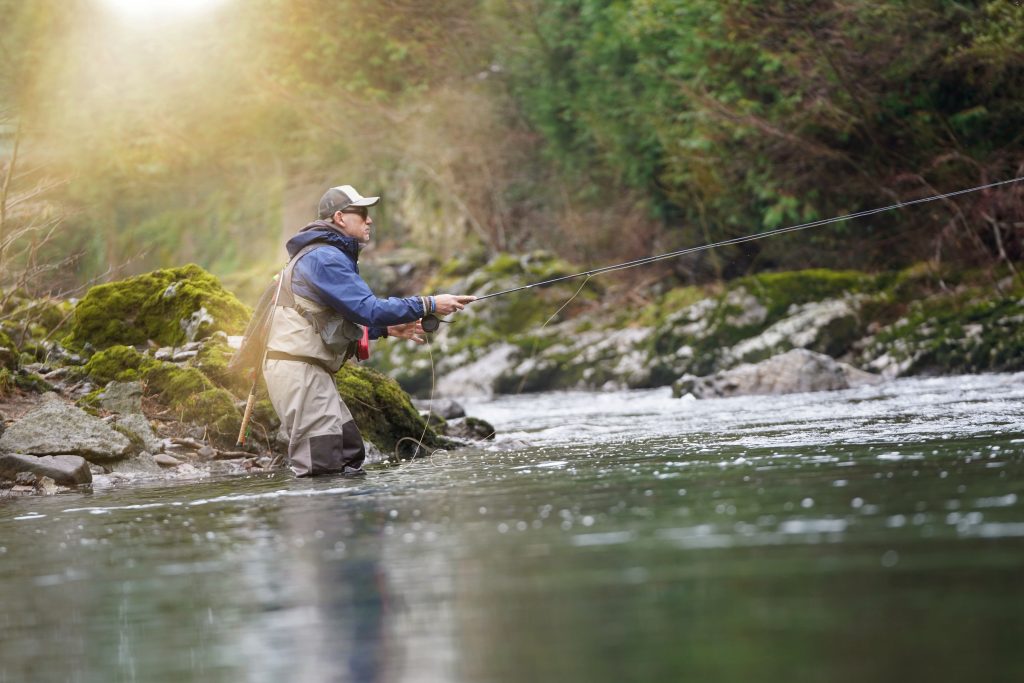
Georgia’s rugged mountains and clear, winding streams offer anglers a unique challenge: the Georgia Trout Slam. Designed to attract outdoors enthusiasts to the state’s beautiful waters, this initiative challenges anglers to catch three different trout species—rainbow, brown, and brook—within one season. Anthony Rabern, Northeast Georgia Region Supervisor, calls it “a program to increase awareness of North Georgia trout fishing” and notes, “people love a challenge” when it comes to fishing [Rabern Interview].
From the high peaks of the Appalachian Mountains to the cool tailwaters below Lake Lanier, each trout species occupies distinct habitats across Georgia, making the Slam a test of both skill and endurance. This guide details the key features of each trout and provides a roadmap for anglers who want to tackle the challenge.
The Three Trout Species
- Rainbow Trout
Rainbow trout, the most commonly stocked trout in Georgia, are relatively easy to find, especially with the help of weekly stocking reports on the Georgia Wildlife website. “We publish our stocking list every week,” says Rabern. “Rainbows are fairly easy to find and catch.” These trout are often found in mid-elevation streams and are known for their vibrant colors. When fishing for rainbows, look for them in deeper pools or near rocks and logs, which provide shelter. - Brown Trout
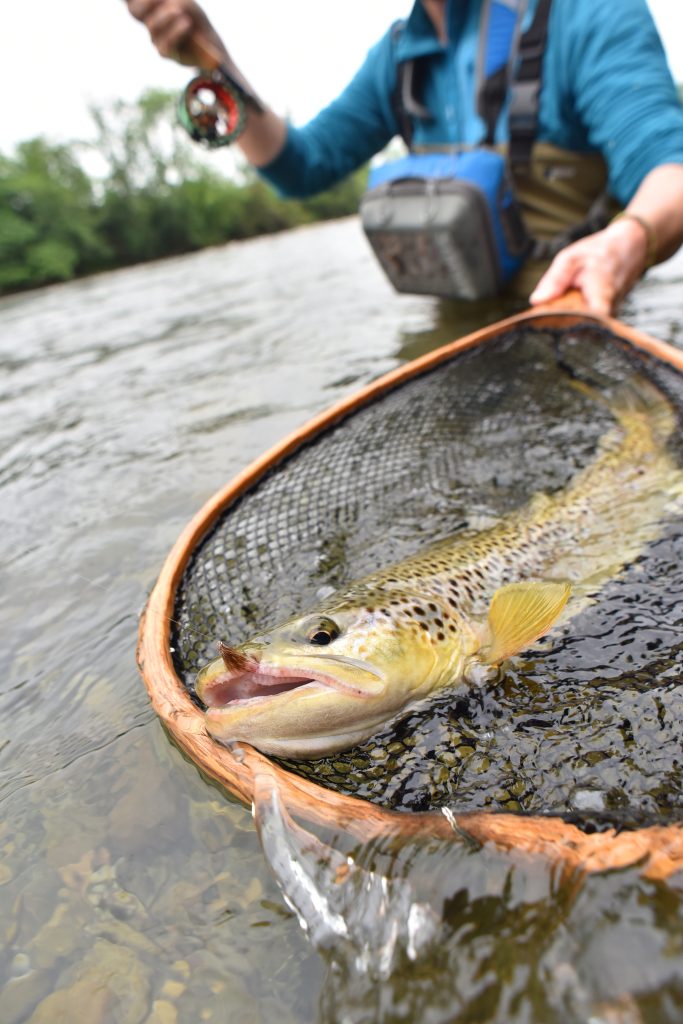
Larger and more elusive, brown trout tend to inhabit lower-gradient waters and are often found in the cool tailwaters below Lake Lanier. “We have a self-sustaining brown trout population below Lake Lanier,” Rabern shares. “The brown trout can get really big there. Fish up in the teens are not out of the question.” Known for their wariness, brown trout often require stealth and precise lure placement, with Rabern recommending lures that resemble natural prey or flies presented close to the riverbed. - Brook Trout
Native to Georgia, brook trout are found only in high-elevation streams above 2,800 feet, often in remote, forested areas. Brook trout are prized by anglers for both their beauty and the difficulty of reaching their habitats. “Brook trout spawn at the tail end of August into November, and their populations are vulnerable to heavy rainfall, which can wash out eggs,” explains Rabern. Fishing for brook trout often involves hiking to remote mountain streams, rewarding anglers with both challenging fishing and stunning scenery.

Preparation and Strategy for the Slam
Completing the Georgia Trout Slam involves more than just catching fish—it requires understanding where each species thrives and adapting to different fishing conditions.
- Gear Up
Rabern notes that most anglers he encounters prefer ultra-light spinning tackle, ideal for Georgia’s smaller trout streams. “These fish are small, so ultra-light spinning tackle is the way to go for most anglers,” he explains. For fly anglers, Rabern suggests aiming for insect-imitating lures, particularly during the spring and summer hatch seasons. “It’s about matching the hatch,” he says, referring to the practice of selecting flies that resemble the insects trout are feeding on. - Plan the Route
North Georgia’s mountains, especially the Chattahoochee National Forest, offer numerous public access points for trout fishing. The Georgia Wildlife website provides an interactive map and stocking schedule, helping anglers plan where to target each species. “Just look at the streams that come off the spine of the Appalachians,” Rabern suggests for those seeking brook trout. These tributaries, which flow from high-elevation ridges, are often the best locations for finding brook trout. - Know the Timing
Spring and early summer are ideal for the Trout Slam, when water levels are manageable and insect activity peaks. Brook trout fishing is best in early spring before summer droughts limit their available habitat. Knowing when and where each species is most active increases the chances of completing the Slam.
Conservation and Responsible Fishing
Georgia’s trout populations face unique challenges, especially the native brook trout. As Rabern explains, brook trout populations fluctuate based on environmental conditions. “If we get a heavy rainfall during spawning, it can flush the eggs right out of the stream bed,” he says, adding that droughts in the summer also concentrate fish in small pools, increasing competition for food. By practicing catch-and-release, especially in sensitive brook trout habitats, anglers can help maintain these delicate populations.
The Trout Slam initiative indirectly supports conservation efforts by raising awareness about Georgia’s trout diversity and attracting anglers to the outdoors. “Seeing families go out and fish together, three generations even, shows that it’s more than a challenge—it’s a tradition in the making,” Rabern remarks.
Planning the Perfect Trip
For those ready to try the Trout Slam, Georgia offers ample resources and accessible locations. The Georgia Wildlife website’s trout fishing page provides licensing information, stocking schedules, and maps. In addition, most fishing areas are on public lands, with the Chattahoochee National Forest offering numerous camping options nearby. Whether planning a weekend trip or a longer fishing adventure, North Georgia’s trout streams make for an unforgettable experience.
Top Tips for Trip Planning:
- Stocking Schedules: Use weekly stocking reports for rainbow trout locations.
- Maps and Guides: The Georgia Wildlife website and Rabun Trout Unlimited provide maps, local guides, and seasonal hatch charts.
- Lodging: With many campgrounds and public access points in the Chattahoochee National Forest, anglers can find accommodation options near prime fishing spots.
Final Thoughts
The Georgia Trout Slam is more than a fishing challenge; it’s an invitation to experience the natural beauty and biodiversity of the Georgia mountains. “Each species requires a different approach, a different understanding of habitat,” says Rabern. For seasoned anglers or beginners alike, the Slam offers a chance to hone their skills, spend time in the outdoors, and perhaps inspire a new family tradition.
For Rabern, the excitement of the Georgia Trout Slam is seeing anglers of all ages take on the challenge. “We’ve had people come from seven different states, families doing it together. It’s about more than catching fish,” he says. Whether you’re a local or from out of state, the Georgia Trout Slam offers an adventure that promises scenic views, unique fishing experiences, and a deeper appreciation of Georgia’s natural landscapes.