
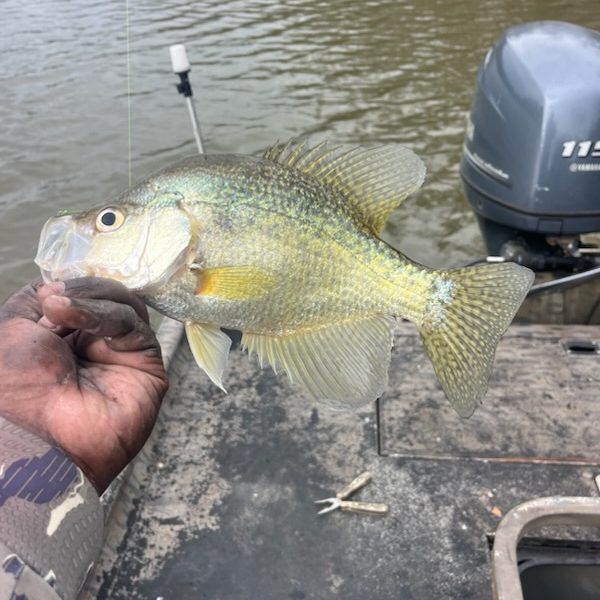
Catching crappie can be challenging, especially when they’re scattered and not holding tight to structure. However, with the right approach, you can still have an incredibly successful day on the water. Dip McMillian, an experienced angler in the Mobile-Tensaw Delta, recently shared his insights on how to locate and catch crappie under changing conditions.
Dip McMillian is a much-beloved angler in South Alabama, known for his expertise in crappie fishing and his dedication to sharing knowledge with fellow fishermen. As the founder of Dippie Outdoors, he works tirelessly to introduce young anglers to the sport through local outreach and educational efforts. Whether he’s fine-tuning new lure designs, scouting productive fishing spots, or offering practical tips on techniques, McMillian’s passion for the outdoors is evident in everything he does. With years of experience fishing the Mobile-Tensaw Delta and beyond, he has developed a deep understanding of crappie behavior and the strategies needed to catch them, even when conditions are tough.
Finding Scattered Crappie
Crappie in the Mobile-Tensaw Delta are constantly on the move, and as conditions change, they don’t always hold to predictable spots. Instead of schooling tightly around submerged trees or ledges, they may spread out, making them more difficult to locate. During this time of year, Dip often finds fish scattered between 8 and 12 feet of water, with some sticking to structure while others roam freely. Targeting these roaming fish can be a challenge, but it also presents an opportunity, as they are often more aggressive, actively searching for food rather than waiting for it to come to them.
Electronics play a key role in locating scattered crappie. Side imaging sonar is useful for identifying underwater structures where fish might be holding, while live sonar, such as Garmin LiveScope, makes it easier to spot crappie that are swimming freely through the water column. Transition areas—where creek channels meet shallow flats or where submerged timber leads into open water—are often prime locations to find scattered fish.
Water temperature also plays a major role in crappie behavior. Cooler temperatures often push crappie to structure for warmth, whereas warming trends can encourage them to roam and feed. Wind and current can further influence their movement, as strong winds tend to push baitfish into protected creek bends, attracting hungry crappie. Additionally, fish may move out of the main current into slack water areas, such as coves or behind submerged obstacles.
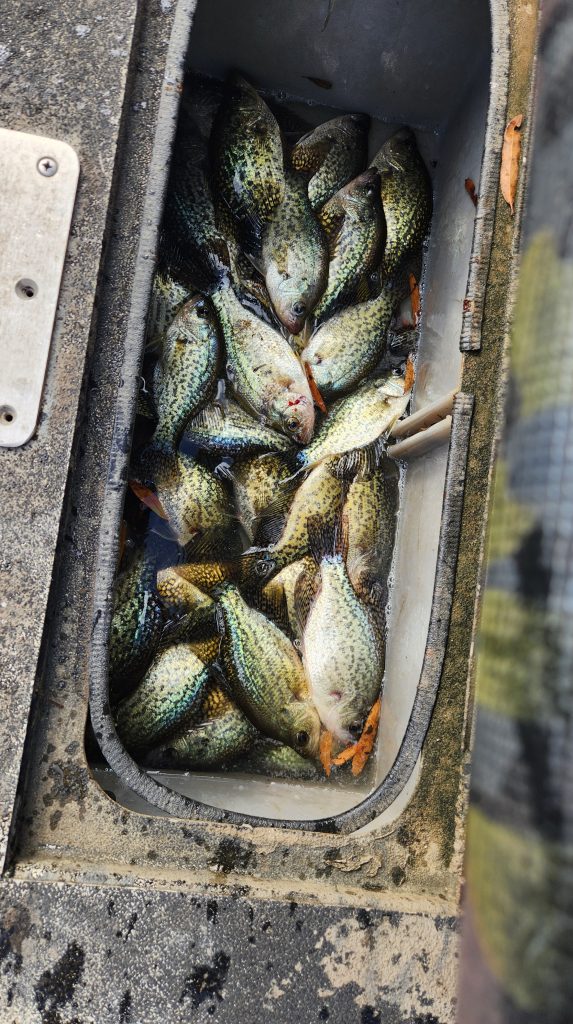
When it comes to catching crappie in these conditions, presentation is everything. If the fish are holding tight to structure, vertical jigging or slow, precise presentations work best. However, if they’re roaming, casting and retrieving a jig at their depth is often more effective. McMillian advises that even when crappie are scattered, they can still be caught in large numbers by adjusting techniques based on their behavior. By combining electronics, location scouting, and strategic lure presentations, anglers can turn what might seem like a challenging day into a highly productive fishing trip.
Best Lures and Jigs for Crappie
When targeting scattered crappie, lure selection and presentation can make all the difference. Dip typical prefers jigs in natural baitfish colors with contrasting tails, such as silver or black bodies paired with a chartreuse tail. These combinations provide a realistic look while also offering enough visibility to attract bites, even in murky water.
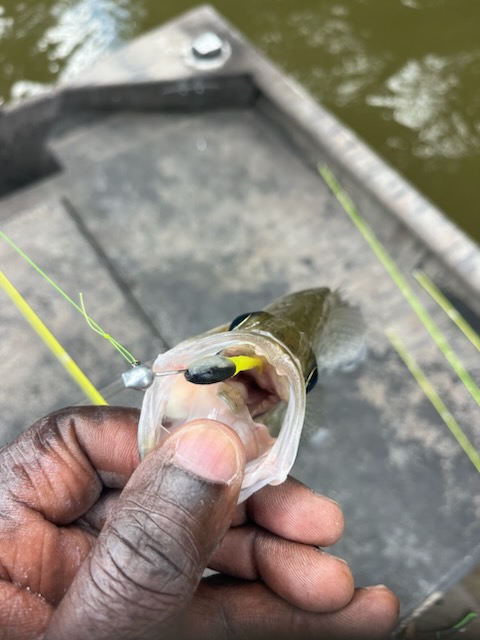
Jigs with lighter, more natural hues tend to perform well in clear water, while those with brighter accents, like chartreuse or pink, can be more effective in stained or muddy conditions.
In terms of technique, McMillian prefers single-pole jigging, which allows for precise lure placement. When crappie are holding to structure, dropping the jig directly into their zone and making subtle movements often triggers a strike. However, when fish are roaming, casting past them and retrieving the jig at their depth can be more productive. The key is to keep the bait at eye level with the fish, as crappie are more likely to strike a lure positioned just above them rather than below.
Managing Wind and Boat Positioning
Fishing in the high winds that spring sometimes brings can make boat control tricky. It’s not uncommon for Dip to find himself trying to fish in 12 to 15 mph winds, making it difficult to stay on structure. Instead of fighting it, he strategically positioned his boat in creeks where bends and coves provided shelter.
“If you’re single-pole jigging, boat presentation is key,” he said. “If the boat gets out of position, I just drift down, reset, and come back against the wind.”
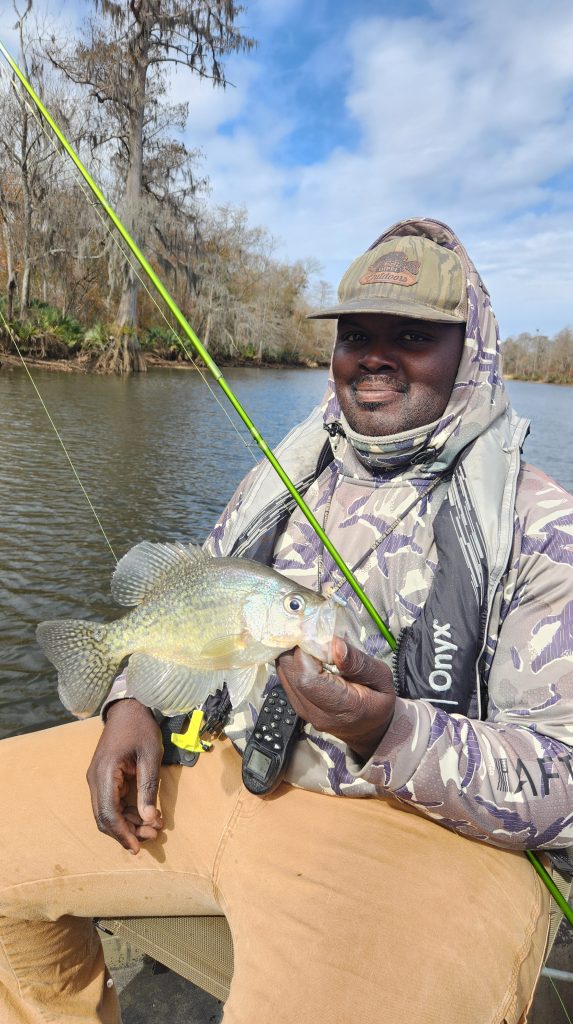
For anglers using spot-lock trolling motors, McMillian warns about potential drawbacks in strong winds. While spot-lock can hold you in place, sudden adjustments can cause unexpected jerks that can throw you off balance, resulting in an unwanted tumble and splash! His advice? Use it cautiously and rely on manual boat control if possible.
Final Advice for Weekend Anglers
With the right baits, a solid understanding of crappie behavior, and careful boat positioning, you can still land plenty of fish—even when they’re scattered. Be safe, fish smart, and take advantage of those roaming crappie when you find them!