
For years, Alabama’s flounder fishery faced serious challenges. Overfishing, habitat changes, and environmental factors had significantly depleted the population, leaving many anglers worried about its future. But thanks to a combination of strategic conservation efforts, improved regulations, and favorable environmental conditions, the flounder fishery is now bouncing back—stronger than ever.
The Decline and the Turning Point
A decade ago, catching a flounder in Alabama waters felt like a rare event. Anglers who once relied on consistent flounder catches found themselves struggling, and biologists began sounding the alarm about dwindling populations. The situation became dire enough that in 2019, Alabama made significant regulatory changes to help the species recover.
The state reduced the daily bag limit from 10 fish to 5, increased the minimum size from 12 inches to 14 inches, and, perhaps most notably, implemented a complete closure of flounder harvest during November—the peak of their spawning migration. These changes were designed to protect breeding females, ensuring that more fish had the chance to reproduce before being harvested. Additionally, commercial harvest restrictions were tightened, helping to reduce overall pressure on the population.
Signs of Recovery
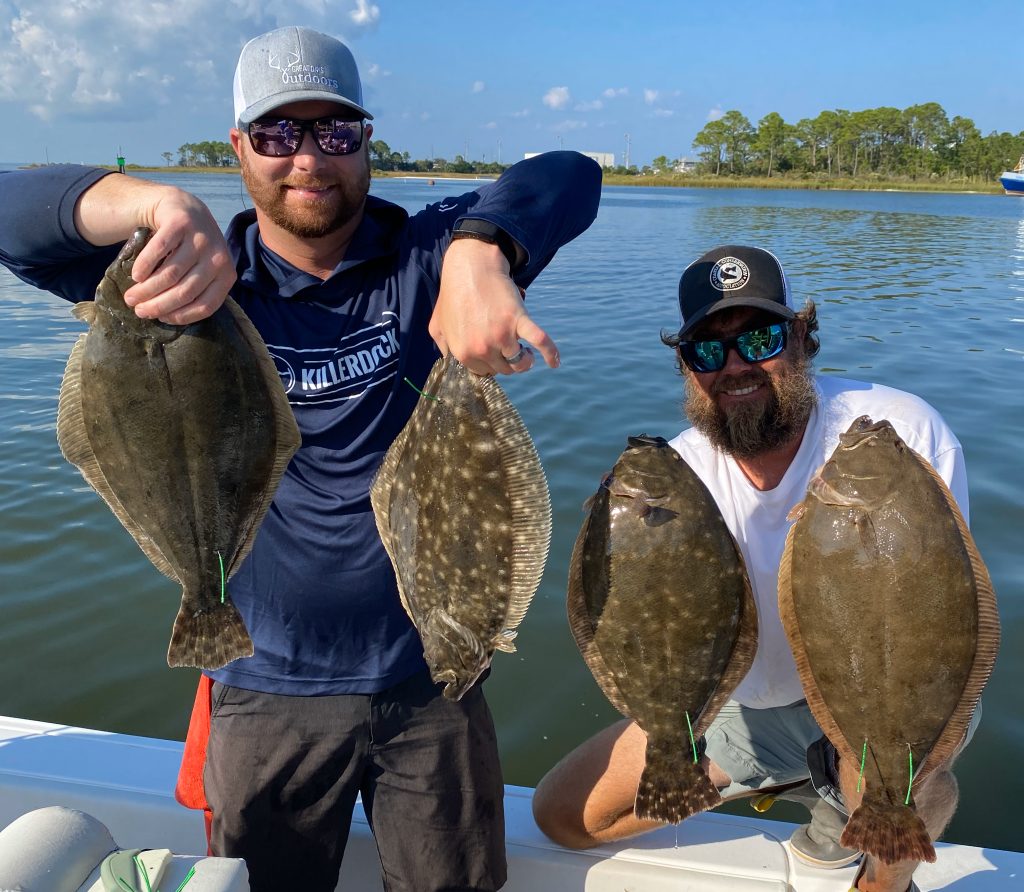
Fast forward to today, and the results are remarkable. Flounder numbers have rebounded, and anglers are once again finding success in Alabama’s inshore waters. Captain Richard Rutland, a seasoned guide, recalls how catching flounder used to be a rare occurrence just a few years ago. “Back then, if you caught a flounder, it was like, ‘What’s he doing here?’ Now, we’re seeing consistent catches, and even better, we’re seeing a lot of younger fish in the system, which means they’re reproducing well.”
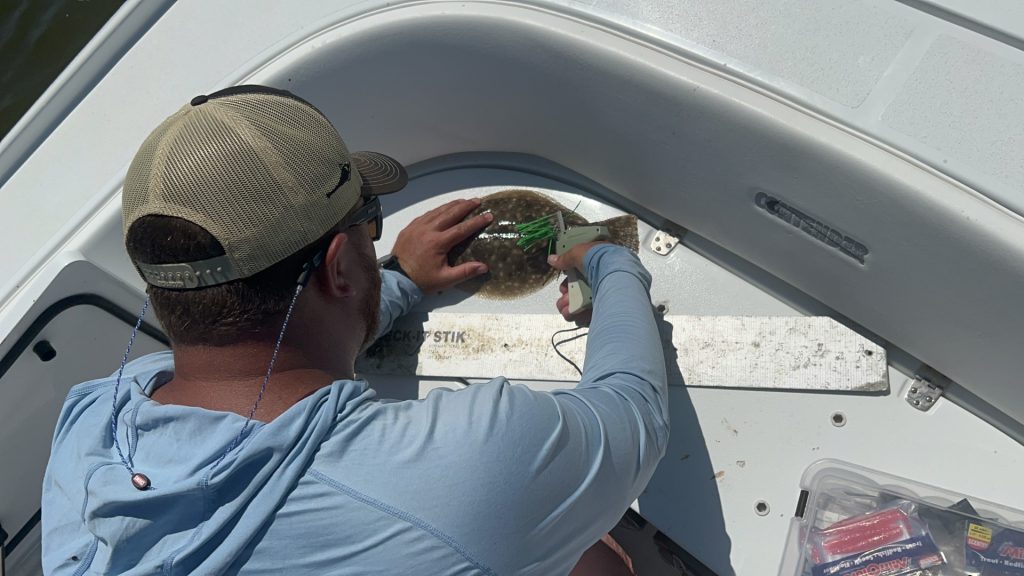
Dylan Kiene, a PhD student at the University of South Alabama specializing in marine science, has been closely tracking the recovery. Through an angler-based tagging program, he and his team have been able to monitor flounder movement patterns and population trends. One of the most encouraging discoveries? The return of overwintering juveniles in Alabama’s river systems—something that had nearly disappeared before the regulations changed.
“We’re now seeing young flounder stay in rivers like Dog River and Fowl River throughout the winter, growing rapidly before making their offshore migration,” Kiene explains. “That’s a big sign that the fishery is stabilizing.”
The Role of the Hatchery and Science
In addition to new regulations, Alabama’s flounder hatchery program has played a crucial role in restoring the population. Operated by the Alabama Marine Resources Division, the hatchery has become one of the most successful in the Gulf of Mexico, producing and releasing thousands of juvenile flounder each year.
Kiene credits the success to the efforts of researchers and the cooperation of local anglers who provide live flounder for breeding stock. “Anglers bringing in live fish for our hatchery program has been a game-changer,” he says. “It allows us to raise and release strong, healthy fish back into the wild, directly supplementing the population.”
The Impact of CCA Alabama on Flounder Conservation
Another key player in the effort to bring back Alabama’s flounder has been the Coastal Conservation Association (CCA) Alabama. CCA has provided significant funding and resources to expand hatchery operations and support scientific research. The organization contributed nearly $170,000 to help improve Alabama’s flounder hatchery program, allowing for the purchase of advanced equipment, including tanks, feeders, and chilling units. These upgrades have made it possible to raise and release even more juvenile flounder into Alabama waters.
In addition to financial contributions, CCA Alabama has partnered with local fishing tournaments to source live flounder for the hatchery program. Events like the Saltwater Finaddicts tournament now include a live flounder division, where anglers can donate their catches to be used as broodstock for future generations. This initiative has significantly increased the genetic diversity of hatchery-raised fish and has been instrumental in boosting overall population numbers.
CCA’s involvement also extends to advocacy and education. The organization has worked to inform anglers about the importance of conservation regulations and sustainable fishing practices. By engaging both recreational and commercial anglers, CCA Alabama has helped foster a community-wide effort to ensure flounder remain abundant for future generations.
Flounder Behavior: The Science Behind Their Movements
Another fascinating aspect of this recovery has been the opportunity to study flounder behavior more closely. Kiene’s research has shed new light on how these fish migrate and navigate their environment.
One of the most surprising discoveries? Flounder seem to have an incredible ability to return to the exact river system where they were born. “We’ve tagged fish in Dog River, watched them migrate offshore for spawning, and then return to the same river months later,” Kiene says. “The leading theory is that they use a combination of magnetic fields and chemical cues in the water—kind of like how salmon find their way home.”
Even more intriguing, subtle physical differences have been observed in flounder from different areas. Kiene and Rutland have noticed that flounder from East Fowl River often have a small indentation above their eyes, a characteristic not seen in fish from the Mississippi Sound. While the reason for this difference is still unknown, it suggests that localized populations may be adapting to their specific environments in ways we don’t yet fully understand.
Flounder Fishing Today: Tactics for Success
With the fishery recovering, more anglers are targeting flounder than ever before. But these fish aren’t always easy to catch, and having the right tactics can make all the difference.
Rutland and Kiene emphasize the importance of fishing structure—whether it’s docks, seawalls, or submerged rocks. “A flounder is like a mouse in a room,” Rutland explains. “It’s a lot easier to catch one if it’s up against a wall or in a corner, rather than out in the open.”
Jigging techniques are key, with anglers using a variety of soft plastics on light jig heads. Recently, the release of the Slick Jr., a smaller version of the popular Slick Lure, has provided a new weapon for targeting flounder. “It has an incredible action, and the profile is perfect for matching the bait these fish are feeding on,” Rutland says.
When fishing for flounder, patience is critical. Kiene describes a technique he learned from his father: “Once you feel that first bite, don’t set the hook immediately. Let them hold onto it, move the lure slightly, and you’ll often feel them take a second, stronger bite. That’s when you set the hook.”
A Bright Future for Alabama’s Flounder
Alabama’s flounder fishery has made an inspiring comeback, but the work isn’t over. Continued conservation efforts, responsible angling practices, and scientific research will be key to maintaining this progress. The good news? With a healthier population, a growing body of research, and a dedicated community of anglers and scientists, the future looks promising.
For those who love to chase these elusive, flat-bodied fish, now is the time to hit the water. The bite is back, and Alabama’s flounder fishery is thriving once again.