

In this week’s Alabama Saltwater Fishing Report, Capt. Tanner Deas of Dauphin Island Fishing Charters fills in as host for Butch Thierry and talks with Capt. Branden Collier of Capt Collier Charters and Capt. Richard Rutland of Cold Blooded Fishing. Butch also joins Tanner for a look at the beach and land-based bite.
The fall fishing transition is producing excellent flounder fishing, steady whiting action from shore, impressive cobia and tripletail opportunities, and a fast offshore reef bite. The captains also discuss how the latest cold front, falling tides, and changing bait movement are shaping speckled trout and redfish fishing across Mobile Bay and the Delta.
Conditions Recap
October delivered a stretch of beautiful fishing weather along the Alabama Gulf Coast, with calm seas, clear water, and productive days both inshore and offshore. That changed when a strong northeast wind accompanied the latest cold front. Capt. Branden Collier describes winds reaching around 40 mph, making offshore trips impractical and pushing water out of some shallow areas. Tanner says the water had been exceptionally clear along the beaches, around Dauphin Island, and offshore before the wind arrived, although he had not yet confirmed how much clarity would remain afterward.
Low and falling tides were an important part of the nearshore and land-based pattern. Some beach troughs became too shallow to hold fish comfortably as the morning progressed, concentrating the better flounder fishing in deeper pockets beside rocks, docks, and seawalls. Tanner found that the whiting bite also faded as the falling water drained out of productive beach areas.
Inside Mobile Bay and the Delta, Capt. Richard Rutland says the recent hurricane caused less disruption than many anglers feared. His University of South Alabama sampling work showed little change in salinity at the stations he checked, and he continues to see shrimp, bait, and early bird activity toward the north end of the bay. Speckled trout are beginning to stage around river mouths, while additional cold fronts may be needed before large numbers move farther toward the Causeway and upper rivers. Farther south, cobia, tripletail, jack crevalle, and flounder are keeping the October bite active.
Nearshore and Offshore Fishing Report – Capt. Branden Collier of Capt Collier Charters
Capt. Branden Collier of Capt Collier Charters joins Tanner after an unusually productive trip that started with an unexpected boat problem. With their planned offshore run temporarily sidelined, the group stayed around nearby structure and found flounder stacked beneath aggressive schools of jack crevalle. The jacks made it difficult to keep a lure near the bottom, but the flounder were worth the effort, including several fish over 20 inches. Branden even made do with a PENN Battle spinning combo and the assorted tackle the crew had on hand.

The crew eventually switched to an offshore boat and headed out to the reefs, where the red snapper bite was immediate. They caught quality fish in a matter of minutes, including multiple snapper over 12 pounds and one measuring 34 inches. Gray triggerfish were feeding aggressively as well. Live bait produced the snapper, while strips of fresh squid and an eight-inch soft plastic from Coastal Brew Bait Company drew strikes from triggerfish. Although king mackerel had been the original target, the day became a memorable mixed-species trip without a productive king bite.
Cobia Fishing Around Offshore Structure
Branden also reports outstanding cobia fishing during a tagging trip with Dylan Kiene and a research team. After gathering live bait, they worked offshore structure and encountered one of the best concentrations of cobia Branden has seen in the past year or two. The group caught and tagged several fish, including one in the 25- to 27-pound range and another around 35 pounds. At one point, Branden saw roughly 20 cobia swimming near the surface alongside the boat. The crew also spotted a much larger fish they estimated at 60 to 70 pounds.
Croakers are Branden’s first-choice live bait for cobia, followed by options such as cigar minnows and scaled sardines. Hardtails produced a fish, but he found them less desirable for this kind of presentation. Interestingly, a school that ignored the available live baits responded to an artificial lure from No Live Bait Needed (NLBN), reinforcing his recommendation to keep a lure ready even on a live-bait trip. Branden believes cobia and tripletail may remain available into mid-November if the weather stays favorable, but says the timing will depend on how quickly conditions cool.
Three Cobia Rigs to Keep Ready
Branden recommends having three setups rigged before approaching cobia. The first is a medium-heavy spinning outfit carrying an artificial lure such as a paddle tail, fluke-style bait, or bucktail. He likes Daiwa BG spinning reels in the 4500- to 5500-size range, approximately 40- to 50-pound braided line, and a 40- to 50-pound leader. Along with NLBN, he mentions JYG Pro Fishing and Z-Man soft plastics, including the Diesel MinnowZ, as options for drawing reaction bites from fish that refuse live bait.

His second setup is a freelined bait or a knocker rig with a one- to two-ounce egg sinker and circle hook. For fish holding deeper, his third choice is a Carolina-style bottom rig with a six- to eight-ounce egg sinker and a three- to four-foot leader leading to a circle hook. Branden says a substantial share of his cobia come from near the bottom rather than the surface. When one fish is hooked, he advises having another angler ready with a bait or lure for any cobia that follow it to the boat.
Beach and Land-Based Fishing Report – Capt. Tanner Deas of Dauphin Island Fishing Charters
Capt. Tanner Deas of Dauphin Island Fishing Charters tells Butch Thierry that beach fishing has offered a good mix of species, but success has depended heavily on choosing the right depth for the tide. With clear water and an unusually low falling-tide cycle, Tanner scouted beaches for cuts in the outer sandbar, deeper troughs, and places where anglers could reach a pocket of water that would still hold fish as the tide dropped.
Whiting and Redfish Along the Beach
Whiting were the most dependable early-morning beach target. Tanner and his customers walked the shoreline, casting into deeper pockets rather than setting rods in one location. Live shrimp and small pieces of fresh dead shrimp both worked on Carolina rigs. The bite slowed as the tide continued to fall and those pockets became shallower, sometimes leaving only knee-deep or shin-deep water where fish had been feeding earlier.
For this fishing, Tanner uses a three-quarter-ounce egg sinker, 20-pound fluorocarbon leader, and a size 1 Owner SSW hook. He likes the smaller hook for whiting and puppy drum while still having enough strength to handle an occasional redfish when the drag is set properly. The crew also spotted slot redfish moving through the inner beach trough, but those fish largely ignored their shrimp and artificial presentations. Tanner suspects the abundance of mullet along the beach made the reds more selective, with live bait potentially offering a better chance.
Finding Flounder on Low Tides
The standout land-based bite has been flounder. Tanner says several consecutive days of fishing from shore and boat produced quality fish, including multiple flounder over 20 inches and plenty of others in the mid-to-upper teens. Instead of staying on the shallow beach as water fell, he shifted to structure-oriented locations where deeper water remained accessible. Pockets four to eight feet deep around rocks, docks, and seawalls were especially productive, and the fish often gathered just off the shallowest portions of the structure.
Tanner explains that flounder may move right against a shoreline or rock line on a higher tide, but when water drops to a foot or two, those same fish often settle in the adjacent deeper pockets. That makes locating the nearest comfortable depth more important than simply casting to the same cover that produced earlier in the tide cycle.
Flounder Lures and Productive Colors
For artificial lures, Tanner has been throwing Z-Man soft plastics, including Diesel MinnowZ and five-inch jerk-shad styles. Hot pink and dark purple have been particularly productive. He singles out Z-Man’s Laguna Shrimp color, bright pink options from Coastal Brew Bait Company, and pink MirrOlure soft plastics as standout choices during the recent flounder bite. In very clear water, Tanner could sometimes see fish rise off the bottom to grab a worked soft plastic.
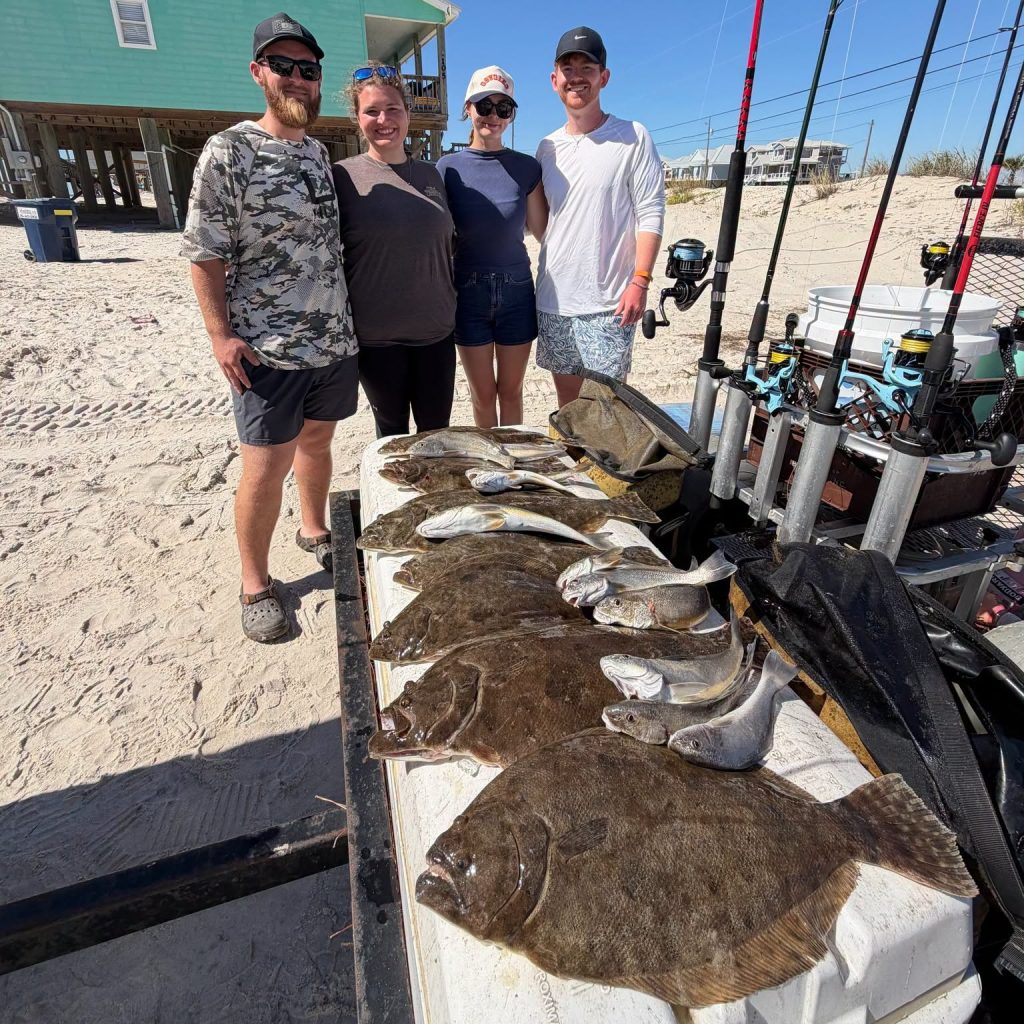
Anglers planning a late-October flounder trip should also keep the calendar in mind. Alabama’s flounder harvest season closes November 1 through November 30, making the remaining days of October the last opportunity to harvest fish before the annual closure.
Sheepshead and the Next Fall Pattern
While flounder are producing now, Tanner is already watching for the sheepshead bite to strengthen. The clear water let him spot fish gathering near structure, and his past trips suggest the final weeks of October and early November can be excellent for this species. He plans to return with fiddler crabs and work some of those same rock and dock areas. He is also seeing redfish, smaller trout, and occasional sheepshead farther up the rivers, setting up additional options as the weather cools.
Mobile Bay, Delta and Inshore Fishing Report – Capt. Richard Rutland of Cold Blooded Fishing
Capt. Richard Rutland of Cold Blooded Fishing says the first real taste of fall has brought encouraging signs around Mobile Bay and the Delta. He has seen shrimp boats working near the Causeway, bait and bird activity in the northern bay, and concentrations of speckled trout around several river mouths. The fish appear to be staging for the move into their colder-weather areas, although Richard cautions that one cool snap usually is not enough to send large schools all the way into the upper rivers.
Where to Find Speckled Trout and Redfish
Richard recommends splitting time between the river mouths and nearby stretches of the rivers and bay, working several miles in either direction rather than focusing only on the exact point where a river meets open water. He has found keeper trout around some of these transitional areas during brief sampling stops. Tanner has also been catching numerous smaller trout farther inside, with an occasional keeper mixed in, along with scattered redfish and sheepshead.
For anglers dealing with strong wind, Richard points out that fall creates more protected opportunities inside the rivers. The recent redfish reports from the upper bay and Delta have been especially promising, including secondhand accounts of anglers enjoying very high-number days. As water temperatures continue to drop, he expects more trout to gather along the Causeway and farther upstream. In the meantime, river mouths, leeward shorelines, and areas with visible bait are practical starting points.
Fishing Research and Public Access
Richard also explains his work on a University of South Alabama research project focused on public fishing access. His team samples locations near public access points such as Cedar Point Pier, Heron Bay Cut Off, Dog River, and Fowl River. At each station, they fish standardized 20-minute periods with popping corks and bottom rigs, documenting species, measurements, water depth, salinity, temperature, dissolved oxygen, and other conditions. Separate surveys ask shore anglers about their catches, preferred species, and access needs.
The goal is to assemble several years of information that can help identify opportunities to improve public access to Alabama’s coastal fisheries. Richard says the effort is especially important for anglers who depend on shoreline fishing rather than owning a boat.
Tripletail and Jack Crevalle on the South End of Mobile Bay
Richard reminds anglers not to overlook the south end of Mobile Bay while everyone concentrates on the fall river transition. During a recent trip he and his crew caught 13 tripletail, including a fish around 22 pounds, and saw unusually large numbers of jack crevalle cruising in schools. He has also heard encouraging reports of bull redfish activity developing around Dixie Bar, West End, and Sand Island, although he had not personally found those fish during the reported trip.
The most effective tripletail approach has been sight-fishing floating debris, logs, sticks, and grass gathered along tide lines. Richard used the tower on his boat to locate fish at the surface and spent hours slowly working one productive debris field after finding it. Some tripletail were hanging beside floating structure, while others were free-swimming in open water. In calm conditions, fish were more likely to be high enough in the water column to spot.
Live shrimp were Richard’s best bait for these fish. Small live pogies drew interest but often swam away before a cautious tripletail committed. A slowly moving shrimp was easier to place in front of a fish and keep within striking distance. He also kept a deeper-set slip cork ready to fish alongside larger floating logs when no fish were visible. For free-swimming tripletail, he stresses being prepared to cast quickly and accurately before a fish disappears.
Featured Sponsors
- Coastal Connection EXP Realty – Abaco Orange Beach
- Fiber Plastics Inc.
- Hilton’s Realtime Navigator
- Coastal Brew Bait Company
- Baker Metal Works
- Alabama Marine Resources Division / Outdoor Alabama
- Make Wake Marine
- Foster Contracting / Fortified Roofing Pros
- Deep South Crane Rentals
- SlipSki
- CCA Alabama
- Camper City Truck Accessories
- Moffett Road Dentistry
- McCoy Outdoor Company
- EMS Endeck PVC Decking