

Working a topwater or twitch bait in saltwater demands the right baitcaster setup and gear ratio to truly make it come alive. I sat down with Chris Vecsey from Sam’s Bait and Tackle in Orange Beach to talk about the gear, line, and techniques he relies on for battling hard-hitting fish like stripers, reds, and big trout. If your topwater lure doesn’t “walk the dog” quite right or your reel struggles to keep up with a charging redfish, Chris had plenty of insight to fix that.
Gear Ratio Preferences
For saltwater anglers, reel speed isn’t just about convenience—it’s about control. The right baitcaster gear ratio can make or break a fight. “I don’t like using a baitcaster that’s under a 7:1 gear ratio in saltwater,” Chris said. “Even if I’m throwing wake baits or something with a little more drag, I still want at least that 7:1 speed. Anything slower and you’ll struggle to keep up with a fish running right at you.”
A faster retrieve helps maintain line tension and pick up slack, especially when fish are charging hard or striking at erratic topwater lures. “You can always slow down your handle turn,” Chris explained. “But you can’t make a slow reel faster.”
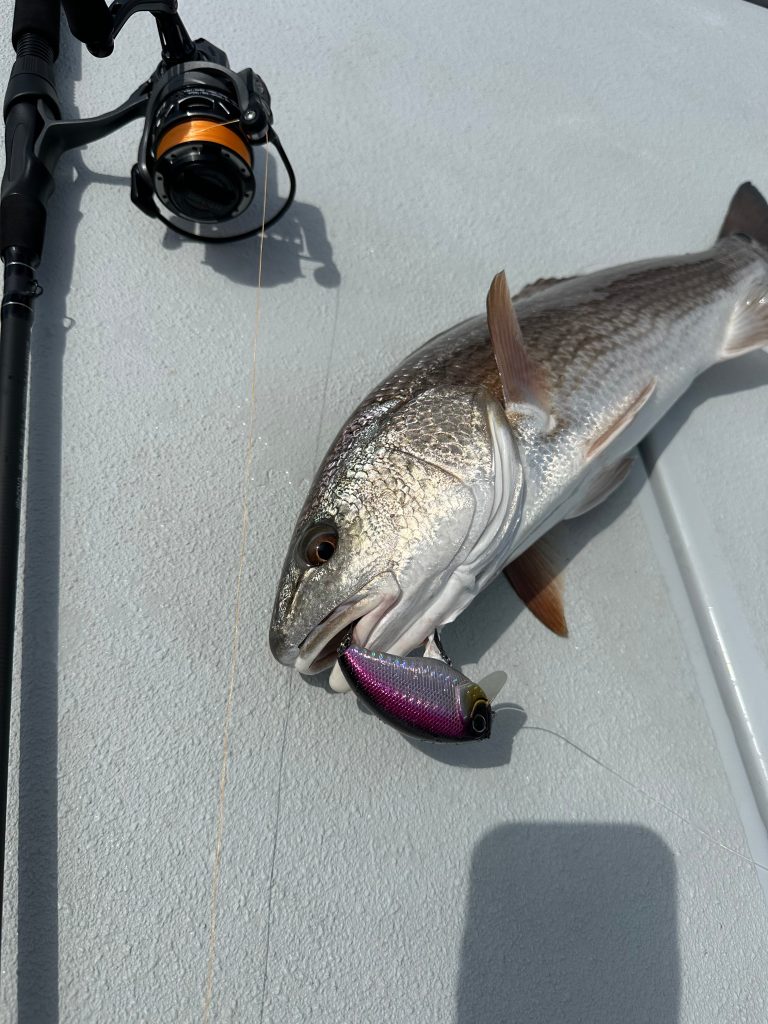
That said, there’s a limit. “For saltwater, I don’t go over a 9:1,” he added. “You don’t need that much speed out here. It’s more about torque and control than burning line like a freshwater bass angler fishing frogs or buzzbaits.”
Rod Action and Strength
The rod you pair with your baitcaster plays a huge role in landing strong fish. “For stripers, I like a stiffer rod,” Chris said. “They’ve got hard mouths, and they hit like a ton of bricks. A stout rod helps drive that hook home and gives you leverage to turn them if they’re near structure.”
He noted that anglers transitioning from trout or flounder setups often underestimate how much backbone they’ll need. “A lighter rod might feel better for finesse work,” he said. “But when you’re dealing with a fish that bulldogs back toward a dock or bridge piling, you’ll wish you had more power.”
Line and Leader Choices
When it comes to line, Chris keeps things simple. “I run 15 to 20-pound braid most of the time,” he said. “Then I’ll bump up to a 30-pound leader when I’m fishing for stripers. They’re not leader-shy, so you can get away with the heavier stuff.”
That extra leader strength pays off around docks and rocks and when a fish decides to surge boatside. “If you’re fishing aggressively, especially with faster retrieves or in current, heavier leader material just saves you headaches,” he added.
Hook and Lure Durability
A great baitcaster setup won’t help much if your lure gives out. “Stripers and bluefish will absolutely destroy light-wire hooks,” Chris said. “Always check that your topwaters and jerkbaits have strong, saltwater-grade hooks, 3X or 4X rated if you can find them.”
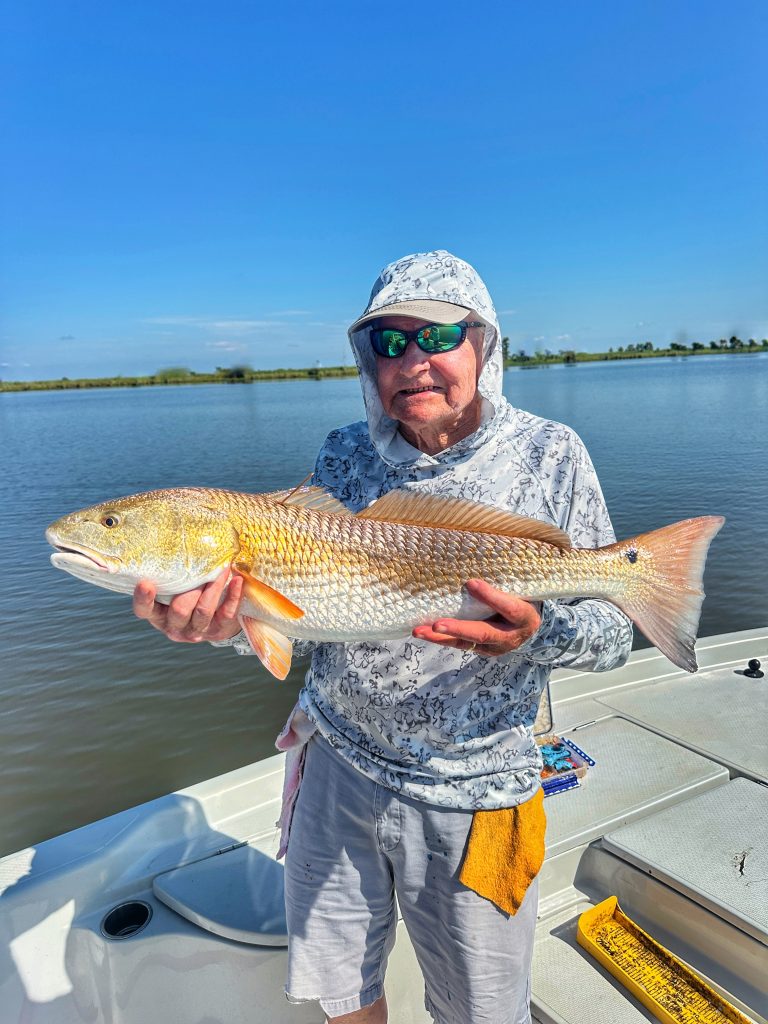
He’s seen plenty of good fish lost to bent hooks or broken hardware. “That bulldog fight they’ve got will straighten cheap hooks right out,” he warned. “You want saltwater-rated plugs and beefy split rings. If you don’t, you’ll eventually lose a trophy fish.”
Retrieve Rate and Lure Movement
The way you work the lure is just as important as the reel itself. “I like to move the lure with the rod, not the reel,” Chris explained. “Your reel’s job is just to pick up slack. That’s especially true for topwaters and twitch baits. You need that little bit of slack in the line to let the lure dance.”
This is where baitcasters really shine. “With a spinning reel, it’s easy to over-retrieve,” he said. “Even with a slower gear ratio, a spinning reel’s rotor just eats up too much line too fast. You lose that cadence, and the lure stops walking.”
The right baitcaster gear ratio helps maintain that rhythm. A balanced retrieve rate gives you finer control and just enough slack to keep the lure moving naturally. “When you’re walking the dog, that smaller pickup lets you keep the perfect amount of slack,” Chris added. “It’s subtle, but it makes all the difference in how that lure moves.”
Baitcaster vs. Spinning Reels
Chris summed it up simply: “A spinning reel wants to fish faster than you do.”
That’s not always bad, especially when throwing light baits, but for precision retrieves like walking a topwater or twitching a jerkbait, baitcasters have the advantage. “Spinning reels can make it tough to maintain that rhythm,” he said. “With a baitcaster, you’re in complete control of slack and cadence.”
Matching Lures and Species
The same setup that’s perfect for trout on topwater might not cut it for stripers. “If I’m chasing stripers, I’ll size everything up,” Chris said. “Heavier outfit, stiffer rod, stronger hooks. For trout and flounder, you can back off and fish a little lighter. But when those big stripers or bluefish are around, you don’t want to go in undergunned.”
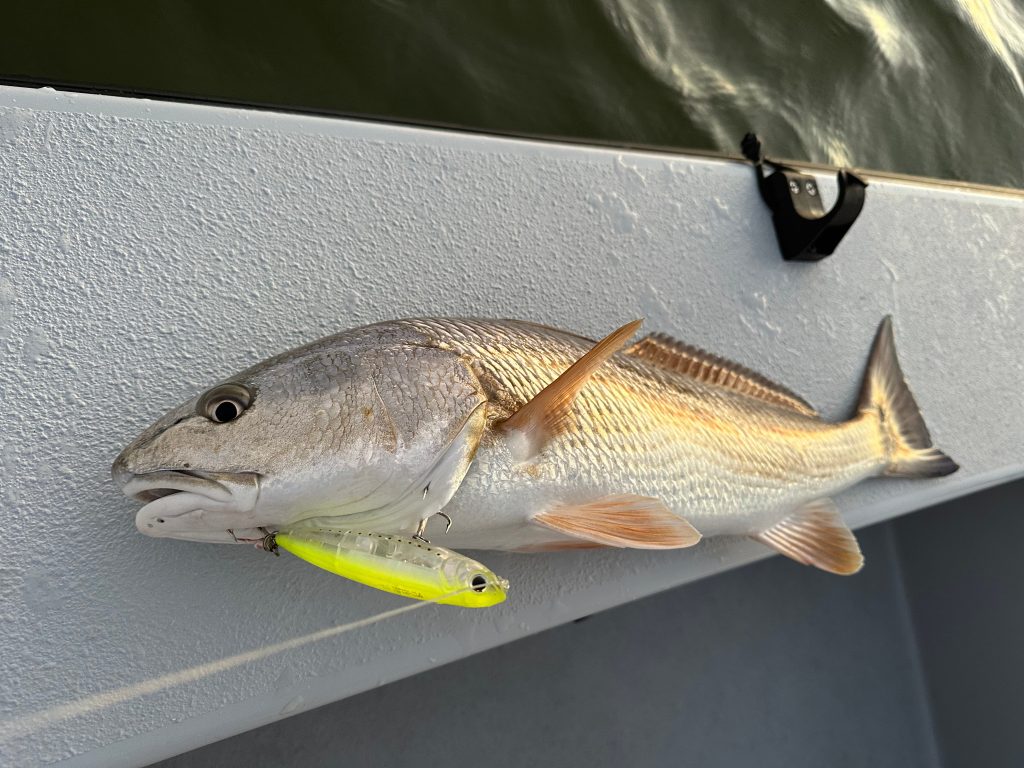
That’s also true for choosing lure styles. “Bigger jerkbaits like the Berkley Cutter or the Yo-Zuri Jerkbait work great,” he said. “They’ve got strong hardware and suspending action that matches those fast, aggressive retrieves stripers like.”
Practical Tips for Anglers
Chris offered a few parting tips for anyone fine-tuning their baitcaster game:
- Inspect your lures: Make sure every plug has strong, saltwater-grade hooks and split rings.
- Choose the right gear ratio: Stay between 7:1 and 8.5:1 for saltwater, fast enough to control slack but not so fast you lose torque.
- Match rod stiffness to your target: Go heavier for stripers or reds, lighter for trout or flounder.
- Use your rod, not your reel: The reel picks up slack. The rod makes the lure dance.
- Don’t skimp on leader strength: You’ll thank yourself when a 30-inch striper runs you around a piling.
Final Thoughts
Picking the right baitcaster for topwater and twitch baits isn’t just about brand or price. It’s about balance. The right baitcaster gear ratio, rod stiffness, and lure setup all work together to keep your presentation natural and your hookups solid.
As Chris put it best, “You can’t make a slow reel fast, but you can always slow your hands down.”
That’s sound advice whether you’re chasing stripers under the lights or redfish cruising the grass lines.