

As somebody who worked behind an archery counter for five years, I got to hear many stories about what went wrong when deer were shot at. I’ve also done a fair bit of learning by grabbing the electric fence for myself! Most misses are the results of nerves, overconfidence, poor tuning, or poor form. Even with the best bow sight, things can still fall apart when buck fever sets in. I had a lot of hunters who brought me bows to troubleshoot, convinced that something was wrong after they missed a deer. Most of the time, the problem could not be replicated in the calm environment of an indoor shooting range. I’ve had the same humbling experience many times myself.
But gear problems do exist. In my experience, problems with the bow’s sight are most often to blame for opportunities that don’t turn into punched tags. If you’ve been bow hunting for very long at all, chances are you’ve run into some of these problems yourself.
Pin Stack
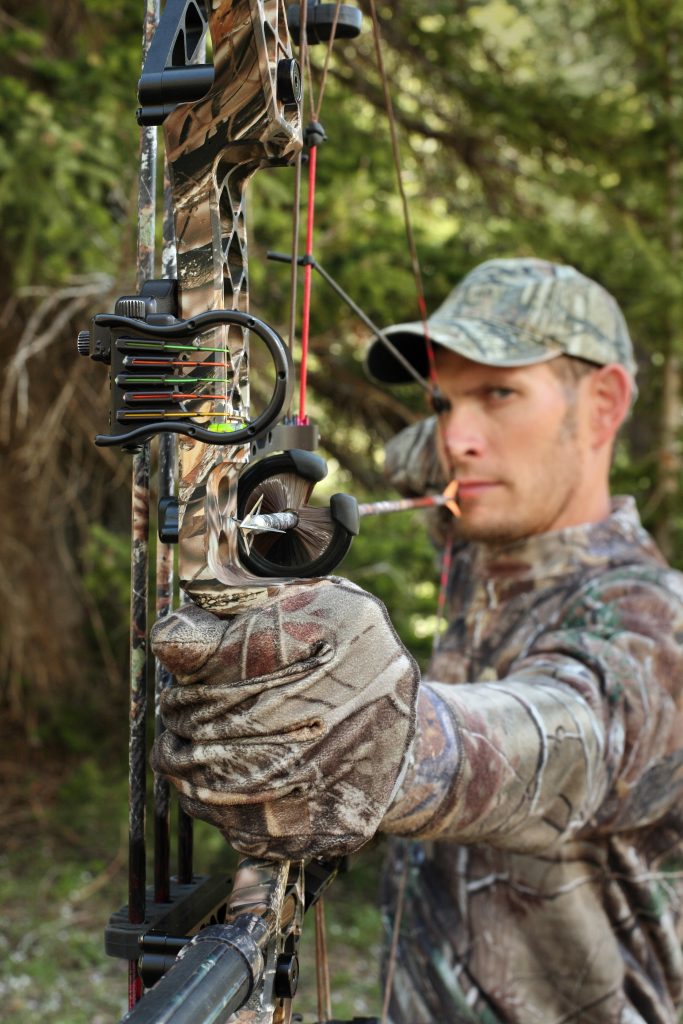
Multi pin sights with the pins set too close together obscure targets, especially during low light. Lighted pins can make this effect worse, as can bright fiber optic pins that gather lots of natural light. Large diameter pins are also worse about blocking out your target in low light.
Blurry Pins
There are two main causes of blurry pins. A pin that is too bright in low light can produce a blurry starburst effect, but many times the problem isn’t necessarily the sight’s fault. Genetics and Father Time leave many hunters with eyes that just can’t focus as well as they need to. Sometimes the choice hunters have to make is to have either the pins blurry or the deer. Neither is great, but it’s typically better to have a clear view of the pin if possible.
Moving Pins
There is nothing worse than a bow pin that moves when it’s not supposed to. I’ve seen multi-pin sights rattle loose over the course of thousands of shots, and shift slightly at the most inconvenient times. I’ve also seen many hunters fall victim to a sliding single-pin sight that got bumped on the walk to the stand.
I have a buddy whose face still clouds over every time I make him retell the story of the Colorado elk he missed at 30 yards. He shot clean over its back by several feet, thanks to a sliding sight that had been bumped loose as he crawled on his hands and knees to close distance.
Low Light Issues
While I’ve mentioned twice that too-bright pins cause problems, there’s a reason for their existence. If you remember the days of painted metal pins, then you know the pain of being able to see the deer that just stepped out of the brush, but not being able to see the pins in dying light.
Peep Sight Woes
Peep sights became popular as improving bow technology allowed archers to attempt longer shots. A peep sight works identically to a rear aperture sight on a rifle, and can greatly assist with accuracy at longer distances. But peep sights come with a host of problems. Normal peep sights rotate over time as the bow string stretches and settles in, meaning you can’t look through them without twisting them into position. Models that use a piece of tubing to keep them aligned are great, as long as the tubing is in good condition. As it ages, it becomes prone to slipping loose or breaking, and DEET will rot the tubing almost instantly. If not served into the string properly, peep sights can move over time, giving you fits as you try to figure out why you’re shooting higher and higher. Finally, peep sights reduce the amount of light coming into your eye, and compound all of the low-light issues we’ve discussed.
Pin Confusion
This is a problem that sneaks up on people. People in high-stakes careers (military, first responders, emergency room staff, etc) have a saying: “You will not rise to the occasion, you will fall back on your level of training.” Many hunters shoot their bows mindlessly during the off-season as a way to relax, often at a static distance. However far it is from the back fence to the back porch, or from the target to the shade tree, is how far most archers shoot their bows. They make thousands of shots at one distance, using one pin.
Then they go hunting, and a buck comes cruising through the woods. In a matter of seconds, they hear it shuffling through the leaves, turn their head, catch sight of white antlers, stand up, draw back, blurt out a shaky “Mehp!”, settle the pin, punch the release…and watch the buck run off.
Which pin did they use? Usually, not the pin that corresponds to the distance to the buck, but the one that they’ve used thousands and thousands of times in the backyard.
Hunting Bow Sights
Over the years, several hunting-specific sights have been developed in order to combat some of these issues. Hunting is much different than target shooting, as all archery hunters eventually learn. In the backyard, we shoot leisurely at small targets, in calm conditions, with good lighting, at known yardages. In the woods, we shoot at basketball-sized vitals with frazzled nerves, right before dark, at yardages that may or may not be known. And we sometimes only have a split second to do it!
Pendulum Bow Sights
Pendulum bow sights have been around for a long time, but have never really become mainstream. They were an early attempt to solve for pin clutter and pin confusion by having a pin that swung from a pendulum. When hunting elevated, the angler on close shots is steeper than the angle on longer shots. A pendulum sight moves up and down automatically, compensating for drop as a deer moves closer or further away.
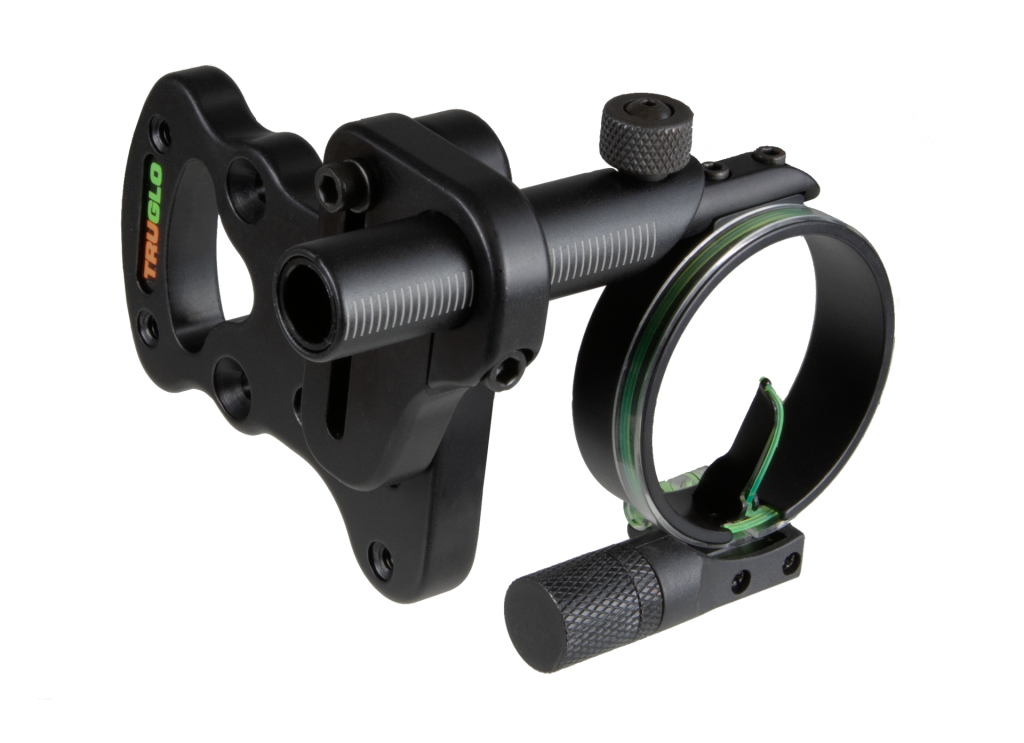
It’s a slick system when it works. Unfortunately, pendulum sights can freeze, rust, or hang up in their arc for a variety of reasons. Currently, hunters also have limited options to choose from. But many deadly hunters use them, such as Alabama’s own Dr. Robert Sheppard.
EZ V Bow Sight
The EZ V sight gained an almost cult following in recent years. It aimed to solve a lot of common sight problems we’ve discussed. You can’t have pin clutter, blurry pins, or pin confusion if there are no pins, right?
The EZ V uses stadiametric rangefinding, which is a big phrase for a simple phenomenon. The EZ V’s “V” sight device capitalizes on the fact the deer look smaller the further away they are. When using the sight, you fit the deer’s vitals between the V. The further away the deer is, the lower in the V those vitals will squeeze, and the higher you aim your bow to make them fit. EZ V offers multiple inserts with different Vs for different real-world bow speeds, so all you have to do is shoot your bow through a chronograph, pick the right insert, and start shooting.

I’ve never used an EZ V, but I have a lot of friends who swear by it. I do have one friend who used one extensively and went back to a single-pin sight, for reasons we’ll discuss below.
Single Pin Bow Sights
Single pin sights have a big advantage over multi pin sights because they don’t clutter the sight picture. But while adjustable single pin sights are awesome on the range, they can be frustrating in the woods. We’ve mentioned that they can be bumped, but there are some other problems. Deer move, and sometimes you may draw on a deer at forty yards but not be able to shoot until he’s at 20. What do you do in that case? Let your bow down and adjust your slider? Kentucky windage it?
My buddy who used an EZ V eventually came to a similar epiphany to what I arrived at shortly after buying a “modern” compound bow several years ago. New bows are fast. So fast that at most whitetail hunting distance rangefinding is not that important. Chuck Adams used to frequently talk about how the average distance P&Y bucks were taken was only 19 yards, with only 5% of bucks being taken beyond 40 yards. Shots do trend a little further now, but most deer are still taken inside of 40 yards, and the distance between a 20 yard pin and a 40 yard pin is less than it’s ever been. For my buddy, the rangefinding feature of the EZ V simply wasn’t needed. He found that with a single pin zeroed at 30 yards, he could shoot deer from point-blank-rage out to 40-45 yards with just a little (mostly instinctive) Kentucky Windage.
Try it yourself. Shoot your thirty yard pin at twenty yards, and shoot it at 30. See how far about your groups are. You may find that a single, fixed pin is a simple, bulletproof, and problem-free way to shoot deer at hunting distances.
Red Dot Bow Sights
Another innovation that shows promise for hunters with bow sight blues is ARD (Adjustable Red Dot) sights. I’ve become a big fan of red dot sights for handguns, shotguns, and crossbows for a while now, and was excited to see that somebody was making a well-made bow sight to mount a red dot to.
“I’ve been hunting with a red dot since the late ‘80s,” says Tim Zelenka, inventor and co-owner of ARD. “But back then, there wasn’t a mount that let you adjust for yardage. One did eventually get made, but it took two hands to operate, which wasn’t ideal in my mind. So eventually, my wheels got to turning, and I got up with an engineering buddy and had a prototype 3D-printed. That was the start of the ARD, and it was improved upon little-by-little until we arrived at our current product.”

“One of the biggest advantages of a red dot is that everybody can see it, and they’re very intuitive to use,” Tim continues. “I’d say half of our customers are hunters 45 years old and older who are having issues clearly seeing pins, and the other half are new archers to whom the idea of pins and peep sights just seems complicated. With a red dot, since the dot looks like it’s on the target, everybody can see it, and it’s just very intuitive to use. You also don’t need to use a peep sight to line up your eye with a red dot, which is an advantage as well.”
Red dot sights check a lot of boxes for hunters, and avoid a lot of the common problems we’ve discussed. They’re intuitive to use, show up well in dim light, and since they can be used without peep sights you avoid a lot of those problems as well. Of course, they’re not inexpensive, and just like with single pin sights you’ll have to either live with the problems presented by sliding mechanisms or get comfortable with Kentucky windage.
Conclusion
Ultimately, what matters is that the sight you’re using works in real-world hunting conditions. While practicing in the yard this summer, don’t forget that what works in the backyard may not be ideal in the twilight conditions of the deer woods. Do some shooting in low light conditions, and make sure that none of the problems we’ve discussed are likely to rear their heads come this fall.