

You do not have to spend $1,000 or more to buy a crossbow capable of reliably killing deer. Budget crossbows occupy a strange place in the archery market because manufacturers advertise increasingly narrow limbs, extreme arrow speeds, integrated cocking systems, premium optics, and other features that can make a $400 or $500 crossbow seem outdated before it ever leaves the box. But there is a big difference between a feature that is nice to have and one that actually determines whether a crossbow will work in the woods.
After years of selling, assembling, setting up, hunting with, buying, and trading crossbows, one thing has become clear: $500 is enough money to buy a legitimate hunting crossbow. It probably will not buy a company’s flagship model, but it can absolutely buy a bow capable of killing deer cleanly and serving a hunter for years, the key is simply understanding where the money matters.
Decide What “Under $500” Really Means
Before comparing bows, decide whether the $500 budget is for the crossbow itself or for everything needed to start hunting, as that distinction matters significantly. A new crossbow package will usually include a scope, quiver, a few bolts, and some type of cocking device, but a first-time hunter may still need broadheads, additional bolts, a target, a case, rail lubricant, string wax, and other accessories. If $500 is the absolute out-the-door budget, the actual crossbow may need to cost closer to $400 or $450. Fortunately, there are still plenty of capable hunting bows in that range.
As a general rule, roughly $300 to $500 is a good price range for a new budget crossbow. Much below that, particularly under roughly $200, buyers increasingly encounter bows better suited to recreational shooting than serious deer hunting. A $500 crossbow is still a budget crossbow, it probably will not be the fastest, narrowest, lightest, or most feature rich bow in the manufacturer’s lineup, but those compromises do not necessarily make it less effective on a whitetail.
Buy a Hunting Crossbow, Not Simply a Cheap Crossbow
There is an important difference between an inexpensive hunting crossbow and a cheaply built crossbow. Most major manufacturers offer lower-priced bows built around the same basic principles as their more expensive equipment. Those models may be wider, heavier, slower, or packaged with less expensive accessories, but they are still designed as hunting tools. That is very different from choosing an unfamiliar crossbow online simply because its advertised specifications look impressive.
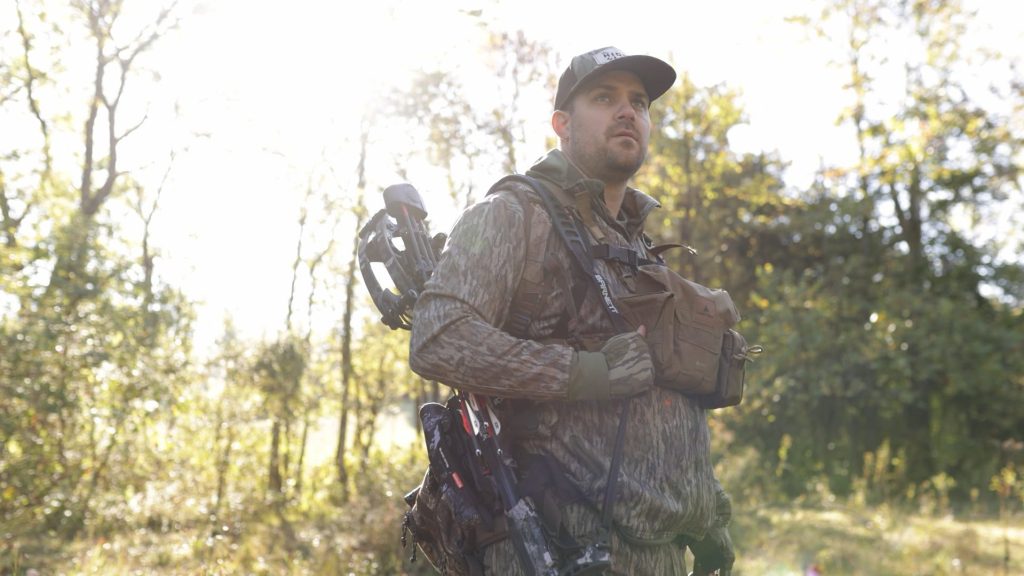
Established manufacturers such as Barnett, Wicked Ridge, TenPoint, and other recognizable crossbow companies have a major advantage: replacement parts, warranty support, compatible accessories, and dealers familiar with their products are generally easier to find. That matters because every crossbow eventually needs maintenance: strings and cables wear out, optics can fail, bolts get damaged or lost, and at some point, the bow may need to be pressed or serviced.
The dealer can be nearly as important as the manufacturer. A local archery shop may charge slightly more than an online retailer, but having someone nearby who understands the bow can become extremely valuable during deer season. A warranty is useful, but even a good warranty does not help much if a hunter loses several weeks of the season waiting for a bow to be shipped back and repaired.
Don’t Chase Crossbow Speed
If there is one specification budget-minded crossbow buyers tend to obsess over, it is arrow speed. Manufacturers know that, which is why one box advertises 350 feet per second, another promises 370, and another hits 400 or more. While it is easy to assume that the fastest bow must be the better bow, for most whitetail hunters, that simply is not the case.
Modern hunting crossbows producing somewhere around 300 to 350 fps already provide plenty of performance for normal deer hunting distances. A hunting setup traveling just under 350 fps is fully capable of producing complete pass-throughs on deer and hogs with proper shot placement and an appropriate broadhead. The obsession with extreme crossbow speed becomes even harder to justify when compared with other archery equipment, as traditional bowhunters routinely kill deer with arrows moving far slower than modern crossbow bolts, and older compound bows commonly produced real-world hunting speeds well below what even inexpensive crossbows achieve today.
For a hunter keeping shots inside approximately 40 yards, a smooth and reliable 350-fps bow is generally more useful than a cheaply constructed bow designed around an extreme velocity number. Higher speed also brings tradeoffs: more energy stored in the limbs means greater stress on strings, cables, limbs, and other components. Very fast bows tend to wear strings and cables more quickly, and high-energy systems can be less forgiving when something goes wrong. While speed becomes more useful as shooting distance increases because a faster bolt produces a flatter trajectory, for ordinary whitetail hunting ranges, it should not be the deciding factor when comparing budget bows.
Pay Attention to the Trigger
Crossbow accuracy is one area where inexpensive equipment can perform surprisingly well. At normal hunting distances, a properly assembled and consistently cocked $500 crossbow should be capable of excellent accuracy. In many cases, the practical accuracy difference between a $500 bow and one costing three times as much will be much smaller than the price difference suggests.
The trigger is one feature that does matter. A crossbow trigger has a difficult job because, unlike a firearm trigger, it may be holding well over 100 pounds of stored draw weight. Older or cheaper systems sometimes compensate with a heavy trigger pull or significant creep, both of which can make precise shooting more difficult. A clean, reasonably light trigger is therefore worth prioritizing over small differences in advertised speed.
Barnett, for example, has improved substantially in this area over the years, with TriggerTech systems appearing on a number of its bows. Regardless of brand, a buyer who has the opportunity to shoot a crossbow before purchasing it should pay close attention to the trigger, as that is something a specification sheet cannot communicate.
A Good Cocking System Matters More Than You Think
Cocking consistency is one of the most important parts of crossbow accuracy. If the string is pulled slightly farther to one side from shot to shot, the bolt may not leave the bow in exactly the same manner. A proper cocking device helps center the string and makes that process repeatable, which is why some type of rope cocking aid should be considered minimum equipment on a modern hunting crossbow.
A rope cocker also dramatically reduces the amount of physical effort required—a 150-pound draw weight can effectively be reduced to roughly half that effort with a typical rope cocking system. For many hunters, that is manageable, but for others, it is not.
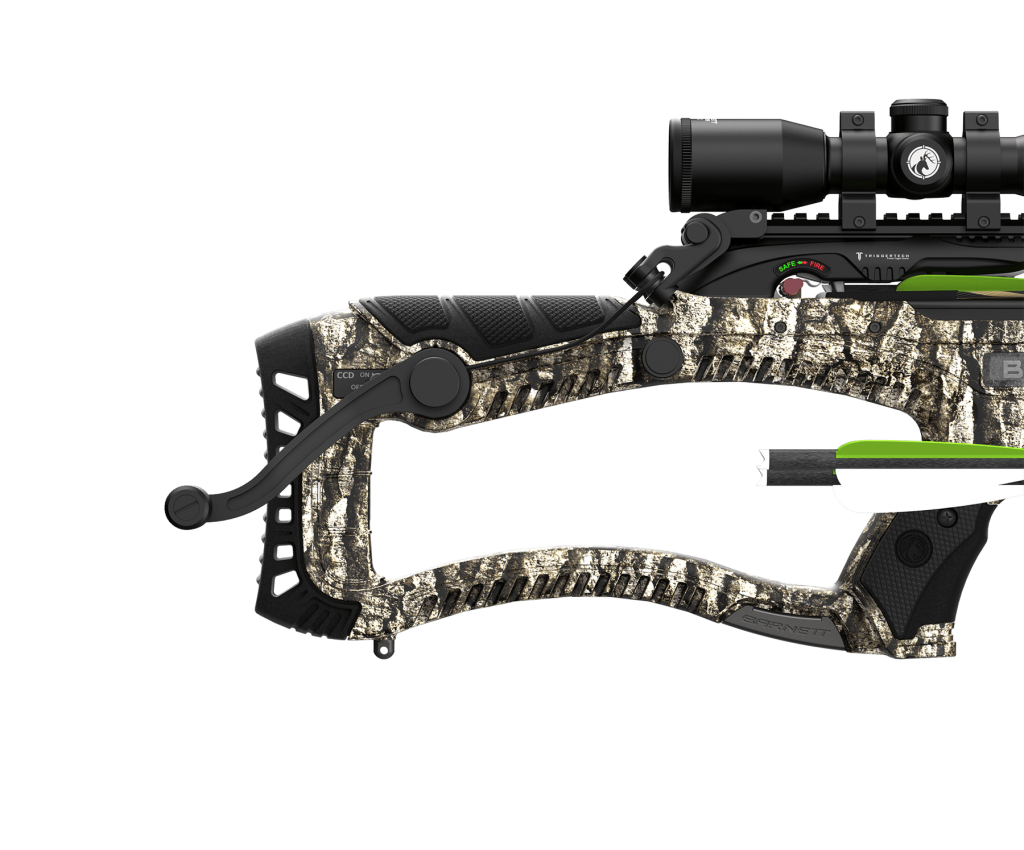
Hunters with shoulder or back problems should strongly consider a crossbow with an integrated crank system. Smaller-framed shooters may also benefit because a rope cocker becomes considerably harder to operate when the handles must be pulled high enough that the movement changes from something resembling a deadlift into more of an arm curl. Modern crank systems are much better than many early versions, and they are increasingly available on affordable crossbows.
Barnett’s XP 370 is one example of the type of package now available in the budget category, combining roughly 370-fps performance with versions that include a crank cocking device, compact optic, and TriggerTech trigger. A crank is not necessary for everyone, however; a good rope cocker remains simple, reliable, inexpensive, and perfectly effective for hunters comfortable using one.
Don’t Overlook the Scope
Optics are one of the easiest places for manufacturers to reduce the cost of a crossbow package, though that does not automatically make factory scopes bad. Crossbow optics do not need the same performance expected from a high-end centerfire rifle scope because typical hunting distances are short and high magnification is unnecessary. A simple 3x or 4x scope with roughly a 32mm objective can be perfectly adequate for whitetail hunting.
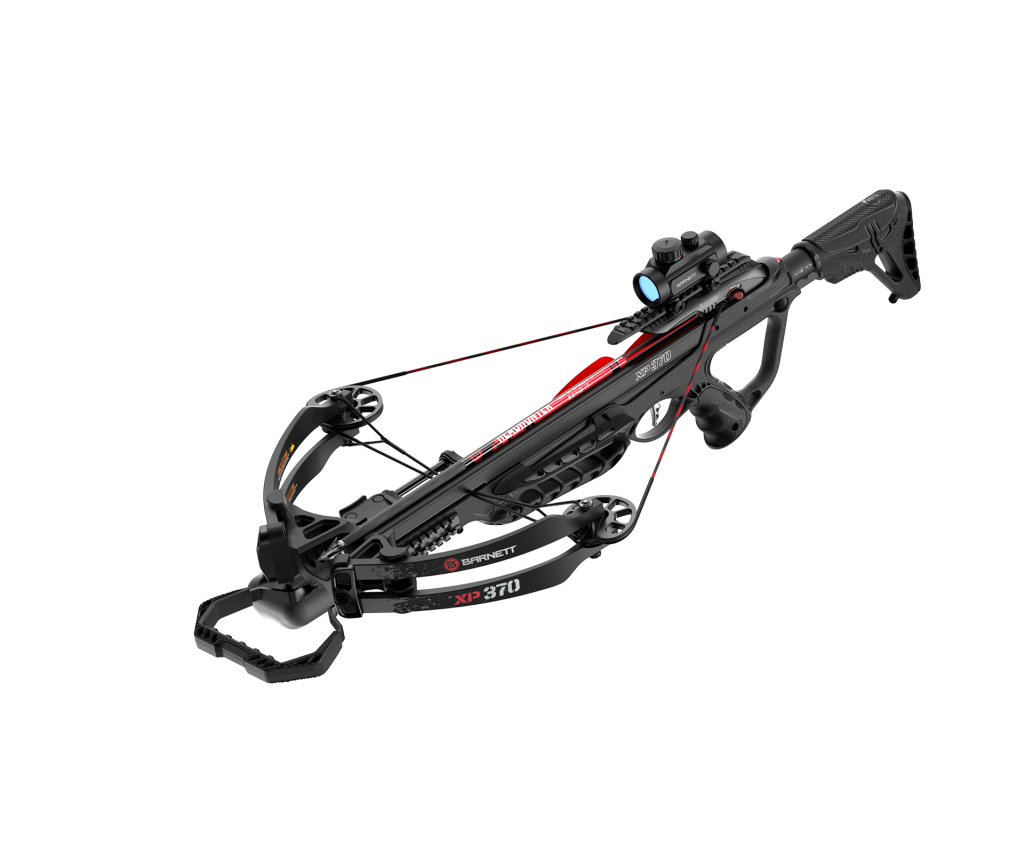
In fact, simplicity can be an advantage at this price point. If two similarly priced packages include scopes, and one optic is loaded with electronics and other features while the other is relatively basic, the simpler optic may have allowed the manufacturer to spend more of its budget on the things that matter most. Buyers should look through the scope whenever possible and pay attention to brightness, clarity, reticle visibility, and eye relief.
Factory optics are also easy to upgrade later. For that reason, a mediocre scope should not necessarily eliminate an otherwise excellent crossbow, although optics can serve as a useful tiebreaker between two otherwise similar models.
Compact Crossbows Are Nice, But You Pay For Them
Premium crossbow advertising often emphasizes narrow axle-to-axle dimensions, and there are legitimate advantages to compact bows. Crossbows are bulky compared with rifles and vertical bows, so extra width becomes noticeable when hunting from a ground blind, maneuvering inside a shooting house, climbing into an enclosed stand, or carrying equipment through dense cover. Weight matters too, particularly for public-land hunters who may walk a mile or more to reach a stand.
But compactness is another feature manufacturers tend to charge a premium for. A hunter with good vehicle access who primarily walks short distances across fields, roads, or open woods may gain very little from paying extra for the narrowest possible bow. Wider bows can also offer practical advantages: they may be somewhat easier to cock consistently, may put less extreme stress on components, and can be easier for local archery shops to service with standard equipment. Ultimately, the most compact crossbow is not automatically the best crossbow.
Ergonomics Matter in the Woods
Fit and handling often receive less attention than speed, but they can matter far more once hunting season begins. A comfortable pistol grip, usable fore-end, solid cheek weld, and properly fitted stock all make a crossbow easier to shoot well.
Adjustable stocks are particularly useful and are now common on many inexpensive bows. An AR-style adjustable stock allows the shooter to lengthen the bow while practicing in a T-shirt and shorten it when wearing heavy winter clothing, while also making one bow more adaptable for different family members or youth hunters. For a first-time buyer, an adjustable stock and comfortable ergonomics are generally more valuable than gaining another 20 or 30 fps.
Budget for Bolts, Strings, and Cables
Most crossbow packages include only a few bolts. That is enough to start shooting, but hunters should plan to buy more—six bolts is a reasonable minimum, while keeping roughly a dozen on hand provides backups for practice, hunting, damage, and loss. It is especially important to follow the manufacturer’s specifications for bolt length, weight, and nock design because many modern crossbows use specific nock systems, and using an incompatible bolt can cause serious problems, including partial dry fires.
Strings and cables are another cost buyers sometimes overlook. They are consumable parts, and how quickly they wear depends on the bow, how much it is shot, how fast it is, and how well it is maintained (as faster bows generally put more strain on these components). Strings and cables should be kept clean and maintained according to the owner’s manual, including appropriate waxing and lubrication, noting that extreme heat and poor storage can also shorten their lifespan.
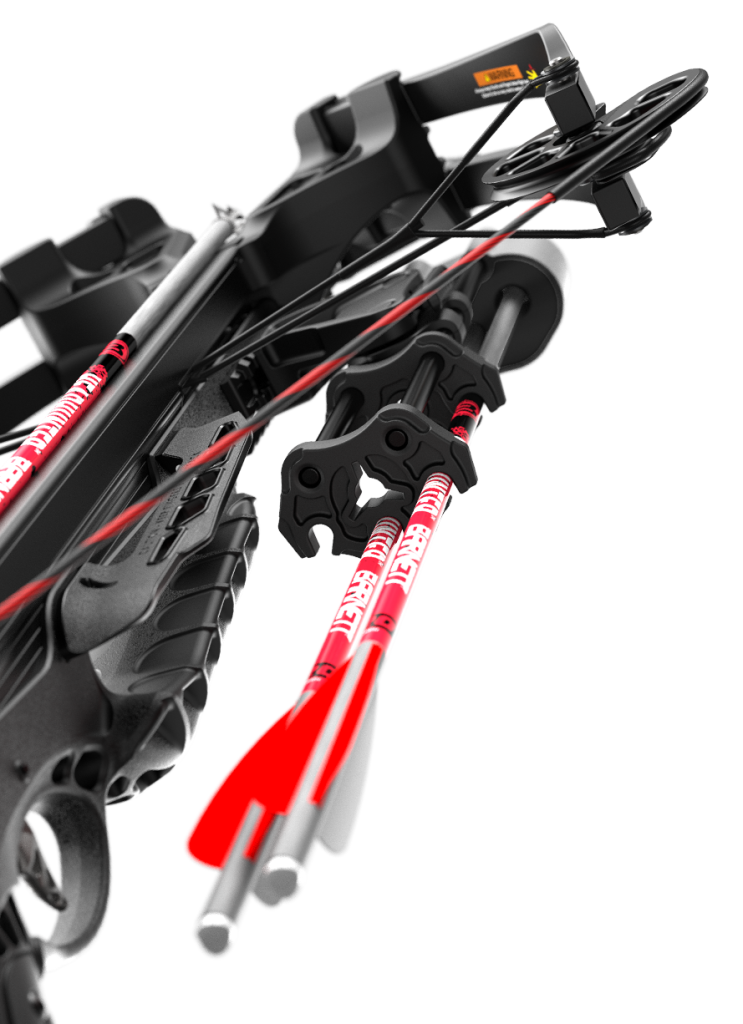
A practical strategy is to buy a replacement string and cable set when purchasing the bow. Keeping the parts on hand makes it much easier to replace worn components immediately rather than stretching their useful life simply because replacements are unavailable during hunting season.
Be Careful Buying a Used Crossbow
Crossbows depreciate fairly quickly, which makes the used market tempting. A $500 budget may buy a used bow that originally cost substantially more, which can be an excellent deal when buying from someone trustworthy who maintained the equipment properly. However, it can also mean buying someone else’s headache. Potential problems include hidden limb damage, trigger issues, worn strings, anti-dry-fire problems, or crank systems that function intermittently—and some of those problems may not appear during a quick visual inspection.
Experienced archery technicians can evaluate used bows more confidently because they know what to inspect and often have access to tools and replacement parts. For a first-time crossbow buyer, however, a new $400 or $500 bow with a warranty is often the safer choice than an unknown premium bow from a pawn shop or online marketplace. Anyone buying used should test-fire the bow several times rather than relying on a single shot.
What Matters Most in a Crossbow Under $500
A good sub-$500 hunting crossbow should come from a reputable manufacturer and produce enough speed for ordinary whitetail hunting without depending on an extreme velocity figure as its main selling point. Something in the 300-fps range is capable of hunting effectively, while roughly 340 to 350 fps or better provides plenty of performance for most hunters. Beyond that, priorities should shift toward a decent trigger, reliable cocking system, reasonable dimensions, comfortable stock, serviceable optics, and readily available replacement parts.
A common model from a major manufacturer also has advantages that rarely appear on a specification sheet: bolts are easier to find, local technicians are more likely to know how to work on it, and replacement parts are usually easier to obtain. Whenever possible, shoulder and shoot the crossbow before buying it to make sure the trigger feels good, the stock fits, the scope is usable, and the controls make sense.
Just as importantly, make sure you understand exactly how to operate it before leaving the store. Crossbows store tremendous amounts of energy—incorrectly seating a bolt, cocking the string improperly, using the wrong nock, or misunderstanding an anti-dry-fire system can damage the bow and potentially injure the shooter. Many apparent equipment failures are actually caused by user error, so read the owner’s manual and, when possible, have a knowledgeable technician demonstrate the correct loading and cocking procedure.
Who Actually Needs to Spend More Than $500?
A first-time crossbow buyer probably does not need to spend much more than $500. Until someone has hunted with several bows, it can be difficult to know which premium features actually matter. A hunter may eventually decide that an integrated crank is essential, someone walking deep into public land may decide shaving weight is worth paying for, or a hunter who spends most of the season in enclosed blinds may decide an extremely narrow bow is worth the added expense, but those preferences usually develop through experience.
Someone who has already shot a more expensive crossbow and knows exactly what they like may be better served by saving longer and buying that bow rather than settling for something else. For everyone else, the $300 to $500 category offers plenty of room to learn what matters without sacrificing the ability to hunt effectively.
The biggest mistake is assuming that budget equipment automatically means inadequate equipment, because it does not. Modern crossbows have reached the point where dependable hunting bows are readily available below $500. While buyers may give up some speed, compactness, premium glass, lighter weight, or high-end cocking technology, they do not have to give up accuracy, reliability, or the ability to kill a deer cleanly.