

For hunters who primarily hunt whitetail deer, the dream of heading out west and chasing elk rages deep inside many. Due to the elk’s size, the challenging terrain in which they are hunted, and the possibility of taking longer shots, hunters typically look for a different rifle to accompany them. But for most eastern dwelling deer hunters, elk is at most a once-in-a-season adventure, so the prospect of buying a rifle that has no utility for their back home whitetails may not sit right. So should you settle for buying a rifle that collects dust until you head out West? Or should you just take your deer rifle elk hunting? Or is there a rifle that can serve both styles of hunting without compromising on either front? Today, we aim to find out.
What’s The Best Rifle To Hunt Deer?
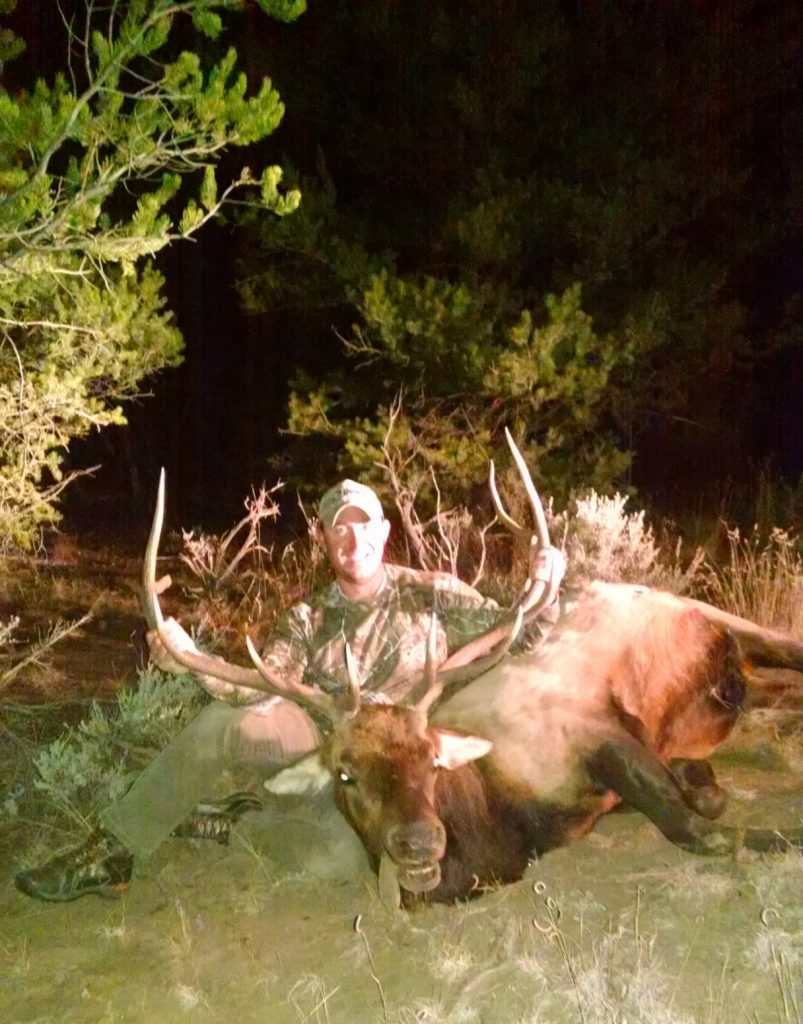
When I turned 16, I was gifted a Winchester Model 70 stainless synthetic chambered in 270 Winchester and it has accompanied me on hundreds of days hunting deer and has performed without compromise. Scoped, loaded, and slung, it weighs in at a little under 9 pounds. It has taken nearly 100 whitetail deer and one bull elk. On my last elk hunt, I carried it, but by the middle of each day, it was beginning to become a drag on my shoulder. Additionally, I went into each hunt limiting myself to shots under 300 yards, poking out to 400 only if all of the conditions were perfect.
The reality of deer hunting is that just about any style of rifle will do. If you want to lug a 15-pound bench rest gun into a shooting house or you want to carry a 6-ish pound lever action into the brush, they will all take whitetails. So with that understanding, it should be noted that while you can hunt deer with all different types of rifles without giving up much, that same rifle may become a burden chasing elk. I wanted to know what goes into the design process of a great elk rifle, so I sat down with Jeff Bradley of Christensen Arms to learn what kind of benchmarks they shoot for when designing a rifle that will function flawlessly when pursuing Rocky Mountain Elk. Jeff is a native of Utah and has extensive experience guiding hunters for Western big game. As a brand ambassador for Christensen Arms, he understands the intricate process that goes into creating a world-class big-game rifle.
How Much Does The Best Elk Rifle Weigh?
I told myself on that last hunt that on my next, I wanted to bring a lighter rifle. So I wanted to know, just how light should I shoot for? “That’s going to be different for a lot of different people.” Jeff said, “Let’s say your 14-year-old daughter is going on her first elk hunt. You do not want her carrying a 17-and-a-half-pound rifle up and down the mountain.
First of all, physically, she couldn’t even do it and she wouldn’t enjoy it at all. And so it’s just like a golf bag. There’s more than just a driver and a putter. There are a few irons and wedges. And I think the same thing is true for an elk rifle. If you have a youthful hunter or small frame hunter, somebody that doesn’t weigh a whole lot, you might want to look for a rifle that is easier to carry around.”
So like most things, the answer is, it depends. If you’re hunting elk on a ranch out of a truck for the most part, you can probably get away with a heavier rifle than if you’re heading deep into the backcountry and hunting steep elevations.

For me, I want to solve for the hardest hunt, and then I know that rifle will be able to tackle anything else I throw at it. So when I’m examining bare rifle weight, I am looking for something under 6 pounds. Why? Because by the time you add optics, ammo, and accessories like a muzzle brake or suppressor and a sling, you’re going to be getting into 7-7.5 pound rifle territory. In my experience, when hunting on foot for long distances, say 8-12 miles daily for days on end, A gun in that range is a pleasure to carry.
The Lightweight Hunting Rifle Dilemma – More Recoil
If you’ve ever shot a lightweight hunting rifle, you immediately find out that while that gun is a pleasure to hold, if it isn’t modified for recoil reduction it can be a terrible shooting experience. If you are going to start taking shots at game animals beyond your gun’s maximum point-blank range, you owe it to the animal to spend a lot of time at the range understanding your rifle’s ballistics and especially shooting into a crosswind. If the recoil of your rifle is punishing, you are not going to be able to spend much time on the range without developing bad habits. So, how can hunters shave weight on a rifle without sacrificing performance?
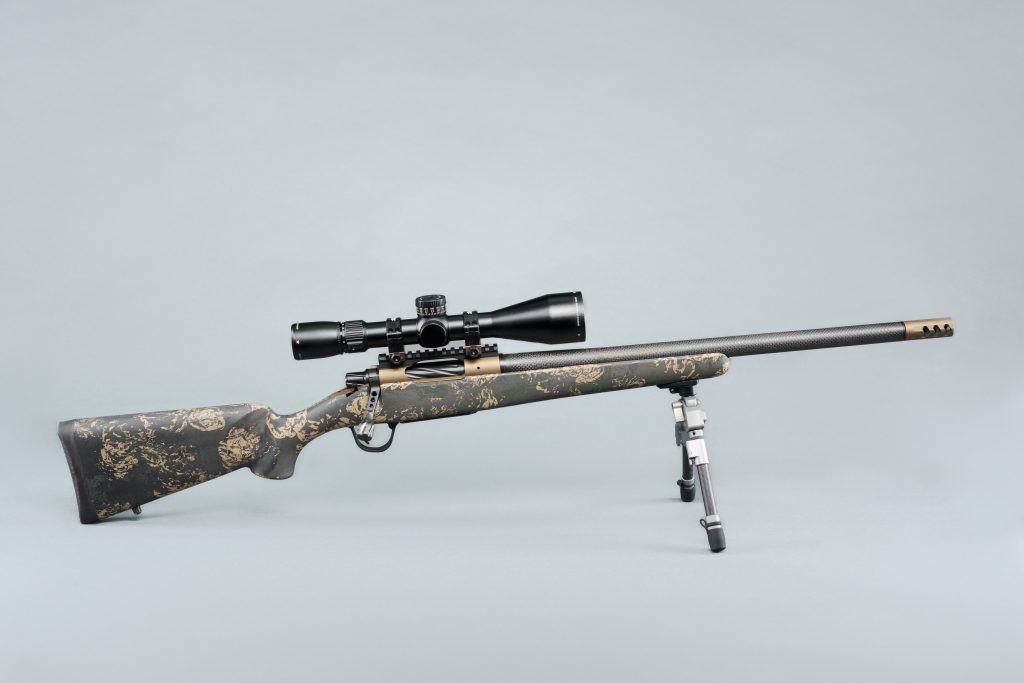
“If your rifle is so heavy, that you can’t go beyond one ridge, you probably missed out on an opportunity that you could have had if you had a little bit lighter rifle. That’s where composite technology comes into play,” Jeff said. “The stock on the Christensen Ridgeline FFT weighs one pound less than the stock on a regular Ridgeline rifle. And so by using that next innovation in technology, we take one pound right off the stock of that rifle. The trade-off is when you reduce the mass of the firearm that typically can translate into more felt recoil. However, with a well-designed muzzle brake or suppressor, a lot of that goes away. And so the disadvantage of a light rifle in the form of increased recoil can be mitigated to a certain extent.”
So, how much recoil can you expect to reduce with a quality muzzle brake or suppressor? “That’s hard to quantify and measure as a manufacturer, it takes a very sophisticated machine to compute the felt recoil as it would feel to the shooter,” Jeff said. “I would guess we’re in the neighborhood of 30 or 40%. We shoot a radial brake with holes all the way around it. Most of those brakes are put on our hunting rifles, where we anticipate a kneeling or a standing shot. Now if it’s going to be a tactical long-range rifle and even some of the hunting rifles we’ll put a side port brake on where all the pressure is directed immediately to the left and the right and we don’t have anything going down to kick up pine cones and dust as you’re shooting close to the ground. And that break is probably in the neighborhood of 30 or 40% as well.”
So the dilemma of lightweight hunting recoil is solved by a muzzle brake or suppressor and in addition to that, a quality recoil pad. Recoil pad manufacturers claim felt recoil reduction of up to 70%, so playing it conservatively, a quality muzzle brake or suppressor and a recoil pad can reduce felt recoil easily by 50%. In layman’s terms, that turns a 300 Winchester Magnum into a 270 Winchester from a recoil perspective. This is more than comfortable enough to allow you as much range time as you need to become proficient at elk hunting ranges.
The Best Rifle For Long-Range Accuracy
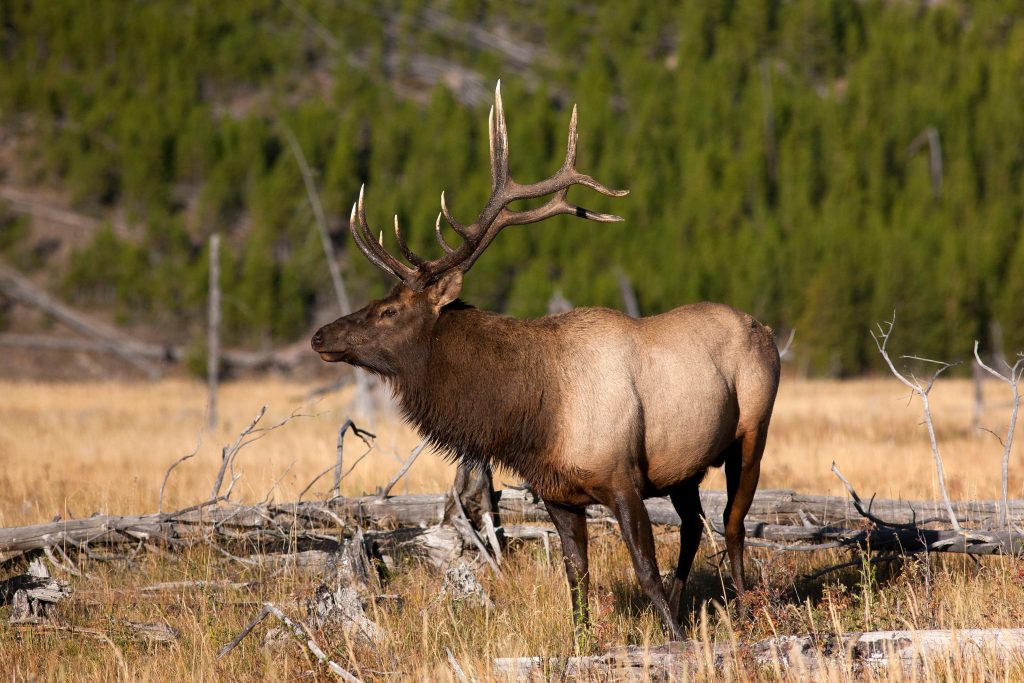
On that last hunt, I recognized that by limiting my shots to 300 yards, I was giving up a lot. The western landscape will easily offer shots beyond this distance, but with that opportunity comes a great responsibility as the shooter. Ultimately it’s the nut behind the wheel that makes the biggest difference, but you don’t want to start out handicapped. I asked Jeff what he thinks hunters should demand in terms of the hunting rifle’s accuracy to make sure their equipment is not a weak link.
“For me, the minimum acceptable would be one minute of angle. If you’re talking about the vitals just behind the shoulder, on an adult bull broadside, the kill zone would probably be about eight inches around. Now eight inches is one minute at 800 yards. So if you’ve got a one-minute gun, and you’re holding on that bull at 800 yards, and you do everything right and you get a good release, chances are you’re going to have an effective shot on that target.”
So if I’m looking at a deer rifle to take elk hunting, I could start modifying an existing rifle. Take that Model 70 I mentioned earlier for example. I could drop it in a carbon fiber stock, then replace that steel barrel with a threaded carbon fiber option in a more suitable Elk hunting Caliber. Then I could pick up a muzzle brake (or suppressor) and a recoil pad to tame the increased recoil. But would I be confident that this would be a minute of angle gun?
Jeff had this to say about taking that route. “One of the things we work on every single day is consistently being accurate. In other words, if you make 10 barrels, you want all 10 of those barrels to be the same quality, eight good ones don’t help you that much. And so everything from the barrel steel to the technology we use in the composites of a good rigid stock goes into that. When Christensen Arms started, what we were doing 25 years ago was buying a Remington 700 rifle, taking the Remington barrel off of it, contouring the barrel, wrapping it in carbon, reinstalling the Remington barrel on the Remington receiver, putting it in the Remington stock and selling that gun.”
“It was a good way to start the technology. It was a good way for us to start to understand the interface between a carbon wrap barrel and a steel barrel. So we learned a lot. But the disadvantage to that was you were stuck with the tolerance stacking and the misalignment and everything that occurred in a Remington gun. Even though you had a good carbon barrel on there, you were limited with what you had. Now we have everything from the bolt to the receiver to the stock to the barrel being made right here at Christensen Arms, and we can control all of that stuff. So bringing that all under one roof helped us tremendously in being a lot more consistent.”
What’s The Best Caliber For Elk Hunting That Isn’t Overkill On Deer?
If you’ll limit your shot distance. There is no reason why your favorite non-magnum, tried and true deer caliber won’t kill an elk. Here are just a few that with properly selected hunting ammunition will carry the minimum recommended 1,500 ft-lbs of energy at 400 yards:
- .270 WIN
- 7mm-08
- 280 Remington
- .308 WIN
- .30-06
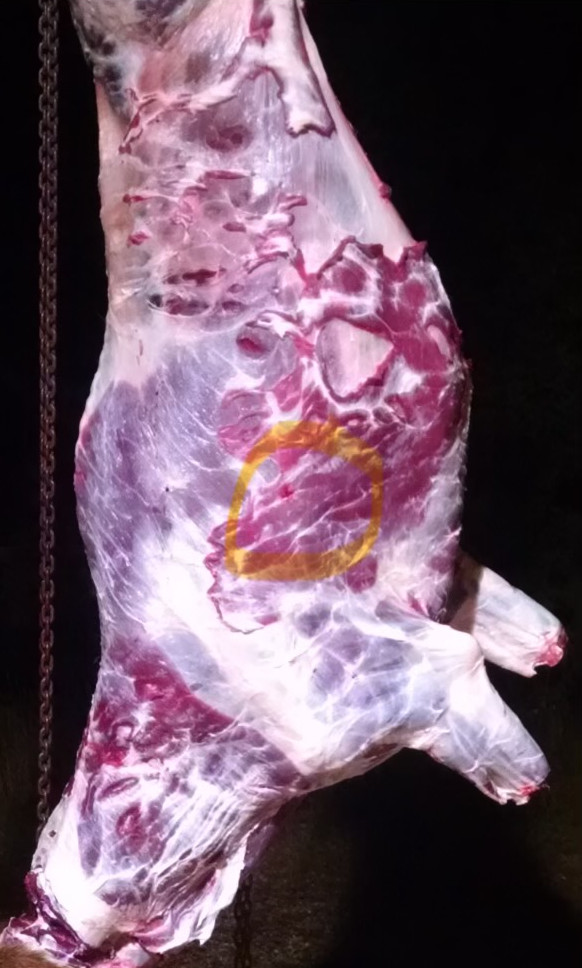
But this article isn’t about a deer hunting rifle that is “good enough” for elk. This article is really about an elk rifle chambered in a caliber that won’t cut your deer in half. And why wouldn’t you want as big of a bullet as you can accurately shoot? I’m not worried about the 200-yard broadside shot. I’m concerned with the 460-yard quartering-away shot on the bull of a lifetime when my adrenaline is through the roof.
Where does that leave us on caliber choice? Jeff had some advice on what he is seeing with today’s available options. “I’m gonna give you the answer based on my current experience, I’m just finishing a nice rifle built on our stuff in 7 PRC. And I’ve got two in 6 PRC, one and 300 PRC and then I’ve got everything from 338 Remington Ultra mag, all the way down to the 17 calibers. And I base it mostly on how much downrange energy I’m going to get out of that gun. How much does it weigh? Can I be consistent in hitting a target with the way that rifle was set up? For me, that would be anywhere between 6.5 PRC to 300 Win Mag. I don’t think you have to have a 338 Lapua to kill an elk at 800 yards. In fact, I know you don’t.”
“So in other words, if you’re shooting a 7PRC, especially if you’re a hand loader, you can load down for a whitetail or up for a big bull. In 300 Win Mag, for example, you can go everywhere from 110 to 220 grains in bullet weights. And so there are a lot of different great calibers that would do it. For me, the flavor of the month lately has been that 7 PRC. I was amazed at how quickly and easily that round could be dialed up to 1200 yards at the range and still bring tremendous energy, shoot flat, and recoil great. I’m not sure what barrel life’s gonna be yet. It’s a little early in the test for that. But I would say anything in that 7 PRC range would be good. And if it were Jeff Bradley personally hunting next fall, I would shoot a 7 PRC.”
So if you’re going to limit yourself to 400, there are many great options, and if you want to go even further without fear of being overkill on whitetails, consider any of these calibers and load down when you’re hunting back home if needed.
- .280 Ackley Improved
- 6.8 Western
- 270 WSM
- 7mm PRC
- 28 Nosler
- 7MM Rem Mag
- 300 WSM
- 300 Win Mag
Your Deer Rifle Can Go Elk Hunting, But It Probably Isn’t The Best
If you want to take your deer rifle elk hunting, go for it! Just understand that you are most likely going to be compromising something. Whether it’s shot distance, carrying comfort, or accuracy, most deer rifles are not built for the potential demands of today’s western elk hunting. Look for a manufacturer who builds their rifles to the weight, accuracy, and recoil standards that you will need to make your elk hunt the best it can be while still creating a gun that you can use back home when pursuing whitetails. If you’re like me, half the fun of the hunt is getting ready for it, so why not enjoy the process of getting set up with a rifle that’s built for the task?