

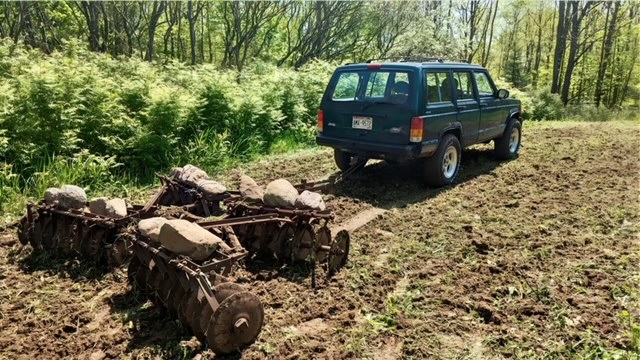
Food plots can be an excellent addition to rural and urban properties to complement the natural forage and provide additional nutrition for your local wildlife. Traditionally, many landowners sow several varieties of plants for their local deer in the Fall and into the Winter. However, many landowners are taking advantage of a growing body of research that says planting year-round forage produces healthier deer and turkeys, which are more likely to stay on or near one’s property. Some landowners use tillers, hand spreaders, and smaller attachments pulled behind off-road vehicles for smaller fields. I know one inventive fellow who hooks an eight-foot disc behind his 1998 Jeep Cherokee XJ 4×4 to plow his plot. However, for those seeking efficiency and effectiveness, investing in the best tractor for food plots can be a game-changer. A tractor with the right attachments can plow, plant, and fertilize your food plots in addition to performing various tasks like mowing, clearing brush, and maintaining your roads.
Tractor Sizes And Types
Buyers can quickly become overwhelmed when searching for the right-sized tractor and the necessary accessories for planting and other chores around their property. I recently talked with Shannon Moore of LS Tractor USA about tractors in general and a few things prospective buyers need to consider before zeroing in on a specific model.
Moore is the Regional Sales Manager at LS Tractor for the Eastern US and also plants nearly a dozen acres of food plots annually. Moore said choosing the right tractor and attachments is critical to ensure efficiency while minimizing the risk of damaging your equipment.
His job affords him a unique perspective on what factors landowners need to consider before an upgrade or pulling the trigger on their first tractor. Moore said that attachments come in various sizes, and depending on the landowner’s needs, they will help determine what model and horsepower are needed to operate those accessories.
According to Moore, a basic tractor setup for smaller food plots consists of a three-point mounted disc, spreader, and cultipacker. An example would be the LS MT1 sub-compact series, which comes with a 22 or 25-hp diesel, a 3-point lift capacity of 738lb, and enough power to garden and mow up to five acres.
The LS Compact MT-2 Series offers larger-framed models with three or four-cylinder diesels for more demanding tasks on more substantial properties. This series provides 25 to 40+ horsepower ratings and can power more robust implements, including no-drill planters.
For landowners with more significant acreage, stepping up to the LS MP-3 series with the right attachments can till and plant up to twenty acres of food plots. LS offers four engine choices that range from 42 to 57 hp, with options like the limited-edition MP 357 Mossy Oak Bottomlands Camo edition that looks as good as it plows. It comes with a class two hitch, hydrostatic transmission, a lift capacity of 2,755 lbs, and weighs in at about 4,300 lb with a cab.
Assessing Your Food Plot Planting Needs
Creating and maintaining a successful food plot starts with thoroughly assessing your planting needs. A good starting point is to list your specific goals for each food plot and decide whether your plans include seasonal or year-round plantings. Combine the total area you need to disc and plant to determine the appropriately sized implements and how much power you will need to operate each one efficiently.
Begin by evaluating the soil type in each field, then use soil tests to determine its pH level, nutrient content, and texture. This information will guide you in selecting the appropriate soil amendments and fertilizers to optimize plant health and yield.
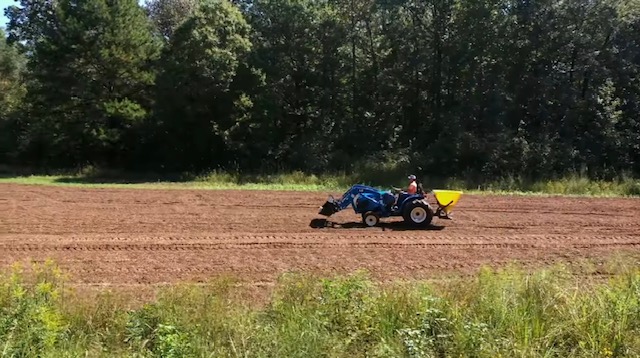
Analyze each site’s sunlight exposure, drainage, and potential for erosion. Identifying these factors early on will help you design a plot layout that maximizes growth potential while minimizing maintenance efforts.
Once you’ve considered these factors, you can research specific plants or seed mixes suitable for your area and goals and the appropriate attachments to plant and maintain them.
Recommended Tractor Sizes For Different Food Plot Sizes
As a general rule, plowing requires more horsepower than planting. Moore mentioned that determining the acreage of your combined fields, soil types, plot shape, and terrain is essential to calculating the horsepower needed to efficiently till and plant them.
Tractor weight also plays a crucial role in determining its ability to pull a plow effectively. Heavier tractors have better traction, which transfers more power from the engine to the ground. It is crucial when plowing heavy or wet soil, as it prevents the tractor from losing traction.
For a food plot that is between a quarter to one acre in size, a sub-compact tractor with around 15-20 horsepower can be surprisingly capable. When dealing with plots that range from one to five acres, a compact utility tractor in the 20-to-30 horsepower range is a better fit. For plots that cover five to twenty acres, investing in a more substantial tractor with 35-50 horsepower is advisable. For properties exceeding twenty acres, a tractor with over 50 horsepower will be more efficient and better suited to handle the larger area.

While larger tractors generally require more fuel, their ability to complete tasks quickly can offset the higher fuel consumption. Furthermore, a tractor with adequate horsepower will typically experience less wear and tear, extending its lifespan.
Key Tractor Attachments For Food Plot Planting
The right attachments can significantly improve efficiency and productivity when planting and maintaining food plots. Here are some essential tractor attachments:
Disc Harrow- A disc harrow is a crucial attachment for preparing the soil before planting. It cuts through the soil, breaking up clods and creating a smooth seedbed.
Cultipacker Seeder– A cultipacker seeder is an all-in-one attachment that firms and levels the soil while simultaneously planting the seed at the desired depth. It ensures good seed-to-soil contact, promoting better germination and growth.
Broadcast Seeder– A broadcast seeder can be a time-saving attachment for larger food plots. It evenly spreads the seed over a wide area, allowing for efficient planting.
Box Blade– A box blade is a versatile attachment that can level and smooth the soil surface, removing high spots and filling in low areas. It’s helpful for final seedbed preparation before planting.
Fertilizer Spreader- Proper fertilization is crucial for the growth and health of your food plots. A tractor-mounted spreader can accurately distribute fertilizer over the entire plot area.
Sprayer– Weed control is essential for a successful food plot. A tractor-mounted sprayer allows you to apply herbicides, insecticides, or other necessary chemicals efficiently and evenly across the plot.
Rotary Tiller– A rotary tiller can break up the soil and incorporate organic matter for smaller food plots or areas with heavy vegetation.
Brush Hog– If your food plot area requires clearing of brush or small trees, this attachment can be a valuable tool for site preparation.
Front-End Loader– While not directly related to planting, a front-end loader can be a valuable attachment for moving materials around the food plot area, such as soil amendments or seed bags.
It’s important to note that not all attachments may be necessary for every food plot situation, and the specific attachments needed will depend on factors such as soil conditions, plot size, and the types of crops planted.
Considerations For First-Time Tractor Buyers
Buying a tractor for the first time can be an exciting but overwhelming experience. Once you determine all the jobs you expect to accomplish, you can choose the correct frame size, horsepower, and attachments you need to carry out all those chores.
Larger tractors are more expensive but can handle heavier workloads, while smaller tractors are more maneuverable and cost-effective for smaller properties.
2WD tractors are suitable for flat terrain and lighter work, while 4WD tractors provide better traction and stability on hilly or rough terrain. New tractors are more expensive but have warranties and the latest technology. Used tractors can be cost-effective if well-maintained, but ensure you inspect them thoroughly or have them checked by a mechanic. Consider reputable tractor brands with reliable dealer networks for parts and service support in your area.
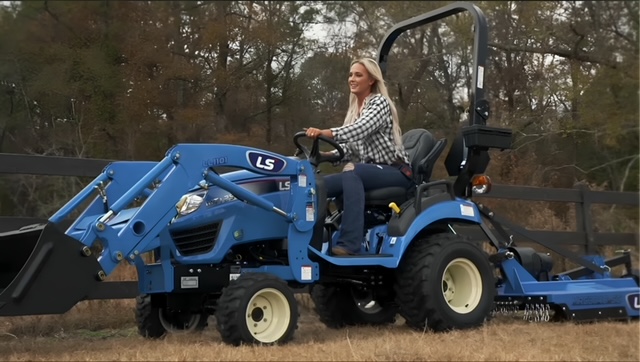
Pay attention to the tractor’s ergonomics, visibility, and operator comfort features, especially if you expect to spend long hours behind the steering wheel. Also, look for features like rollover protection structures (ROPS), seatbelts, and easily accessible controls.
Finally, test drive a prospective model and seek advice from experienced farmers or agricultural experts before purchasing. Remember, a tractor is a significant investment, so take your time, do your research, and choose a tractor that meets your specific needs and budget.