

If you’re managing a pond or planning to create one, stocking bluegill is one of the most impactful decisions you can make. These hardy fish not only provide excellent forage for predator species like bass but also create exciting fishing opportunities for families and anglers alike. However, successful pond management starts with smart choices—like selecting the right bluegill for pond stocking and establishing a feeding program that supports healthy, consistent growth.
Norm Latona, founder and president of Southeastern Pond Management, offers his expert insight on what pond owners should know before stocking bluegill. “Bluegill are the fundamental forage in most managed ponds because they spawn multiple times throughout the year,” Norm explains. “Females may produce 10,000–50,000 eggs per spawn, which ensures a consistent food source for predator fish.”
With the right strategy, you can create a thriving ecosystem while enjoying the benefits of larger, healthier bluegill.
Why Coppernose Bluegill is the Top Choice
One of the first decisions pond owners face is whether to stock coppernose bluegill or northern bluegill. According to Norm, coppernose bluegill are the superior choice for most managed ponds. “We recommend and stock coppernose bluegill,” he says. “When put on an intensive supplemental feeding program, they commonly grow faster and larger than northern bluegill in small impoundments. They’ll routinely exceed one pound in size when managed with a regular feeding program.”
This fast growth and larger size make coppernose bluegill ideal for recreational fishing and as a food source for bass. In fact, with proper care and feeding, some bluegill can grow to impressive sizes. Norm shares, “It’s not unusual for us to collect 32- to 36-ounce bluegill in lakes that are diligent about feeding. These fish can grow to over two pounds, looking like dinner plates—they’re that thick and heavy.”
Stocking Rates: Getting It Right
Stocking bluegill is not a one-size-fits-all process. The right approach depends on whether your pond is new, recently renovated, or already established.
“For new or renovated ponds, bluegill fingerlings should be stocked at a rate of 1,000–2,000 per acre from October through March,” Norm advises. Stocking during fall or early winter gives the bluegill time to grow and reproduce before predator fish, such as bass, are introduced in the summer.
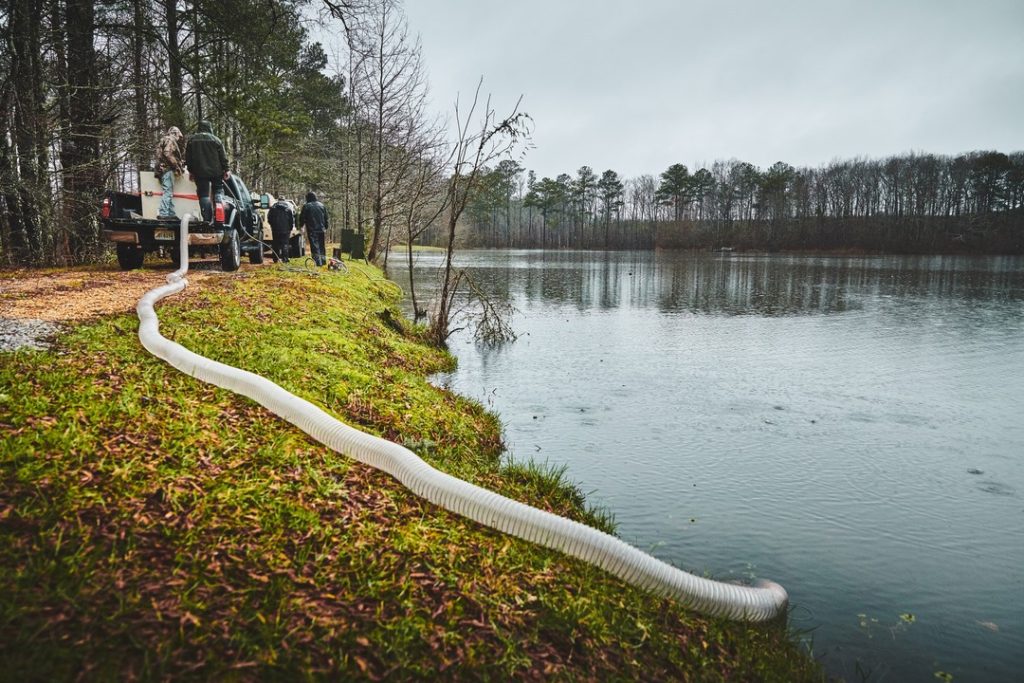
In established ponds, particularly those with “bass-crowded” conditions, intermediate-sized bluegill are often introduced at a rate of 500–2,000 per acre. “In those cases, the bluegill help feed stunted bass while enhancing the reproductive capacity of the bluegill population,” Norm says.
Feeding Bluegill: How to Maximize Growth
Supplemental feeding is one of the most impactful ways to improve the health and size of your bluegill population. While bluegill naturally feed on zooplankton, insects, and other invertebrates, adding a pelleted feed to their diet promotes faster growth.
“What you and I grew up on was floating catfish pellets—32–36% protein—and there’s nothing wrong with it,” Norm explains. “Bluegill eat it like crazy, and they’ll certainly grow on it.” However, for those aiming to achieve exceptional growth rates, Norm recommends high-protein feeds like Purina’s AquaMax. “This commercial-grade feed, with 48–50% protein and a high fish meal content, will make your bluegill grow right before your eyes. It’s more expensive, but if you’re serious about producing big fish, it’s the way to go.”
Feeding frequency also matters. Norm highlights the importance of consistency: “Fish will eat more if you feed them small amounts over a longer period of time. Breaking feedings into two or three times a day—morning and evening—is ideal.”
The Role of Automated Feeders
Automated feeders take the hassle out of consistent supplemental feeding and ensure your bluegill population thrives. Norm emphasizes the value of investing in high-quality feeders. “When it comes to fish feeders, you really get what you pay for,” he says. Southeastern Pond Management primarily uses Texas Hunter feeders due to their durability and effectiveness.
“These feeders are what we call directional feeders,” Norm explains. “They shoot food out in one direction and are easy to mount on a pier or bank. Most of the models we use have 100-pound hoppers, which are ideal. They’re low-profile, hold enough feed to last one to two weeks, and keep the food fresh.”
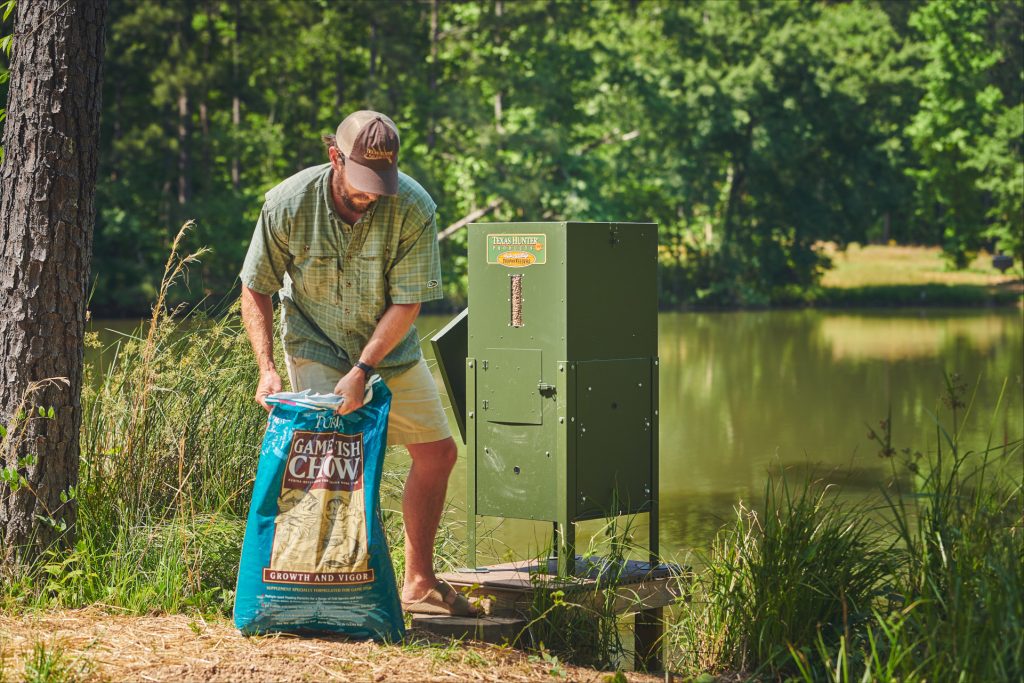
Norm also notes the importance of maintenance. “We sell feeders with solar panels to recharge the 12-volt batteries. With basic care, like keeping the solar panel clean, these feeders can last for years with minimal issues.”
Tips for Choosing the Right Hopper Size
When selecting a feeder, it can be tempting to opt for the largest hopper available, but Norm cautions against this. “Bigger isn’t always better,” he says. “The only difference between a 300-pound hopper and a 100-pound hopper is how often you have to fill it. If it’s not a huge burden to refill your feeder, go with the smaller hopper. You’ll avoid problems like moisture getting in and clumping the feed.”
For most ponds, a 100-pound capacity feeder is more than sufficient. “Five pounds of fish food per acre per day is a lot,” Norm explains. “With a 100-pound feeder, you’re refilling it every 10 days to two weeks for a typical five-acre lake.”
Building a Feeding Program Around Your Goals
Your feeding strategy should align with your pond’s purpose. Are you stocking bluegill to create a fun fishing spot for the grandkids or to provide forage for bass? “If you’re just feeding bluegill to attract them for easy fishing, small amounts of feed are enough,” Norm says. “But if your goal is to improve their growth rate and abundance, you’ll need to increase the feeding rate and frequency.”

Bluegill quickly become habitualized to feeders, swarming the area as soon as food hits the water. “If all you’re doing is concentrating fish for catching, you don’t need to feed much. But for real growth, we work with pond owners to tailor a program based on their goals and budget,” Norm adds.
Final Thoughts
Stocking bluegill is a rewarding way to enhance your pond’s ecosystem and recreational value. With the right species, stocking rates, feeding programs, and equipment, you can achieve a thriving population of healthy, fast-growing fish.
As Norm Latona puts it, “Outside of liming and fertilizing—two cornerstone practices in pond management—supplemental feeding is one of the most impactful inputs you can make. Whether you’re managing for trophy bluegill, feeding bass, or just making it fun for the kids to catch fish, a solid feeding program and quality equipment make all the difference.”
If you’re ready to stock your pond with bluegill, consider consulting with a pond management professional to design a program tailored to your specific needs. By taking the time to do it right, you’ll create a sustainable, thriving pond that provides years of enjoyment and ecological benefits.