

For many hunters, the obsession with wild turkeys begins the moment they hear a tom’s thunderous gobble echo through the stillness of an early spring morning. While calling a mature bird into shotgun range is rewarding, bowhunting turkeys takes the challenge to an entirely different level.
Drawing a gobbler close enough for a clean shot with a bow requires stealth, patience, and precision—a pursuit that’s as ancient as it is demanding. Archaeological finds in the eastern U.S., including 5,000-year-old stone points and turkey bones, suggest Native Americans routinely hunted turkeys with bows long before firearms arrived. Even after acquiring guns, many tribes continued using traditional methods well into the 18th and 19th centuries.
Modern bowhunters are up against a worthy opponent. Wild turkeys boast remarkable eyesight—270-degree vision in vivid color, sharper than 20/20—and can take to the air at speeds up to 60 mph. These instincts make them masters of evasion and a true test for even the most seasoned archers.
To better understand the skills and gear it takes to succeed, I spoke with veteran archer Steve Bailey of Kentucky, who has been bowhunting turkeys since the mid-1980s. He’s pursued multiple subspecies across the U.S., and in the following pages, I’ll share some of the wisdom he’s gained through decades of hard-earned experience.
Archery Turkey Hunting Gear Must-Haves
Hunting turkey with a bow requires a commitment many are reluctant to make. However, ask any archer who has successfully arrowed a turkey, and they will attest to the adrenaline rush they experience when everything comes together. If you’ve ever rubbed shoulders with a seasoned turkey caller, you will likely sense a profound respect most develop after a few seasons of chasing this wary adversary.
There are several must-have items to help improve their chances before a bowhunter tries to fool an old tom,
Turkey Archery Target
Nothing can take the place of actual practice. Regularly launching multiple arrows into a target at various ranges keeps your shooting muscles toned, alerts you to equipment or form issues, and tightens your groups. Whether you choose a more traditional bag target, a block type, or a realistic 3-D model, first verify that it’s adequate for your bow’s speed.
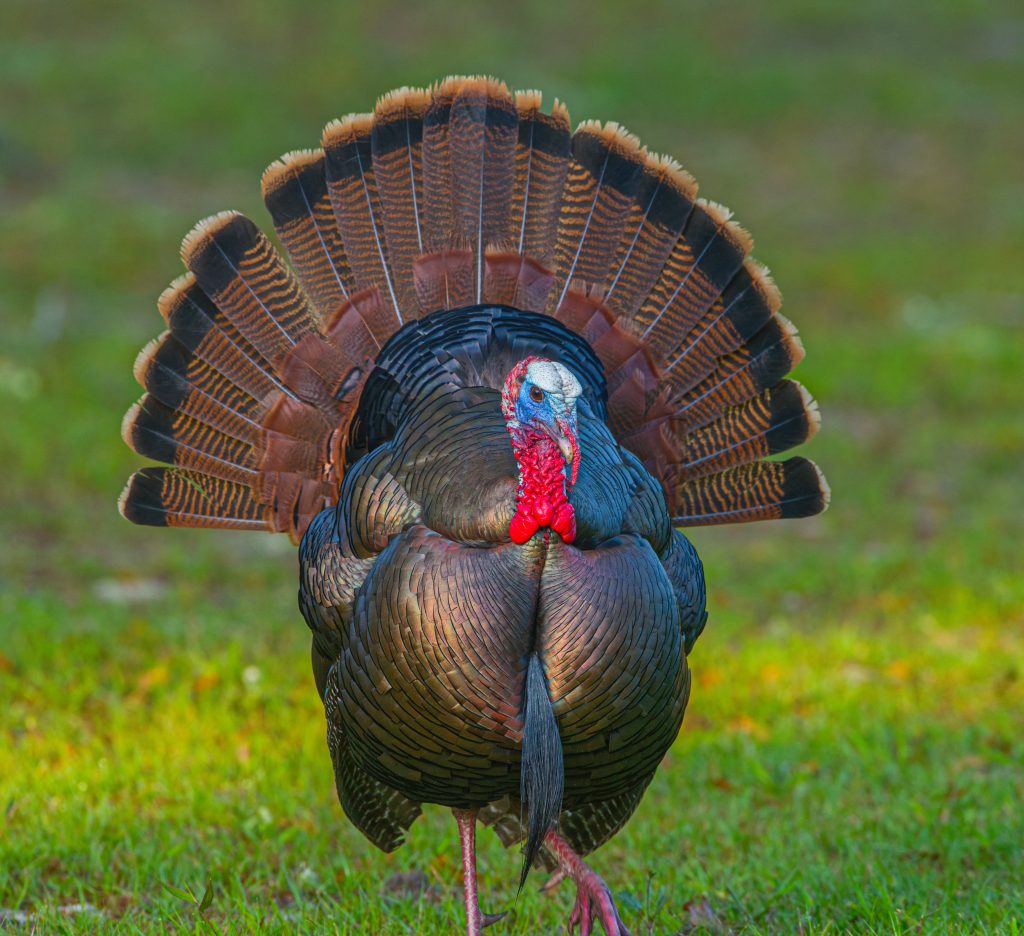
Remember, if you hunt from a sitting or kneeling position, you will need to incorporate these shots into your practice routine. Below are a few target suggestions to help prepare archers to zero in on a turkey’s kill zone.
When choosing an archery target for turkey hunting practice, consider the following factors:
- Budget- 3D targets are the most expensive option, followed by foam block targets and bags.
- Durability- Foam block and bag targets are generally more durable than 3D options.
- Size- A target that approximates the size of the turkey you’re targeting to hunt is the best option.
- Pose- Choose a 3D target made in a posture you will likely encounter and is easy to reposition for various shot angles.
- Arrow type- Make sure your target is compatible with the arrows and points you’ll be using.
3D Targets
These realistic foam targets are an excellent choice after your bow is tuned and the sights are adjusted. They come in various sizes and poses so you can closely match the type of turkey you hunt. Bailey explained that he had encountered several 3-D models where the outlined kill zones were inaccurate, so verify the accuracy of the vitals on your target and create a more precise aim point with a bright marker if necessary. Popular models include:
Foam Block Targets
This durable option incorporates a high-density foam designed to stop the fastest arrows. Some use a series of layers designed for broadhead use, and a few have more than four sides.
Bag Targets
These are primarily designed for field points and are speed-rated. They are portable and the most affordable option.
Best Archery Gear for Turkey Hunting
Whether you shoot a recurve, longbow, compound, or crossbow, familiarity with your equipment is necessary to keep those arrows in the bullseye. Sorting/weighing arrows, broadheads, practice tips, and maintaining fletchings is part of a routine required for consistency.
Bailey is one of many compound shooters who reduce their draw weight for turkey season. He chases turkeys with a bow adjusted 5-8 pounds less than his whitetail setup. Bailey explained that a lower draw weight makes for a smoother pull and allows an archer to maintain a full draw longer.
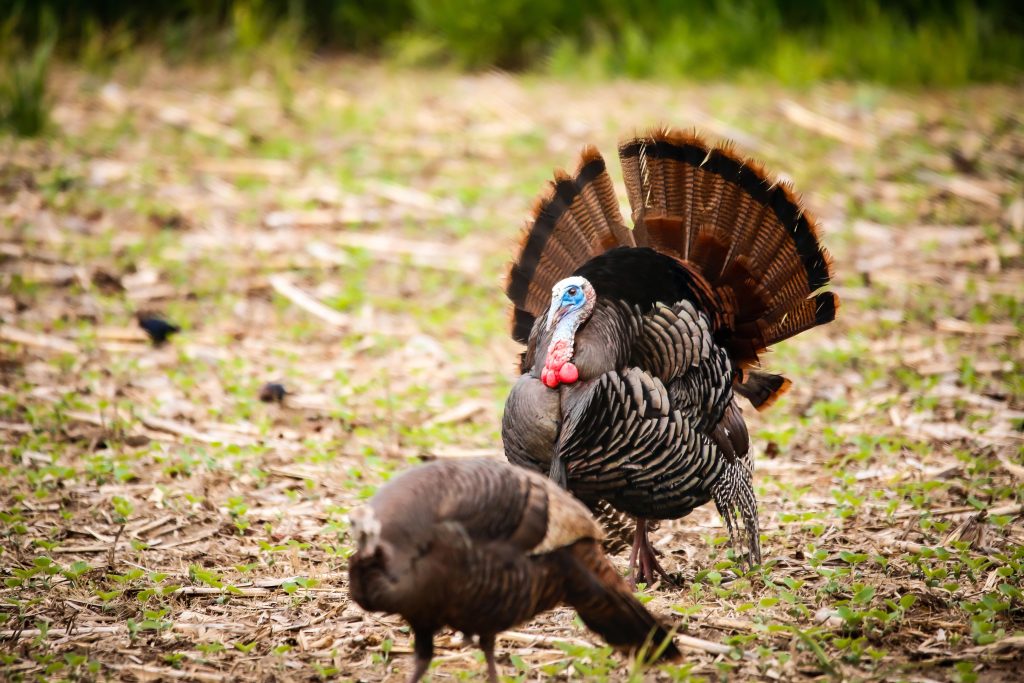
A turkey’s vitals require greater accuracy than do deer. That smaller target means extended practice sessions with finely tuned equipment. Every archer has a personal maximum range, and a good rangefinder takes any guesswork out of the shot equation. Bailey said he uses a smaller front stabilizer and ensures the finish on every piece of his archery equipment is dark or covered in a dull camo finish.
Calls
Bailey recommends learning to use a mouth call to avoid any unnecessary movement associated with traditional box and slate models. Whether you use a slate, box, or diaphragm to coax a strutting gobbler closer, know that any excess motion can quickly end a hunt, so practice with whatever call you use to minimize the chances of being detected.
Bailey said Woodhaven and Zink produce his go-to calls, and although he hasn’t used push-button calls in a while, the Lynch model would be his choice.
Woodhaven– Mike Pentecost began making calls over 20 years ago and produces a variety of highly acclaimed models in Heflin, Alabama. He has partnered with champion callers Scott Ellis and Billy Yargus to create calls to fool the wariest gobblers.
Zink Calls- Award-winning call maker Fred Zink produces an extensive line of custom calls in Irving, Texas, used by dedicated turkey stalkers throughout the US.
Lynch Calls- M. L. Lynch, a carpenter from Homewood, Alabama, decided he could make a living selling his sought-after calls and began his company in 1940. His legacy lives on, and his namesake company produces an expanded line of time-tested models in Boston, Georgia.
Archery Turkey Shot Placement
As a rule when bowhunting turkeys, fixed and rear-deploying mechanical broadheads have fewer problems with feather penetration. The thicker quills can decrease penetration where a head’s blades fold forward. Bailey explained that several large-diameter blades are available for turkeys but that a standard broadhead works well when precisely placed into the vitals.
Drawing back on an alert bird is nearly impossible. That’s where a strategically placed decoy can be an excellent investment. Position it where an approaching turkey’s gaze will be diverted from your location to afford a better shot.
Frontal– Just below the beard is a great shot, but avoiding that gaze can be tricky.
Broadside– Follow the legs up to the drumstick and aim a few inches forward for a direct path to the vitals.
Rear– A turkey’s exit hole is the perfect entry point that results in a quick kill.
Best Blind for Bowhunting Turkey
A blind can help conceal an archer’s movements but can burden the run-and-gun style hunter. Bailey suggests using a tent with a black interior and ensuring your clothing and equipment blend in to avoid being silhouetted.
Your hunting destination can significantly influence your choice of blind. If you have a tried-and-true location, setting up and brushing in your setup before your hunt is a great option. A lightweight minimalist model might work better if your hunt is on a less familiar property where you’re still learning the terrain. Bailey has used blinds extensively but prefers to hunt without one. However, he highly recommends a quality three-legged swiveling stool to shoot from.
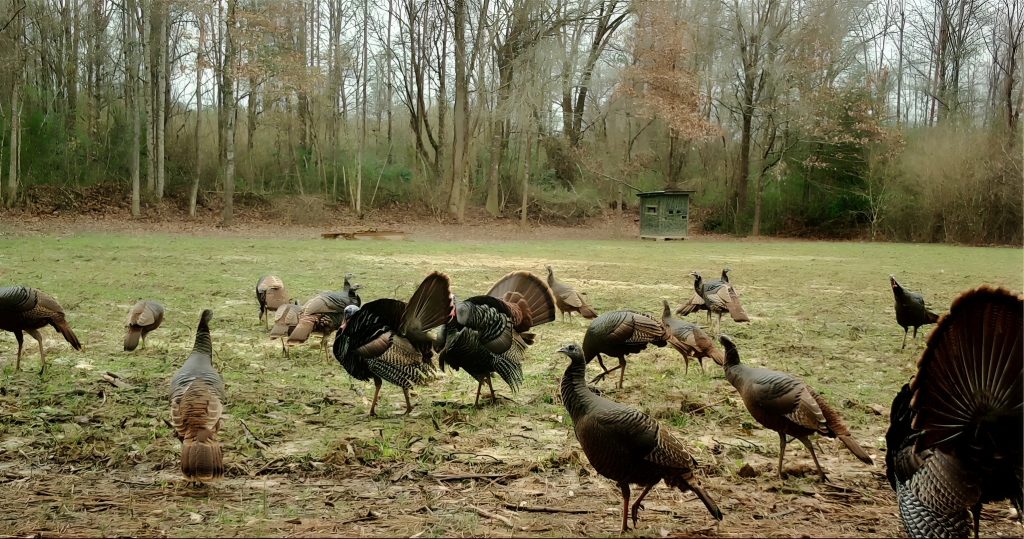
Sturdy hub-style blinds dominate the market, though collapsible, spring steel framed models are another alternative. Take note of the surrounding vegetation where you hunt and choose a model with a camo pattern that best blends with where you will locate.
If you’ve scouted a good staging location, consider setting up a blind a few days before your hunt. It’s essential to add additional foliage to reduce its visual footprint. Ground blinds come in various window styles and sizes, so choosing one boils down to personal preference. Primos, Muddy, Browning, and Ameristep are a few brands to consider when researching the best option to help conceal you and your bow. Between them, they have more than a dozen models to choose from in an array of camo patterns, sizes, and price points.
Bowhunting Turkey Tips
Bailey said having a decoy to distract a turkey’s eyes makes a huge difference when the time to draw nears. The best call, blind, and decoy can get your target within range, but it boils down to timing and how concealed you are as you draw, aim, and release. It’s the difference between running to grab a pair of spur-lined legs and adding notes under the near-miss column of your hunting journal.
Patience and an intimate knowledge of where to place your broadhead for a humane kill are required before anyone walks into the early morning forest to engage in a feathered chess match.
It can take a while to become familiar with your specific hunting terrain. Excellent maps are a great tool, but thoroughly scouting your property before the season to locate potential roost sites, staging areas, and strut zones can pay dividends when it comes to knowing where to sit as you begin your conversation with a tree-bound turkey.
Taking late afternoon rides around your hunting land to call and pinpoint a roost will allow you to formulate a strategy to increase the odds that you will be in line with a gobbler’s fly-down and staging area.
Bailey said using a small chair to pivot slowly is crucial in close-quarter encounters and can’t be overstated.
Bowhunting Turkeys Without a Blind
You will need to find or create an ambush location that takes advantage of a good backdrop with plenty of vegetation to keep hidden. Excellent blind-building skills are a prerequisite for creating a brushed-in natural hide that provides concealment and room to draw.
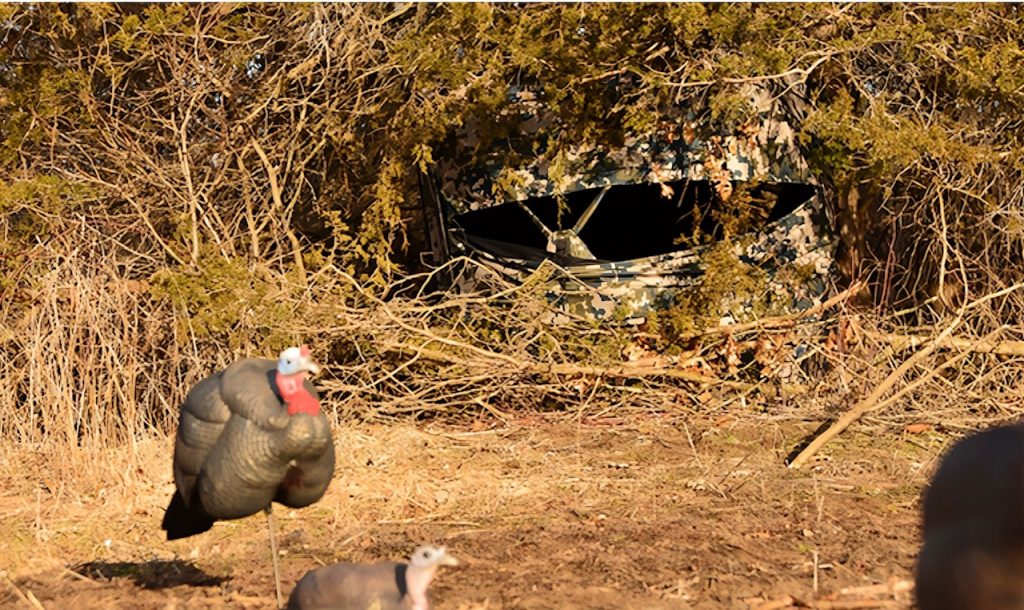
A quality folding saw, brush clippers, and a few feet of camo twine or oversized reusable twist ties like Nite Ize Gear Ties can help create a quick hideout. Choose a lightweight folding saw with a solid locking mechanism. Silkey, Primos, and Fiskars produce several models that make short work of limbs and saplings.
Bypass pruners work great for cutting smaller limbs to create openings for a natural blind. Wicked Tree Gear, Fiskars, or Felco offer a variety of models to quickly dispatch briars, vines, and smaller limbs for quickly brushing in your setup.
Conclusion
If you decide to take on the challenge of bowhunting turkeys, fine-tune your bow and invest in a realistic 3D turkey target, quality decoys, and a reliable ground blind. Practice like you hunt—set up a realistic scenario, have someone film as you call and draw, and focus on eliminating unnecessary movement. Mastering their language and dialing in your setup can make the difference between a missed opportunity and witnessing the wing-dragging strut of a wily gobbler at full draw.