

Bull redfish, the larger relatives of the common redfish, captivate anglers with their powerful fight and sheer size. Capt. Shane Traylor with Bona Fide Inshore Charters, an experienced angler with years spent fishing in the southern waters of Alabama, shares insights into targeting these fish using both artificial lures and live baits. Here’s a look at what he had to say about the thrills, techniques, and best practices of bull redfish fishing.
Early Encounters with Bull Redfish
Capt. Shane recalls his first encounter with a bull redfish near Fowl River Bridge, describing the unforgettable feeling of battling a fish that showed no signs of fatigue, even as it fought around bridge pilings. “I’d hooked big stripers and catfish before, but this was different. With bull reds, you feel the raw power of a fish that isn’t going to give up easily.” His love for bull reds grew from that initial fight, pushing him to learn more about their habits and behavior.
Using Artificial Lures to Target Bull Redfish
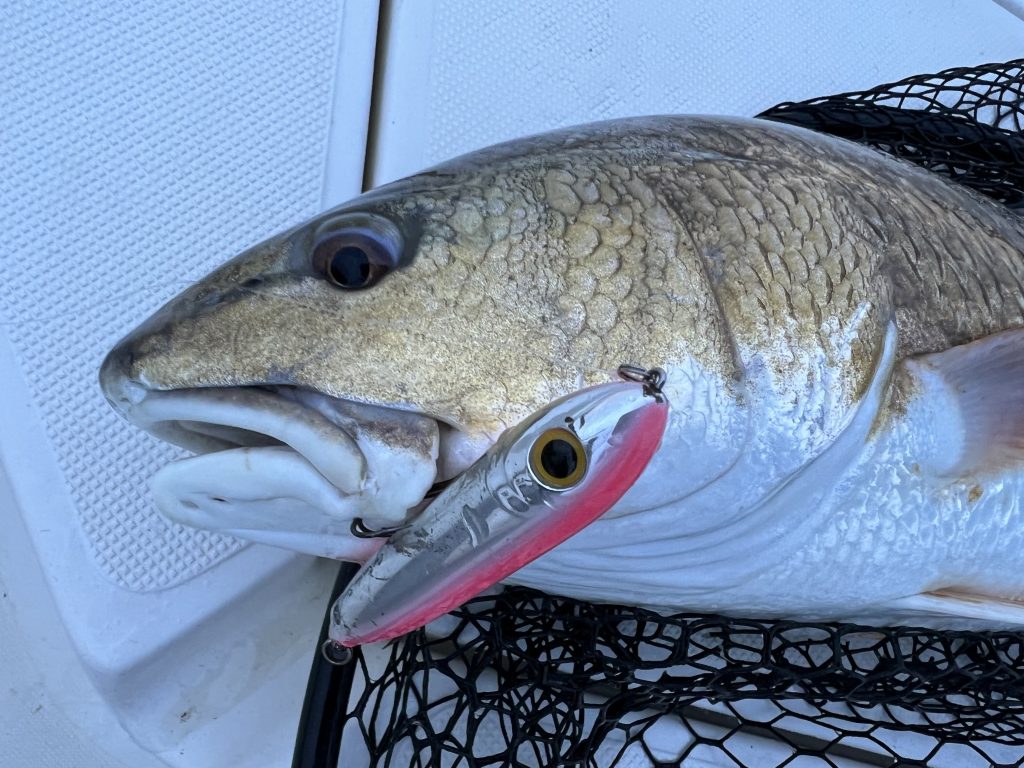
Artificial lures, according to Capt. Shane, provide versatility and allow anglers to cover more water quickly. He highlights that, while live bait is always effective, there’s something especially rewarding about tricking a bull red with a well-chosen lure.
He’s found that larger lures can be cast long distances, a big advantage when trying to reach these fish in open waters. His recommendations include topwater lures during the late summer and fall, especially around schools of menhaden, or “pogies,” which attract bull reds. “Topwater fishing is thrilling because you can see five or six bull reds fighting over the bait. Removing some of the treble hooks can help avoid injuring the fish too much, and a single hook at the back often works best.”
For subsurface lures, Capt. Shane favors big bucktails with curly-tail grubs and soft plastic swimbaits. Colors and profiles don’t need to be complicated; anything that mimics local baitfish typically works. He stresses that high energy, erratic retrievals are the most effective, as bull reds are more likely to attack a lure that’s darting quickly and unpredictably.
Adapting to Water Conditions and Seasonal Shifts
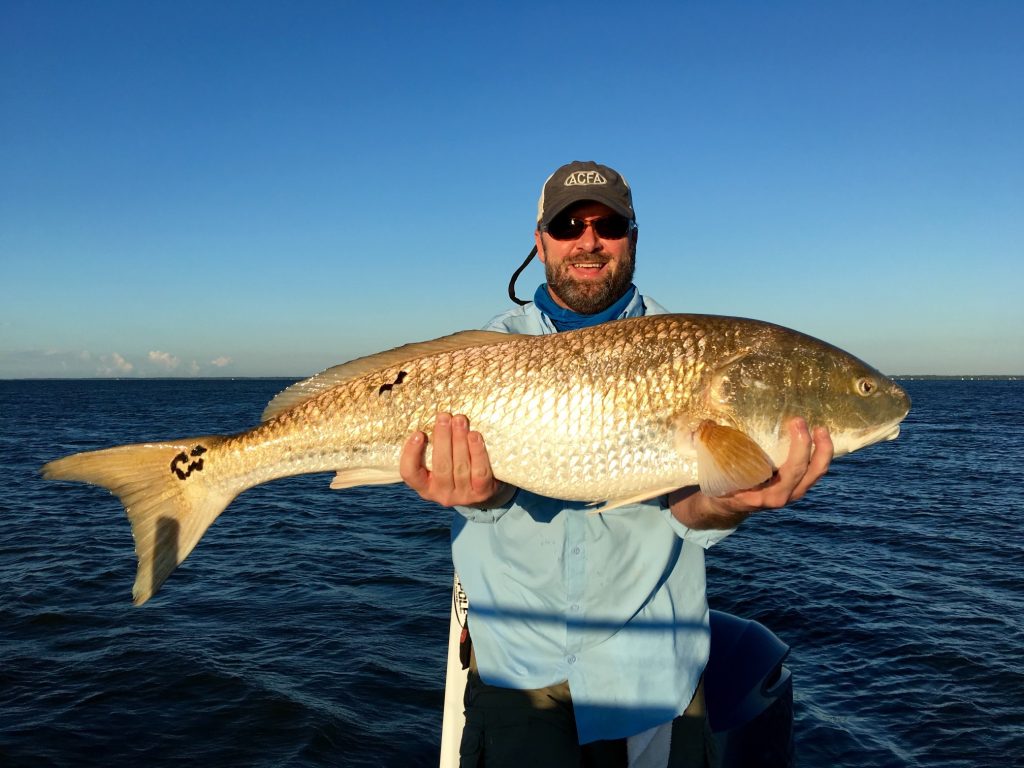
In terms of water clarity and temperature, Capt. Shane notes that bull reds can be found in a range of environments, from crystal-clear Gulf waters to the muddy waters of the Delta. Rather than overthinking water conditions, he focuses on timing, with fall being particularly fruitful. Seasonal changes also affect where he searches for fish: during colder months, he heads to the Delta’s deeper waters, where current is abundant and baitfish are often present.
Live Bait Recommendations for Bull Redfish
Capt. Shane is a fan of live bait, especially pogies and mullet. Pogies are usually abundant, and a single net cast can supply more than enough bait for a trip. “If you’re in a productive area, live bait draws attention and covers water on its own. Pogies act erratic and move around a lot, making them perfect for drawing a bull red’s interest.” When targeting bull reds, he opts for strong hooks, often 3x or 4x strength, to handle the aggressive fish without bending or breaking.
While rigging live bait, he recommends hooking it in a way that allows the fish to swim naturally. He finds that hooking the baitfish near the tail creates an erratic action as it tries to swim away, often making it more attractive to predators. For rigging, he emphasizes using circle or octopus hooks, which minimize deep hooking and are easier on the fish, especially for those planning catch-and-release.
Common Mistakes and Tips for Success
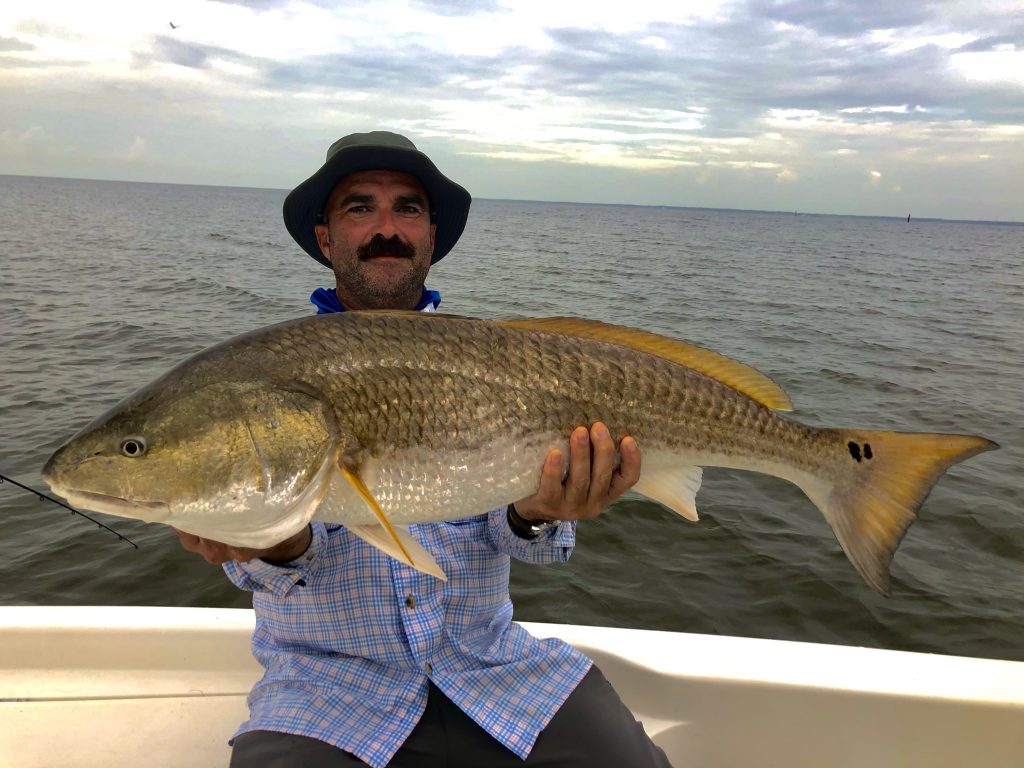
One common mistake he sees with newcomers to bull red fishing is setting the hook too early, especially with live bait. “With live bait, the trick is to feel the fish bite and let it get tight before setting the hook. Bull reds have thick mouths, so once they’re hooked, you’ll need to set the hook firmly to ensure it penetrates properly.”
Another tip is to fight bull reds “down and dirty,” using a lower rod angle to keep the fish from getting too much leverage. Capt. Shane explains, “Raising the rod high only makes the fish pull harder. Keeping the rod low gives you more control and prevents the fish from charging off uncontrollably.”
Tackle and Gear for Bull Redfish
When it comes to gear, Capt. Shane recommends high-quality, durable setups. For artificial lures, he likes a reel in the 5000 series with around 20 pounds of drag. He finds this size strikes a balance between power and maneuverability. “You want a reel with enough line capacity because these fish will make long, hard runs.”
For leaders, he prefers a 40-pound test, which is sturdy enough to handle abrasion without becoming overly thick or cumbersome. Using fresh, sharp hooks is essential; he replaces them frequently to ensure a reliable hookset every time. High-quality tackle makes a significant difference when battling fish that are strong and stubborn, so he suggests investing in gear that can withstand repeated encounters with these powerful fish.
Locating Bull Redfish and Ideal Fishing Spots
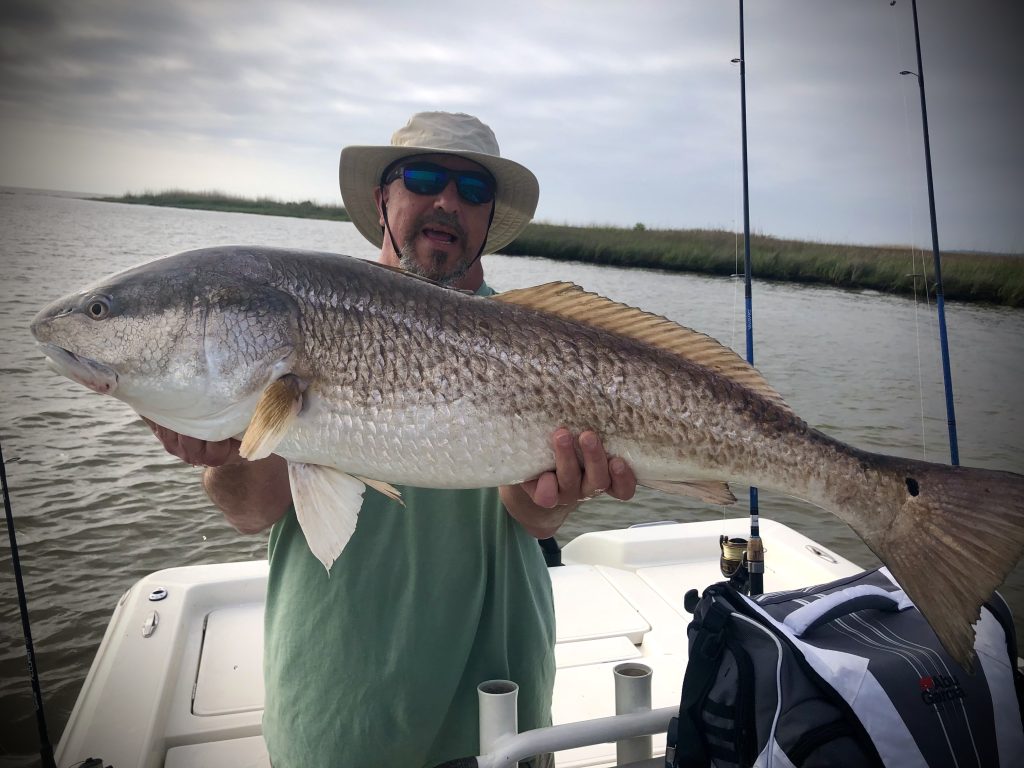
For anglers looking to target bull reds, Shane advises finding areas with “big water” – spots with strong currents, depth, and plenty of baitfish. These fish are often found near large tidal flows or in the deep waters of river deltas, especially during the fall and winter months. Traditional fishing hotspots include the Dixey Bar, Dauphin Island, and nearby barrier islands. However, he cautions that these areas can become rough quickly, so anglers should exercise caution.
Environmental Awareness and Conservation
As a proponent of conservation, Capt. Shane releases the vast majority of his bull redfish catches, particularly larger fish that have had more time to reproduce and contribute to the population. He points out that many bull reds can live up to 40 years, producing millions of eggs over their lifetime. By practicing catch-and-release, anglers can help sustain the bull redfish population for future generations.
Wrapping Up: Final Thoughts and Memorable Catches
In closing, Capt. Shane advises newcomers to focus on patience and persistence. Bull reds are challenging but immensely rewarding to catch. He reminisces about memorable catches and insists there’s nothing quite like the feeling of hooking a bull red. “These fish are tough, relentless, and full of personality. Whether you’re using live bait or artificial lures, there’s no thrill like it. And when they’re fired up, they get almost reckless, which makes the battle all the more exciting.”
For those interested in targeting bull redfish, the key is to stay adaptable and enjoy the thrill of the chase. From selecting the right gear to understanding fish behavior and respecting conservation principles, there’s a lot to learn, but each trip out provides valuable experience—and a chance to make memories with these powerful fish.