

A good clover plot is one of those things that feels easy only after it is already working. Getting there takes soil tests, lime, seed, rain, timing, and enough patience to let the stand develop. Once it is established, that plot can become one of the most useful pieces of a hunting property, feeding deer through spring, helping bridge the gap between fall and summer plantings, and giving turkeys and other wildlife a green place to use when other food sources are changing.
That is why weed control in clover and other legume plots can make landowners nervous. On one hand, no one wants to watch dog fennel, ragweed, ironweed, or other weeds take over a plot that was supposed to be producing forage. On the other hand, spraying the wrong herbicide can wipe out the very plants the landowner was trying to protect. That is especially true when hunters start talking about 2,4-D and 2,4-DB (Butyrac 200), because the names sound almost the same, but the way they fit into a wildlife food plot can be very different.
For land managers focused on wildlife habitat, that difference matters. 2,4-D is a familiar broadleaf herbicide that many people know from lawns, pastures, rights-of-way, and other grass-based systems. It can be useful in the right setting, but a clover plot is not a grass pasture, and many of the forages hunters want to keep are broadleaf plants themselves. Clover is a broadleaf. Soybeans are broadleaf. Cowpeas are broadleaf. Jointvetch and alyce clover are broadleaves. So if a landowner reaches for a broadleaf herbicide without understanding crop safety, he may be killing the food plot along with the weeds.
Dr. David Russell, an associate Extension professor for crop, soil, and environmental science with Auburn University, said that is where food plot managers need to slow down and think about what they are actually trying to accomplish. Russell has a PhD in weed science, a master’s degree in agronomy, and a background in landscape architecture, but he also hunts and manages land himself. That gives him a practical view of food plot weed control, where the goal is not always a perfectly clean field, but a field that grows the right plants and serves wildlife well.
What Makes 2,4-DB Different?
The simplest way to think about 2,4-DB is that it gives hunters a broadleaf weed-control option in some legume plots where ordinary 2,4-D may not be appropriate. Products such as Butyrac 200 are often discussed around clover, alfalfa, soybeans, peanuts, and other legume systems because those crops can often tolerate 2,4-DB when it is used correctly and according to the label. That makes it valuable for hunters who want to clean up a clover field without killing the clover.
Russell said 2,4-DB is worth knowing because landowners do not have many good choices when they are trying to control broadleaf weeds in desirable broadleaf crops. “2,4-DB is a good one to keep in mind, just because we don’t have a lot of options to control the undesirable broadleaves in clover,” he said. He also pointed out that the same kind of challenge can show up in other legume plots, such as cowpeas or summer broadleaf forages, where the landowner wants to keep the crop but remove weeds competing with it.
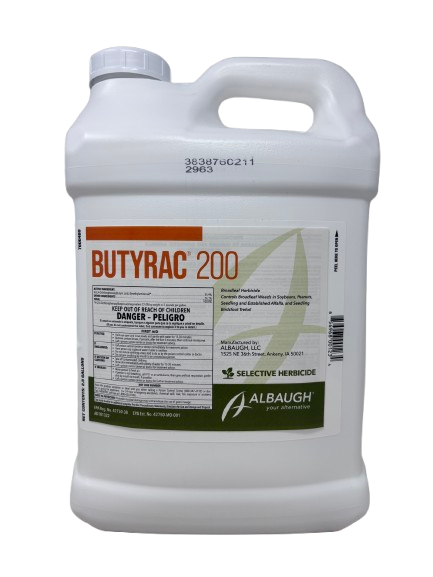
The chemistry can get complicated, but the practical point is not hard to understand. Russell explained that many desirable legumes can tolerate 2,4-DB because of how that compound behaves in the plant. “Generally speaking, those 2,4-DB labels, like Butyrac 200, are labeled for those legumes, like soybeans, clover, alfalfa, what else, peanuts,” he said. In the target weed, the compound can be converted into the active 2,4-D form that causes injury, while many labeled legumes are more tolerant when the product is applied correctly.
That is why mixing up 2,4-D and 2,4-DB can become an expensive mistake. The names are close enough to confuse people, but the use pattern is not the same. If a hunter is managing clover, jointvetch, alyce clover, cowpeas, or another legume-based plot, he needs to read the label and make sure the product is actually labeled for that forage and situation. The “B” in 2,4-DB is not a minor detail; in many food plot settings, it is the difference between protecting the forage and damaging it.
Why This Matters For Wildlife
The point of understanding this difference is not just chemical knowledge. It is about keeping more food on the property. A hunter may spend months building a clover stand only to lose it because he treats the field like a grass pasture. If the wrong herbicide injures the clover, the plot may thin out, open up to more weeds, and lose the steady forage production that made it valuable in the first place.
That is especially important because many legume plots are meant to do more than attract deer during one short season. Clover can provide high-quality forage for much of the year, depending on the region, variety, weather, and management. Cowpeas, soybeans, jointvetch, and alyce clover can provide summer forage when deer are growing antlers, does are raising fawns, and natural food can be changing fast. A herbicide decision that saves that forage may mean more food for wildlife over time.
Russell’s larger point was that wildlife plots do not always need to be perfectly clean. A weed is best understood as a plant out of place, and in wildlife habitat, some plants that look messy to a landowner may still have value for deer, turkeys, insects, or cover. “What one may see as an undesirable, somebody else may love that plant there in that particular space,” Russell said. “I don’t think our food plots need to fit a look.”
That does not mean landowners should let every weed go. It means they should decide which plants are truly hurting the plot and which ones can be tolerated. If a broadleaf weed is shading clover, competing with young legumes, or spreading through a plot without offering much value, it may need to be controlled. But if the goal is to protect legumes, the product choice matters as much as the decision to spray.
Where 2,4-D Still Fits
2,4-D is not a bad herbicide. It is a useful broadleaf weed-control tool in the right setting, especially in grass-based systems where the desirable plants are grasses and the problem plants are broadleaf weeds. That is why so many landowners are familiar with it. If the goal is to remove broadleaf weeds from a grass field, pasture, lawn, or certain non-crop areas, 2,4-D may have a place, depending on the label and the situation.
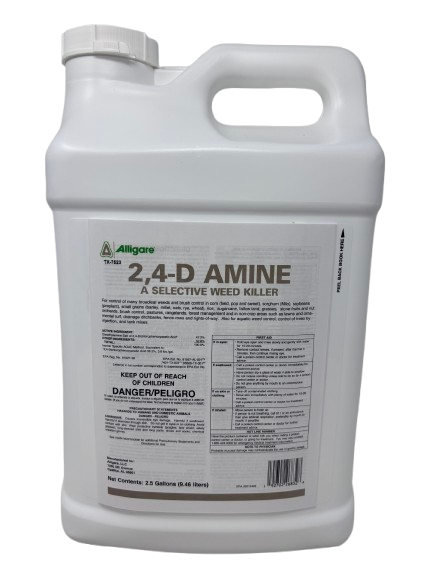
The problem comes when hunters carry that same thinking into legume food plots. A clover plot is not managed the same way as a grass field. If the desirable crop is a broadleaf plant, then a broadleaf herbicide can become dangerous unless it is specifically labeled and safe for that crop. That is where 2,4-DB becomes part of the conversation, because it may provide a way to control some broadleaf weeds while preserving certain legumes.
That said, 2,4-DB should not be treated like a magic shield for every legume plot. It still has a label. It still has crop restrictions. It still has rate requirements, timing windows, and application rules. Some legumes may be more tolerant than others, and some food plot mixes may include species that are sensitive even if the clover or beans can handle the product. In mixed plots, the most sensitive desirable plant often determines what can be sprayed.
What 2,4-DB Will Not Do
One of the easiest mistakes with 2,4-DB products such as Butyrac 200 is expecting too much from them. Because Butyrac 200 can be a valuable tool in certain legume plots, hunters may assume it is the answer for every broadleaf weed that shows up in clover. Russell was clear that this is not the case. Some broadleaf weeds are simply harder to control, especially if they are perennial, woody, or already too mature.
Dog fennel is a good example. It can become a real headache in food plots because deer generally do not make much use of it, and it can grow tall enough to shade desirable forage. Mowing may suppress it for a while, but because it comes back from a strong root system, removing the top growth does not always solve the problem. Russell said chemical control can be more effective on that kind of plant, but only when the right herbicide is used at the right growth stage.
When comparing broadleaf herbicide options, Russell said that 2,4-D or 2,4-DB may have a place, “but when you consider a big robust perennial broadleaf like dog fennel, that may not be the best choice, even if you increase the rate up to the max per application use.” For dog fennel, he said he usually thinks more in terms of triclopyr, fluroxypyr, or dicamba-type products, depending on the situation, label, and application method.
That is an important warning for hunters. If a landowner sprays Butyrac 200 on large dog fennel and only sees the tops curl, that does not necessarily mean the product almost worked. It may mean the wrong product was used for that weed, or the weed was treated too late. With tough perennial weeds, the goal is not just to injure leaves; the herbicide needs to move through the plant and affect the root system.
Where to Find the Right Herbicide
Once a landowner knows that 2,4-DB is the right product for the job, the next challenge may be finding it. Local co-ops and feed stores may carry some common herbicides, but hunters looking for Butyrac 200 or similar selective products may not always find them in the right size or at the right time, especially if they only need enough to manage a few wildlife plots.
That is where a supplier like Chemical Warehouse can be useful. For landowners looking for Butyrac products, adjuvants, dyes, surfactants, or other food plot herbicide supplies, ordering online can save time compared to driving from store to store. The convenience is helpful, but it should come after the plan is made. The right process is still to identify the weed, confirm the forage you are trying to protect, read the label, and then buy the product that fits the job.
That is especially important with products whose names sound similar. A hunter looking for 2,4-DB should make sure he is actually buying 2,4-DB, not 2,4-D. The difference is more than one letter. In a legume plot, it may be the difference between protecting forage and losing it.
Use Extension Before You Guess
Russell encouraged landowners to use Extension resources before guessing at plant identification or herbicide selection. Every state has an Extension system tied to a land-grant university, and many county or regional agents can help landowners identify weeds, understand herbicide options, calibrate sprayers, and think through timing and crop safety. In Alabama, that means landowners can work through Alabama Extension and Auburn University resources, but the same kind of help exists through land-grant systems in other states.
“We have trained professionals,” Russell said. “That’s what we do, is to help walk you through learning what this plant is.” That help can be worth a lot when the decision involves keeping clover alive while controlling broadleaf weeds. A few photos, a conversation about what was planted, and a quick label check may prevent a mistake that costs an entire plot.
That is also a good reminder that herbicide decisions should not happen in a panic. If a weed shows up, identify it. If the plot is mixed, figure out what species need to be protected. If the label is confusing, ask someone who reads these labels for a living. Food plot management does not have to be a chemistry class, but it does reward a careful approach.
More Food Comes From Better Decisions
The difference between 2,4-D and 2,4-DB may seem like a small detail until the sprayer crosses a clover plot. Then it becomes one of those details that can decide whether a field keeps feeding wildlife or gets set back for the season. For hunters managing legumes, that difference is worth understanding before weeds become a problem.
2,4-D still has a place in land management, especially where the desirable plants are grasses and the goal is broadleaf weed control. But in clover, jointvetch, alyce clover, soybeans, cowpeas, and other legume-based wildlife plantings, 2,4-DB products such as Butyrac 200 may offer a more useful option when the label fits the crop and the weed. They can help landowners protect the forage already growing instead of wiping the slate clean every time the field gets messy.
That is the real value for wildlife. More food does not always come from planting more seed. Sometimes it comes from keeping the good stand you already have, controlling the weeds that are actually in the way, and choosing a herbicide that works with the plot instead of against it.