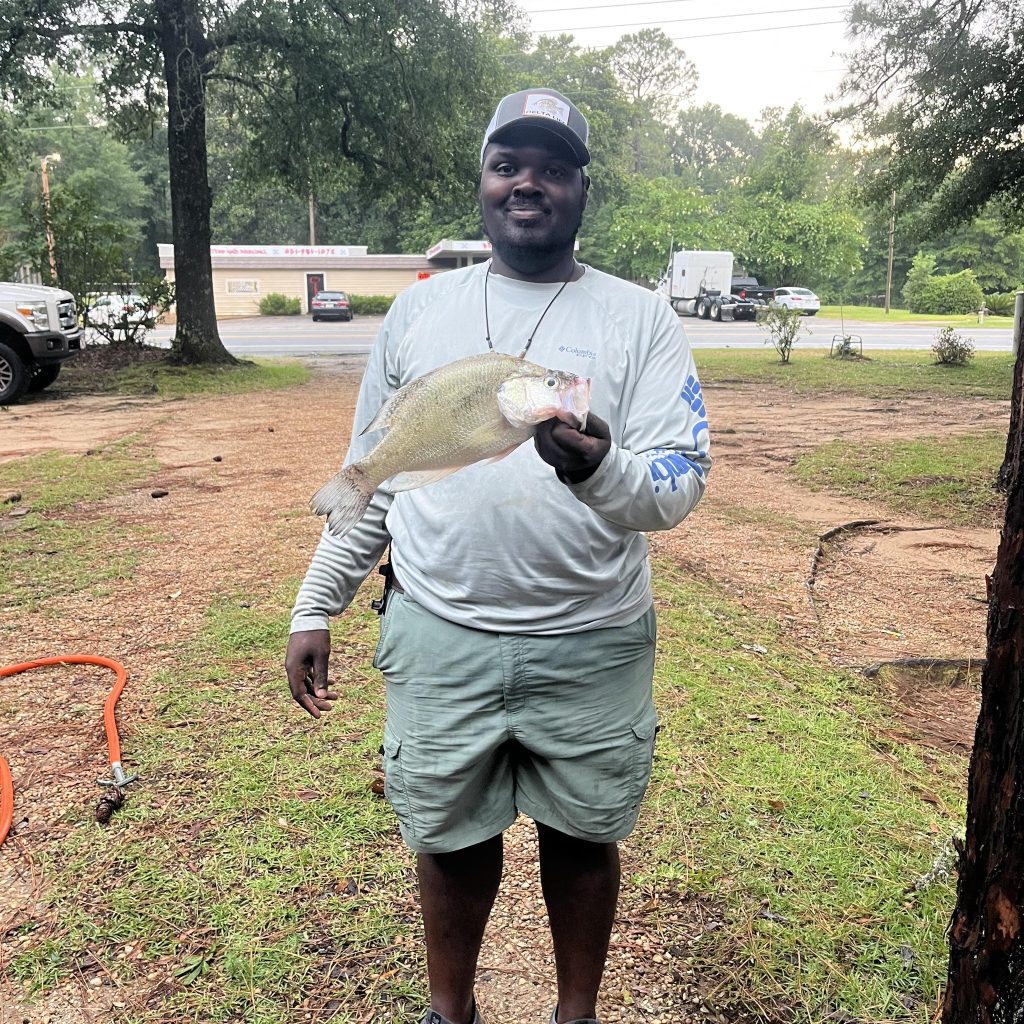
Forward-facing sonar has fundamentally changed crappie fishing and helped anglers catch more crappie, but owning the technology and knowing how to use it are two very different things.
For South Alabama crappie angler Dip McMillan, forward-facing sonar is not simply a way to spot fish before dropping a jig on them; it is one part of a larger system that helps him find crappie, judge their size and attitude, position the boat correctly, and decide which fish are actually worth spending time on. A lifelong outdoorsman, McMillan is a serious tournament angler who regularly competes on the South Alabama tourney trails. Away from competition, he gives back through Dippie Outdoors, organizing youth fishing tournaments and other events designed to introduce kids to hunting and fishing.
His approach to forward-facing sonar is especially useful because he does not treat it as a magic fish-finding screen. Instead, he combines it with side scan, good boat control, careful observation, and a presentation designed to stay visible on the screen…all working together to help him catch more crappie.
Start With Side Scan
One of the most important parts of McMillan’s system happens before he ever points his forward-facing sonar at a fish: he starts with side scan. “I try to find them on the side scan before I put the LiveScope down,” McMillan said while describing a winter crappie trip. That distinction matters. Rather than creeping down a bank or through a creek while trying to locate individual crappie with forward-facing sonar, McMillan uses side scan to cover water and identify places worth investigating.
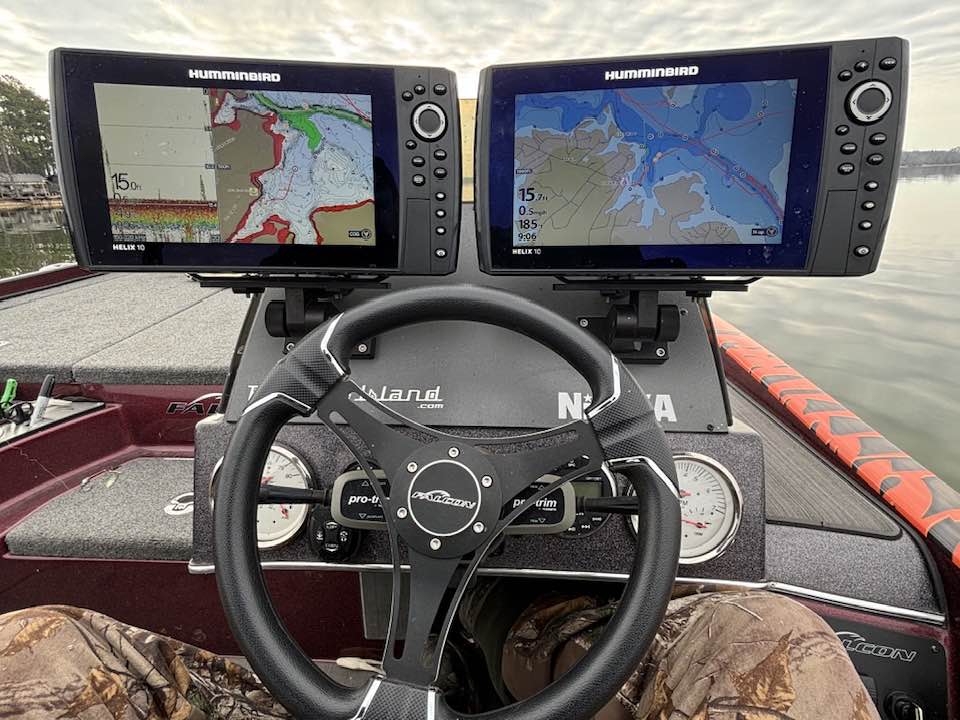
On another trip, he described how strongly he relies on it: “As soon as I start my boat; just as soon as I turn the key, that side scan is coming on,” McMillan said. “And it’s staying on all day long. That side scan is my best friend.” Cruising the local rivers and oxbow lakes, he can inspect the bank, see the available cover, identify groups of fish on that structure, and decide which areas deserve a closer look before forward-facing sonar ever takes over. That ability to quickly eliminate unproductive water is a big part of how he is able to catch more crappie.
“I locate mine with the Lowrance first,” McMillan said. “I look at that bank and I say, ‘Hey man, that’s a lot of structure on that bank. It got some fish on it. Or maybe there’s no fish on structure, but there’s a lot of shad in the water column and you can see the crappie down under them.’” Only once he’s eliminated unproductive water at-speed and keyed in on fertile hunting grounds does he turn the boat around and approach them with forward-facing sonar. “Once you find them and put the LiveScope in the water…after that, it’s money in the bank,” he said.
Learn to Read the Fish, Not Just Find Them
Finding a crappie on forward-facing sonar is only the beginning. McMillan uses the technology to learn considerably more about the fish in front of him than was possible in the past, looking at where they are positioned in the water column, how large they appear, whether they are moving, and how they react when a jig enters their space. Learning to read those details can help an angler catch more crappie instead of simply locating them.
During one recent trip, McMillan found crappie suspended in roughly 12 to 18 feet of water. He noticed that the fish hugging the bottom tended to be smaller, while many of the better crappie were suspended higher in the water column.

“If the fish was hugging the bottom, 9 out of 10 times that fish was probably going to be a 9, maybe 10-inch fish,” McMillan said. “But if that fish was higher in the water column … that was a big fish. And that’s what you want is those big fish, especially if you’re trying to weigh a bag.”
The sonar also revealed which fish were actively feeding, as McMillan could watch crappie move toward the lure and attack it. “You can see them on the LiveScope come hit that bait like a flash,” he said. As an angler becomes more comfortable with the screen, McMillan said it is even possible to start judging individual fish before making a cast: “You can identify the small fish from the big fish real quick once you’ve seen a lot of them. I’ve looked at fish before that were coming to a jig and pulled it away from him, because I knew he wasn’t going to make size. It wasn’t worth taking the time to fool with him” That ability changes how an angler spends his time, allowing him to select better targets rather than simply fishing every return.
But size is only part of the equation. Forward-facing sonar can also reveal whether those fish actually want to eat. On another outing, McMillan found an area holding plenty of fish and large numbers of shad. The crappie were there, but they were not particularly interested in feeding; they remained relatively still and showed little enthusiasm when a jig was placed in front of them, prompting McMillan to move.
At the next location, the screen immediately looked different. The fish were moving up and down through the water column and actively feeding. “If a fish like that is in a group, and they are moving and very active, when you throw that jig in there, they’re going to hit it,” McMillan said. His conclusion was simple: “Don’t waste your time on fish like that,” he said of the inactive crappie. “Find the ones that are moving around looking for food. Feed that fish, not the lazy one.”
That may be one of the greatest advantages forward-facing sonar gives a crappie angler and one of the best ways it can help you catch more crappie. In the past, finding fish but failing to catch them might lead to an hour of changing jig colors, adjusting depths, swapping baits, or assuming the presentation was wrong. Now, an angler can often watch the fish make the decision. If crappie repeatedly look at a jig and drift away, McMillan is willing to leave them and search for fish displaying a more aggressive attitude. The goal is no longer simply to find crappie, it’s to find crappie that are ready to “play ball.”
Boat Positioning Is the Key
Once the fish have been located, one of the hardest parts begins. “Boat positioning is the key,” Dip said.
Forward-facing sonar only shows what is inside the transducer beam. An angler can be surrounded by crappie, but if the transducer, boat, and cast are not aligned correctly, the jig may never appear on the screen. McMillan said the first step is understanding exactly where the transducer is pointing.
“Wherever your LiveScope is facing, you gotta be able to find that jig out in front of it,” he said.
Once an angler repeatedly sees the bait enter the beam, he begins developing a feel for where he needs to cast.

“That’ll let you know what angle you need to throw in for you to be able to see that jig every time,” McMillan said.
The level of boat control necessary to effectively use FFS, especially when hunting scattered, suspended crappie, is high. Anybody who says FFS doesn’t take skill to use simply hasn’t tried to keep their “sights” on a moving fish as wind and current move the boat…all while trying to make a cast.
I have had the pleasure of fishing with Dip, and watching him maneuver inspires the same feelings of admiration I get watching a good wingshooter on a dove field or a good retriever on a hot pond. McMillan has to keep the boat positioned relative to the fish while simultaneously keeping the sonar beam pointed toward them. When wind pushes the boat, that job becomes considerably harder.
This is also where the way you mount your forward-facing sonar transducer can make a major difference. Mounting the transducer directly to the trolling motor is an inexpensive and simple solution, but it ties two jobs together that do not always need to be connected. Every time you turn the trolling motor to correct the boat’s position, you also turn your sonar beam.
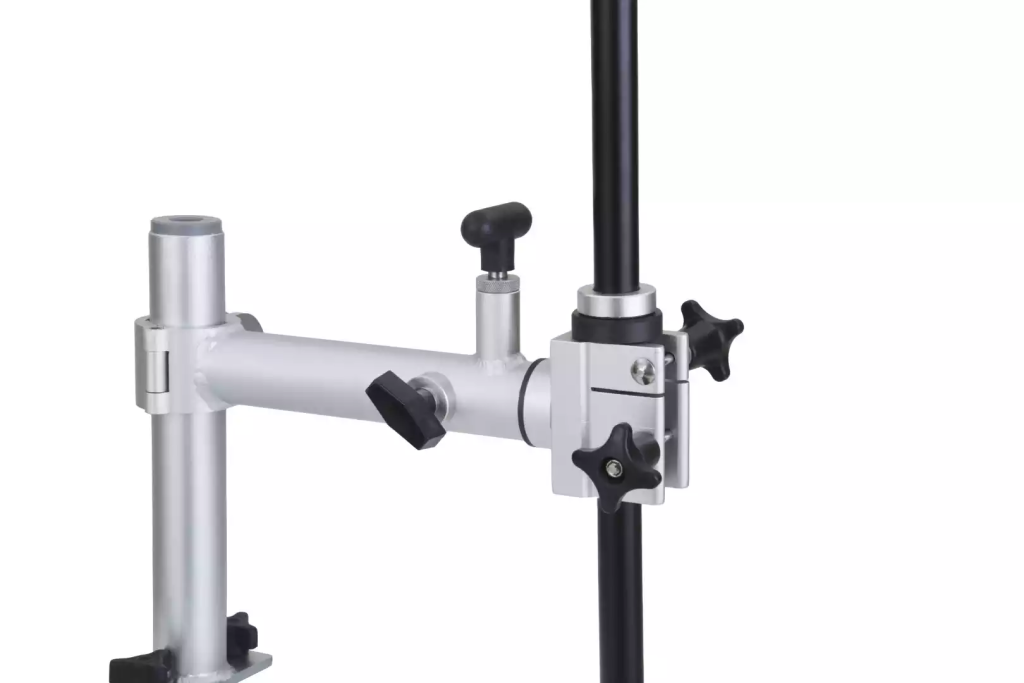
A dedicated transducer pole separates those two jobs. The Millennium Marine Breakaway Transducer Pole allows an angler to aim the FFS transducer independently of the trolling motor. Its adjustable handle makes it easy to reposition the transducer, and the pole locks every 90 degrees in either direction. It also incorporates an adjustable breakaway system designed to help protect the transducer if the pole strikes an obstruction.
That independence becomes especially valuable when conditions deteriorate. If the wind suddenly starts pushing the bow to port, for example, you may need to point the trolling motor to starboard to hold the boat in place. With the transducer mounted to the trolling motor, your sonar beam moves with it, potentially taking your “sights” off the crappie you were tracking. With a separate transducer pole, the trolling motor can handle boat control while the sonar remains pointed at the fish.
That may sound like a small distinction until you try to simultaneously steer the boat, track a moving crappie, keep your jig inside a relatively narrow sonar beam, and make an accurate cast. Separating boat control from sonar control removes one variable from an already demanding process and can help anglers catch more crappie by keeping them locked onto the fish longer.
Seeing a fish on the screen creates an immediate urge to throw at it, but McMillan’s approach is more deliberate: first control the boat, then point the transducer, then find the correct casting angle, and only then make the presentation.
For anglers struggling to consistently see their jig on forward-facing sonar, it may therefore be worth spending less time adjusting sonar settings and more time practicing boat control—and considering whether their transducer mounting system is making that job easier or harder. The screen can only show you what the transducer is pointed at.
Make the Jig Easy to See
Once the fish and boat are positioned correctly, McMillan wants to see one more thing clearly on the screen: his jig. That led him to begin using tungsten specifically for forward-facing sonar. “I switched to tungsten jig heads just for the LiveScope purpose,” McMillan said. He had previously been told that tungsten would produce a clearer return on the sonar screen, and after trying it himself, he became convinced: “You can see split shot on LiveScope too, but that tungsten…it’s just very clear,” he said.
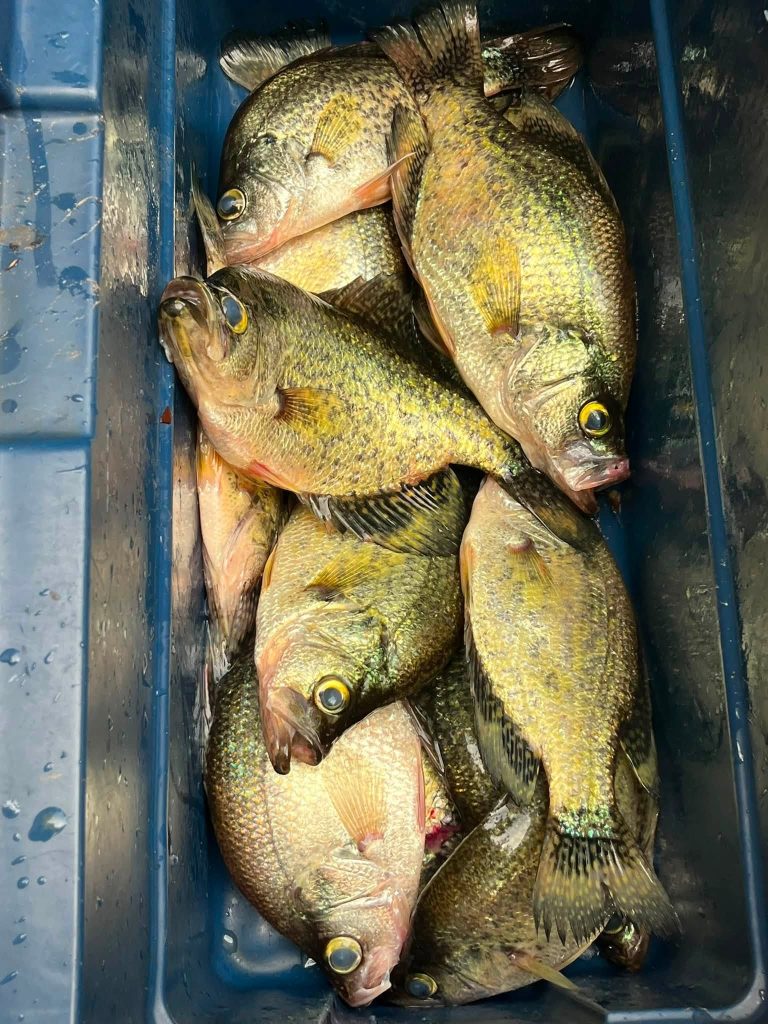
The ability to clearly see the weight and jig closes the loop between the angler and the fish and can help anglers catch more crappie. McMillan can see the crappie, he can see his presentation, and he can watch the space between them disappear. Without that clear visual reference, an angler may know that a fish is 20 feet ahead of the boat but have little idea whether the jig is six inches from its nose or several feet away. A more visible presentation allows the angler to make tiny corrections and watch how the fish responds.
Forward-Facing Sonar Is a Decision-Making Tool
It is easy to think of forward-facing sonar primarily as a way to locate fish, but McMillan’s system shows that its greater value may come after the fish have already been found. Side scan covers water and finds promising targets. Forward-facing sonar then helps determine what kind of fish are present, where they are holding, whether they are active, and how they respond to a bait—all of which can help anglers catch more crappie.
From there, the angler still has work to do. The boat has to be positioned correctly, the transducer has to be pointed in the right direction, the jig has to enter the sonar beam, and the presentation has to reach the fish at the correct angle and depth. And sometimes, even when everything is perfect, the best decision is to leave.