
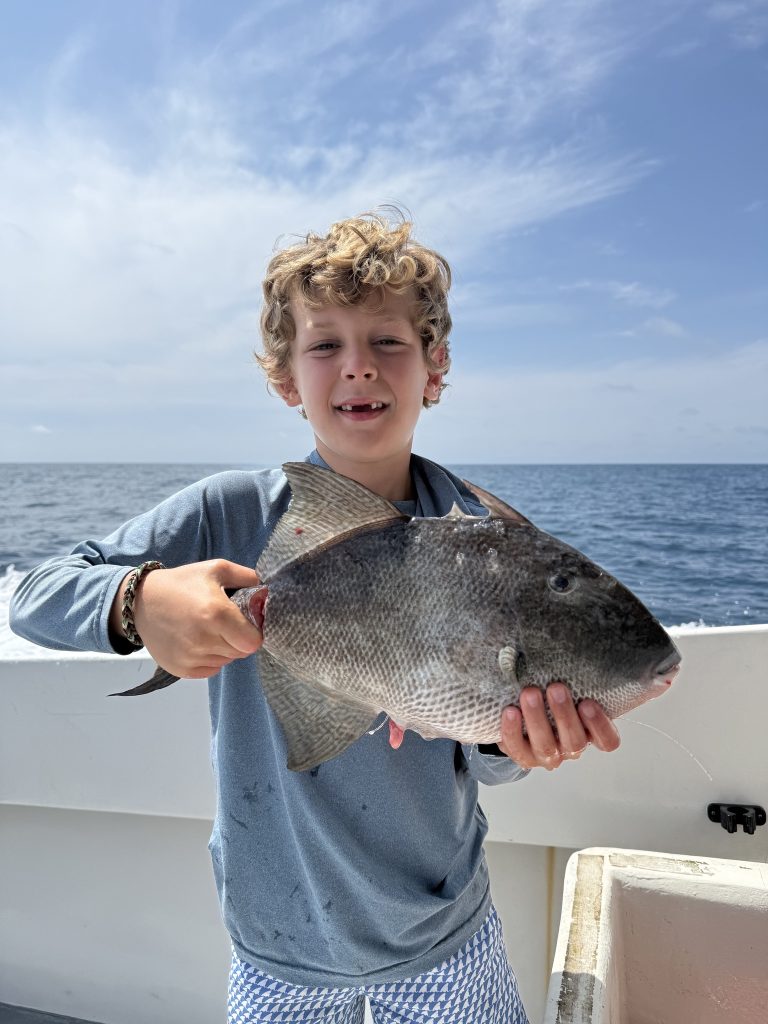
Most people approach catching triggerfish the same way they were taught to fish for everything else on a piece of bottom. Drop straight down, keep your bait near the structure, wait for the peck-peck-peck, and hope you connect before the bait thief wins.
That works often enough to become accepted wisdom. It is also one of the reasons a lot of anglers catch plenty of short triggerfish and fewer of the better ones they actually want to bring home.
Captain Harris Scruggs of Triple B Fishing Charters has spent enough time on nearshore structure off Panama City to know there is another way to target them, and it runs against what many bottom fishermen assume. Instead of keeping the bait pinned to the bottom, he often catches his better triggerfish on flatlines fished well up in the water column.
“We catch a lot of them on the flat line knocker rig,” Scruggs said. “That bait floating up higher.”
That is the kind of detail that can change how you fish a whole trip.
The Mistake Most Triggerfish Anglers Make
Triggerfish get grouped mentally with true bottom huggers because they are usually caught over reefs, wrecks, and hard structure. That leads a lot of anglers to fish for them like small grouper or snapper, dropping chicken rigs to the bottom and never moving the bait far off it.

But Harris pointed to something plenty of anglers have seen on their electronics without fully taking advantage of it: triggerfish often show high in the water column over the structure. That matters because the fish you are marking are not always the fish eating your bait when it is parked on the bottom. When you keep feeding the bottom, you give red snapper, red grouper, and every other reef fish first crack at the offering. Raise the bait, and now you are presenting it where those suspended triggerfish, usually larger specimens, are already comfortable.
How to Fish a Flatline for Triggerfish
The rig is not complicated, which is part of what makes this tactic so easy to add to an existing spread.
At its simplest, this is a knocker rig or light flatline presentation. Think egg sinker above the hook, free sliding down to the eye, or even one of the pre-weighted circle hook jigs like those from Bird of Prey Fishing tackle. “In that depth, we fish anything from an ounce to two or three ounces, depending on the current,” Scruggs said. Making that choice depends on current, depth, and whether they want to keep the bait higher or let it work deeper. The bigger point is not the exact sinker size. The bigger point is placement.
If Harris is fishing inside of 12 miles in roughly 80 to 90 feet of water, he is not talking about suspending the bait 10 feet under the boat. He is talking about putting it roughly 30 to 50 feet down, well above the bottom and often a little above halfway in the water column.
That is a very different triggerfish presentation than most anglers are used to.
Why It Works on Bigger Triggerfish
One reason this tactic seems to favor quality fish is bait size.
A lot of triggerfish anglers are conditioned to go small because triggerfish have a reputation for picking at little pieces of squid or nibbling a bait to death. Harris does not deny that smaller fish do exactly that. His answer is to go bigger anyway when he knows triggerfish are around and he wants keepers.
“Especially when we’re talking about that 18 to 24 inch trigger fish, I mean, that dude’s got a giant mouth,” Scruggs said. “We’ve caught them on 12/0, 13/0, 14/0 hooks, jack fishing on live hardtails.”
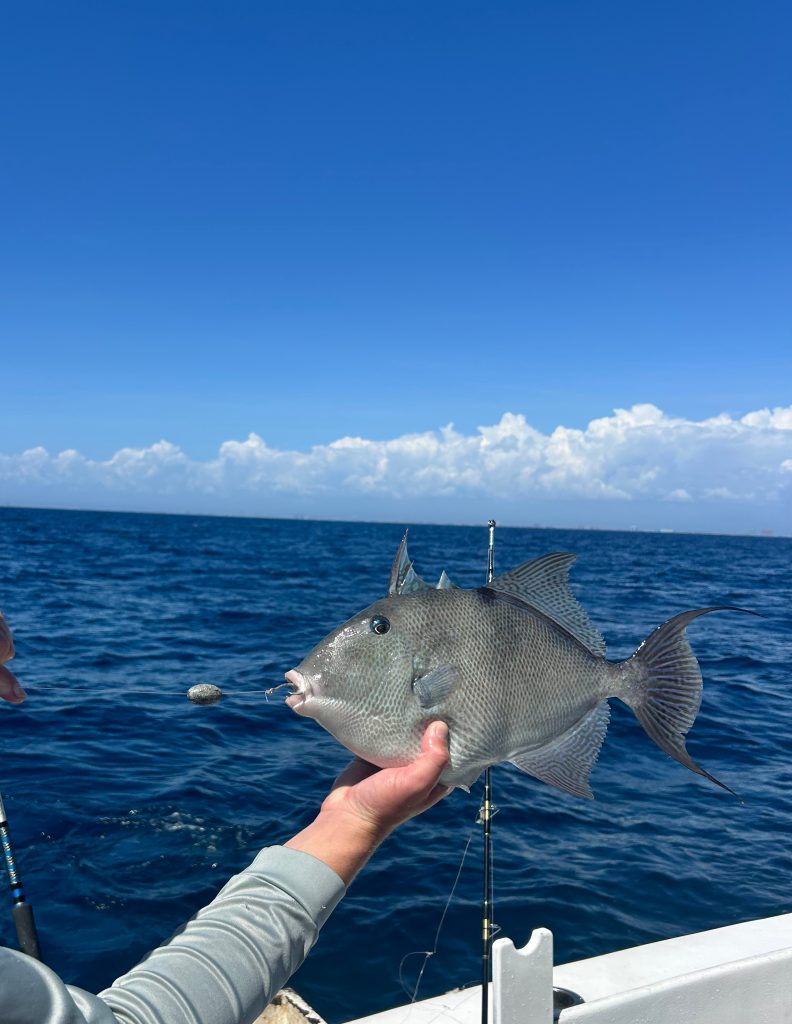
He likes bigger bonita strips, large squid strips, and even whole cigar minnows on light line and a light wire hook.
That is one of the most useful mindset changes in this whole tactic. Yes, triggerfish can peck a bait apart. But better fish are not dainty. They can inhale a substantial offering, and the bigger bait helps sort through the smaller fish. Harris described it exactly the way most reef fishermen would picture it: the little ones rise up and start pecking, then the big fish moves in and takes over.
“If you get eaten up, just keep putting it back out,” he said. “Hopefully that big strip bait is going to attract that bigger trigger fish.”
Line, Hooks, and Rigging
This is not ultralight fishing. It is simply lighter than what many anglers default to around reef fish. Scruggs said 30- to 40-pound line is his standard range for this kind of triggerfish work, and while he noted you can drop to 20-pound and get bites, you are taking more chances. You need enough finesse to let the bait move naturally and enough strength to deal with the occasional bycatch. Because make no mistake, when you fish this way around bottom structure, triggerfish are not the only thing likely to eat.
Harris pointed out that when you take the same bigger bait closer to the bottom, your odds go up for red grouper and red snapper. Raise that bait in the water column, and you can stay more focused on triggerfish. As for rigging strips, he keeps it clean and simple.
“We just hook it on one end, if it’s a strip bait,” Scruggs said. That is worth paying attention to. He is not bunching the bait into a wad. He wants it streamlined so it tracks cleanly when the boat is bumping in and out of gear and the current is pushing on the line. A hydrodynamic bait spins less, fishes more naturally, and is easier for a suspended fish to track down.
When To Choose The Flatline Over The Bottom Rig
This is not an either-or decision when it comes to catching triggerfish. It is another tool. If your goal is to put a bait right in front of red grouper or scamp, you still need something working near the bottom. He said grouper baits need to stay within about five or six feet of the bottom, and they catch those fish both on heavier knocker rigs and on standard multi-hook bottom rigs while doing everything else.
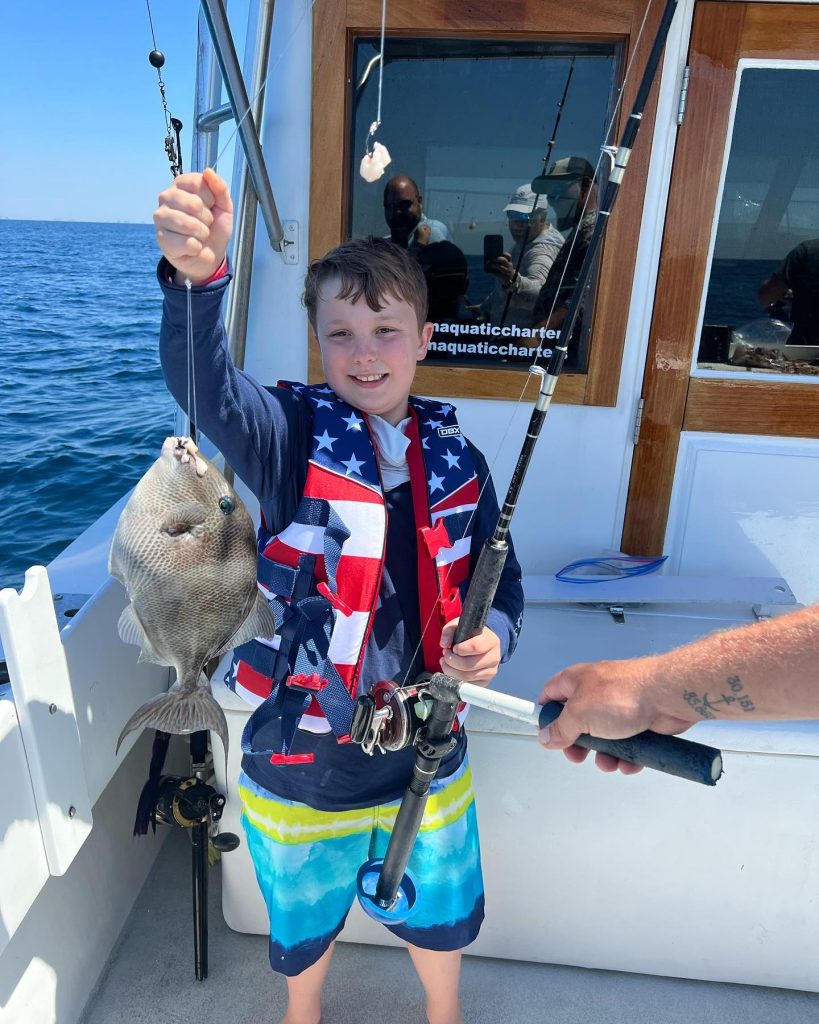
But if your specific goal is keeper triggerfish, especially better-class fish, the flatline gives you a different lane. It gets the bait above some of the competition. It lets you show a larger bait to fish that are already suspended. And it matches what your electronics are often telling you, even if your habits tell you to keep dropping all the way down.
A Good Nearshore Tactic For Six-Hour Trips
Another reason this tactic matters is how well it fits the kind of nearshore trip many anglers actually take in spring when offshore fishing weather windows are shorter. Historically, Scruggs said the fishing close in has been especially strong during that window, with six-hour trips offering a real shot at triggerfish, vermilion snapper, and even red grouper and scamp. That is important because many family and vacation trips are not all-day offshore runs. They are half-day or six-hour trips looking for a practical shot at quality fish without needing perfect long-range conditions.
The flatline triggerfish pattern fits that format well. It is efficient, easy to fish, and adaptable. You can keep one or two baits higher in the water column while other anglers fish deeper. On trips with mixed experience levels, it also gives you another productive option on lighter spinning tackle instead of handing everyone the same straight-down setup.
The Bigger Lesson
The smartest part of this whole approach is not really the knocker rig, or the sinker size, or whether you use squid or bonita. It is the willingness to stop fishing for triggerfish where anglers assume they live and start fishing for them where they are showing themselves.
That is often the difference between repeating what everybody does and consistently finding a better bite. So the next time you are over good bottom and marking triggerfish high, do not automatically send every bait to the bottom. For catching triggerfish more consistently, put one in their face up high, fish it on lighter line, give them a bigger meal than most people think they can handle, and then wait for the rod to load.
As Harris put it, “We catch a lot of the nicer ones” that way.