

After 17 years away from public land hunting, Mark Olis of Moultrie Mobile returned with curiosity, strategy, and a little help from his squirrel dog, Dixie. What began as a low-pressure scouting mission turned into a season of lessons and surprises using cellular trail cameras—culminating in the harvest of the largest buck of his Alabama hunting career.
Mark’s absence from public land wasn’t a break from hunting. Life had simply shifted. Raising kids and juggling their busy schedules left little time for the outdoors. “It’s just the season of life,” Mark reflected.
Last year, he began training Dixie on local public land. That’s when he noticed fresh deer sign—rubs, scrapes, and trails—and his interest reignited.
“I thought, it’d be nice to have a local spot to scout, put in time, and maybe find a good buck,” he said. But after 17 years, he had to relearn the area, starting from scratch with no expectations.
Scouting Smarter with Cellular Trail Cameras
Mark launched his plan in June with one goal: learn the land. He spent weeks driving roads and trails, studying the terrain. He placed cellular trail cameras in strategic spots—not necessarily where he saw sign but where the land funneled deer movement.
“It wasn’t just about deer sign,” Mark explained. “I was watching for human activity too. If a spot had too many people, I’d pull my camera and move on.”
Water sources, pinch points, and steep drainages became his focus during the summer. Mark ran his cameras on video mode, gathering intel on how deer used the land.
In July, a massive buck appeared on one of his cameras. “That’s when I really started focusing on his zone,” Mark said. He set up a grid of cameras to map the buck’s range, eliminating unproductive areas and refining his strategy.
The Rut
By December, the rut was in full swing, and Mark’s cameras were capturing daylight activity from mature bucks. On Christmas Eve, Mark and Dixie set out on a three-mile scouting trip through thickets, drainages, and cutovers. Fresh scrapes and aggressive rubs confirmed what his cameras had been showing: it was time to act.
The next morning, Mark returned to the woods. He started in one spot but adjusted mid-morning to a drainage area where four ridges converged—prime cruising territory for bucks.
The Hunt of a Lifetime
As Mark worked through the drainage, a doe jumped up just 20 yards ahead, followed closely by a massive buck. “It was like slow motion,” he recalled. The buck, locked on the doe, didn’t notice Mark.
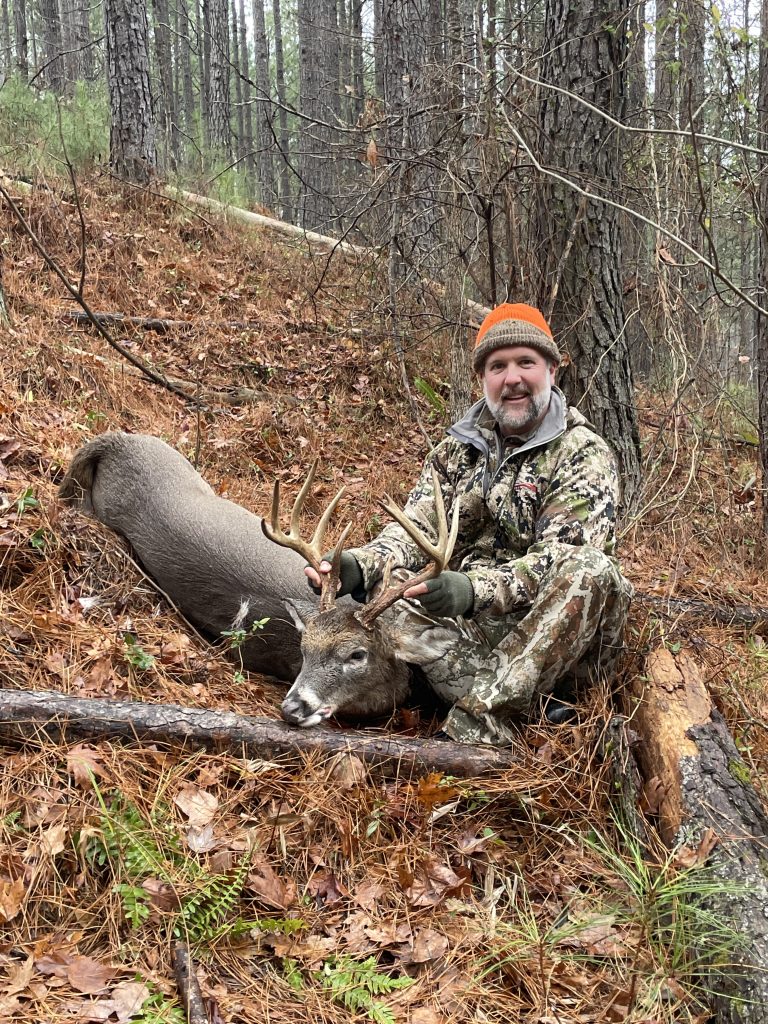
With the deer moving fast through steep, thick terrain, Mark found a small opening, steadied his rifle, and fired just before the buck crested the ridge. The buck dropped instantly.
“I couldn’t believe it,” Mark said. “My knees were shaking, and I could barely breathe. It all happened so fast.”
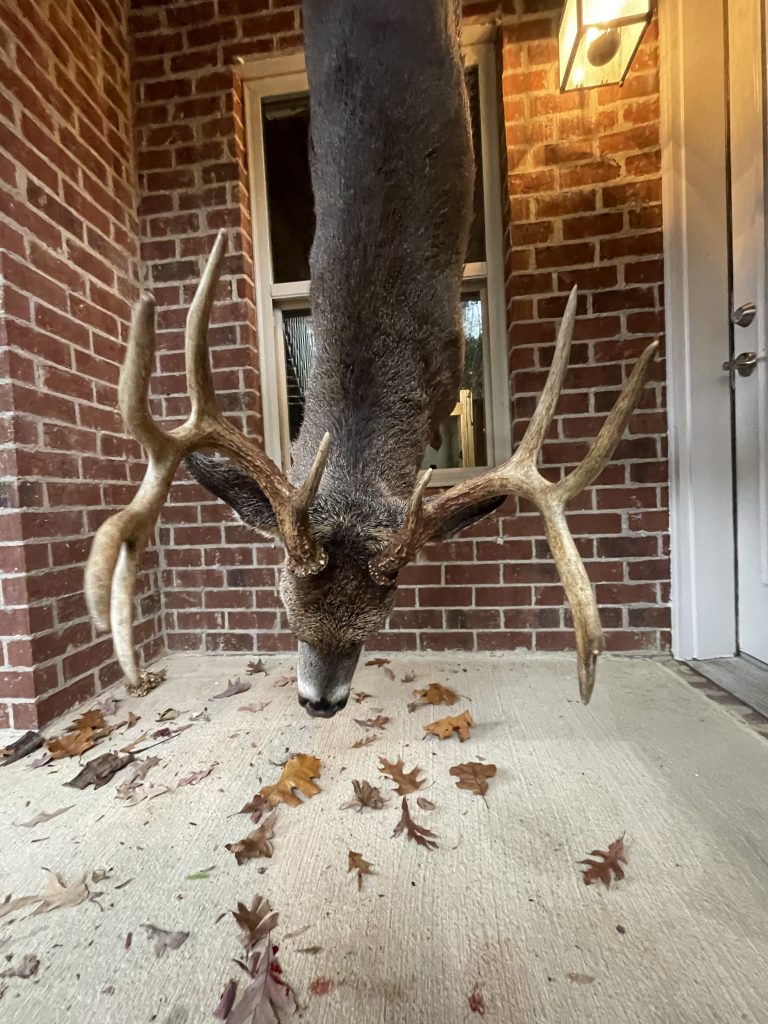
When he reached the buck, emotion hit him. It was a stunning 10-point with tall, symmetrical tines—the kind of deer most hunters dream of.
Lessons for the Future
Mark’s success wasn’t luck. It was the result of careful planning, patience, a commitment to learning the land, and the strategic use of trail cameras. Trail cameras have revolutionized modern hunting, offering hunters unparalleled insight into deer movement and behavior. Thanks to new technology being pioneered by Moultrie Mobile, these incredibly effective tools are now able to provide more information to hunters than ever before, making it possible to figure out bucks in record time.
Moultrie Game Plan: The Power of AI and Predictive Models
Trail cameras have long been used to monitor deer movement, but Moultrie Mobile’s advanced AI and predictive models take this process to an entirely new level. These tools don’t just collect data—they help hunters interpret it, transforming raw information into actionable insights that save time and increase success in the field.
How the Predictive Model Works
Moultrie’s Game Plan system is built on a foundation of machine learning and real-world data. Unlike generic predictive tools, this model incorporates several layers of localized inputs:
The Game Plan system leverages a variety of data sources to create highly accurate predictions tailored to your hunting area. It starts with real-time data from Moultrie Mobile trail cameras, not only pulling information from your own cameras but also from anonymous Moultrie cameras nearby. This ensures the predictions are grounded in the actual behavior of local deer, rather than generalized assumptions or theories.
Historical trends also play a significant role in the model. By incorporating movement data from past seasons, the system provides hunters with a long-term view of deer activity in the region. This helps identify patterns such as seasonal movement, rut activity, and frequently used travel routes, giving hunters a deeper understanding of how deer utilize their environment over time.
Weather inputs are another critical factor. Deer movement is heavily influenced by conditions like temperature changes, wind direction, and barometric pressure. The Game Plan system takes all of these into account, recognizing, for example, that a significant temperature drop often triggers increased daytime activity—a crucial insight for hunters deciding when to head into the field.
Perhaps the most impressive aspect of the Game Plan system is its dynamic nature. Unlike static tools, this predictive model continuously updates based on new data. Hunters receive insights that reflect current conditions, ensuring the information stays relevant and actionable, no matter how quickly the conditions change.
Strategic Trail Camera Placement: The Key to Success
The new Moultrie Mobile cameras are impressive, but where you set up your trail cameras matters as much as the cameras themselves. Simply throwing one up on a random tree isn’t going to help you pattern deer effectively. Mark stresses the importance of putting thought into placement, especially when targeting mature bucks, which require a more strategic approach than general inventorying.
Food plots and feeders are natural places to start. They’re reliable hubs of activity, making it easier to identify which bucks are on your property and gauge their maturity. But when the goal is to hone in on specific deer and their habits, you’ll need to move those cameras into areas where bucks travel and spend time during daylight hours.
For Mark, that means focusing on features like rub lines, scrapes, and natural funnels created by terrain. In the hilly terrain of East Central Alabama, where he hunts, bucks use benches, creek bottoms, and ridge lines as travel corridors. Placing cameras along these features has helped him zero in on where and when deer are moving.
“I put three cameras along a quarter-mile rub line,” Mark said, “and it told me a lot more than a single camera ever could. I learned where the deer were coming off the ridge and heading to bed. That’s the kind of detail you need to set up in the right spot.”
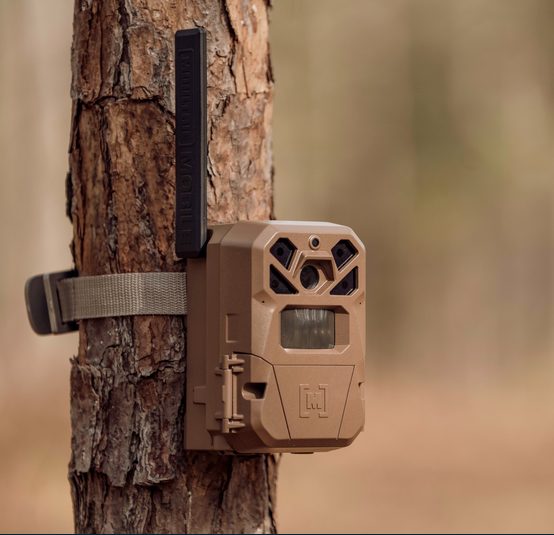
Access is another critical piece of the puzzle. It’s not just about where you place your cellular trail cameras, but how you get to them. Mark often uses creek beds to check his cameras, especially in the morning. The moving water and low thermals help carry his scent away, minimizing the risk of disturbing nearby deer.
One of Mark’s top tips is clustering cameras in high-potential spots. “Instead of spreading cameras across the property, I’ll put multiple cameras on one rub line or bedding area. That gives me a much clearer picture of how the deer are using the area. It’s the difference between guessing and knowing,” he explained.
Strategic camera placement isn’t a one-size-fits-all approach. It takes observation, some trial and error, and a willingness to adapt as you gather more data. By putting cameras in smart locations and minimizing disturbance, you’ll build a better understanding of deer movement and improve your chances of success.
Final Thoughts
Mark Olis’s success on public land wasn’t just a lucky break—it was the result of smart planning and strategic use of trail cameras. His careful approach to scouting and camera placement offers a blueprint for hunters looking to increase their odds of tagging a mature buck. By focusing on natural funnels, bedding areas, and rub lines, and by clustering cameras to get a clearer picture of deer movement, Mark gathered the kind of detailed intel that turns preparation into results.
For hunters inspired by his story, the key takeaway is clear: it’s not just about having the tools; it’s about knowing how to use them. Thoughtful placement of cellular trail cameras, understanding deer habits, and minimizing disturbance can make all the difference. Whether you’re working a new property or rediscovering an old one, applying these principles can help you pattern deer effectively and set yourself up for success. As Mark proved, with a little patience and strategy, your next hunt could be one for the books.