

Across the eastern United States, landowners are reviving a tree that once dominated the American landscape—the chestnut. Once devastated by blight, this iconic species is making a return, thanks in large part to the efforts of growers like Iain Wallace, CEO of Chestnut Hill Outdoors. As Wallace explains, the renewed interest in chestnut trees is about more than just nostalgia—it’s about wildlife, food production, ecological restoration, and even culinary adventure.
A Tree Once Lost, Now Revived
The American chestnut was once a keystone species in eastern hardwood forests. Its range spanned from Maine to Mississippi, providing dense tree cover, habitat for countless species, and an abundant food source. But in the early 1900s, a fungal blight introduced from Asia killed an estimated 4 billion trees within just a few decades.
“It was the largest ecological disaster in recent U.S. history,” says Wallace. The tree’s role was so integral to the ecosystem that its disappearance left a major gap. Wildlife, including deer, turkey, and squirrels, relied heavily on its carbohydrate-rich nuts. Even insects and microorganisms formed symbiotic relationships with the tree.
Enter the Dunstan Chestnut
Wallace’s great-grandfather, Dr. Robert Dunstan, played a key role in breeding a blight-resistant variety now known as the Dunstan Chestnut. By crossing surviving American chestnuts with Chinese varieties—naturally resistant to the blight—he created a hybrid that retained much of the American chestnut’s character while gaining durability.
The Dunstan chestnut, now grown and distributed by Chestnut Hill Outdoors, is known for its sweet, easy-to-peel nuts and robust growth. The original orchard still thrives in Alachua, Florida, where all seeds for new plantings are harvested.
A Wildlife Magnet
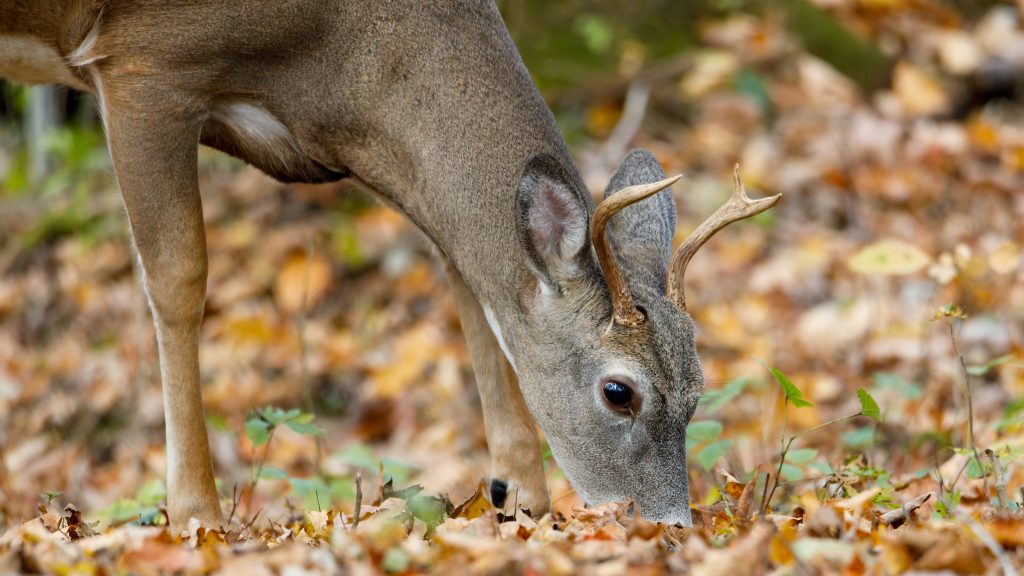
One of the biggest reasons landowners are planting chestnut trees—especially Dunstan chestnuts—is their undeniable appeal to wildlife. In particular, deer hunters and land managers are turning to these trees as a high-performance alternative to traditional mast-producing species like oaks. And when it comes to drawing animals in, chestnuts don’t just compete—they often win.
Unlike acorns, which are high in fat and can carry bitter-tasting tannins, chestnuts are a low-fat, high-carbohydrate nut with little to no bitter tannins. That sweetness makes them extremely palatable, not just to humans but to nearly every species in the forest. “Deer have way more taste buds than we do,” says Wallace, “and they absolutely notice the difference. If they’ve got a choice, they’ll take chestnuts over acorns every time.”

That preference has a biological basis. Chestnuts are nutritionally closer to fruits or starchy vegetables like sweet potatoes than to typical nuts. They’re rich in complex carbohydrates—just the kind of energy boost wildlife need as they prepare for the winter months. On top of that, chestnuts offer a high-quality plant protein with a well-balanced amino acid profile, adding to their nutritional value for wildlife.
“Everything eats them,” Wallace adds. “Deer, turkeys, squirrels, bears—birds even come in for the insects and larvae around the nuts. It becomes a whole micro-ecosystem.” That ecosystem effect makes chestnuts not only a great draw for wildlife but also an anchor species for creating diverse, sustainable habitat on rural properties.
Timing also plays a major role in their value. Chestnuts tend to drop earlier than most acorns, often starting in September, depending on climate and variety. That early drop is a strategic advantage during hunting season, offering one of the first dependable food sources at a time when animals are transitioning off summer forage. It’s not uncommon to see chestnuts become the center of activity in a food plot or along a trail, with game animals revisiting trees daily to grab fallen nuts.
And while acorns vary significantly in crop size from year to year due to “mast cycles,” chestnut trees—particularly Dunstan chestnuts—are far more consistent producers. Once mature, these trees can begin yielding a dependable crop annually, with mature trees capable of producing 50 to 100 pounds of nuts per season under good growing conditions.
For wildlife enthusiasts, this consistency is game-changing. Rather than relying on unpredictable oak harvests, they can create reliable food plots that not only attract game but also support healthier populations year-round. And with the added bonus that chestnuts don’t require processing to remove tannins—unlike acorns—they’re immediately edible for both animals and people.
Ultimately, the Dunstan chestnut fills an ecological niche that was left vacant for over a century. It’s a wildlife magnet not just because of what it provides nutritionally, but because it reintroduces a natural rhythm that many forest ecosystems have been missing for generations.
Growing the Right Way
For those planting chestnuts, Wallace offers a few critical tips:
- Soil & Sunlight: Well-drained soil and full sun are essential. Standing water, even briefly, can kill a chestnut tree.
- Watering: Consistent watering is crucial for the first two years. “Most people lose trees simply because they forget to water,” he says.
- Pollination: Chestnuts aren’t self-fertile, so at least two trees are needed. Wallace recommends three to five for optimal early pollination.
- Protection: Young trees benefit from grow tubes and, ideally, cages to keep deer and other animals from damaging them.
- Fertilization: Wait until after the last frost before applying a time-release fertilizer, and avoid fertilizing too late in summer to prevent frost-sensitive growth.
For large-scale plantings, orchardists sometimes use close spacing to maximize early production, thinning trees later as they mature.
From Orchard to Table
Despite its rich flavor and versatility, chestnuts remain underappreciated in American kitchens. Wallace attributes this to the generational gap caused by the blight. “Most people only know chestnuts from the Christmas song,” he jokes.
But his family has made it a mission to bring them back to the table—literally. From Thanksgiving stuffing to chocolate chestnut torte, they’ve experimented with countless recipes. Some growers are even making chestnut hummus, offering a fresh take on traditional foods.
The Bigger Picture
At its core, the resurgence of chestnut planting represents more than just an agricultural trend—it’s a movement to reintroduce a vital species to the landscape. Whether you’re a hunter, a homesteader, or a casual backyard grower, adding chestnuts to your land is a step toward restoring balance, creating habitat, and growing something meaningful.
As Wallace puts it, “Anywhere that lost chestnuts to the blight would benefit from having them again. Maybe it’s not a pure American chestnut—but it’s a step in the right direction.”