
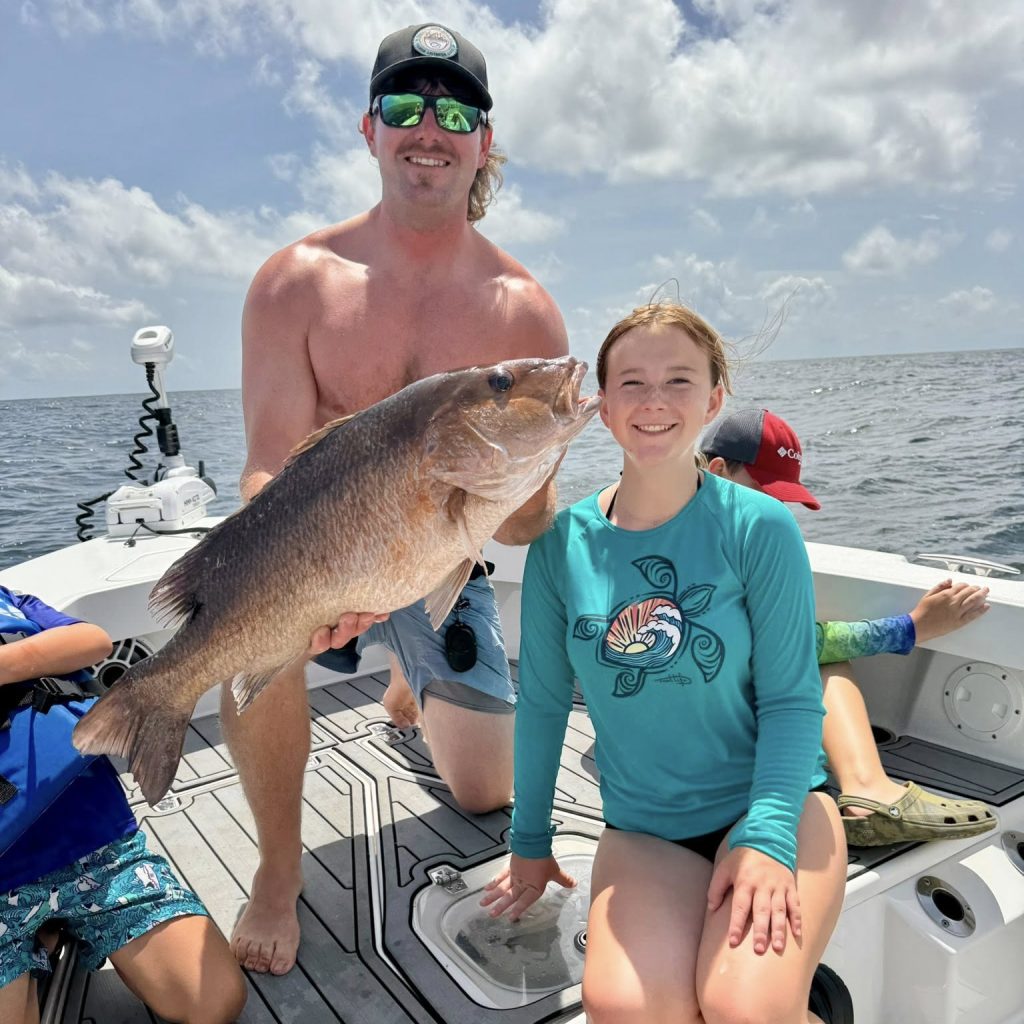
As the Gulf settles and the seas calm, nearshore rigs come alive with opportunity for anglers chasing mangrove and red snapper. These fish may be abundant, but they’re sharp-eyed and quick to turn the fight in their favor. Captain Branden Collier shared his go-to strategies for chum fishing, rigging, and fine-tuning tackle to turn those tricky bites into full fish boxes when the conditions come together.
Chumming Strategies That Fire Up the Bite
Fall and early winter can be prime time for nearshore snapper fishing, especially when the weather gives you a window. Collier explained that his focus has been on the rigs in 30 to 50 feet of water, where both mangroves and reds tend to hang around the corners and cross braces.
“I like to set up up-current of the rig,” Collier said. “Then I’ll throw out some chum—could be pogies, finger mullet, or chopped shrimp—and let it drift right into the structure. That chum line gets those mangroves fired up and moving toward the boat.”
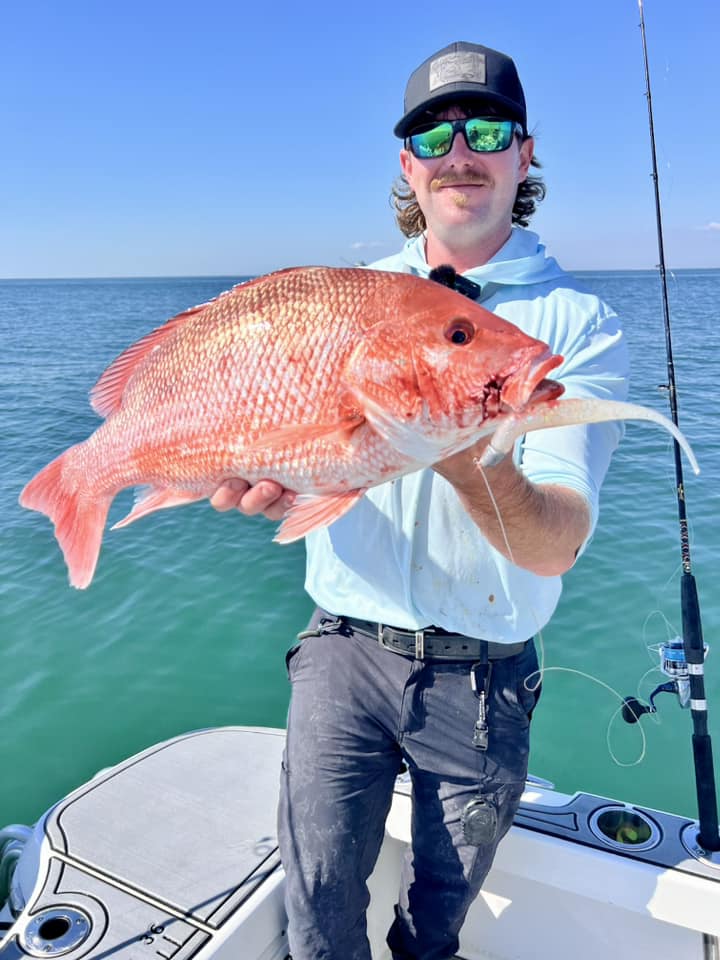
Once the fish rise in the water column, the bites can be fast and furious. “You’ll actually see them come up toward the surface once they get in that feeding mode,” he said. “When that happens, you can catch them quicker, and it helps pull them away from the legs a little so they don’t break you off.”
Still, the current plays a huge role. On a neap or slack tide, Collier says you can get away with lighter rigs or even free-lining baits into the chum fishing line. “But most days, the water’s moving too good for that. You’ll need some weight to get your bait down eight to fifteen feet below the surface, right where the fish are feeding.”
Leader Selection and Adjusting to Fish Behavior
Mangrove snapper are notorious for their sharp eyes and cautious feeding habits. They’ll follow a bait all the way down before rejecting it at the last second if something doesn’t look right.
“They’re smart fish,” Collier said. “I usually start with 40-pound fluorocarbon, but sometimes you’ve got to go down to 30 to get bit. It’s a fine line. Too light, and you risk getting broke off in the rig. Too heavy, and they won’t touch it.”
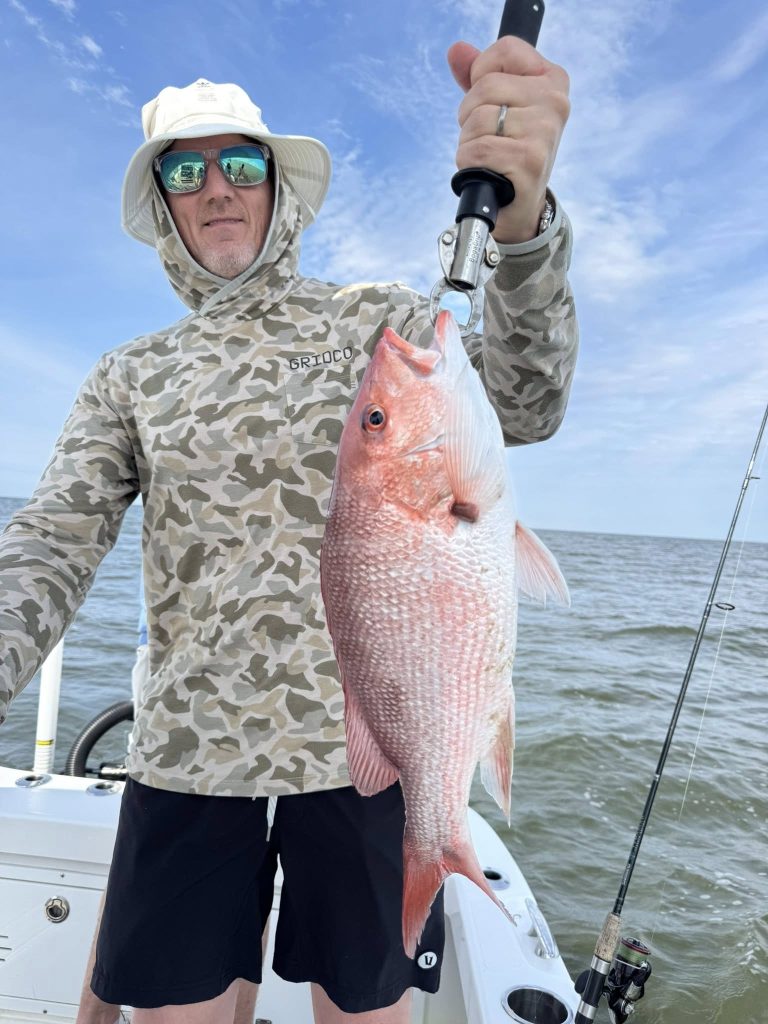
Collier prefers high-quality fluorocarbon like Yo-Zuri, Seaguar, or AFTCO’s Saiko Fluorocarbon for its abrasion resistance around structure. “I pay extra for good leader—it’s worth it,” he added. “When you’re pulling fish out of steel, that tougher coating makes a difference.”
He typically rigs a knocker setup or a simple split-shot above the hook to let the bait drift naturally. When fish are shy, Collier says subtle changes—leader size, hook gauge, or even bait placement—can make all the difference. “You’ve got to adapt. If they stop biting, go lighter, or move to another leg. Don’t be afraid to make changes.”
The Right Tackle for the Job
When it comes to gear, Collier doesn’t play around. “You’ve got to decide if you’re out there for sport or meat,” he laughed. “If I’m guiding or tournament fishing, I’m leaning heavy. Medium-heavy rods with 4500 to 6500-size reels, tight drag. I don’t want them pulling much line—get them out of the structure and in the boat.”
He runs a standard 2/0 or 3/0 circle hook, light wire if possible. “You don’t need the big, triple-strong hooks for mangroves,” he said. “The thinner gauge helps hide the bait and gives you better hook penetration.”
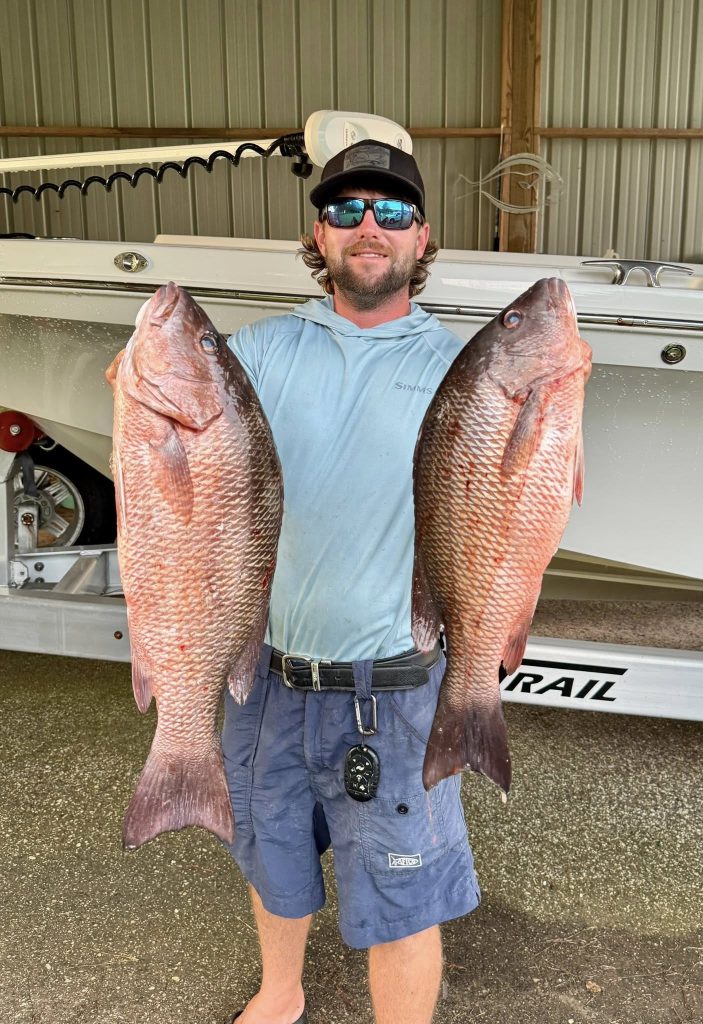
As for bait, live shrimp are hard to beat. “I’ll hook them through the head or the tail depending on how they’re reacting,” Collier explained. “If you’ve got the chum going and the fish fired up, it doesn’t take long to get a bite. You’ll catch four or five quick, then they’ll either shut off or you’ve caught the whole school. When that happens, move to another leg and start over.
Bonus Catches and Bycatch
In addition to mangroves and reds, Collier said anglers can expect spadefish and the occasional cobia or large red snapper to crash the party. “If you’re chumming and see jellyfish around, there’s a good chance you’ll have spadefish right under them,” he said. “We’ve had days where customers thought they hooked a giant snapper, and it turned out to be a 10-pound spade. They’re everywhere right now.”
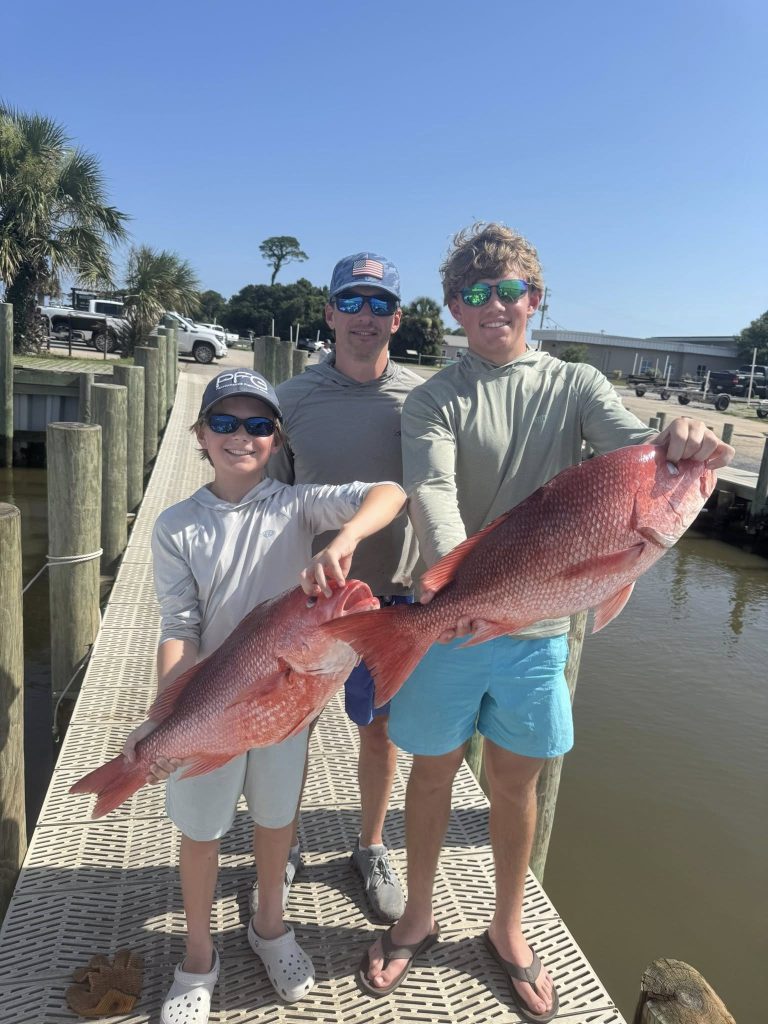
And while red snapper season may be short, there’s always a few bonus fish mixed in. “Most are undersized this time of year, but when it’s open Friday through Monday, it’s a nice addition to the box.”
Key Takeaways: Be Ready to Adjust
Mangrove and red snapper fishing nearshore is all about adaptation. You can’t fish the same setup every day and expect the same results.
“You’ve got to pay attention,” Collier said. “The tide, the water clarity, how the fish are acting—everything changes. Some days, they’ll eat 40-pound all day long. Other days, you’ve got to sneak down to 30 and hide your hook in the bait. The main thing is being ready to change.”
That flexibility, along with smart use of chum and the right leader material, can turn a tough day at the rigs into a productive one. And when the bite’s hot, nearshore chum fishing is some of the most exciting action you can find just a few miles off the beach.