

A compact tractor, sometimes called a utility tractor, is designed for smaller acreage and lighter workloads than a traditional full-sized agricultural tractor. This class of machines is revolutionizing small-scale farming by offering a versatile and efficient alternative to their larger counterparts.
These models balance size, power, and maneuverability to meet the unique demands of landscapers, oversized residential properties, smaller acreage farms, and businesses. Many hunting clubs have also discovered that compact tractors are cost-effective and can save a lot of sweat equity as they maintain roads, bush hog, till, plant, and fertilize their fields.
To better understand what these compact workhorses are capable of and the array of optional equipment available, I spoke with Adam Haney of Haney Equipment near Cullman, Alabama. He’s the sales manager of this family-run equipment business that has been selling and servicing tractors since 1968. Adam explained the similarities and differences between various compact models. He said Haney Equipment sells & services an extensive line of compact tractors, including several models manufactured by LS Tractor.
Haney explained that LS Tractors offers compact models to fit almost any budget, and their two-year “Bumper-to-Bumper” and extended 6-year warranty make them an excellent choice.
Understanding Compact Tractors
This class of tractors attempts to strike a balance between power and maneuverability. There is some diversity within this classification, and below are a few of the characteristics that help define machines within this classification.
- Size and weight– Compact tractors typically weigh between 1,500 and 4,000 lbs and measure between 80 and 120 inches long, which allows for increased maneuvering in tight spaces.
- Horsepower– Engine horsepower is generally between 25 and 55HP.
- Maneuverability– Compact tractors have a tighter turning radius and excellent maneuverability compared to larger models. Many have four-wheel steering for enhanced traction and pulling.
- PTO and 3-point hitch– Most compact tractors have a rear-mounted PTO (power takeoff) shaft to power implements and a three-point hitch to attach implements like loaders and mowers.
- Comfort and safety features– Compact tractors offer enclosed cabs or ROPS (rollover protective structure) for driver comfort and safety. They often include power steering, hydrostatic transmission, and cruise control.
- Affordable price– Compact tractors are generally priced lower than full-sized models, which makes them attractive for smaller acreages, landscaping jobs, and part-time farmers.
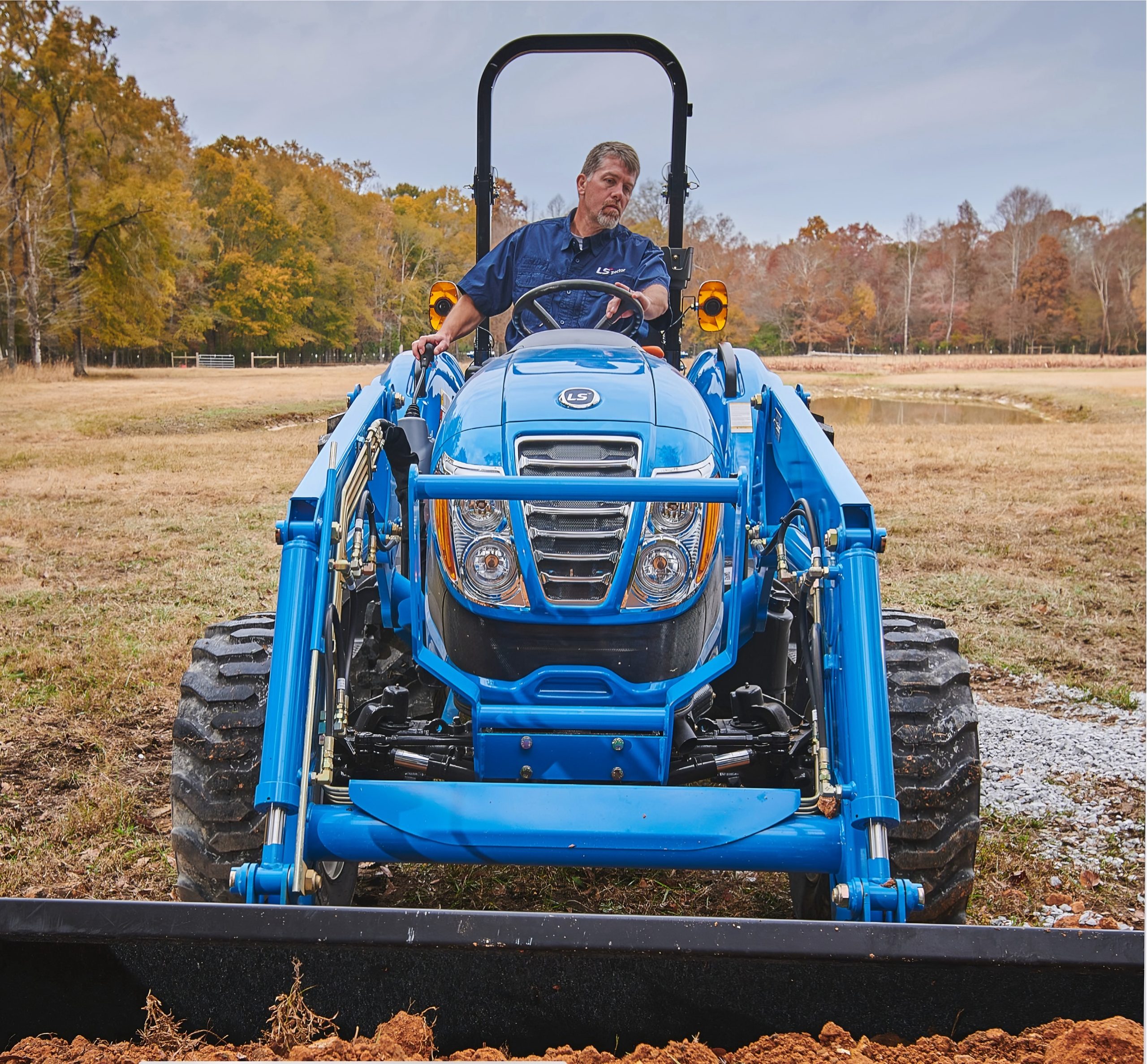
Benefits Of Compact Tractors For Small-Scale Farming
Compact tractors excel at a wide range of activities around smaller farms and hunting properties. Attachments such as front-end loaders and backhoes allow owners to complete projects often done using hand tools. Here is a small sample of the tasks these vehicles can perform.
- Plowing/Planting fields
- Mowing pastures
- Grading driveways
- Digging post holes
- Moving/Lifting heavy loads
- Landscape projects
Additional Benefits
- Ease of Use- Their user-friendly design simplifies operating and swapping the various optional attachments. Owners can often handle repairs and upkeep, minimizing downtime and cost.
- Reduced Soil Compaction- Their smaller size and lower weight result in less soil compaction, benefiting crop health and yield.
- Lower Maintenance/Operating Expenses- Compact utility tractors consume less fuel, leading to cost savings and a reduced carbon footprint.
- Unmatched Versatility- Tackle any project easily thanks to the wide range of compatible attachments. Whether maintaining your home, managing a commercial property, or working the land, you can perform almost any job with the right accessory.
Choosing The Best Compact Tractor For Your Needs
When determining size and horsepower, a good rule of thumb is to consider both acreage and terrain. Haney said, “Potential buyers need to consider the various tasks they expect to perform, along with the terrain of their property. Whether a parcel is primarily flat or has hilly terrain will factor in when choosing your tractor’s size.” A larger-framed model with increased weight and power is more stable on hillsides.
Brush cutters and finishing mowers account for about 95% of compact tractor attachments, according to Haney. He also mentioned that a grappler is an excellent attachment for properties with timber and can quickly move fallen limbs and trees from roadways.
What Size Tractor Do You Need?
Correctly sizing your tractor relies on a few key factors.
According to Haney, a great starting point is to develop a clear vision of the tasks you wish to complete on your property. Whether you’re maintaining a well-manicured lawn or using your 20-acre field for baling hay, you need a machine with the correct size and power that can handle any job you anticipate. Consider a tractor with dimensions that allow you to maneuver in or around any buildings or enclosures on your property.
Compact Tractor Specifications To Consider
Frame size- The length and width of a tractor is sometimes called its footprint. The geometry of these specs determines stability on hillsides along with its turning radius. These measurements will also influence how well it can maneuver within the confines of a barn or other buildings on your property.
Weight- A heavier tractor typically offers better stability and traction on uneven terrain or when using heavy implements such as loaders or backhoes. Heavier models also tend to be more durable under heavy use; however, weight can factor into one’s choice if it will towed to other locations.
Transmission- Most compact tractors offer a choice of manual or hydrostatic transmissions. The manual is generally cheaper but requires shifting. Hydrostatic uses fluid flow instead of gears, allowing for continuous speed changes.
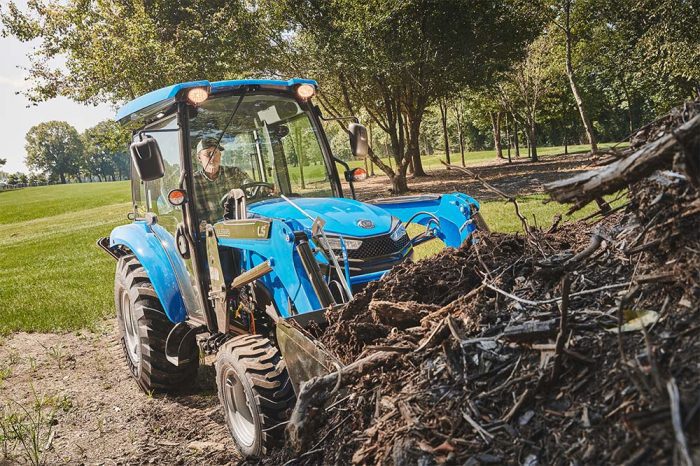
Horsepower- The number of acres a compact tractor can handle depends on the size and horsepower of the tractor. Here’s a general guide based on property size:
- 1-5 acres– For small acreages, a compact tractor with 20-30 horsepower should suffice. This power range allows for mowing, light hauling, and basic property maintenance tasks.
- 5-10 acres- A 30-50 horsepower tractor is suitable for medium-sized properties. It can handle tasks like mowing larger fields, tilling soil, moving heavier loads, and operating various attachments for landscaping and farming.
- 10-20 acres- Larger-framed compacts with 50+ hp can handle heavier-duty tasks such as plowing, harrowing, baling, and towing larger implements.
LS Tractor Specs
Haney said LS Tractor manufactures an MT2 and MT3 Premium Series alongside their MT2E and MT3E Economy Series of compact tractors with different frame sizes, horsepower, and transmission options.
- LS MT2/MT2E– This series offers three or four-cylinder engines from 25 to 42.5 hp, designed for attachments up to five feet wide.
- LS MT3/MT3E- These powerful models can handle larger implements designed for more demanding tasks. With four reliable engines ranging from 35 to 57 horsepower, you can find the perfect combination to fit your needs.
Compact Tractor Features
Must-have features for a compact tractor will vary with your specific needs and the tasks you plan to use it for. However, several items are considered essential for most compact tractor owners.
- Loader- A front-end loader lets you lift and move heavy, bulky materials such as soil, gravel, or mulch.
- Four-wheel drive- This option makes a tremendous difference when operating on loose or muddy soil and increases pulling power on steep terrain.
- Mowers- A belly or rear mower deck facilitates efficient lawn mowing and brush clearing.
- Tillers- Several types are available for breaking up soil and preparing seedbeds and are essential for more extensive gardening and farming operations.
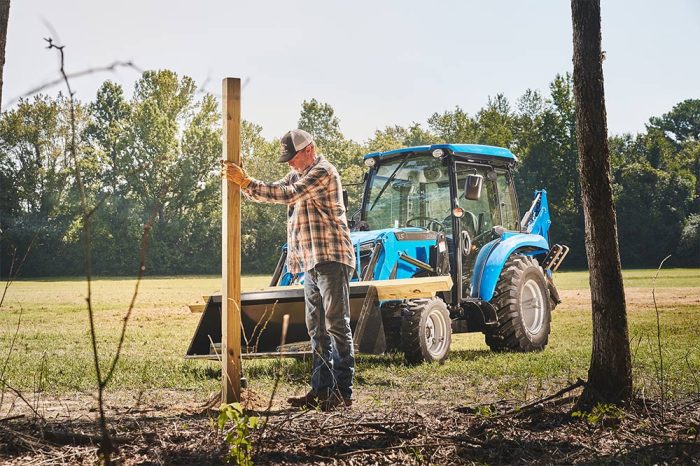
There are additional features that, while not essential, can greatly enhance the tractor’s functionality and user experience.
- Backhoe- Adding a backhoe attachment enables digging tasks like trenching or excavation.
- Grapplers- A clamshell grappler is an excellent way to grasp and carry heavy loads or move brush.
- Post Hole Digger- This makes digging holes quicker and more efficient for fence installation or planting trees.
- Forks- Forklift attachments are handy for transporting pallets, lumber, or hale bales around the property.
- Planter- With a quality planting implement, controlling seed spacing and planting depth is a breeze.
- Sprayer- Adding a sprayer enables the tractor to apply pesticides, herbicides, or fertilizers to crops or landscaping.
- Cab with Heater and A/C- A cab enclosure with climate control provides comfort and protection from bugs and temperature extremes during long hours of operation.
- GPS guidance- GPS guidance can provide driving accuracy and efficiency when performing tasks such as mowing, tilling, and planting.
- Toolbox- A built-in toolbox offers convenient storage for tools and small implements.
- Lighting Package- Enhanced lighting improves visibility during low-light conditions or night operations.
- Bluetooth Module- Radio, USB
Several additional items can improve the functionality and safety of your compact tractor.
- Counterweights
- Safety lights
- Mirrors
- Horns
- FOPS (Falling Object Protective Structure)
Final Thoughts On Compact Tractors
If you’ve become envious of a relative’s compact tractor and want your own “Swiss-Army-Knife-On-Wheels,” begin making a list of the features you need and the tasks you expect to take on, so you’ll be better prepared when decision time comes.
Fortunately, finding a suitable machine for your property or business can be as easy as asking the right questions to the right people. A reputable dealer can offer valuable input in your search for a dependable machine or attachments. Look for a business that stands by the products and services they offer. Having that dealer support can give you peace of mind and help keep your machinery maintained and operating at its full potential.