

Crossbows have finally become mainstream. Once upon a time, any able-bodied man who hunted with one was derided as a lazy, unscrupulous character who would also probably cheat on his taxes and his wife if given the opportunity. Nowadays, a crossbow hunter may still hear something along those lines, but it’ll be delivered with a wink instead of a scowl.
All of that hate has left some hunters assuming that there’s “nothing to” hunting with a crossbow. But if you’re new to the weapon, there are a few things you need to realize before you hit the woods. Otherwise, you risk making a mistake that sets us conscientious crossbowers (crossbowmen?) back a decade in the public eye. We wouldn’t want to lose our hard-earned seat at the table, so let’s look at The 10 Commandments for Crossbow Hunters.
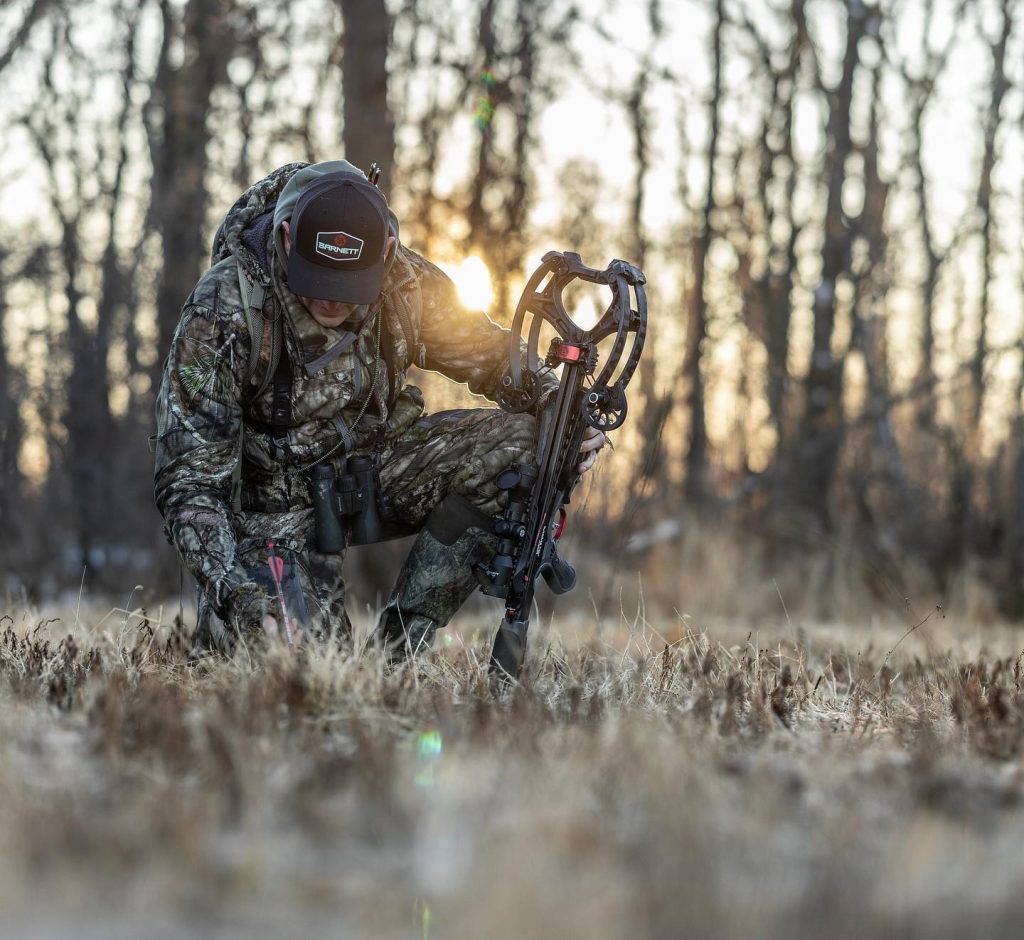
I. Thou Shalt Remember It Is Not A Rifle
Compound bow purists (as a former trad bow enthusiast, that’s a weird thing to write) sneer at “crossgun” toters. The tired and thankfully mostly dead argument against crossbows is that as easy as they are to shoot, they shouldn’t be allowed in the woods during archery season.
Anybody who has actually hunted with one knows that this is mostly hogwash. Yes, it’s easier for most folks to be accurate at hunting distances with a crossbow than a compound bow. But a crossbow is not and will not ever appropriate the performance of a rifle. Even the fastest crossbow is laughably slow compared to any firearm.
The effective range of archery tackle, regardless of which way the limbs set, is measured in tens of yards, and not hundreds. When I shot a compound bow, I wanted a twenty-yard shot and would take a thirty-yard one. With a crossbow, I still want a twenty-yard shot, have taken a few thirties, and have only once pushed it out to forty. In my opinion, the hellacious noise a crossbow makes when it’s fired negates whatever advantage its extra velocity gives you. A deer may react to a compound bow, but it will absolutely react to a crossbow.
With this in mind, keep your shots close. Don’t fall into the rifleman’s mentality and try to cover as much of the woods as possible. Hunt stands that put deer within bow range. Hot acorn trees, mineral licks in the back corner of a small food plot, creek crossings, trail intersections…you know the drill. If you treat your crossbow like a bow, you’ll be tickled pink with it. If you try to “stretch its legs,” it’ll come back to bite you.
II. Thou Shalt Keep It Maintained
Crossbows should be high-speed, low-drag killing machines. Emphasis on “low drag.” Lubricate your bolt shelf per the manufacturer’s instructions, and wax your string and cables. Crossbows are under incredible tension and generate lots of friction and heat. Pay especially close attention to the servings as they go around the cam and where they contact the bolt shelf. You’ll notice that the serving material is probably thicker on your crossbow than on a compound bow. There’s a reason for that. Wax can prolong your string and cable life, and reserving the string in a timely manner can prevent you from having to replace it mid-season. That said, crossbows go through strings and cables faster than compound bows, at least when you measure their lifetime in shots fired.
Another important maintenance item is the bolt connecting the riser to the stock. Most crossbows generate excess energy beyond what can be transmitted to the bolt, and this energy usually goes into “rattling the fillings” of your poor bow. Loctite is your friend, but keep the allen wrench that came with your bow in its case and give it the ole snug-and-go every now and then.
III. Thou Shalt Practice Diligently
This ties into the “treat it like a bow” tip. Most people don’t need to log nearly as many hours with a crossbow as they do a compound bow in order to build and maintain proficiency. But since crossbows are relatively “slow” compared to a rifle, your post-shot routine (or lack thereof) can impact where your bolt lands. You’ll probably discover that the trigger on your crossbow is heavy and has a lot of travel compared to the one on your rifle, making trigger control much more important. It’s also important to minimize flinching or dropping the weapon on the shot since the bolt stays on the rail for a lot longer than a bullet stays in a rifle barrel.
Finally, it’s important to be familiar with all the “quirks” of your bow to cut down on crunchtime screw-ups. Don’t ask me how I know that a crossbow won’t go off if the bolt isn’t firmly nocked and deactivating the anti-dry fire device, no matter how big the buck you’re trying to shoot is.
IV. Thou Shalt Not Desire For ‘More’
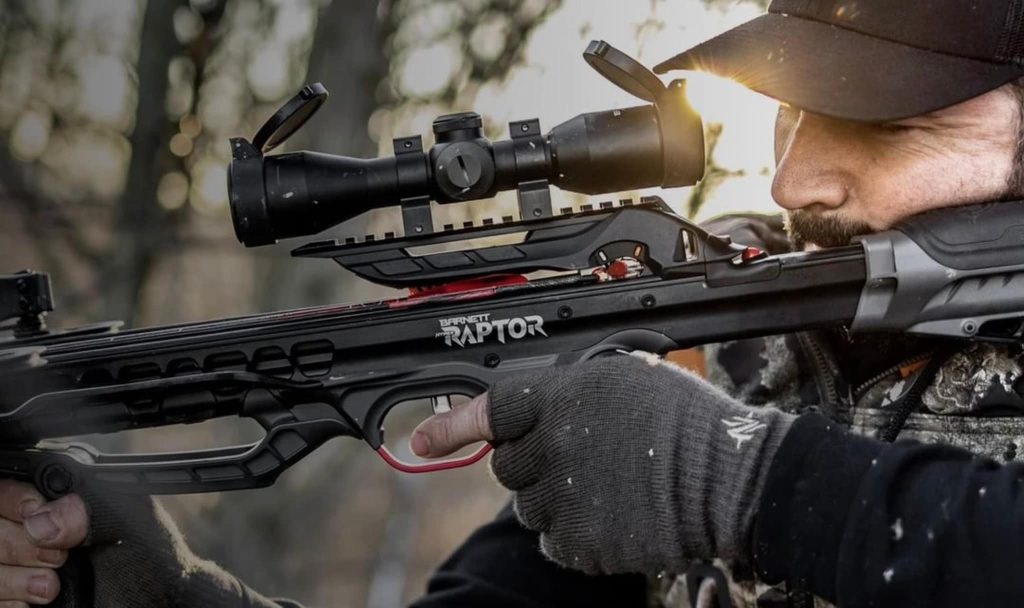
Most hunters want more. More speed, more cutting diameter, more accuracy, and more penetration. But sometimes, less is more. This is particularly true when it comes to weight, length, and axle-to-axle measurements. Crossbows suck to carry through the woods, but shorter and lighter crossbows suck much less than heavier and bulkier models. In the past, smaller bows suffered from reduced speeds. But current models, like the Barnett Hyper Raptor, can break the 400fps barrier with paltry 7.5” axle-to-axle lengths. Whether you’re walking through thick brush or maneuvering in a tight shooting house, you’ll be happier with a smaller bow than a larger one.
V. Thou Shalt Buy A Discharge Bag
Or a discharge bolt. Or both. Much like a muzzleloader, the loading and unloading of a crossbow can be the most annoying part of a hunt if you’re not prepared. Some models offer cranks that allow you to de-cock the bow, but for most bows you’re going to need to pull the trigger to get tension off the limbs. A discharge bolt is a good “Plan B,” but a discharge bag can serve double duty as something that lets you quickly check zero before a hunt or after a mystifying miss.
VI. Thou Shalt Not Skimp On Optics
“Subpar” is a polite way to describe a lot of the scopes that come with crossbows. Before you decide if you like yours or not, take it out in the woods during the first or last five minutes of legal shooting light and look through it. Even if you have lighted reticles, chances are you’re losing light through the aperture, and all the glowing crosshair is doing is washing out the vitals behind them. If you’re looking to upgrade your hunting rig, start with a lightweight scope that does a good job gathering light. Or do what I did, and switch to a reflex sight. For fast, close-in shots during the gray hours (IE, eastern whitetail hunting), a wide field of view, fast target acquisition, and good low-light performance is more important than magnification.
Speaking of good low-light performance, BukOps has recently introduced an innovative new scope that shows great promise for hunters. Their Cycloptic-X Primetime Crossbow Scope offers digitally-enhanced low light imagery that doesn’t utilize thermal or infrared technology. Product demonstration videos are truly impressive, with gray light turning into daylight via some clever digital magic packed into the scope.

VII. Thou Shalt Stock Up On Bolts And Broadheads Before Season, And Not During
Crossbow bolts are short, fast, and hard to track with mortal eyes after the trigger is pulled. Food plot dirt is soft. These two things combined mean that in some seasons, it feels like crossbow bolts are disposable. Once you find a bolt and broadhead combination that you’re happy with, stock up. Nothing sucks worse than running out mid-season and having to zero your weapon to a different, untested combination during peak rut.
VIII. Thou Shalt Fear The Cross(bow) Thou Beareth
This was a default response to customer concerns back when I worked behind the archery counter. When you cock a crossbow for the first time, it can be unsettling to observe how much force is packed into such a small package. A compound bow blowing up in your face is startling. A crossbow doing the same is traumatizing. If you stick your finger above the protective guard and into the string’s flight pass, it probably won’t take it off. But you’ll probably wish that it would have.
Be careful with the dang thing. Keep the safety on. Firmly seat the bolt. Keep up on maintenance. Don’t shoot it if something seems off. And this goes without saying, but don’t point it at anybody.
IX. Thou Shalt Shoot The Broadheads Thou Liketh
This may be controversial, but in my personal experience and from talking with multiple industry reps, there’s no appreciable difference between broadheads branded as “crossbow heads” and regular ole insert-your-preferred-brand-here ones. Yes, the ferrule may be bigger to match up with the diameter of thicker crossbow bolts. Some manufacturers also claim to use stronger springs or o-rings to keep the blades closed, and sometimes they offer crossbow-specific heads with larger cutting diameters, but your bow won’t explode and the deer won’t get away if you use the broadheads you already have with your new bow.
X. Thou Shalt Know And Keep The Other Commandments
While crossbow regulations are a lot less goofy than they were in the early days of their widespread legalization, there are still some rules in most states that can trip up longtime bowhunters. Public land in particular can pose problems with more restrictive rules for crossbow usage than on private property.
Conclusion
This isn’t an exhaustive list of commandments, but it’s enough to get a new crossbow hunter in the woods. Remember that despite what you may have heard, crossbow hunting really is much more similar to bow hunting than rifle hunting. You have to get in close, and you’re dealing with a tool that requires more effort on your part to utilize effectively. Get into the bowhunting mindset, and you’ll have a productive season. If you need more help with that, you can check out this article we wrote specifically for beginner bowhunters.
