
For landowners with access to water who want to build a dock, one of the first and most important questions to address is the different type of dock pilings for sale. While the appearance and features of a dock are significant, they mean little if the understructure is weak or, worse, fails and collapses.
Underwater dock structures face numerous challenges, including wave action, storm damage, and marine borers—saltwater organisms that destroy traditional wood pilings. Material costs are always a key consideration, so it’s worth examining the options to determine which pilings best suit specific dock construction needs.
Traditional Wooden Pilings
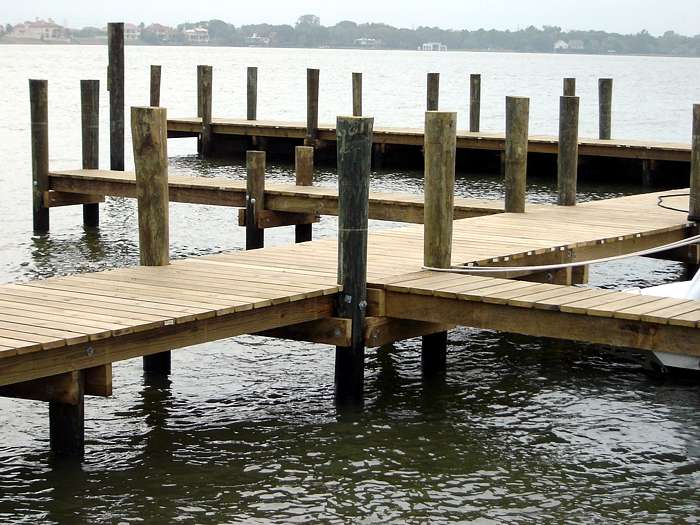
The most common choice for dock pilings has long been treated wooden posts. These are readily available, relatively inexpensive, and easy to work with. However, due to strict regulations on the chemical treatments applied to wooden posts in coastal areas, their lifespan is limited without a protective barrier system.
Cost
Currently, treated pine dock posts cost about $70 for a 12-foot length on the central Gulf Coast. Prices vary by location, with higher costs in more populated areas. Installation costs must also be considered.
Austin Porter of Shoreline Plastics explains, “With wooden poles, you typically get some sort of wrap nailed onto the post. This wrap doesn’t work well and can range from $50 to $100 per pole. The wrap may add an extra year of protection, but once it loosens or marine growth forms under it, the damage continues. All it takes is a pinhole for harmful organisms to enter.”
Maintenance
Routine maintenance is essential to ensure the structural stability and safety of wooden dock pilings. Neglecting maintenance can lead to costly repairs, structural vulnerabilities, and safety hazards.
Regular inspections, protective coatings, and secure anchoring are necessary to prevent issues such as wood rot and deterioration. Failure to maintain pilings can result in sagging docks, uneven surfaces, and even collapse, posing risks to individuals and property.
Life Expectancy
In the past, wooden posts treated with heavy chemicals had an expected lifespan of over 20 years. However, due to modern regulations and the use of genetically modified, fast-growing trees, today’s wooden pilings are less dense and hold treatments poorly.
Porter notes, “Wood poles used to last 30+ years. Now, we’re seeing lifespans of 10–15 years in most of Florida, and in some areas, they fail in as little as five years.”
Plastic/Composite Pilings
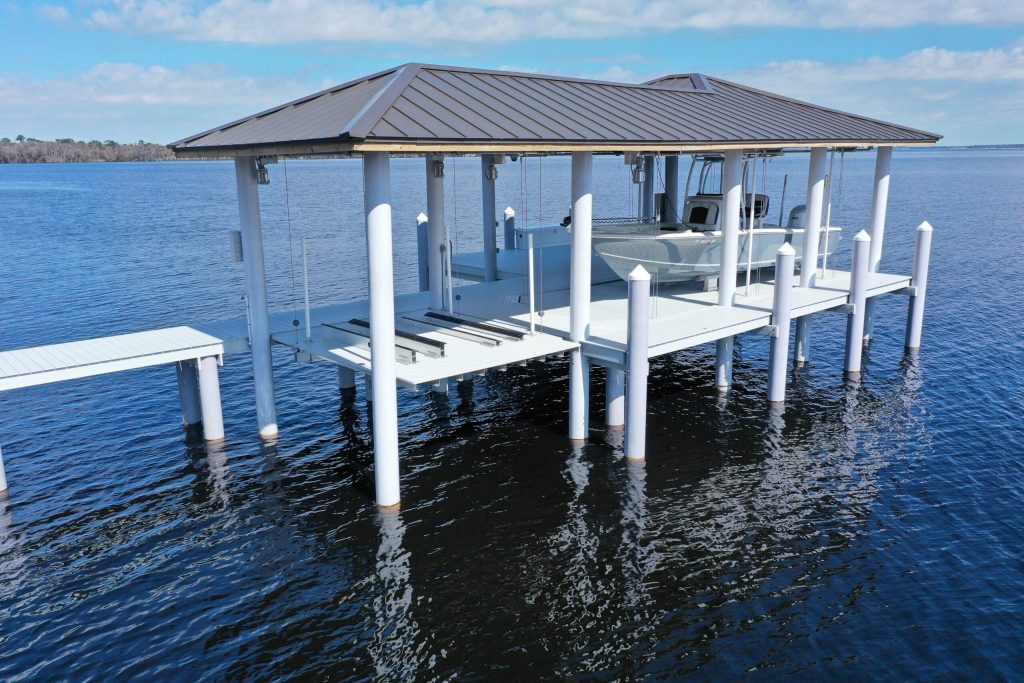
Plastic-based dock pilings for sale, such as the EcoPile System from Shoreline Plastics, offer a solution to the problem of marine organism damage. This system has been successfully used along the coast for several years, providing a durable alternative to traditional wood pilings.
Cost
Porter explains, “The EcoPile is roughly 2–3 times more expensive than wooden poles, depending on size and length. However, the overall cost increase for a project is typically around 10–20%. For more elaborate docks, the increase can be as low as 5%, while basic docks may see a 30% rise. On average, switching to EcoPile increases the cost by about 15%—a reasonable price for a foundation that lasts a lifetime.”
For instance, a $50,000 dock built with wood pilings might cost $60,000 with EcoPile. In the long run, the higher upfront cost is offset by avoiding future replacement and repair expenses.
Maintenance
Unlike wooden pilings, plastic pilings require minimal maintenance. Marine borers cannot damage plastic, and the only marine growth that may occur is barnacles, which are easily removed or left to grow without causing harm.

“The EcoPile is maintenance-free and should last a lifetime,” says Porter. “Barnacles can’t ‘grab’ into the pole and are easy to knock off.”
Life Expectancy
Plastic and composite pilings are immune to marine organisms and require little upkeep. Once installed, they provide decades of reliable service.
Porter adds, “The EcoPile was designed to be a one-time replacement, with a life expectancy of 50 years or more.”
In Conclusion
When selecting pilings for residential dock construction, owners must weigh their options carefully.
Traditional wooden pilings are widely available and cheaper to install but have a relatively short lifespan in saltwater. Maintenance and protective measures add to their cost over time.
Composite pilings, such as the EcoPile, are more expensive initially but require little maintenance and last for decades, making them a cost-effective long-term solution.
For the best results, consult a reputable local contractor. A skilled contractor can navigate regulations and help select the most suitable dock pilings for sale, ensuring a durable and cost-efficient dock.